第1章
When the Status Quo Becomes Your Deadliest Enemy: The Imperative of Disruptive Creativity
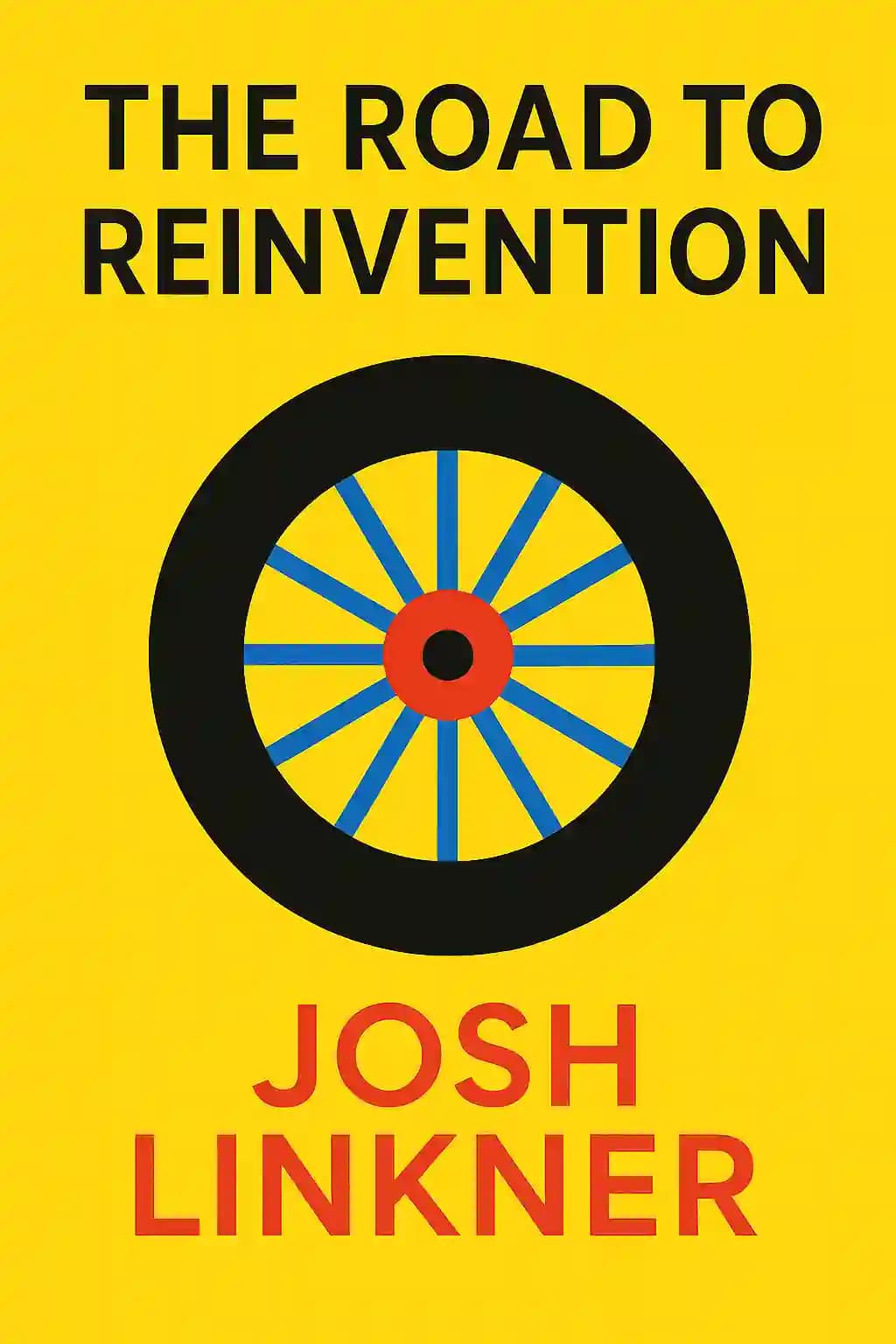
What if the very thing you've built your success upon becomes your greatest threat? This is the central paradox explored in Josh Linkner's "The Road to Reinvention." As a serial entrepreneur who has built and sold four technology companies worth over $250 million, Linkner understands firsthand that in today's rapidly changing marketplace, standing still is equivalent to moving backward. The book has become required reading for executives at companies like Microsoft and IBM, with Mark Cuban calling it "a must-read for anyone seeking to drive meaningful change." Beyond business circles, the book has influenced how organizations approach innovation, with its principles being applied everywhere from Fortune 500 boardrooms to community revitalization efforts. What makes this work particularly compelling is how it transforms the abstract concept of "reinvention" into a systematic, actionable framework that any individual or organization can implement.
In today's brutally competitive landscape, organizations face unprecedented threats from all directions. Fickle consumer trends, friction-free global markets, and relentless technological disruption have created an environment where even century-old stalwarts can collapse seemingly overnight. Consider Samsung's story: despite revenues soaring 250% over six years, CEO Lee Kun-Hee was shocked to find Samsung TVs collecting dust on back shelves during a world tour while competitors' products were prominently displayed. Rather than coasting on strong results, Lee gathered hundreds of executives in Frankfurt and delivered a three-day manifesto that would forever change the company, famously declaring, "Change everything but your wife and children."
This Frankfurt Declaration marked Samsung's most significant turning point. Today, the company's commitment to reinvention continues through its Future Strategy Office, which constantly monitors for signs of potential stagnation. By 2013, Samsung had become the world's largest TV and smartphone manufacturer with revenues exceeding $250 billion-representing an astonishing 17% of South Korea's entire GDP.
The market leaves no room for me-too players or those intoxicated by past success. Creativity has become the most sustainable competitive advantage-the one thing no company can outsource. The fundamental question facing every organization is no longer whether to change, but whether you will drive that change or be driven by it.
When confronting the need for reinvention, too many freeze rather than act. Like deer in headlights, they face paralysis when approaching transformation. The first step is always hardest but unleashes the momentum needed to overcome stagnation. Most achievements worth accomplishing don't come from gigantic epiphanies but from persistent small advances that accumulate into transformation over time.
It's crucial to understand that reinvention differs fundamentally from turnarounds. While turnarounds are reactive, desperate responses to crushing challenges focused on short-term survival, reinvention is proactive, ideally occurring when a company is thriving. Turnarounds destroy morale through cost-cutting and control, while reinvention breathes new life through innovation and creativity. By the time a turnaround becomes necessary, it's often too late-only 10% of organizations ever regain market leadership after stumbling that badly.
第2章
The Eight Principles of the Reinvention Ethos
The most successful organizations and individuals-from Nike to Madonna-share a common thread: an ethos of reinvention that embodies a disruptive mindset. These principles can transform your career, company, and community, though they may require abandoning long-held beliefs.
Most of us were conditioned to comply, follow rules, and avoid mistakes-precisely the wrong principles for the innovation age. But we can reprogram our thinking with open-mindedness and willingness to shed outdated beliefs.
The past makes a great teacher but a horrible master. Living shackled to history-whether dwelling on past mistakes or clinging to past successes-strangles potential and restricts progress. Many businesses fall into this trap, rationalizing stagnation with myths like "history repeats itself" or "it's just a cycle." Letting go doesn't mean pretending the past never happened-use your accumulated assets as tools for innovation, not crutches for repetition. As Bill Gates warns, "Success is a lousy teacher. It seduces smart people into thinking they can't lose."
To foster innovation, we must encourage courage rather than stifling it. When team members withhold ideas due to fear of judgment, organizations suffer. Instead of dismissing seemingly bad ideas with harsh criticism, engage thoughtfully by asking questions: "Tell me more about that," "What was your thinking?" or "How could we make it better?" This approach makes people feel understood rather than ashamed, priming them to dig deeper and return with more ideas.
Failure isn't just inevitable-it's essential to discovery. Most breakthroughs come not from lightning bolts of genius but through series of stumbles and experiments. WD-40 earned its name from "Water Displacement, Fortieth Experiment"-39 failures preceded success. Beck Besecker's journey illustrates this perfectly: after five business pivots and four name changes in under a year, his sixth iteration, Marxent Labs, finally soared with its Visual Commerce platform.
The greatest breakthroughs often come from contrarian approaches-zigging while others zag. Dove exemplified this by rejecting beauty industry norms of showcasing digitally-enhanced supermodels. Instead, they celebrated real women and exposed industry manipulation through their "Real Beauty" campaign. The video revealing how models are digitally altered went viral with 32 million views before any paid advertising, yielding extraordinary results: products featured in the campaign saw a 600% sales increase in just two months.
Organizations often neuter creativity by fixating on boundaries rather than opportunities beyond them. Dan Gilbert of Quicken Loans flips the old saying "I'll believe it when I see it" to "You'll see it when you believe it," emphasizing that belief shapes reality. Disruptive thinking requires faith to explore the unknown. From civil rights to wireless internet, every human advancement began as someone's wild dream.
The best leaders today understand their job is to put their own companies out of business through continuous reinvention. Top-tier organizations constantly examine their offerings and operations, obsessively hunting for outdated systems and better approaches. Warren Buffett exemplifies this principle through Berkshire Hathaway, which began as a textile mill in 1889. After gaining control in 1964, Buffett reinvented the struggling textile business by investing in insurance and other ventures. By 1985, the original textile operation was shut down completely.
Our instinct to say "no" to radical ideas-conditioned by grumpy professors, cynical parents, and finger-wagging bureaucrats-undermines progress and innovation. This stop-sign mentality has contributed to the downfall of great leaders, companies, and cities. The world is filled with naysayers who overstate risks and find flaws in every proposal, but nearly every advance in civilization was initially met with cold reception.
Whether launching products, opening businesses, or rebuilding communities, your focal point must be ahead of you, anticipating trends and changes. Research and data should help you project forward, not anchor you to the present. Always remember you're aiming at moving targets-don't let the past or present mislead you into taking a losing shot.
第3章
Cannibalizing Your Own Product: The Key to Sustainable Innovation
The bankruptcy of Polaroid Corporation in 2001 exemplifies the danger of refusing to cannibalize your own products. For over fifty years, Polaroid dominated instant photography, even prevailing against Kodak in a patent battle. Yet this victory narrowed the company's vision rather than expanding it.
When faced with suggestions for innovation, Polaroid's leadership repeatedly rejected them, fearing they would "cannibalize our core business." This conventional thinking, rooted in a scarcity mindset that sees markets as finite, prevented Polaroid from embracing new technologies.
Meanwhile, startups like Instagram (which ironically featured filters mimicking old Polaroids) captured the digital photography market and sold to Facebook for $1 billion-roughly the same amount of debt that drove Polaroid to bankruptcy. Success can intoxicate even disciplined leaders into believing their advantage is sustainable, but market conditions change rapidly. Companies must drive those changes through continuous innovation rather than hiding behind fears of cannibalization while competitors feast on the rewards of innovation.
Successful reinvention demands deep exploration of customer needs. Research confirms that companies committed to ongoing R&D and innovation partnerships achieve significantly higher sales growth. SNUBA exemplifies this approach-by examining obstacles keeping customers away from traditional scuba diving (certification requirements, heavy equipment, flight restrictions, high costs), they created a hybrid experience keeping tanks on the water's surface connected to divers by a twenty-foot hose. This innovation eliminated barriers while preserving the underwater breathing experience, creating an entirely new category that's served over 5 million people worldwide.
To truly disrupt markets, you must create solutions that are ten times better than existing options. At Detroit Venture Partners, we only back startups that solve customer problems 10X better than market leaders. This principle applies equally to reinvention within established companies-you must dramatically outperform both competitors and your previous offerings.
The 10X factor demands something compelling and remarkable enough to break customers from their comfortable patterns. When ink-jet printers were locked in commodity price wars, HP boldly reinvented the category by adding fax capabilities. This multipurpose innovation elevated their product above the noise, driving sales and profits. As the category evolved, innovative manufacturers added scanning, copying and photo printing while status quo players remained trapped in price competition.
第4章
Retooling Your Operations: Finding Better Ways to Deliver Value
At the height of their success in 2011, Quicken Loans' leadership took a bold step-gathering for an urgent off-site meeting not because of problems, but to reinvent their already thriving company. This counterintuitive move reflected their belief that reinvention works best from a position of strength rather than desperation. The result? Their loan origination skyrocketed from $30 billion to over $70 billion the following year, and surpassed $100 billion in 2013.
Quicken Loans' success comes not from product innovation-mortgages remain essentially commodities-but from operational reinvention. The company's philosophy of "being obsessed with finding a better way" drives them to constantly transform how they do business, leading to unprecedented customer satisfaction and market dominance.
Reinventing operations requires concrete plans before asking people to abandon established methods. Bureaucrats who derive importance from maintaining complex processes will resist change with weak rationalizations. The key is examining every aspect of your organization's operations and identifying "cannonballs"-systems or processes that once made sense but are now relics.
Commander Michael Abrashoff demonstrated this by transforming the worst-performing Navy ship into the top performer within a year by categorizing tasks as either non-value-added or mission-critical, and by listening to crew suggestions. One sailor's idea to use stainless steel fasteners instead of standard ones saved hundreds of thousands in painting costs annually. The answers to operational improvement often emerge when leaders ask the right questions and challenge conventional wisdom.
Even in mature industries with entrenched competitors, operational reinvention can create breakthrough success. Michael Dubin's Dollar Shave Club took on razor giant Gillette by completely reimagining the business model. Instead of competing through traditional retail channels, Dubin created a subscription service delivering razors directly to customers monthly. His viral launch video cost just $4,000 to produce and attracted 17,000 paying customers in its first week. By sourcing quality off-brand razors, eliminating the wholesale middle man, and selling direct to consumers online, Dollar Shave Club delivered higher value at lower costs while enjoying better margins. This market model innovation allowed a startup to disrupt a mature commodity business without any traditional marketing infrastructure.
第5章
Creating Vivid Customer Experiences: The Sensory Advantage
Maya Angelou's quote reminds us that while people forget what you say or do, they never forget how you made them feel-setting the foundation for creating memorable customer experiences. Steve Wynn exemplifies this philosophy, having revolutionized Las Vegas not by changing casino gaming itself but by meticulously crafting every sensory detail of the customer experience.
Despite cost concerns from investors, Wynn's focus on extraordinary experiences made properties like the Bellagio wildly profitable, generating over $1 million daily in non-gaming profit by 2009. His $2.7 billion Wynn Las Vegas further raised industry standards with innovations like the first on-property Ferrari-Maserati dealership and projection waterfall displays, proving that continuous reinvention of customer experiences creates tremendous competitive advantage.
To reinvent customer experiences, businesses should conduct a "five-senses experience audit" examining every touch point from the customer's perspective. Using a karate studio example, the author suggests analyzing what students experience through all five senses when entering, training, and interacting with the business. This means examining not just the core service, but everything from phone calls and billing to facility ambiance and post-workout experiences. Simple, inexpensive changes like providing iced towels after training or playing traditional Chinese music can dramatically improve customer perception. With only 37% of brands receiving good customer experience ratings, small sensory improvements can quickly elevate a business above competitors.
Disney's magical experiences across eleven theme parks generate $12.6 billion in revenue by delighting all senses. Similarly, GE designer Doug Dietz transformed frightening MRI machines into "Pirate Island" adventures for children, dramatically reducing sedation rates without changing the machine itself. The University of Pittsburgh Children's Hospital had window washers dress as superheroes, while Brazil's A.C. Camargo Cancer Center rebranded chemotherapy as "Super Formula" in comic books, placing IV bags in colorful superhero-themed capsules.
Henry Ford Hospital in West Bloomfield revolutionized healthcare by hiring a former Ritz Carlton executive as CEO, creating a hospital that feels like a luxury hotel with gourmet kitchens, spas, and wellness classes. Despite higher construction and operating costs, patients overwhelmingly choose this facility for scheduled procedures, proving experience-based differentiation drives business success.
Even the most mundane industries can be transformed through memorable experiences. In 1994, Robert Stephens revolutionized tech support by launching Geek Squad, turning boring computer repair into theater. Technicians became "special agents" with badges, uniforms (black pants, white shirts, skinny ties), and black-and-white VW Beetles resembling police cars. This playful approach, complete with "The Little Orange Book" manual and the "Mother Board of Shame" for violations, differentiated them so effectively that Best Buy acquired them in 2002. By 2012, they employed 24,000 geeks generating $1.3 billion in revenue.
第6章
Telling a Memorable Story: Crafting Your Narrative
In today's world where consumers see over five thousand marketing messages daily, powerful storytelling can help organizations stand above the noise. Detroit's story transformed when Chrysler's "Imported from Detroit" Super Bowl ad shifted public perception from decay to grit and determination. This two-minute spot changed how people viewed the city, generating enthusiasm that translated into real results-high occupancy rates, new businesses, and talent migration.
Storytelling goes beyond marketing to craft an organization's narrative and articulate what it stands for, connecting teams, customers and suppliers to a larger mission. YoReciclo founders Luis Duarte and Hector Elizondo faced the challenge of introducing recycling to Mexico, where awareness was low and only 3% of waste was recycled. Their storytelling approach put social impact before economics, with Duarte connecting the mission to his desire to leave a cleaner environment for his infant son. This gave their message meaning beyond profit.
They also made recycling fun and accessible with bright, convenient bins that attracted attention. By focusing on emotional benefits and purposeful storytelling, the company reached profitability in just eight months and generated over $1 million in first-year revenue, demonstrating how a compelling narrative can drive real business results.
Storytelling can transform commodities into premium products, as proven by Stewart and Lynda Resnick who branded seedless mandarin-orange hybrids as "Cuties." By creating a narrative that positioned these fruits as kid-friendly, easy-to-peel treats competing with candy bars rather than other fruits, they created America's most profitable legal cash crop. Cuties sell for nearly double premium navel oranges, with shipments quadrupling between 2005 and 2012 to 75 million boxes, building the Resnicks' $2.2 billion fortune.
Nick Morgan identifies five story types that resonate: quests (ordinary heroes seeking goals), strange lands (leaders guiding through change), love stories (revealing societal problems), rags-to-riches tales (promoting economic justice), and revenge stories (restoring order). These frameworks transform functional communication and brand messaging into compelling narratives that drive action.
Standing out in today's cluttered marketplace requires becoming a firebrand-someone who burns with passion and disrupts the status quo. College Hunks Hauling Junk transformed from a forgettable college side-hustle into a thriving 33-franchise business simply by creating a memorable brand in an unsexy industry. Whether for companies or individuals, the key to unlocking potential is crafting a story that's unique, captivating and irresistible. Nobody remembers the also-rans.
The most compelling brands communicate with emotional impact and elegant simplicity, like Porsche's brilliant ad: "The two-seat Porsche Boxster. The more kids you have, the more practical it becomes." This concise message conveys volumes about freedom, reward, and adventure-a standard against which to measure your own brand messaging.
第7章
Overhauling Your Culture: Building a Foundation for Reinvention
Creating a transformative culture is essential for organizational reinvention. Father Gregory Boyle demonstrated this in Boyle Heights, a rough East LA neighborhood, by founding Homeboy Industries to employ ex-convicts who faced 65% recidivism rates. Rather than treating them with suspicion, he extended trust and dignity, creating a culture where employees developed pride and helped assimilate newcomers. Now a $10 million operation employing 400 people, Homeboy Industries proves how cultural norms can transform even those deemed unlikely to change.
Organizations are more than balance sheets and equipment-they're collections of people who create either art or havoc based on cultural foundations. Attempting reinvention without addressing culture is like building a new roof on a crumbling foundation.
Transforming organizational culture requires first diagnosing whether you need refinement or full-scale overhaul. Effective cultural change must be anchored to a higher mission to overcome the gravitational pull of the status quo. Apollo Tyres of India exemplifies this approach-they transformed from a $300 million company by establishing a bold vision to grow seven-fold to $2 billion by 2010. This ambitious target inspired the team and forced them to reexamine every aspect of the business. They created an in-house training academy, empowered employees with decision-making frameworks, and increased transparency.
Creating a culture that empowers creativity is no longer optional-it's essential for competing in today's complex world. Team members must make judgment calls amid constant change rather than simply following manuals. The six common threads of culturally brilliant organizations are: fuel passion through collective purpose (like Steve Jobs' desire to "put a ding in the universe"); hunt and kill assumptions by challenging "that's how we do it" thinking; never stand still by recognizing success is temporary; embrace oddball ideas rather than letting the "creativity termination squad" shut them down; stick it to the man with a healthy irreverence that proves doubters wrong; and fight to win by channeling competitive drive toward conquering competitors and ditching dogma.
Rituals powerfully reinforce cultural values by transforming abstract principles into concrete actions. Rackspace exemplifies this with their "Fanatical Support" value, celebrated through their employee-led blog and quirky recognition program where top performers receive a symbolic "Fanatical Jacket" (straitjacket). These rituals communicate company values while driving desired behaviors.
According to researcher Paolo Guenzi, "Rituals create a shared identity, activate team members' networks, stimulate emotions while reducing anxiety, and reinforce desired behaviors." The most effective approach is to envision desired cultural values and reverse-engineer rituals to support them, ensuring they're authentic and create alignment rather than confusion.
第8章
Reimagining Your Customer: Finding New Markets and Delivery Methods
Harley-Davidson's near-bankruptcy comeback story demonstrates the power of reimagining your customer base. When Japanese competitors decimated their market share, twelve passionate employees bought the company and doubled down on emotion rather than price competition. They transformed their customer profile from stereotypical bikers to include white-collar professionals, while simultaneously deepening relationships with existing customers through the Harley Owners Group (HOG). This strategic reinvention saved the iconic American brand by finding new customer segments and emotionally charging their core audience.
Mass marketing is giving way to targeted segmentation as digital tools allow businesses to speak directly to niche audiences. Smart companies are finding new opportunities by narrowing their focus rather than battling for the same broad customer base. The potential customer segments are virtually limitless, from specific demographic combinations to interest-based micro-communities. By transforming who you serve, you can drive your organization forward and discover untapped markets eager for your offerings.
Gender-focused businesses are thriving by rejecting the one-size-fits-all approach. The Bella Sky Hotel in Copenhagen created Bella Donna, Europe's first women-only floor with specialized amenities that female business travelers value. This innovation has kept these rooms constantly booked and inspired similar concepts worldwide as women's business travel has grown from 5% to nearly 50% of the market. Similarly, Curves gyms created a women-only workout environment, while Roar Motorcycles customizes bikes specifically for female riders.
Taking the opposite approach, Lady Jane's Haircuts for Men transformed traditional salons with leather recliners, sports on HD TVs, and masculine decor, growing to over forty locations by targeting an underserved male demographic.
Finding new ways to reach customers can be as powerful as identifying new segments. Brownie Wise revolutionized distribution in the 1950s by inventing the Tupperware party concept, transforming how household products were sold. This in-home, multilevel marketing approach provided jobs for saleswomen while creating convenience and entertainment for customers, dramatically boosting sales. Her techniques still power companies like Mary Kay, Pampered Chef, and Stella & Dot today.
Nontraditional delivery methods can unlock rich opportunities. LegalZoom.com, cofounded by Robert Shapiro, revolutionized legal services by offering template solutions online instead of through traditional wood-paneled offices. By delivering common legal procedures like wills and business formations through the internet, they've served over 2 million customers at a fraction of traditional costs, securing $66 million in venture capital while disrupting the legal industry.
第9章
Transforming Your Career: Personal Reinvention Strategies
Steve Jobs reminds us that our time is limited-we shouldn't waste it living someone else's life. This wisdom underscores the importance of career reinvention and taking ownership of our professional paths.
Instead of focusing on a fallback plan B, we should develop a plan Z-our dream plan that represents what we'd do if we knew we couldn't fail. Plan Z is the intersection of passion, heart, and soul-our true calling. Like Sophia Amoruso, who transformed from dumpster diver to founder of NastyGal, a $240 million fashion company built on her own terms through social media rather than traditional advertising, we should pursue our dreams rather than settling for safety.
Personal reinvention requires a systematic approach with seven key steps: 1) Set a clear vision using tools like vision boards to visualize your desired end state; 2) Do a gap assessment to identify what needs improvement; 3) Identify costs and sacrifices required for your transformation; 4) Find mentors who can guide and hold you accountable; 5) Conduct a premortem to anticipate potential obstacles; 6) Build accountability markers with rewards and penalties; and 7) Track, measure, and refine your progress regularly to stay on course.
Personal career reinvention comes in many variations, from garbage collectors becoming millionaires to executives becoming teachers. The right approach depends on your life stage, passions, skills, and resources. Think of each reinvention model as trying on an outfit-some won't fit your style, but when one does, that's the path to pursue.
Miles Davis exemplifies the artist who constantly reinvents while staying in his core field. Rather than resting on past glory, Davis pioneered five distinct musical movements: bebop, cool, blue, hard bop, and electric fusion. This reinvention style involves maintaining your primary career but regularly transforming your approach to avoid stagnation.
Like caterpillars transforming into butterflies, another reinvention approach involves natural progression to a more advanced state within your field. Charles Best evolved from history teacher to founder of DonorsChoose.org, creating a platform where teachers post classroom project requests for public funding. Luke Holden transformed from lobster fisherman to restaurant chain owner, bringing Maine's lobster rolls to major cities.
Named after the Microsoft founder who transformed from ruthless businessman to the world's greatest philanthropist, the Bill Gates reinvention involves changing to a completely different career focused on helping others rather than personal enrichment. Gates not only donated billions but revolutionized philanthropy by demanding accountability from charities through detailed business plans and performance metrics.
Ruth Fertel exemplifies the curve jump-making a bold move into a completely different field without prior experience. As a divorced single mother with limited resources, she mortgaged her home to buy a 60-seat steakhouse despite having no restaurant experience. Learning everything from scratch, she built Ruth's Chris Steakhouse into a global chain worth over $500 million.
第10章
Forging Your Legacy: Making an Impact That Matters
Andre Agassi's story opens this chapter as an example of personal reinvention. Despite reaching the pinnacle of tennis success in the 1990s, Agassi was deeply unhappy until he hit bottom in 1997. Through introspection, he embraced a new scorecard focused on compassion, humility, generosity, and thoughtfulness rather than rankings and money. With a renewed purpose "to make others feel safe," he rebuilt his life, returned to #1 in 1999, and has since raised over $60 million for education. The chapter emphasizes that personal reinvention and commercial success aren't competing forces but symbiotic-the more you help the world, the more success you'll likely gain.
While history reveres givers like Gandhi and Mother Teresa, it condemns takers like Bernie Madoff. Most people exist in the gray area between, often overestimating their positive impact. True success means doing well AND doing good-winning matters, but how you win matters more. The author challenges readers to honestly assess their give-to-take quotient through probing questions: Do you liberate or restrict? Do you enact solutions or complain about problems? Do you elevate others or set them back? If everyone improved their ratio of giving to taking by just 15 percent, our communities would dramatically improve. The more we give, the more we ultimately receive.
Many people pursue success backward, thinking "if I could HAVE what I want, then I could DO the things I want, which would allow me to BE who I truly am." The most successful people reverse this formula: they first focus on BEING true to their core values, which allows them to DO meaningful things, resulting in HAVING what they need as a byproduct. Writing your own eulogy is a powerful starting point-how do you want to be remembered? To discover your true path, ask yourself: What do you love doing most? What gives you the most joy? When do you feel you're making the biggest impact? What would you do if failure was impossible? Following your authentic calling will ensure that "having" takes care of itself.
The best way to begin personal transformation is by envisioning your legacy. What will people say about you ten years after you're gone? Developing a personal mission statement provides a powerful guidepost for decision-making. The author's own statement focuses on seizing potential, making impact, challenging others to achieve, and leaving everything better than found-with no reference to wealth or fame.
While businesses measure success through metrics like revenue and profits, personal scorecards typically focus on extrinsic markers like income, title, and possessions. The author challenges readers to expand their metrics to include intrinsic measures that reflect deeper impact. For personal reinvention, he identifies seven critical "muscles" to build: empathy, compassion, courage, positivity, discipline, creativity, and grit.
The choice is yours: disrupt or be disrupted. Regardless of your circumstances, you must decide whether to embrace proactive reinvention. Too often we feel life happens to us, as if we're merely passengers. This is your time to take the driver's seat and speed toward enormous opportunities. Despite real and perceived obstacles, it's time to shed your barriers like a snake sheds its skin. We live in a world of endless possibility where you get to write your own script. Take personal responsibility and proceed with passion. Choose new ideas over old ones, abundance over scarcity, fresh thinking over conventional wisdom, innovation over stagnation, growth over protection, exploration over fear, and your dream over someone else's.
第11章
Embracing Continuous Innovation: The Path Forward
The most successful organizations today recognize that innovation isn't a one-time event but a continuous process. Companies like Apple, Amazon, and Google have built innovation into their DNA, constantly questioning their own business models and exploring new frontiers. This approach requires both courage and humility-courage to challenge what's working and humility to admit that today's success formula won't work forever.
Research from McKinsey shows that companies that successfully institutionalize innovation outperform their peers by 30% in revenue growth and 17% in profit growth over five-year periods. These organizations create formal structures for exploring new ideas while maintaining operational excellence in their core business. They establish innovation labs, allocate resources for experimentation, and reward creative thinking at all levels.
The pace of change continues to accelerate, with the average lifespan of S&P 500 companies dropping from 67 years in the 1920s to less than 15 years today. This trend means that reinvention isn't just a nice-to-have strategy-it's essential for survival. Organizations that wait until disruption threatens their core business find themselves playing defense, often too late to recover their market position.
For individuals and organizations alike, the future belongs to those who embrace reinvention as a way of life rather than a response to crisis. By developing the habits of questioning assumptions, exploring new possibilities, and continuously evolving, we position ourselves to thrive in an increasingly unpredictable world. The choice is clear: disrupt yourself or be disrupted by others. The road to reinvention isn't always comfortable, but it leads to the greatest opportunities for growth, impact, and fulfillment in both business and life.