第1章
When Vision Transforms: The Mind's Extraordinary Adaptability
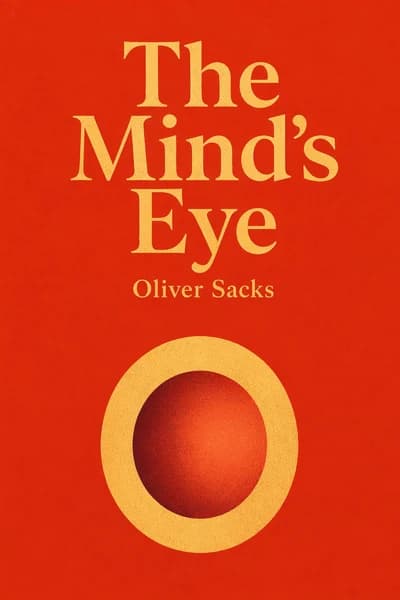
What happens when the world you've always known suddenly changes? Imagine waking up one morning to find that you can no longer read the newspaper, recognize your spouse's face, or perceive depth in three dimensions. For most of us, such scenarios represent our deepest fears. Yet in "The Mind's Eye," renowned neurologist Oliver Sacks reveals how individuals facing profound visual disturbances don't merely cope-they often discover entirely new ways of experiencing reality. This 2010 bestseller spent 19 weeks on the New York Times list and has been praised by luminaries from Temple Grandin to Jon Kabat-Zinn for its profound insights into neuroplasticity. Through intimate case studies and his own experience with ocular cancer, Sacks demonstrates how visual challenges can reveal the brain's remarkable capacity for adaptation, transformation, and even transcendence.
第2章
The Pianist Who Could No Longer Read Music
In January 1999, celebrated pianist Lilian Kallir wrote to Sacks describing a peculiar problem-she could no longer read musical scores despite seeing individual notes perfectly. During a 1991 Mozart concert, the sheet music had suddenly appeared unintelligible. Initially dismissing it, her sight-reading ability gradually deteriorated until she relied entirely on memory for performances. Three years later, she developed similar difficulties reading words, though her writing remained unaffected.
Neurological testing revealed Lilian had alexia-she could only read letter by letter-and struggled with visual recognition, often misidentifying common objects. Her PET scan showed diminished activity in her visual cortex, suggesting a degenerative condition called posterior cortical atrophy (PCA), which primarily affects complex visual processing while preserving memory, intelligence, and personality until late stages.
Despite her condition worsening over time, Lilian maintained remarkable resilience. In her home environment, she functioned with surprising competence, navigating her cluttered apartment confidently and maintaining an elaborate system of categorization by color, position, and context rather than visual recognition. Everything in her kitchen had its memorized place. She counted eggs individually rather than perceiving them as a group, identified spices by smell, and operated appliances by feel.
When we ventured outside together, Lilian demonstrated remarkable adaptive strategies-recognizing traffic signals by position and color rather than text, identifying her favorite diner by its distinctive black and white tiles, and navigating the supermarket with an impressive mental map. "Color is of the essence," she emphasized, using it as her primary visual cue.
Most striking was how Lilian's musical abilities remained preserved despite her visual decline. At the piano, though initially hesitant, she played Chopin mazurkas beautifully with her eyes closed, relying on muscle memory rather than visual cues. She had even arranged a Haydn quartet for piano entirely by ear after hearing it on the radio, explaining that her musical memory and imagery had become "stronger, more tenacious, but also more flexible" since her visual decline.
By 2002, though her condition had advanced significantly-she appeared much more "blind," getting lost even within her own apartment-her piano playing remained a transcendent reminder of her identity as an artist. During one visit, she initially struggled at the piano, hitting wrong notes and asking "Where am I?", but soon found her bearings and played the Haydn piece beautifully. As the music resolved in its final chords, she simply said, "All is forgiven."
第3章
Finding Voice Beyond Words
Patricia H. was a brilliant, energetic woman who suffered a massive cerebral hemorrhage in 1991, leaving her with right-side paralysis and severe aphasia. Initially given little chance of recovery, she was transferred to Beth Abraham Hospital where Sacks first met her in October 1991. She was angry, frustrated, and struggling to communicate, able only to use passionate gestures and occasional exclamations like "Hell!" or "Go away!"
The inability to communicate devastated Pat far more than her physical paralysis. A year later, however, she had developed remarkable compensatory skills-understanding others through gestures and expressions rather than words, and expressing herself through eloquent mime. Like many aphasics, Pat developed heightened abilities to read others' intentions and detect deception through nonverbal cues.
A breakthrough came when her speech pathologist Jeannette Wilkens discovered Pat could recognize individual words though she couldn't read sentences. Jeannette created a lexicon for her-a "bible" of categorized words that Pat carried everywhere, boldly approaching people and pointing to subjects she wanted to discuss. Combined with her gestures and mime, this allowed remarkably full expression despite her paralysis.
By 1996, five years post-stroke, Pat's receptive aphasia had lessened slightly. She could understand some speech and had fixed phrases like "You're welcome!" but couldn't name objects or form sentences. She resumed painting with her left hand and excelled at dominoes, her nonverbal representational systems remaining intact.
Though Pat had largely lost her powers of "propositionizing" or "describing" (what Wittgenstein called "saying"), her powers of "depiction" or "showing" were remarkably heightened. Her true virtuosity lay in her mimetic powers-her genius-level skill with gesture and expression. This preservation of mimesis (the deliberate representation through action) allowed her remarkably rich communication despite language loss.
By 2002, Pat had developed limited ability to speak a few words through music therapy with Connie Tomaino, singing familiar songs that would temporarily "release" her voice. Despite occasional moments of raw horror at her condition, Pat remained grateful to be alive, active and engaged with the world. As her daughter Lari observed, "It's as if the negativity has been wiped away... She is the opposite of a victim. She actually feels that she has been blessed."
第4章
Writing Without Reading: The Paradox of Alexia
In January 2002, Howard Engel, the Canadian author of the Benny Cooperman detective novels, wrote to Sacks describing a strange experience. One morning, he discovered he could no longer read his newspaper-the familiar letters appeared like "Cyrillic one moment and Korean the next." With remarkable calm, he deduced he'd suffered a stroke.
At the hospital, tests confirmed a stroke affecting visual parts of his left brain. Howard had developed alexia sine agraphia-he could still write perfectly well, even though he couldn't read what he'd written. This peculiar dissociation reveals that reading depends on multiple processes that can break down independently.
Nineteenth-century neurologists like Joseph-Jules Dejerine had documented similar cases, including that of Oscar C., a retired businessman who suddenly lost his ability to read in 1887 while retaining other visual and cognitive abilities. Dejerine's autopsy of Oscar C. revealed a lesion in the left occipital lobe, suggesting a specialized "visual center for letters" in the brain.
Modern brain imaging technologies have confirmed this discovery. Stanislas Dehaene and colleagues have identified what they call the "visual word form area" or "the brain's letterbox"-a crucial node in a complex cerebral network that activates in a fraction of a second when viewing written words, connecting to auditory, speech, intellectual, memory and emotional centers.
For Howard Engel, a prolific writer and voracious reader, alexia presented an existential crisis. Being able to write without reading seemed useless-"like being told that the right leg had to be amputated but that I could keep the shoe and sock." How could he continue his career writing complex detective novels without reading ability?
Yet Howard persisted with remarkable determination: "Even though reading was slow and difficult-frustrating as hell at times-I was still a reader. The blast to my brain could not make me otherwise." He laboriously deciphered words letter by letter, sometimes recognizing letter pairs or "chunks" first. Though reduced to a child's reading level mechanically, his lifetime of reading experience allowed him to leverage vocabulary, grammar and literary knowledge to infer words from minimal cues.
Unable to visualize words mentally, Howard developed alternative reading strategies. Most notably, he began tracing letters with his finger in the air and, remarkably, with his tongue against his teeth or palate-effectively "reading with his tongue." This sensory-motor alchemy, replacing visual reading with a form of writing, allowed him to read much faster, though still far slower than before his stroke.
Three months after his stroke, Howard returned home and gradually reacquired his computer skills with his son's help. Though initially doubting his ability to write fiction again, he discovered his creative mind had been unconsciously plotting during his hospital stay. Following his mother's advice to "write about what you know," he decided to write about illness, reintroducing his detective character Benny Cooperman as someone who, like himself, wakes in a hospital with alexia and amnesia.
Working intensively, Howard produced a first draft within weeks. To revise it despite his reading limitations, he employed various formatting tricks and eventually had his editor read the entire manuscript aloud, allowing him to reorganize it mentally. This painstaking process resulted in his novel "Memory Book" (2005), followed by another Cooperman novel and his memoir "The Man Who Forgot How to Read" (2007).
第5章
When Faces Become Unrecognizable
Prosopagnosia or "face blindness" is a neurological condition that impairs the ability to recognize faces. Sacks reveals his lifelong struggle with this condition, describing how he frequently fails to recognize friends, colleagues, and even himself in mirrors. His difficulties extend to place recognition as well, causing him to get lost in familiar neighborhoods and buildings. These challenges have often been misinterpreted as rudeness, absentmindedness, or social awkwardness, when they actually stem from a specific perceptual deficit.
People with prosopagnosia develop resourceful strategies to circumvent their deficits, recognizing people by distinctive features like unusual noses, beards, spectacles, or clothing styles. Many rely on voice, posture, or gait for identification, while context and expectation play crucial roles-expecting to see students at school or colleagues at the office. Sacks describes his own methods, noting he can recognize particular features about faces even if he cannot recognize the face itself, and finds caricatures easier to recognize than photographs. He avoids social gatherings that might lead to embarrassing situations and can more easily identify his neighbors' dogs than the neighbors themselves.
The neurological basis of prosopagnosia involves the fusiform face area, which activates not only for faces but also when experts identify objects in their specialty. Face recognition involves a complex network from occipital to prefrontal areas, with recognition (knowledge-based) and familiarity (feeling-based) having separate neural bases that can be dissociated.
While acquired prosopagnosia from brain injuries is rare, congenital prosopagnosia affects at least 2% of the population but remains largely unrecognized by neurologists. Recent research by Nakayama and Duchaine has identified thousands of cases, revealing subtle brain changes and strong genetic components. The spectrum of face recognition ability extends from severely impaired to "super-recognizers" who remember virtually every face they've seen, with most people falling somewhere in between.
Unlike dyslexia, which affects a similar percentage of the population and receives educational support, prosopagnosia lacks official recognition and public understanding. People with face-blindness must develop their own strategies and increasingly turn to books, websites, and support groups to share experiences. Even researchers like Ken Nakayama, who studies prosopagnosia, posts notices asking people to identify themselves when they meet due to his own mild face-blindness.
第6章
Discovering Depth: Sue's Stereoscopic Awakening
Stereoscopic vision-our ability to perceive depth through binocular disparity-was first scientifically demonstrated by Charles Wheatstone in the 1830s with his stereoscope invention. While many depth cues exist (perspective, occlusion, shading), only binocular stereoscopy allows us to truly perceive rather than merely judge depth.
Losing stereoscopic vision profoundly alters one's experience. Pediatric ophthalmologist Paul Romano documented his struggle after an ocular hemorrhage left him with monocular vision: "I see items but often don't recognize them... I have lost my physical localization memory." Simple tasks like cutting meat became difficult, and he lost his sense of spatial orientation.
The groundbreaking work of Nobel Prize winners David Hubel and Torsten Wiesel revealed how early visual experience is critical for developing binocular cells in the visual cortex necessary for stereoscopic vision. Without proper development of these cells-whether from congenital conditions or from strabismus (misalignment of the eyes)-stereoscopy fails to develop. Approximately 5-10% of people have little or no stereo vision, often without realizing it.
In December 2004, Sue Barry wrote to Sacks about her extraordinary experience. Born cross-eyed in 1954, Sue had undergone multiple eye surgeries as a child but never developed binocular vision. Though she'd functioned well with monocular vision throughout her life, she only discovered her stereo-blindness during a college neurophysiology course.
When vision problems developed in her late forties, she consulted Dr. Theresa Ruggiero, who discovered Sue's eyes were misaligned vertically. Using prism glasses and vision therapy, Sue achieved "flat fusion" of images from both eyes. Days later, she began experiencing stereopsis for the first time-light fixtures seemed to "pop out," steering wheels projected from dashboards, and leaves displayed space between them.
This transformation was both disorienting and delightful, revealing an unbridgeable gulf between her intellectual understanding of stereopsis and the actual experience. The conscious effort of moving her eyes into position for binocular fusion proved critical for Sue's breakthrough. Maintaining her stereopsis required rigorous daily fusion exercises of at least twenty minutes. Sue likened learning stereo vision to developing "a new choreography" for eye movements.
During a visit to Woods Hole, Massachusetts, Sacks and colleague Bob Wasserman joined Sue for a nighttime swim among bioluminescent dinoflagellates. As they swam through clouds of these tiny organisms lighting up like "miniature fireworks," Sue experienced them in true stereo depth for the first time. Despite the absence of contours, boundaries, or perspective cues-"like being immersed in a giant random-dot stereogram"-she could perceive the noctiluca at different depths and distances.
Sue's experience suggests remarkable adult brain plasticity. David Hubel, who followed her case with interest, speculated that her rapid recovery of stereopsis likely meant the neural apparatus had remained intact despite decades of disuse, requiring only proper eye alignment to reactivate. Seven years after her breakthrough, she published "Fixing My Gaze," detailing her journey. For Sue, stereopsis remains revelatory-transforming experiences like snowfall from "a flat sheet in one plane" into "a beautiful three-dimensional dance" that places her within the experience rather than looking in from outside.
第7章
Through the Patient's Eyes: A Doctor Becomes Ill
On December 17, 2005, Sacks' life changed dramatically when he noticed visual disturbances in his right eye during a movie. What began as fluttering and instability escalated to a white-hot spot with spectral colors and a growing blind spot. The diagnosis was confirmed days later by Dr. David Abramson, ironically a former student of his, who identified it as a melanoma near the fovea of his right eye.
Having cancer means an instant change in status. The diagnosis is a threshold beyond which lies a lifetime of tests, treatments, and vigilance-and always a sense of reservation about the future. "I've made a bargain with the tumor," Sacks wrote in his journal, "you can have the eye if you leave the rest of me alone."
After radiation treatment with a custom radioactive plaque, Sacks experienced strange visual phenomena. His scotoma (blind spot) was like a window through which he saw strange buildings, moving figures, little scenes playing themselves before him. Sometimes he saw jumbled letters, hieroglyphs or runes. Most startlingly, when he closed his good eye, he continued to see whatever he was looking at with remarkable clarity-not mere afterimages but detailed scenes persisting for fifteen seconds, a genuine persistence of vision.
By June 2007, after his third lasering procedure to eliminate the remaining tumor, Sacks lost all central vision in his right eye. Looking in the mirror, he couldn't see his own head, only his shoulders and beard bottom. Outside the next day, he saw only the lower halves of people walking-streets full of moving legs with no upper bodies.
The most profound change came with the loss of stereoscopic vision. Space was once a hospitable, deep realm he could wander through at will. Now it was gone. Everything appeared on a single plane-Christmas lights on trees no longer formed globes of twinkling depth, and foliage in the botanical garden was just a flat confusion. His mirror reflection appeared on the mirror's surface rather than behind it.
Without stereoscopy, Sacks faced constant practical difficulties. At cocktail parties, he grasped at air missing canapes by inches or poured wine into laps instead of glasses. Steps and curbs became treacherous hazards-he saw them only as lines on the ground with no depth information. He experienced bizarre visual illusions constantly-flat objects like newspapers appeared to stick up in the air, he mistook doormats for tables, and saw strange chimeras like gray webs between his fingers that were actually carpets three feet below.
After two years of stable vision with peripheral sight in his right eye providing a small crescent of stereopsis, everything changed when bleeding into the vitreous humor left his right eye completely blind, sensing only diffuse illumination. Walking with a friend days later, he discovered a terrifying new reality-people and objects seemed to materialize suddenly on his right side without warning. He had lost approximately forty degrees of his visual field-everything to the right of his nose had vanished.
Most disturbing was not just failing to see people when they stood to his right, but failing to even imagine they could be there-because "there" no longer existed in his mind. The experience paralleled the "unilateral neglect" he'd observed in stroke patients, though his was caused by an ocular problem rather than a cerebral one.
Ten weeks post-hemorrhage, Sacks achieved surprisingly little accommodation. The outside world remained hazardous-people absorbed in cell phones, tiny dogs on invisible leashes, children on scooters-all designed to "drum up business for orthopedists." He relied on friends as guides and protectors and lost things placed to his right on his own desk. Phrases like "disappear into thin air" and "come out of the blue" were no longer metaphors but literal descriptions of his experience of nothingness.
第8章
The Many Ways of Seeing Without Sight
To what extent do we create our own experiences, and how much are they predetermined by our brains and senses? Blindness offers unexpected insights into these questions, presenting the challenge of finding a new way of living when the old way has been destroyed.
John Hull's extraordinary book "Touching the Rock" documents his transition to complete blindness at age forty-eight, describing how he experienced a gradual extinction of visual imagery and memory-a state he called "deep blindness." This meant not just losing visual images but the very idea of seeing, where concepts like "here" and "there" lost meaning. Though initially distressed by his inability to conjure faces of loved ones or familiar places, Hull came to accept this transformation with remarkable equanimity, viewing it as necessary for developing his other senses.
Cognitive neuroscientists have discovered the brain is far less hardwired than once thought. In those blind from birth or early childhood, parts of the visual cortex can be repurposed for sound and touch processing. This reallocation enables extraordinary sensory capabilities, as demonstrated by mathematician Bernard Morin, blind from age six, who showed how a sphere could be turned inside out, and conchologist Geerat Vermeij, blind since age three, who identifies new mollusk species through tiny tactile variations.
After publishing an essay on Hull's book in 1991, Sacks received numerous letters from blind people who couldn't identify with Hull's experience. Many reported maintaining vivid visual images and memories decades after losing sight. This contradiction became clearer when Australian psychologist Zoltan Torey contacted him about his experience. Blinded in an acid accident at twenty-one, Torey had deliberately developed his "inner eye" rather than following advice to switch to an auditory mode of adjustment. He cultivated such remarkable powers of generating, manipulating and holding visual images that he constructed a virtual visual world as intense as the perceptual one he'd lost.
Unlike the inward-focused Hull and Torey, Sabriye Tenberken is a doer who transformed the lives of blind people in Tibet by creating Tibetan Braille and establishing schools for the blind. Visually impaired from birth and completely blind from age twelve, she maintained her childhood love of painting and colors, using them to identify objects even after losing sight. Her images might differ wildly from reality-once "seeing" a crystalline salt beach and turquoise water when actually facing gray rocks-but these disparities don't trouble her.
Jacques Lusseyran, blinded in an accident at nearly eight years old, initially experienced visual loss similar to Hull's, forgetting faces and finding that people "appeared without heads or fingers." But then, while relinquishing the actual visual world, he constructed an imaginary one more like Torey's. His inner vision began as a formless, flooding radiance-possibly a release phenomenon of the deprived visual cortex-before developing into powerful visual imagery. His mind constructed a limitless "screen" where thoughts appeared not in black and white but "in all the colors of the rainbow."
What happens to the visual cortex-nearly half the cerebral cortex-when someone becomes blind? While the pathways from retina to brain may atrophy somewhat, the visual cortex itself remains largely intact and highly active. This "good neural real estate" becomes available for new functions: in someone like Torey, it may enhance visual imagery; in someone like Hull, it might amplify other senses.
Blind people develop remarkable adaptations like "facial vision"-sensing objects and spaces through sound or tactile cues. Ben Underwood developed dolphin-like echolocation by making mouth clicks and reading the echoes. Paul Bach-y-Rita pioneered sensory substitution technology, particularly using the tongue's dense sensory receptors to form "touch pictures" from video cameras.
Can those born blind ever truly "see"? Despite the visual cortex being 25% smaller in congenitally blind people, sensory substitution can still activate it. The brain shows extraordinarily rich interconnectedness between sensory areas, creating "intersensory" or "metamodal" states for which we have no common language. Language becomes increasingly important for those who lose sight, as Arlene Gordon found when traveling: "I saw Venice when I was there," constructing visual images from descriptions, reading, and memories.
This reveals language's paradoxical power-that most human invention can enable what should be impossible, allowing us to see through another's eyes. Some, like Hull, find their creative strength after blindness, as did Milton who produced his greatest poetry after going blind. Borges similarly wrote about blindness's paradoxical effects, imagining Homer gaining a deeper sense of time and epic power through his sightlessness.
第9章
Reimagining Our Visual World
What emerges from Sacks' exploration is a profound truth about human perception: vision is not merely a passive recording of external reality but an active, creative process deeply intertwined with our entire cognitive apparatus. The stories in "The Mind's Eye" reveal that when conventional visual pathways are disrupted-whether by alexia, prosopagnosia, loss of stereopsis, or blindness-the brain doesn't simply surrender to darkness or chaos. Instead, it reorganizes, repurposes, and reimagines.
The remarkable adaptability we witness in these cases suggests that perception is fundamentally constructive rather than merely receptive. Howard Engel reading with his tongue, Pat communicating through mime and gesture, Lilian navigating by color and position, Sue gaining stereopsis in middle age-all demonstrate the brain's astonishing plasticity and the human spirit's resilience.
Perhaps most striking is how these adaptations often transcend mere compensation. Hull described his blindness as "a dark, paradoxical gift" bringing him a new intimacy with nature and intensity of being beyond what he'd known when sighted. Torey's visualization abilities exceeded those of many sighted individuals. Sue Barry experienced a depth and richness of visual perception that many born with normal stereopsis take for granted.
These stories challenge our conventional understanding of disability as simply the absence of ability. Instead, they reveal how altered perceptual states can open doors to entirely different ways of experiencing and engaging with the world-ways that might even enrich our collective understanding of human consciousness.
In an age increasingly dominated by visual stimulation, from smartphone screens to virtual reality, Sacks reminds us that vision is far more complex, mysterious, and marvelous than we typically acknowledge. Our visual experience is not a fixed, universal constant but a dynamic, individualized construction-one that can be lost, transformed, or even reinvented through the remarkable plasticity of the human mind.