第1章
When Sleep Becomes Stone: The Extraordinary Awakenings
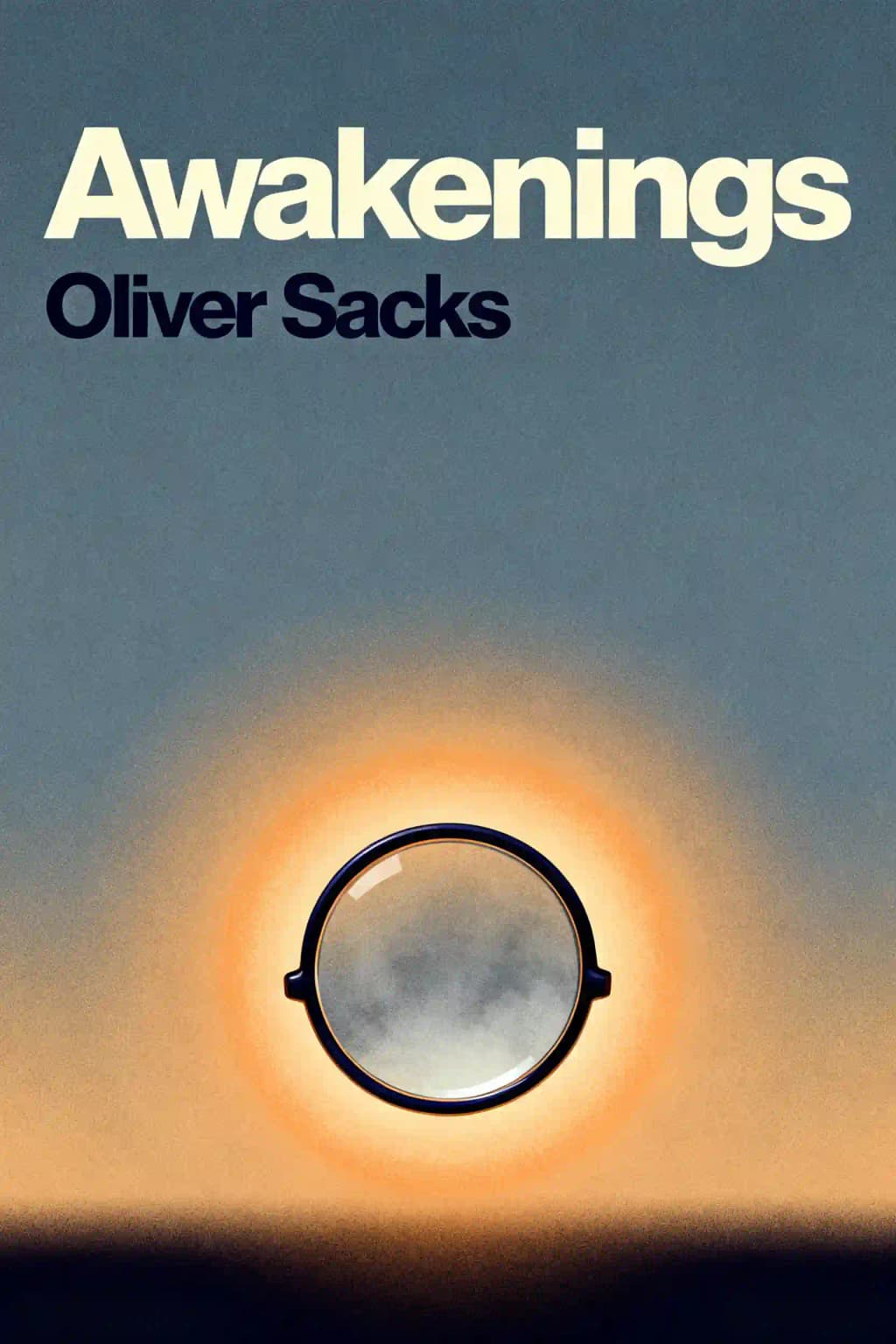
Oliver Sacks' "Awakenings" chronicles one of medicine's most remarkable chapters - the brief resurrection of patients trapped in neurological limbo for decades. This 1973 masterpiece, later adapted into an Academy Award-nominated film starring Robin Williams and Robert De Niro, documents the astonishing "awakening" of patients who had been essentially frozen in time since the 1920s sleeping-sickness epidemic. The book has profoundly influenced medical thinking about consciousness and neurological disorders, with neurologist V.S. Ramachandran calling it "a brilliant and humane book that transformed our understanding of the human brain." Even decades after publication, "Awakenings" remains a staple in medical education, with the New York Times describing it as "a masterpiece of medical narrative: observant, eloquent, compassionate."
第2章
The Sleeping-Sickness Epidemic and Its Aftermath
Between 1916 and 1927, a mysterious neurological disease swept across the globe, affecting nearly five million people. This "encephalitis lethargica" or sleeping-sickness, described by neurologist Constantin von Economo as a "Hydra with a thousand heads," presented with wildly varying symptoms. Some victims fell into unbreakable comas lasting weeks or months, while others suffered relentless insomnia that drove them to the brink of madness. The disease struck indiscriminately - affecting young and old, rich and poor, across continents. Many died in the acute phase, their bodies overwhelmed by brain inflammation, but those who survived often developed a peculiar aftermath - they became human statues, trapped in a twilight state between life and death.
The post-encephalitic syndrome typically emerged years after the initial infection, sometimes appearing suddenly after decades of apparent recovery. Unlike typical Parkinson's disease with its characteristic tremors and shuffling gait, these patients developed profound "freezing" - becoming motionless for hours, days, or even years. One patient, Frances D., perfectly described her condition: "I cannot start and I cannot stop. Either I am held still, or I am forced to accelerate." The disease could halt not just movement but perceptions, thoughts, appetites, and feelings. Some patients would freeze mid-sentence, their words trailing into silence, while others would become stuck in repetitive motions, like a record player caught in a groove.
What made these cases particularly haunting was that beneath their frozen exteriors, these patients remained intellectually intact - prisoners in their own bodies. Their higher faculties - intelligence, imagination, judgment, and humor - were typically spared, allowing them to become what Sacks called "unique witnesses to a unique catastrophe." Many developed elaborate coping mechanisms to navigate their frozen world. Frances D. carried tiny paper balls to drop when frozen, using their whiteness to "incite" her to take a step. Another patient learned to "bounce" off walls to maintain momentum, while others used music or rhythmic patterns to break free from their frozen states.
By the 1960s, these patients had been institutionalized for decades, relegated to back wards of chronic hospitals, their condition considered hopeless. At Mount Carmel Hospital in New York, where Sacks worked, approximately eighty such patients lived in a state of suspended animation, what von Economo had called "extinct volcanoes." Some hadn't spoken or moved voluntarily in over forty years, requiring constant care for even basic needs. They existed in what one patient described as "a bottomless darkness and unreality," conscious yet not fully awake, lacking all energy, initiative, affect, or desire. The hospital halls were filled with these living statues - some frozen mid-gesture, others locked in peculiar postures - each preserving a moment from decades past like tragic time capsules of human consciousness.
第3章
The Coming of L-DOPA: A Medical Breakthrough
The scientific journey toward treating Parkinsonism began with a crucial anatomical discovery - the identification of the substantia nigra as the primary damaged area in patients. This small but vital region, named for its dark appearance ("black substance" in Latin), proved to be ground zero for the devastating effects of the disease. By 1960, after decades of meticulous research, scientists confirmed that these patients were severely deficient in dopamine, a neurotransmitter essential not only for normal movement but for motivation, reward, and emotional processing.
The challenge lay in delivering dopamine to the brain - the molecule itself couldn't cross the blood-brain barrier, a natural defense system that protects the brain from potentially harmful substances. Dr. George Cotzias made the breakthrough by using massive oral doses of L-DOPA (levodopa), a chemical precursor that could slip through this barrier and convert to dopamine within the brain. His innovative approach, though controversial at the time, would revolutionize Parkinson's treatment.
When news of L-DOPA's success reached Mount Carmel Hospital, it generated unprecedented excitement among both staff and patients. Leonard L., confined to communicating through a letterboard, captured the collective hope with his poetic declaration: "Dopamine is Resurrectamine. Cotzias is the Chemical Messiah." However, practical obstacles remained - L-DOPA's prohibitive cost of $5,000 per pound meant many facilities couldn't afford to treat their patients. It wasn't until March 1969 that Sacks finally secured enough medication to begin treatment.
The results exceeded even the most optimistic expectations. Patients who had been essentially "frozen" in time for decades suddenly returned to life with astounding transformations. Magda B., who had barely whispered for over ten years, began speaking in clear, resonant tones within a week. Miron V.'s case was even more dramatic - after fourteen years of near-total immobility and silence, he regained almost normal movement and speech within 24 hours. Perhaps most remarkably, Hester Y., immobilized since age thirty-five, spontaneously leapt to her feet and strode down the ward, repeatedly exclaiming "What do you think of that?" with unbridled joy.
These "awakenings" transcended mere physical improvement - they represented profound existential transformations that revealed the deep relationship between body and self. Patients described the sensation as "deflation" or "detumescence," as if years of accumulated disease were physically draining away. Many reported experiencing not just recovery, but a fundamental "return-to-oneself" - a revelation that showed how Parkinsonism had been parasitically consuming their essential nature. As one patient eloquently expressed, "Before I was galvanized, but now I am vivified" - drawing a crucial distinction between artificial animation and true, vital life force. These experiences raised profound questions about consciousness, identity, and the nature of existence itself - questions that would continue to challenge medical understanding of both disease and recovery.
第4章
The Tribulations: When Miracles Fade
Unfortunately, the beautiful, unclouded return to health proved temporary for almost every patient. Sooner or later, troubles emerged - not mere "side-effects" but radical complications reflecting each patient's entire being-in-the-world. As Sacks poetically described it, these patients simultaneously suffered from surfeit and starvation - "one halfe lackes meat, and the other stomacke." This paradoxical state manifested differently in each patient, yet followed eerily similar patterns of initial elation followed by devastating complications.
Frances D. developed frightening respiratory crises characterized by violent gasps, forced breath-holding, and explosive expirations "like the boom of a gun." These episodes would strike without warning, leaving her terrified and gasping for air. Her breathing patterns became increasingly erratic, alternating between periods of rapid, shallow breaths and prolonged, dangerous breath-holding that sometimes required medical intervention. The respiratory disturbances seemed to mirror deeper neurological disruptions, as if her very capacity to sustain life's most basic rhythm had been fundamentally altered.
Rose R.'s condition escalated to severe insomnia, racing thoughts, and extreme hyperactivity with dilated pupils - signs of an overactive nervous system in overdrive. She experienced bizarre "bewitchment" episodes where her gaze would be involuntarily captivated by objects, accompanied by thought blockages or intrusive thoughts. These episodes could last for hours, during which she appeared trapped in a state between consciousness and trance. Common objects would take on an almost magical quality, becoming impossible to ignore or look away from, while her mind either went completely blank or filled with unwanted, often disturbing thoughts.
Margaret A.'s case proved particularly dramatic, developing an array of symptoms including tic-like movements, palilalia (repetitive speech), and severe insomnia punctuated by vivid nightmares. Her mood swings ranged from hypomania to agitated depression, often cycling between these extremes multiple times per day. Her emotional excitement became increasingly manic, manifesting in uncontrollable urges to dance and sing, pressured speech that would pour out in an unstoppable torrent, and animal-like feeding behaviors that deeply distressed both her and her caregivers. After reaching an extreme peak of excitement where she felt "jam-packed with energy like a rocket," she required emergency tranquilization and a significant reduction in her L-DOPA dosage.
The pattern became predictable yet remained impossible to prevent: patients would become increasingly over-stimulated and exorbitant while underlying deficits grew more profound. Like someone living on borrowed money, they preserved appearances while depleting vital reserves, experiencing a transitory "boom" before the inevitable "crash." This crash wasn't a gentle return to normalcy but a devastating descent below baseline into exhaustion and depression - often leaving patients worse than their pre-treatment state.
In post-encephalitic patients, these crashes were particularly severe and dramatic, occurring within seconds and sometimes dozens of times daily. These weren't mere exhaustions but instantaneous transformations between violently explosive "expanded" states and intensely contracted "imploded" states - what Leonard L. eloquently described as shifts from "supernova" to "black hole." These rapid oscillations between extreme states left patients and caregivers alike feeling helpless and disoriented, challenging fundamental assumptions about consciousness and personality continuity.
第5章
The Paradoxes of Awakening
The L-DOPA experience revealed profound paradoxes about the nature of consciousness and disease. Patients showed remarkable abilities during brief windows of normality that contradicted their apparent disabilities. Those unable to walk could dance with grace; those who couldn't speak could sing beautifully; those with cramped handwriting suddenly wrote smoothly when they "got into" the activity.
Most strikingly, many Parkinsonians who couldn't walk alone walked perfectly with another person present - not through physical contact but through what one patient described as "partaking" of the other's power of walking. Music demonstrated particularly remarkable therapeutic power, liberating patients while it lasted. As Edith T., a former music teacher explained, she had become "graceless" with Parkinsonism, her movements "wooden, mechanical," having lost her "naturalness" and "musicalness" of movement - she had been "unmusicked."
These phenomena suggested that the fundamental problem in all Parkinsonian disorders was passivity - difficulties with self-stimulation despite intact ability to respond to external stimulation. Patients might be mute unless spoken to, motionless unless motioned to, yet sing and dance perfectly when music played.
The experiences also revealed profound distortions in patients' perception of space and time. Seymour L. demonstrated this vividly when he experienced a corridor as suddenly dipping downward, causing him to accelerate into festination (hurried small steps). When accompanied back along the same corridor, he walked normally but remained convinced of his earlier perception: "What you call 'festination' is no more than a normal reaction to an abnormal perception. We Parkinsonians suffer from illusions!"
Perhaps most astonishing were the time perception anomalies. Miron V., who appeared to sit motionless for fifteen hours at a stretch, was actually performing normal movements at an inconceivably slow rate. What seemed like static positions hours apart were actually continuous actions - such as wiping his nose - performed ten thousand times slower than normal, though to him they felt like taking just seconds. Time-lapse photography confirmed this extraordinary phenomenon.
第6章
Beyond Chemistry: The Human Element in Healing
As the L-DOPA trials continued, it became increasingly clear that medication alone couldn't solve these complex neurological problems. The most important factor in patients' well-being proved to be their relationships with the world, particularly with other human beings. The chemical intervention, while powerful, was merely one component in a complex web of healing factors that included social connections, purpose, and emotional well-being.
"A faithful friend is the physic of life," as Sir Thomas Browne noted, and this ancient wisdom found powerful validation in the ward's experiences. The essential thing was feeling at home in the world, knowing one had a real place - a truth that became painfully evident when institutional changes disrupted the delicate social ecosystem. When Mount Carmel's character changed in autumn 1969, with administration prioritizing "efficiency" over compassion, the effects rippled through the ward like shock waves. Human relations became strained as staff turnover increased and time for patient interaction decreased. Patients who had previously found accommodation became profoundly unsettled at all levels - physically, emotionally, and socially.
Those who achieved the most stable improvements were patients who were restored to meaningful work or family connections. The case of Miron V. proved particularly illustrative. Initially presenting with severe "bipolar" disease, he did remarkably well between 1970-1972 through the healing powers of work and love. When a cobbler's bench was set up for him in the Sheltered Workshop, his old skills returned rapidly, along with joy and self-esteem: "I feel like a man again... I've got some use and a place in the world." His case demonstrated how purposeful activity, combined with social recognition, could stabilize even severe neurological conditions.
The devastating impact of broken connections manifested just as dramatically. Rolando P.'s case highlighted the profound interdependence between emotional bonds and physical health. When his mother, who had visited faithfully every Sunday despite progressive arthritis, became too disabled to continue her visits, he experienced two months of grief, depression, and rage during which he lost twenty pounds. The situation worsened when federal budget cuts forced the dismissal of a beloved caregiver who had temporarily replaced his mother's care. Without these crucial emotional anchors, he descended into corpse-like apathy beneath his Parkinsonian mask, stopped eating, lost all hope, and died within weeks.
Similar patterns emerged across the ward - patients with strong social connections and meaningful activities showed more stable responses to medication, while isolation and purposelessness consistently undermined therapeutic progress. Even the most precisely calibrated drug regimens proved ineffective without the sustaining power of human connection. This confirmed the metaphysical truth stated by poets and physicians across ages: that love is the alpha and omega of being, and healing is, first and last, the business of love - a truth as relevant to modern neurology as it was to ancient healing practices.
第7章
The Lessons of Awakenings
The extraordinary experiences documented in "Awakenings" fundamentally challenged established medical paradigms and revealed profound insights about consciousness, human resilience, and the nature of healing. These cases demonstrated that the potential for health can persist even after decades of profound illness - a discovery that transformed our understanding of chronic neurological conditions. Patients who had been essentially "frozen" for decades showed remarkable recoveries, proving that the human spirit's capacity for renewal could survive despite seemingly permanent neural damage.
Sacks identified two distinct yet interconnected challenges in medicine: identification and understanding. The identification process resembles legal investigation - a methodical gathering of evidence through symptoms, diagnostic tests, and clinical signs to reach a diagnosis and determine treatment. While this process could theoretically be automated through sophisticated algorithms and artificial intelligence, Sacks emphasized that this technical approach addresses only half the medical equation.
The understanding component requires something machines cannot replicate: genuine human connection and empathy. Patients are not mere collections of symptoms or "cases" to be solved - they are complex individuals whose illness experiences encompass psychological, social, and spiritual dimensions. This realization led Sacks to advocate for complementarity in medicine: maintaining technical excellence while preserving human connection. Drawing from philosopher Martin Buber's wisdom, he stressed the urgent need to humanize medical technology before it further mechanizes the healing relationship.
The L-DOPA experiments revealed another crucial insight: the remarkable capacity for self-healing within each patient. Individuals demonstrated abilities to resist and combat their conditions using not only prescribed treatments but also internal resources - willpower, determination, and psychological resilience. These innate healing powers, though poorly understood, often proved more powerful than medical interventions alone. Yet modern medicine, Sacks observed, focuses primarily on studying disease mechanisms while neglecting these fundamental healing capacities.
The seemingly simple questions "How are you?" and "How are things?" emerged as profound philosophical inquiries that transcend mere medical assessment. These questions probe the essence of human experience and well-being - questions that cannot be adequately answered through laboratory values or clinical measurements alone. They require what Buber termed an "I-Thou" relationship: a genuine, empathetic connection between physician and patient that acknowledges the full humanity of both parties.
The Awakenings experience ultimately demonstrated that effective medicine requires a delicate balance between scientific precision and human understanding. It showed that healing involves not just treating symptoms but engaging with the whole person - their hopes, fears, and unique life narrative. This holistic approach, while more challenging than purely technical medicine, offers the best hope for genuine healing and transformation.
第8章
The Legacy of Awakenings
In the years following the initial L-DOPA trials, Sacks continued working with his surviving but dwindling population of post-encephalitic patients. Of the twenty patients whose stories he originally related, most had died by the 1980s, with the last survivors passing away in the late 1980s and early 1990s.
The book's impact extended far beyond medicine. Harold Pinter's play "A Kind of Alaska" was inspired by "Awakenings," condensing the experience into a single afternoon depicting Deborah's awakening after 29 years in a frozen state. When performed at the National Theatre with Judy Dench as Deborah, it created an uncanny sense of witnessing an actual awakening, despite Dench never having met a post-encephalitic patient.
In 1990, a feature film adaptation directed by Penny Marshall and starring Robert De Niro and Robin Williams brought the story to an even wider audience. De Niro's preparation for the role was legendary - he spent months studying actual patients, immersing himself so deeply in Leonard's character that he temporarily altered his own neurological patterns, unconsciously holding his foot in the same dystonic position he used when portraying Leonard even when off-set.
Perhaps the most poignant moment during filming came when Lillian T., the only living survivor from "Awakenings," arrived on set to play herself in a scene with De Niro. Her presence created an atmosphere of awe and a sudden, almost frightening sense of reality. While the actors could slip out of their roles, Lillian had to be one for life. As De Niro took up Leonard's frozen, dystonic posture, Lillian, herself frozen, watched with an alert and critical eye. She gave Sacks a barely perceptible wink and thumbs-up sign, meaning, "He's okay - he's got it! He really knows what it's like."
The legacy of "Awakenings" continues today in our understanding of neurological disorders and our approach to patient care. It stands as a testament to the resilience of the human spirit, the complexity of the human brain, and the profound importance of seeing patients as whole persons rather than collections of symptoms. As Leonard L. wrote: "I am a living candle. I am consumed that you may learn."
第9章
The Awakened Mind: Consciousness and Identity
At its philosophical core, "Awakenings" explores fundamental questions about consciousness, identity, and what it means to be fully present in the world. The post-encephalitic patients demonstrated that consciousness isn't binary but exists on a spectrum - they were neither fully awake nor completely asleep, but suspended in a liminal state that challenged our understanding of awareness.
Their experiences revealed that our sense of self is intimately tied to our ability to move and interact with the world. When movement was restored through L-DOPA, patients didn't just regain physical abilities - they recovered aspects of identity that had been dormant for decades. As Magda B. described her pre-L-DOPA state: "I ceased to have any moods. I ceased to care about anything. Nothing moved me - not even the death of my parents. I forgot what it felt like to be happy or unhappy."
This reconnection with emotion was often the most profound aspect of awakening. Patients who had been emotionally flat for decades suddenly experienced the full range of human feelings - joy, grief, anger, desire. Sometimes these emotions emerged in overwhelming torrents, as decades of suppressed feelings rushed forth at once. Hester Y.'s diary revealed her struggle: "I would like to express my feelings fully. It is so long since I had any feelings."
The awakenings also revealed something profound about time and memory. Despite losing decades of their lives to illness, many patients showed remarkable continuity of self. Frances D., who had been effectively "absent" for forty-five years, resumed her life with the same essential personality, though now in an aged body. Others, like Rose R., became engrossed in memories from 1926, her last year of normal life, experiencing what Sacks called "forced reminiscence" as if time had stood still.
Perhaps most profound was the revelation that health isn't merely the absence of disease but an active state of being - what Sacks called "the optimum possible in particular circumstances." Even patients who never achieved complete recovery could find a form of accommodation, drawing on deep strengths to establish right relations with themselves and the world. As Leonard L. described during his brief period of genuine health: "It's a very sweet feeling, very sweet and easy and peaceful. I am grateful to each moment for being itself... I feel so contented, like I'm at home at last after a long hard journey."
In this sense, "Awakenings" isn't just about neurological disorders - it's about the universal human journey toward wholeness, connection, and meaning. As T.S. Eliot wrote in lines that Sacks found particularly relevant: "the end of all our exploring will be to arrive where we started and know the place for the first time."