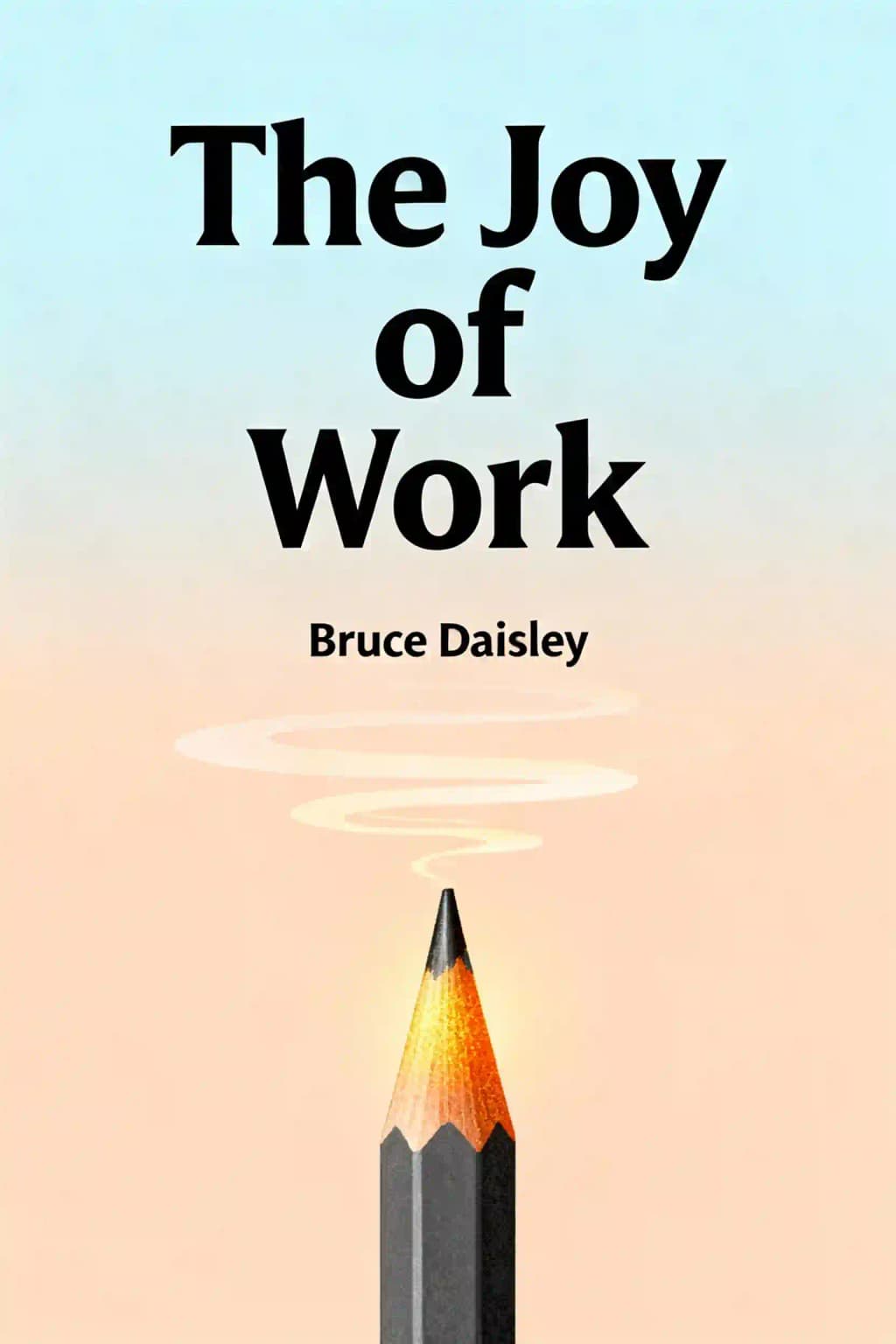
Discover 30 evidence-based strategies to transform your workplace in "The Joy of Work." Twitter VP Bruce Daisley's acclaimed guide offers "Monk Mode" mornings and walking meetings that have sparked a workplace revolution. What if your dream job is actually your current one?
Bruce Daisley, bestselling author of The Joy of Work: 30 Ways to Fix Your Work Culture and Fall in Love with Your Job Again, is a globally recognized expert on workplace culture and organizational behavior. A former Vice President for Twitter in EMEA and leader of YouTube’s UK business at Google, Daisley draws on over a decade of executive experience at tech giants to explore solutions for modern work challenges. His book blends practical insights with research-backed strategies to address burnout, collaboration, and leadership in hybrid environments, reflecting his passion for redefining productivity and employee well-being.
Daisley reinforces his authority through the chart-topping podcast Eat Sleep Work Repeat, which has garnered over 6 million listens, and his role as a Visiting Honorary Professor at Bayes Business School, where he focuses on organizational culture.
His follow-up book, Fortitude, was named 2022’s “best business book of the year” by the Financial Times. Known for his engaging, relatable style, Daisley’s work is widely cited in publications like The Guardian and Harvard Business Review, and he keynotes for organizations like Google and SAP. The Joy of Work became a #1 Sunday Times bestseller, cementing his status as a leading voice in reshaping work culture.
The Joy of Work offers 30 actionable strategies to combat workplace burnout, rebuild team connections, and foster a healthier work culture. Drawing on neuroscience and behavioral studies, it addresses modern challenges like meeting overload, digital fatigue, and psychological safety. Daisley blends Silicon Valley leadership experience with academic research to create a blueprint for sustainable productivity.
Managers, HR leaders, and employees struggling with disengagement will find actionable insights here. It’s particularly valuable for remote/hybrid teams navigating collaboration challenges. Daisley’s evidence-based approach also appeals to skeptics seeking alternatives to generic self-help advice.
Yes – it was a Sunday Times #1 business bestseller and Financial Times Book of the Month. Readers praise its practical fixes for email overload, ineffective meetings, and “always-on” work habits. Critics note some ideas feel familiar, but the curated science-backed frameworks make it a standout.
Three core pillars:
As Twitter/YouTube’s former EU VP, Daisley critiques “hustle culture” hypocrisy in tech. He shares insider fixes Google/Twitter used to reduce meeting times by 40% and boost innovation through “no agenda” brainstorming sessions.
Some readers argue the title overpromises – it focuses more on reducing work frustration than creating outright joy. Others want more case studies from non-tech industries. However, 85% of Goodreads reviewers rate it 4+/5 for actionable insights.
Daisley’s “virtual watercooler” concept helps distributed teams rebuild informal connections. Tactics include camera-off meetings, asynchronous updates, and “virtual commutes” to mentally transition between work/home modes.
Less collaboration = more innovation: Daisley proves excessive meetings drain the cognitive bandwidth needed for deep work. His “Maker Schedule” framework reserves uninterrupted mornings for solo creative tasks.
Unlike theoretical takes on workplace happiness, Daisley offers step-by-step fixes tested at scale (e.g., reducing email stress by 30% through send delays). It’s more tactical than Atomic Habits but more research-driven than Fish!
With AI automating routine tasks, Daisley’s emphasis on human-centric culture – creativity, empathy, and purposeful interaction – aligns with the rising demand for “soft skill” leadership. Updated editions address AI meeting assistants and burnout analytics.
Yes – its “competency mapping” exercise helps identify transferable skills, while “fear-setting” techniques reduce paralysis in job transitions. Daisley also debunks myths about “dream jobs,” focusing instead on crafting sustainable roles.
著者の声を通じて本を感じる
知識を魅力的で例が豊富な洞察に変換
キーアイデアを瞬時にキャプチャして素早く学習
楽しく魅力的な方法で本を楽しむ
Open offices actually decrease face-to-face interaction by 70%.
Walking increased creative thinking by an astonishing 60%.
The office should be a place for collaboration, not distracted individual work.
We should only come to offices for conversations and meetings.
『Joy of Work』の核心的なアイデアを分かりやすいポイントに分解し、革新的なチームがどのように創造、協力、成長するかを理解します。
『Joy of Work』を素早い記憶のヒントに凝縮し、率直さ、チームワーク、創造的な回復力の主要原則を強調します。

鮮やかなストーリーテリングを通じて『Joy of Work』を体験し、イノベーションのレッスンを記憶に残り、応用できる瞬間に変えます。
何でも質問し、声を選び、本当にあなたに響く洞察を一緒に作り出しましょう。

"Instead of endless scrolling, I just hit play on BeFreed. It saves me so much time."
"I never knew where to start with nonfiction—BeFreed’s book lists turned into podcasts gave me a clear path."
"Perfect balance between learning and entertainment. Finished ‘Thinking, Fast and Slow’ on my commute this week."
"Crazy how much I learned while walking the dog. BeFreed = small habits → big gains."
"Reading used to feel like a chore. Now it’s just part of my lifestyle."
"Feels effortless compared to reading. I’ve finished 6 books this month already."
"BeFreed turned my guilty doomscrolling into something that feels productive and inspiring."
"BeFreed turned my commute into learning time. 20-min podcasts are perfect for finishing books I never had time for."
"BeFreed replaced my podcast queue. Imagine Spotify for books — that’s it. 🙌"
"It is great for me to learn something from the book without reading it."
"The themed book list podcasts help me connect ideas across authors—like a guided audio journey."
"Makes me feel smarter every time before going to work"

Joy of Workの要約をPDFまたはEPUBで無料でダウンロード。印刷やオフラインでいつでもお読みいただけます。
The modern workplace has become a curious contradiction. Despite technological advances promising greater efficiency, many of us feel more overwhelmed and disconnected than ever. Bruce Daisley, European Vice-President for Twitter, tackles this paradox head-on in "The Joy of Work," offering evidence-based strategies to transform toxic work cultures into places where people genuinely thrive. What makes his approach particularly refreshing is that it empowers everyone-not just executives-to reclaim workplace happiness through simple, science-backed techniques that challenge our always-on, productivity-obsessed culture. The book has quietly become a phenomenon in corporate circles, with leaders from Google to Goldman Sachs implementing its strategies. Why? Because they work. And they don't require massive organizational overhauls-just small, intentional changes in how we structure our days, interact with colleagues, and manage our attention.