第1章
Transforming Workspaces, Transforming Lives
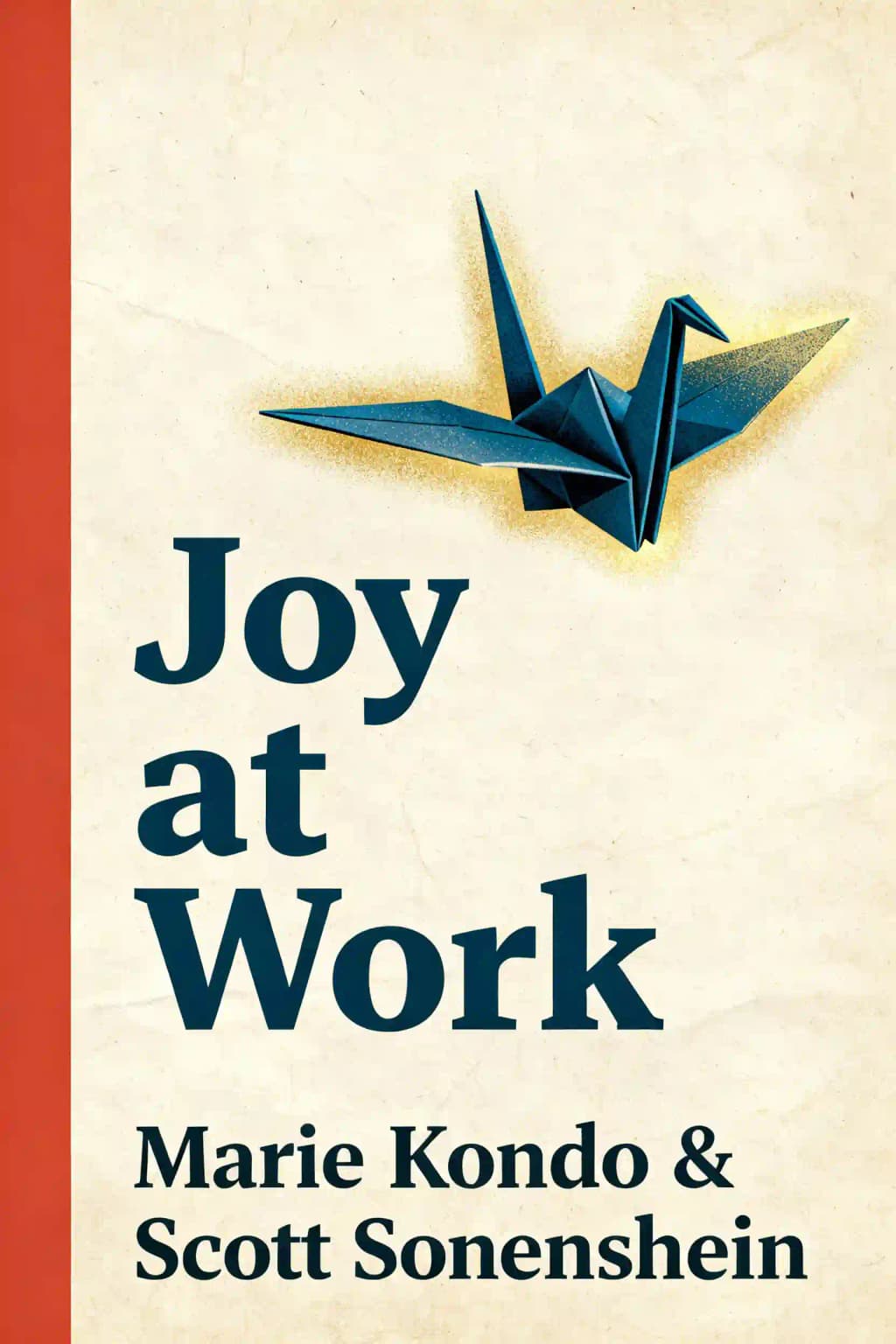
In a world where the average office worker loses an entire workweek each year searching for misplaced items and spends half their day drowning in emails, Marie Kondo and Scott Sonenshein offer a revolutionary approach. "Joy at Work" isn't just another productivity manual-it's a philosophy that has sparked a global movement. Since its publication in April 2020, the book has become a cultural phenomenon, with celebrities like Reese Witherspoon and Drew Barrymore publicly embracing its principles. The KonMari MethodTM, already famous for transforming homes, now extends its magic to professional settings where we spend a third of our lives. What if the key to career fulfillment isn't finding a new job, but transforming your relationship with your current one? What if the path to professional success begins not with acquiring more, but with mindfully choosing what to keep?
第2章
The Hidden Cost of Workplace Clutter
The Monday morning scenario is painfully familiar: you arrive at your desk to find it buried under papers, sticky notes, and random items that accumulated over the previous week. That sigh of defeat you experience isn't just emotional-it's your brain registering the cognitive overload that clutter creates. Research reveals that 90% of working Americans report negative effects from clutter, including decreased productivity, negative mindset, and diminished happiness.
The science behind this is compelling. Clutter raises cortisol levels, creating physical stress in your body. It taxes your brain by forcing it to process irrelevant visual information constantly. Each item in your field of vision silently competes for your attention, impairing your ability to focus on what matters. The financial impact is staggering-businesses lose approximately $89 billion annually in productivity costs in the US alone as workers waste time searching for misplaced items.
Digital clutter compounds these effects. The average office worker spends half their day managing 199 unopened emails, while 96% feel they waste time on unnecessary correspondence. Most computers contain unused programs, and the typical professional manages 130 online accounts per email address. Just the cost of forgotten passwords amounts to $420 per employee annually.
Marie Kondo's personal experience illustrates this transformation. As a struggling new employee at a staffing agency, her sales performance remained poor despite constant work. After tidying her workspace, she didn't see immediate sales improvement but experienced a profound shift-she felt happier at her desk, could find documents quickly, and gradually experienced more joy in her work. This reinforced her belief that tidying workspaces, not just homes, could transform one's professional life.
Unlike homes, workspaces are visible to others, making tidiness more consequential. Research shows people with tidy desks are perceived as more ambitious, intelligent, warm, calm, confident, friendly, industrious, and kind. They gain trust more easily and are more likely to be promoted. Through the Pygmalion effect, these higher expectations boost confidence and improve performance in a virtuous cycle.
第3章
The KonMari Method for Professional Spaces
The KonMari Method for workspaces follows clear principles: tidy only spaces for which you have sole responsibility, separate work items from personal ones, and follow a specific category order-books, papers, komono (miscellaneous items), and sentimental items. For each category, gather all items in one spot, choose what to keep, then store properly.
Begin with books, which often accumulate in workspaces as symbols of knowledge or aspiration. Gather all books in one place to truly see them as separate entities rather than background scenery. When deciding which to keep, consider when you bought them, how often you've read them, and whether they still serve a purpose. Books that spark joy are those that motivate you, make you happy to own, or help you perform better. Those bought on impulse or to impress others have already fulfilled their purpose.
The books you choose to keep reveal your personal values-as demonstrated by Ken, an engineer who discovered his collection of self-development books reflected his deeper desire for more fulfilling work. This realization led him to pursue a new career path that aligned with his true interests.
For papers, Kondo's provocative rule is to "discard everything"-not literally everything, but to approach papers with the resolve to keep only what's absolutely necessary. Sort them into three categories: pending items requiring action, papers you must save for compliance reasons, and papers you want to save as reference or because they spark joy.
To prevent paper clutter from returning, implement three essential storage rules: categorize every paper down to the last sheet, store papers upright in hanging files or filing boxes instead of stacks, and create a pending box for papers needing immediate attention. Beware the "scan trap"-the time-consuming habit of scanning documents before discarding them, which often creates digital clutter that's never reviewed.
For miscellaneous items (komono), break them into manageable subcategories: office supplies, electrical items, job-specific tools, personal-care items, and food. Gather each subcategory in one place and evaluate items individually. Most people unknowingly accumulate multiples-one client had eight staplers and twelve pairs of scissors-creating unnecessary clutter.
Finally, tackle sentimental items-photos, letters, and other emotionally charged objects. Ask if each item sparks joy at your desk now. For difficult decisions, taking photos before discarding can help-research shows people donate 15% more sentimental items when they photograph them first.
第4章
Digital Decluttering: Bringing Order to Your Virtual Workspace
Digital clutter can overwhelm us just like physical clutter, but its invisible nature makes it particularly insidious. Unlike physical items, digital clutter accumulates silently across devices until we face consequences: maxed-out storage warnings, inability to locate critical files, deteriorating device performance, or constant notification anxiety. The solution is to approach digital tidying systematically by category: beginning with documents, progressing to emails, and concluding with smartphone apps and social media.
For documents, conduct a thorough audit of your "Documents" folder using three key criteria: professional necessity, future utility, and emotional resonance. Ask yourself: Do I need this for my current role or future career moves? Will it serve as valuable reference material or creative inspiration? Does it spark joy or positive memories? Create a streamlined folder structure with clear, intuitive categories like "Current Projects," "Archive," "Records," and "Reference Materials." Limit main folders to 5-7 to reduce decision fatigue when filing. Consider implementing a consistent naming convention for files, such as "YYYYMMDD_ProjectName_Version" to enhance searchability.
Transform your desktop from a chaotic catch-all into a purposeful, inspiring workspace. Treat it like a physical desk - keep only active items that require immediate attention. Create a "Daily Processing" folder for temporary files and a curated "Spark Joy" collection containing your best work samples, meaningful feedback, or cherished photos. Select a wallpaper that energizes you and promotes focus - research suggests nature scenes can enhance productivity and reduce stress.
Email management requires a strategic approach, as studies indicate that excessive email engagement correlates with decreased productivity and increased stress levels. Implement the "inbox zero" philosophy by maintaining only emails with future relevance, organized in no more than ten logical folders like "Action Required," "Waiting," and "Reference." Schedule specific email processing blocks (e.g., 9 AM, 1 PM, 4 PM) rather than constant checking. Combat email overload by conducting a thorough newsletter audit - unsubscribe from any that don't provide clear value. Practice mindful email habits: use "Reply All" sparingly, write concise messages, and consider whether an issue might be better addressed through a quick conversation.
Smartphone management is crucial, given that the average person checks their device 85 times daily, accumulating over five hours of screen time. Research from the University of Texas reveals that even a face-down, silent phone can impair cognitive performance - participants performed significantly worse on complex tasks when their phone was merely visible. Conduct a rigorous app evaluation using three criteria: necessity (Is it essential for daily function?), productivity impact (Does it enhance or hinder your work?), and emotional value (Does it genuinely improve your life?). Delete apps failing these criteria, remembering they can be reinstalled if truly needed. Consider implementing a "second screen" approach - moving social and entertainment apps to a secondary device or folder to reduce temptation during work hours.
第5章
Reclaiming Your Time: The Most Precious Resource
Christina's workdays once stretched from 6 a.m. to midnight, leaving her exhausted despite a packed calendar. By visualizing her ideal work life, analyzing how she spent her time, and identifying which activities sparked joy, she discovered nearly half her time went to joyless activities. She began saying no by default, canceled unproductive appointments, and reclaimed time for personal pleasures.
Activity clutter consists of time-consuming tasks that drain energy without contributing meaningfully to personal or professional goals. On average, workers spend less than half their workday on core responsibilities, with the remainder lost to interruptions, nonessential tasks, and meetings. Three psychological traps lead to this clutter: overearning, prioritizing urgency over importance, and multitasking.
The overearning trap occurs when we work toward goals we don't actually value. Research shows people will sacrifice enjoyment (like listening to pleasant music) to earn rewards (like chocolate) far beyond what they can use or enjoy. At work, this manifests as pursuing achievements that don't bring satisfaction.
The urgency trap leads us to prioritize tasks with deadlines over those with significant outcomes. Important tasks tend to be more difficult and offer delayed gratification, while urgent tasks provide immediate satisfaction. We're further misled by artificial deadlines that create "fake urgency."
Despite many people boasting about their multitasking abilities, research reveals multitasking decreases productivity by up to 40 percent, and those who multitask are typically the least capable of doing it successfully. Rather than doing several activities simultaneously, multitasking typically means rapidly switching between tasks without accomplishing any effectively.
To escape these traps, become mindful of how you spend your time by creating physical task piles. Write each regular task on an index card to evaluate its importance. After organizing your task piles, evaluate each task by asking: Is it required for my job? Will it help create a more joyful future? Does it spark joy? Stop doing any task that doesn't meet at least one condition.
To resist saying yes out of guilt, use a simple technique: take a pause. When approached with extra requests, say "I'll think about it and get back to you." Research shows that delaying commitment empowers people to decline tasks they don't enjoy and accept those they do.
第6章
Making Better Decisions with Less Mental Clutter
Most people make thousands of decisions daily-researchers estimate around 35,000! These range from trivial choices like what to wear or eat, to major strategic decisions that can impact careers and organizations. While low-stakes decisions happen automatically through mental shortcuts or habits, medium-stakes decisions (like improving work processes or managing team dynamics) often get neglected, and high-stakes decisions (involving significant resources, personnel changes, or strategic shifts) require focused attention. The key is to determine which decisions deserve your time and energy, and develop systems to handle each type effectively.
Low-stakes decisions should run on autopilot through established routines and systems. What constitutes "low-stakes" varies by job level - for a CEO, approving a $10,000 expense might be routine, while for a manager it requires careful consideration. If the outcome won't significantly impact your goals, team, or resources, don't invest precious mental energy deciding. Automate these decisions whenever possible: use subscription services for regular supplies, create decision rules like "no Friday morning meetings," standardize email responses with templates, or establish clear protocols for routine approvals. Like Steve Jobs with his daily black turtleneck or Mark Zuckerberg's grey t-shirt uniform, successful leaders often eliminate small decisions to preserve mental energy for important ones. Other examples include meal planning services, automated bill payments, or standard operating procedures for common workplace situations.
For medium and high-stakes decisions, begin by gathering them all in one place - perhaps a dedicated decision log or project management tool. Mark high-stakes decisions with "H" and set them aside for focused attention. For medium-stakes decisions, apply a strict filter: keep only those critical to your core work functions, those advancing your work-life vision, or those that genuinely spark joy or interest. For each decision you keep, ask three essential questions: Should someone else make this? Who has the best information or expertise? Can it be delegated to a capable team member or automated through technology?
While having choices seems beneficial, research shows that too many options can lead to decision paralysis, poorer choices, and decreased satisfaction with outcomes. This "paradox of choice" suggests that for most decisions, limiting yourself to five options is optimal. When options are similar in quality or outcome (like choosing between qualified job candidates or comparable vendors), recognize there's likely more than one "right" choice. Organize choices logically using frameworks like cost-benefit analysis, risk/reward matrices, or priority rankings, and clearly understand your preferences and criteria before evaluating numerous options.
Abandon perfectionism in decision-making - it's often the enemy of good execution. For most decisions, "good enough" truly is sufficient and allows for faster progress and learning. Before deciding, ask what outcome will spark joy or satisfaction - often a good-enough decision makes you just as happy as a perfect one. Set realistic deadlines for decisions to prevent analysis paralysis, remain flexible about adjusting course as new information emerges, and maintain perspective about the true impact of most decisions. Remember that few decisions are truly irreversible, and many have less significant consequences than we initially fear. Build in regular review periods to assess and adjust decisions, and create feedback loops to learn from both successes and failures.
第7章
Building Meaningful Professional Connections
Instagram was crucial for Lianne, a British painter with fifteen thousand followers, but managing this large network drained her creative energy and emotional resources. Trolls sent increasingly hostile comments about her art style, important messages from potential buyers got buried in an avalanche of notifications, and she found herself spending upwards of four hours daily on social media instead of creating art. After months of internal struggle, Lianne courageously deleted her account to start fresh with fewer, more passionate followers who actually purchased her work. Within six months, she had rebuilt a smaller network of 2,000 followers but doubled her sales.
While large networks theoretically increase your chances of finding helpful connections, there's a crucial difference between having valuable contacts and having contacts willing to help. Research shows people can reasonably manage about 150 meaningful connections (known as Dunbar's number), and most interactions come from a small subset of our networks - typically just 10-15 people who form our core support system. Studies from the University of Michigan and Stanford also reveal that increased time on social media correlates with decreased happiness and life satisfaction, as people typically share only positive news and career highlights, creating unrealistic comparisons and professional FOMO (fear of missing out).
Rather than creating one integrated pile of contacts, tidy platform by platform - starting with LinkedIn, then moving to Twitter, Facebook, and other professional networks. For each contact, ask three key questions: Which connections do I need for my current job and industry growth? Which can help advance my work-life vision through mentorship or collaboration? Which bring me genuine joy and energy through meaningful interaction? If someone doesn't fit into at least one category, delete them, unfollow them, or mute their feed. Be selective about future connections-don't automatically accept every request or invitation. Consider implementing a "one in, one out" rule when adding new connections.
Tony, a successful sales professional in the tech industry, relied on just four high-quality connections when facing potential job loss during company restructuring. These carefully cultivated relationships - a former mentor, two industry peers, and a previous client - immediately connected him with three promising opportunities, two of which led to interviews. Research from organizational behavior experts shows that high-quality connections involve mutual care, trust, and reciprocity that withstands tough times. To build these essential connections: (1) Be truly present during interactions - ask genuine questions about their challenges and aspirations, and give authentic answers about your own journey; (2) Help others do their best work through mentorship, constructive feedback, and tangible support on projects; (3) Be open about your mistakes and trust others by delegating meaningful work and sharing credit; and (4) Encourage play and informal interaction to deepen thinking and spark creativity - whether through brainstorming sessions, informal coffee chats, or collaborative side projects.
第8章
Creating Meetings That Energize Rather Than Drain
Gavino's career transition from public service to corporate consulting revealed stark differences in meeting culture. In the corporate world, he experienced two contrasting leadership styles: John scheduled frequent, exhaustingly long meetings with aimless discussions and constant interruptions, while Mark ran shorter, focused meetings with clear agendas that ended early and left participants energized. Research shows that over 15% of job satisfaction relates to meeting quality, with poor meetings being cited as a primary source of workplace frustration and burnout. Studies indicate that employees spend an average of 23 hours per week in meetings, making meeting effectiveness crucial for overall productivity.
Before tidying your meetings, envision what an ideal meeting looks like to you. Consider what elements would make meetings productive and enjoyable-perhaps clear purposes, active participation, mutual respect, or efficient outcomes. Key characteristics might include starting and ending on time, having all necessary decision-makers present, maintaining focused discussions, and achieving concrete action items. Review your calendar for the past week and identify all meetings you attended. For each, ask: Was it required for my job? Did it help move me toward my ideal work life? Did it bring joy? Document patterns you notice about timing, participants, and outcomes.
Meetings fail for two main reasons: poor organization or irrelevance to your work. Messy meetings can be improved through tidying, but irrelevant ones should be avoided. Common organizational issues include unclear objectives, missing agendas, poor time management, and lack of follow-up. Many people complain about excessive meetings yet feel insulted when not invited to one - a phenomenon psychologists call "meeting FOMO." Challenge the belief that attending more meetings signals importance. Research shows that reducing meeting attendance by 40% can actually increase productivity and career advancement.
Meetings are shared spaces for collaboration that should be treasured, not platforms for self-promotion or status displays. Six rules for joyful participation: 1) Show up fully engaged and on time; 2) Come prepared having reviewed all pre-meeting materials; 3) Put away electronics unless needed for the meeting; 4) Listen actively and take notes; 5) Speak up only when offering valuable new information or insights; and 6) Do no harm-research shows negative behaviors like criticism, interrupting, or multitasking damage meetings more than positive behaviors help. Studies indicate that one negative interaction requires five positive interactions to counterbalance its effect.
Leading effective meetings requires careful preparation and facilitation. Set clear timelines-thirty to sixty minutes is common, but try reducing existing meetings by fifteen-minute increments until you find the optimal length. Research shows that 45 minutes is often ideal for most business discussions. Consider holding "standing" meetings without traditional conference tables, as they promote creativity and collaboration while naturally keeping meetings shorter - studies show standing meetings are typically 34% shorter than seated ones. Other effective formats include walking meetings for one-on-ones and virtual meeting-free days to protect focused work time. Always end meetings by summarizing key decisions and assigning clear action items with owners and deadlines.
第9章
The Joy of Meaningful Work
When I worked at a staffing agency, I began each day by cleaning my workspace with a favorite dust cloth, wiping my desk, laptop, keyboard, mouse, and phone while thinking "May today be another great day at work!" This ritual took less than a minute but transformed my space and mindset, functioning as a meditation that helped me switch into work mode. The practice improved my performance, resulting in more deals and higher sales.
Don't think of tidying as a chore-approach it as interior designing your workspace. After completing the tidying process, choose items that spark joy, from pens and office supplies to purely decorative elements that lift your spirits. I call this practice "joy plus"-adding things that aren't necessary for work but make you happy, like photos, plants, or in my case, a crystal that sparkles and cleanses the atmosphere.
Many people switch jobs or start businesses after tidying their workspace and developing sensitivity to what sparks joy. But before making drastic changes, conduct a joy analysis of your current job. Identify which aspects bring joy and which don't, determining what you can control. One client, Yu, initially thought she should leave her food manufacturing job to pursue accessory design, but after analysis, she realized she could improve her situation by adjusting her commute time and reassigning an unpleasant client relationship.
Tidying helps clarify your joy-sparking path, but fear of others' opinions can hold you back from following it. When I considered using social media to reach more people with my tidying message, I hesitated out of fear of criticism. My therapist friend's blunt advice-"Don't worry, Marie. Plenty of people hate you already"-prompted me to search my name online, where I found "Why We Hate Marie Kondo" articles. This realization was liberating: people were criticizing me regardless, so why let fear stop me?
Anyone can make their work spark joy, regardless of their job's perceived importance. I learned this from my mother who found joy in homemaking, understanding its value to our family and society. Tidying teaches us that every item, no matter how small, plays a vital role-just as every job is essential. Finding meaning in daily tasks makes work worthwhile and creates joy. Our attitude matters more than the job itself; radiating positive energy influences those around us. Tidying is the first step toward realizing your vision of a joyful career. Finish tidying your workspace, then devote yourself to what you love. Joy at work truly sparks joy in life.