第1章
The Digital Revolution's Inevitable Trajectory
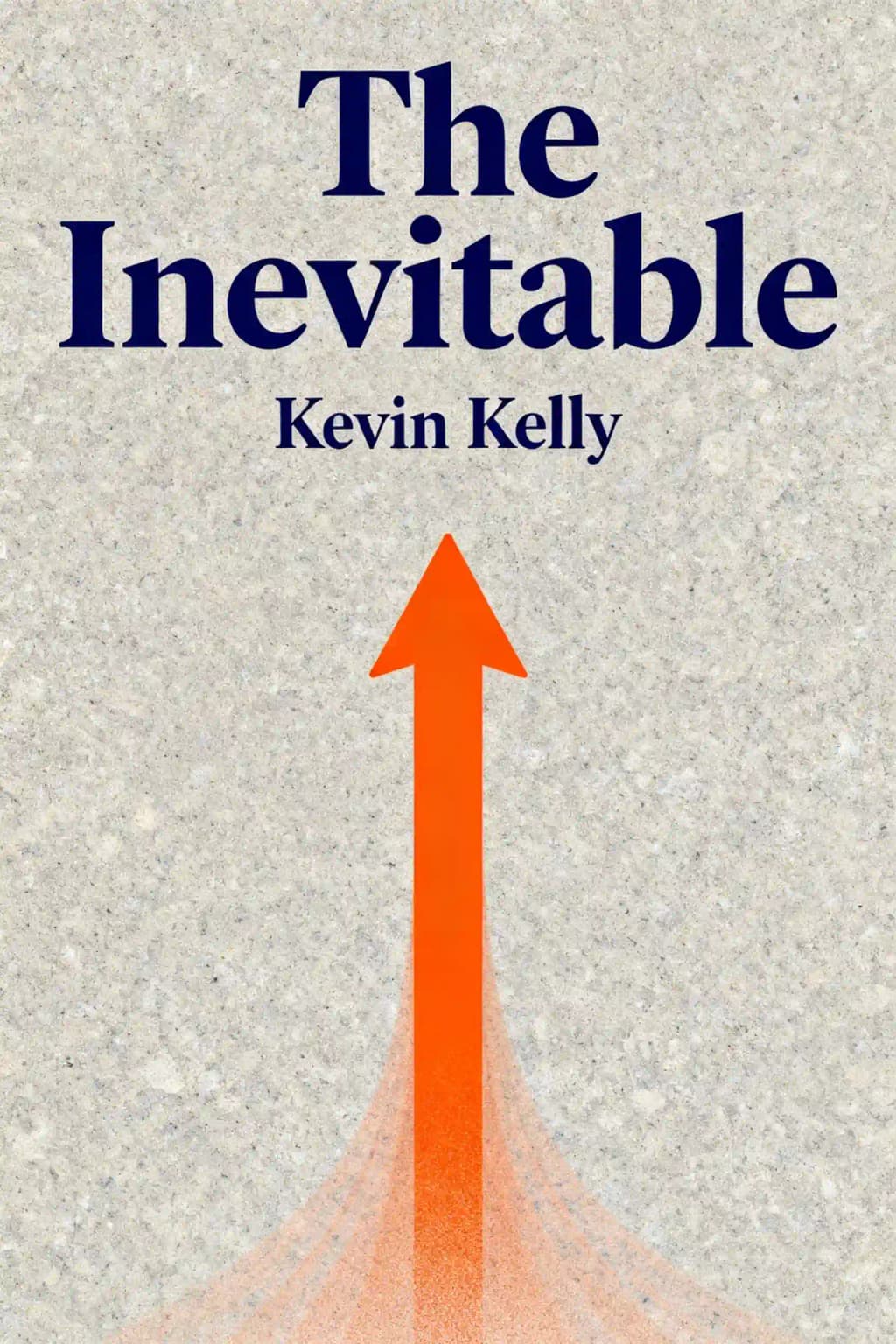
In 1965, a thirteen-year-old Kevin Kelly found himself utterly unimpressed by the room-sized computers at an Atlantic City trade show. Even his first encounter with an Apple II in 1981 left him cold-until he connected it to a phone line. That simple act of networking transformed everything, opening a universe of possibility through that humble phone jack. This moment perfectly encapsulates Kelly's vision in "The Inevitable," which has become required reading for tech executives from Google to Tesla. Mark Zuckerberg cited it as one of his favorite books, while Tim Ferriss called it "an absolute must-read for anyone interested in how technology is shaping our future." The book's influence extends beyond Silicon Valley-it's been translated into 15 languages and has profoundly shaped how governments and businesses worldwide prepare for technological change. Rather than fighting these digital forces, Kelly argues we must embrace them vigilantly, with eyes wide open, to harness their benefits while managing potential harms.
第2章
The Relentless Flow of Becoming
Everything we create is perpetually becoming something else. This isn't just philosophical musing-it's the central reality of our technological age. The digital realm exists in a state of constant flux, shifting from fixed products to fluid processes. Your smartphone isn't a static object but a platform continuously transforming through updates. Your apps aren't finished products but ongoing services that evolve weekly or daily.
This endless becoming creates a strange new reality: we're all perpetual newbies. Consider that most dominant technologies 30 years from now haven't been invented yet. By the time you master today's tools, they're already morphing into something new. This isn't a temporary phase but our permanent condition-a state of endless apprenticeship regardless of age or experience.
This perpetual becoming generates a peculiar form of technological discontent. We keep inventing things that create new longings we never knew we had. What would have seemed absurd a decade ago-needing constant internet connectivity or feeling anxious when your phone battery dies-now feels like genuine deprivation. While some see this as debasing human nobility, Kelly celebrates this discontent as the engine of progress. Unlike our animal ancestors content with mere survival, humans create new itches to scratch, new desires to pursue.
Our destination isn't utopia or dystopia but what Kelly calls "protopia"-a state of becoming rather than arrival. Each day brings incremental improvements that accumulate over decades into civilization. Today's problems were caused by yesterday's technological successes, and today's solutions will cause tomorrow's problems. This circular expansion makes progress difficult to perceive, yet it steadily advances.
The early internet exemplifies how becoming blinds us to change. Smart people made spectacularly wrong predictions: Time magazine declared the internet wasn't designed for commerce; Newsweek called online shopping "baloney"; ABC executives dismissed it as "the CB radio of the '90s." What everyone missed was that users, not institutions, would create the web's content-not 5,000 professional channels but 500 million channels of user-generated material.
We remain largely oblivious to the web's miraculous evolution. In just 8,000 days, it grew to exceed 60 trillion pages-nearly 10,000 pages per living person. From any internet window, we can access music, videos, encyclopedias, news, satellite images, and virtual walk-throughs-a godlike view that kings would have waged wars to possess. Yet despite this saturation, we're still at the beginning. Looking back from 2050, people will realize most of the greatest digital products weren't invented until after 2016.
第3章
The AI Revolution: Cognifying Everything
Artificial intelligence will "change everything" more profoundly than any previous innovation. Even a tiny amount of intelligence embedded into an existing process boosts its effectiveness exponentially. The advantages from cognifying inert things will be hundreds of times more disruptive than industrialization was.
The first genuine AI won't emerge from a standalone supercomputer but from the planetary network of billions of connected devices. This networked intelligence will be distributed, embedded, and loosely connected-making it difficult to distinguish where human thoughts end and AI begins. Any device touching this network will share and contribute to its intelligence. Stand-alone AIs will seem handicapped by comparison, as they can't learn from billions of minds, exabytes of real-life data, and civilization's feedback loops.
Google's DeepMind represents a profound advancement-teaching machines not just to perform tasks, but to learn how to perform them. Rather than programming an AI to play video games, DeepMind researchers taught it how to learn to play games on its own. The AI progresses from random play to mastery within hours, eventually discovering game loopholes human players never found.
The AI future won't be HAL 9000 or a superintelligence singularity, but rather a ubiquitous utility like electricity-cheap, reliable digital intelligence running behind everything. We'll simply plug into the grid for as much IQ as needed. Just as entrepreneurs once electrified manual tools, we'll now cognify everything. Almost nothing exists that can't be made more valuable by infusing it with intelligence.
As robots take over warehouses, fruit picking, pharmacy operations, cleaning, and long-haul trucking, while AI moves into white-collar work like translation, medicine, and paperwork processing, we're already at the inflection point of job displacement. Just as the industrial revolution eliminated 70% of farming jobs over time, automation will replace 70% of today's occupations by century's end-including yours.
But this isn't a race against machines but with them. The highest-earning professions of 2050 will likely depend on automations not yet invented. When robots handle our basic needs, we're free to ask "What are humans for?" and pursue roles like ballerinas, musicians, mathematicians, and yoga masters. Eventually, machines will do these too, prompting us to dream up new things. Our perpetual job will be making jobs for robots-a task that will never be finished.
第4章
From Ownership to Flows: The Liquid Economy
The internet functions as the world's largest copy machine, duplicating every action, character, and thought as data flows through it. This superconductor of copies forms the foundation of our digital economy, where once something enters the network, it never truly leaves. We've shifted from valuing physical stocks to valuing flows of intangibles, as formerly solid products transform into fluid services that continuously update and improve.
We're entering the third phase of computing: the Flows. The first age borrowed industrial metaphors with "desktops" and "folders." The second brought us the web with hyperlinked "pages." Now we live in streams and flows-Twitter feeds, Facebook walls, streaming media, notifications, and real-time updates. Our expectations have accelerated from batch mode (monthly bills) to daily mode (same-day responses) to real-time (instant everything).
Music was the first industry transformed by this shift. When copies become superabundant and free, they become worthless. The economic equation inverts-the valuable things become those that cannot be copied. In a world where digital copies are free and abundant, value shifts to qualities that cannot be copied-what Kelly calls "generatives":
Immediacy: People pay for immediate access to something that will eventually be free.
Personalization: Customization creates value beyond the generic free version.
Interpretation: Free software becomes valuable through paid support and guidance.
Authenticity: People pay for peace of mind-knowing their content is genuine.
Accessibility: Many gladly pay for convenient access to content they could get free elsewhere.
Embodiment: Digital copies lack physicality, creating value in embodied experiences.
Patronage: Fans genuinely want to support creators when payment is easy and direct.
Discoverability: With millions of works created daily, being found has tremendous value.
Once digitized, content becomes liquid-flexible and linkable. The rush to digital music wasn't just about "free" but about freedom from constraints. Music escaped the tyranny of radio DJs and fixed album sequences, becoming something users could reorder, remix, sample, and transform. Value shifted from copies to connections-how content flows, links, and transforms.
As music goes, so go other media and industries. Books exemplify the shift from fixity to fluidity. Traditional books embody four fixities: the unchanging page, identical editions, durable physical objects, and a sense of completion. But ebooks counter with four fluidities: adaptable pages that fit any screen, personalized editions, cloud storage with instant delivery, and the ability to be continually improved.
In the near future, we'll access a cloud containing all media, broken into component parts. Songs will be available not just whole but as individual tracks, instruments, or even chords. Movies will offer separate access to soundtracks, effects, alternative views, and outtakes. Our response to media will be active engagement-adding, subtracting, merging, and translating to continue its flow.
第5章
From People of the Book to People of the Screen
We are evolving from People of the Book to People of the Screen. Five hundred years ago, Gutenberg's printing press revolutionized culture, making text the engine of change. Books expanded language (from 50,000 words in Old English to a million today) and democratized writing beyond scholarly tomes. But today, over 5 billion digital screens illuminate our lives, signaling another profound transformation.
A cultural clash has emerged between People of the Book-those who uphold traditional textual authority-and People of the Screen, who embrace the dynamic flux of pixels, quick cuts, and assembled truths. Screen culture is fast, liquid, and participatory; truth isn't delivered by authorities but constructed in real time by audiences themselves.
Despite fears that television would destroy literacy, screens have actually launched an epidemic of writing. Reading time has nearly tripled since 1980, with billions of web pages added daily. Ordinary citizens compose 80 million blog posts daily, while young people write 500 million text messages. This isn't traditional reading but "screening"-a visual activity merging words with moving images, where text floats over visuals as annotations or links.
Books are evolving from nouns to verbs-from artifacts to processes. A book is "booking"-a continuous flow of thinking, writing, editing, sharing, and screening that generates a book along the way. Reading is becoming social through screens. We can share not just book titles but reactions and notes as we read. Soon we'll link passages between books, connect words to dictionaries, or scenes to movies.
The dream of a universal library containing all knowledge in one place dates back to Alexandria's great library. Today, this dream is finally within reach through technology. When fully digitized, all human creative output could fit on 50-petabyte hard drives-eventually fitting on a phone. Through linking and tagging, this universal library becomes a single networked literature where ideas connect across texts.
Screens increasingly reveal the inner nature of things. A smartphone can display a product's price, ingredients, and origin, or instantly translate foreign text. As screens become more powerful and lighter, they'll overlay information on reality itself. Within 30 years, semitransparent eyeglasses will apply informational layers to everything we see, enabling us to "read" objects and places, not just text.
第6章
The End of Ownership: Accessing Everything
The digital economy is shifting fundamentally from ownership to access. Major companies like Uber, Facebook, Alibaba, and Airbnb have become industry leaders without owning the traditional assets of their sectors. Similarly, digital media services like Netflix, Spotify, and Kindle Unlimited let consumers use content without owning it.
This shift happens because accessing provides most ownership benefits with few disadvantages-no need to clean, repair, store, insure, or maintain. Advanced technology has created an infinite "magical rental store" where ordinary people can summon goods and services as quickly as if they owned them, often with superior quality and convenience.
Digital technology accelerates dematerialization by shifting from products to services. Physical goods deliver more benefits with less material because their atoms are replaced by weightless bits-better design, innovative processes, smart chips, and connectivity. This embeds intelligence into hard things, making them behave like software, transforming nouns into verbs as "software eats everything."
Access delivers services in real-time, meeting our insatiable appetite for instant gratification. Uber disrupted transportation by solving the time equation-automatically detecting location, handling payment, precisely tracking drivers, and offering vastly cheaper shared rides. This on-demand model has spawned thousands of "Uber for X" startups across industries from flowers to lawn mowing to doctor house calls.
Beyond traditional firms and marketplaces, platforms have emerged as a third way to organize human work. A platform is a foundation created by a firm that lets others build upon it-neither market nor firm but something new. Today's wealthiest organizations-Apple, Microsoft, Google, Facebook, Uber, Alibaba, Airbnb-are all multisided platforms enabling ecosystems of interdependent products and services.
Clouds-colonies of millions of computers braided to act as a single large computer-now run our digital lives. As clouds grow, our devices can become smaller and thinner, functioning as windows into the cloud's work. This creates ambiguity about where "my stuff" is and whether it's truly "mine." When collaborating on a Google Doc, each person's copy feels like the original, distributing authenticity and making things feel less personal and more collective.
第7章
The Rise of Digital Socialism
The global rush to connect everyone is quietly birthing a revised technological socialism. Unlike old political socialism, this digital socialism runs over borderless networks, enhancing individual autonomy while generating communal value. Wikipedia exemplifies this emerging collectivism, along with countless wikis that allow collaborative document creation and editing.
The online public demonstrates an incredible willingness to share-1.8 billion personal photos posted daily across platforms like Facebook and Instagram, plus billions of YouTube videos and millions of fan-created stories. This sharing represents the mildest form of digital socialism, yet serves as the foundational ingredient of the entire networked world.
When individuals work together toward large-scale goals, group-level results emerge. Beyond merely sharing photos, users tag them with categories and keywords, while others curate them into collections. Creative Commons licensing means "your picture is my picture"-anyone can use uploaded content, improving their own creations through community resources.
Organized collaboration produces results beyond ad hoc cooperation. Open source projects like Linux coordinate thousands of contributors creating high-quality products that make no sense within capitalism-workers perform immense amounts of market-valuable work without payment. We enjoy these collaborations free: half the world's web pages run on free Apache software, 3D Warehouse offers millions of complex models, and nearly a million community-designed Arduinos exist.
While the shift from hierarchy to networks has been the major cultural story of the last three decades, the bottom alone isn't sufficient. Every successful bottom-up organization eventually becomes a hybrid by incorporating some top-down elements. Even supposed paragons of user-generated content like Wikipedia actually rely on a small group of persistent editors who function as management, providing editorial judgment and continuity.
We're living in a golden age of creative abundance where more artists are producing more work than ever before, with unprecedented accessibility and affordability. Digital tools have democratized creation, while the internet has connected creators with both mass audiences and micro-niches. The sharing economy has revolutionized funding through crowdfunding platforms like Kickstarter, which has enabled 9 million fans to fund 88,000 projects.
第8章
Filtering the Infinite Library
We're living in an unprecedented era of human expression, with an exhilarating avalanche of new content created yearly: 8 million new songs, 2 million books, 16,000 films, 30 billion blog posts, 182 billion tweets, and 400,000 new products. The Library of Everything is now accessible with minimal effort-more Greek texts, Chinese scrolls, Renaissance etchings, and Mozart concertos than nobility of past eras could access.
To navigate this overwhelming abundance, we employ numerous filtering methods: gatekeepers, intermediates, curators, brands, government, cultural environment, friends, and personal preferences. While these traditional filters persist, our superabundant future requires many more filtering types.
Recommendation engines have become my chief discovery mechanism, more reliable than expert or friend recommendations. These "more like this" systems power a third of Amazon's sales ($30 billion in 2014) and are so valuable that Netflix invests $150 million with 300 people working on recommendations. However, being rewarded only with what you already like can create a dangerous "filter bubble" or "overfitting"-getting stuck at a lower peak while ignoring potentially appealing adjacent options.
I want three components in my ideal filtering system. First, recommendations based on what I already like. Second, exposure to what my friends enjoy that I don't know about. Third, a stream suggesting things I don't like but would like to like-occasionally trying opera or vegetables to see if my tastes have changed.
Currently, platforms install filters without user input. Facebook filters your news feed without revealing its criteria-likely optimizing for time spent rather than happiness. Amazon filters to maximize sales, conducting thousands of daily experiments to personalize content. Google, the world's largest collaborative filter, processes 35 billion emails daily and filters 60 trillion pages about 2 million times every minute.
We're at the threshold of a Cambrian explosion in attention technology, with novel arrangements emerging rapidly. Alternative attention routes remain untapped, like charging senders to read their emails-creating a filter where importance is signaled by willingness to pay. With cloud computing, we can now untangle complex networks of influence, tracing who influences whom to the third and fourth level.
第9章
The Remix Revolution
Real economic growth comes from rearranging existing resources to make them more valuable. Similarly, all new technologies derive from combining earlier technologies, and digital growth follows the same pattern of productive remixing. We're experiencing a golden age of new mediums where digital technology unbundles traditional forms into elements that can be recombined in novel ways.
Digital technology has enabled hundreds of new media genres to emerge through remixing. Traditional forms like newspaper articles and TV sitcoms persist, but they've been unbundled into elements that can be recombined. New robust genres include listicles, tweet storms, fan fiction (with 1.5 million works in one archive alone), six-second Vine videos (which generated 1.5 billion daily loops in 2015), and animated gifs that loop gestures or scenes endlessly.
Universal creation tools are reducing the asymmetry that has long defined media-where it's easier to consume than create. While a Hollywood blockbuster might require a million person-hours to produce and only two hours to watch, digital technology has enabled millions to make their own films. Amateur creators rely heavily on remixing, taking existing soundtracks and footage to create new narratives.
Digital filmmaking has fundamentally changed from capturing reality to building it incrementally. George Lucas pioneered this approach with Star Wars, treating scenes not as captured moments but as malleable paragraphs constantly being revised. His films were essentially "written" pixel by pixel, with every frame manipulated through multiple layers of detail-more like moving paintings than photographs.
As moving images become easier to create, store, annotate, and combine, they gain a liquidity similar to words. Beyond findability, another revolution is "rewindability." Unlike oral communication where words vanish once spoken, digital media allows us to scroll back at will. This capability has transformed everything from commercials into art forms to enabling complex TV shows like Lost or The Wire that reward multiple viewings.
Remixing challenges traditional notions of property. Digital bits aren't like physical property-as Jefferson noted, sharing an idea doesn't diminish the original. Our legal system hasn't fully adapted to this reality, with copyright terms extending 70+ years after creators' deaths, hampering innovation. In 30 years, the most important cultural works will be those remixed the most.
第10章
The Inevitable Future: Tracking, Questioning, Beginning
We're naturally opaque to ourselves and need help deciphering who we are. Self-measurement has historically been difficult and limited, but recent advances in tiny digital sensors have made tracking thousands of personal parameters accessible to almost anyone. These penny-sized devices can now measure everything from heart rates to brain waves, fitting into watches, clothes, glasses, phones, or dispersed throughout our environments.
Lifelogging involves passive, automatic tracking of everything recordable without prejudice, for your entire life. Though hugely wasteful since most data goes unused, it's now feasible due to cheap computation, storage and sensors. The goal is total recall-creating a searchable archive of your entire life experience that compensates for our biological memory limitations.
Beyond personal tracking, billions of manufactured objects will soon contain internet-connected chips that monitor usage. The internet functions as the world's largest tracking machine, with anything connected to it becoming tracked. Just as the internet's bias toward copying is technological rather than cultural-making ubiquitous copying inevitable despite resistance-tracking follows the same dynamic.
Wikipedia upended my beliefs about human nature and knowledge. I initially considered it impossible-how could random strangers, including mischievous teenagers, create a reliable encyclopedia without editorial oversight? Yet Wikipedia now contains over 35 million articles in 288 languages, is cited by the Supreme Court, and used worldwide by students and journalists. This success changed me from a steady individualist with libertarian leanings toward appreciating collective social power.
Every year humans ask the internet 2 trillion questions and receive 2 trillion answers-most quite good and all free. Before search engines, most questions couldn't be answered at reasonable cost. Yet paradoxically, abundant answers generate more questions. As answers become cheap and ubiquitous through AI assistants like Siri and Watson, questions become increasingly valuable. A good question isn't concerned with correct answers but creates new territories of thinking, challenges existing answers, reframes its own solutions, and generates many other good questions.
The Beginning marks a century-long process where humanity first links itself into one very large thing-what Kelly calls the holos. This planetary layer combines human intelligence with machine behavior and nature's intelligence. Future historians will see our time as the amazing moment when this global mind first awoke. We are braiding nerves out of glass, copper, and radio waves, wiring up all regions, processes, people, artifacts, and sensors into a grand network of unprecedented complexity.
Rather than a hard singularity where superintelligent AI leaves humans behind, we're more likely entering a soft singularity-where AI, robots, filtering, tracking and all emerging technologies converge with humanity into complex interdependence. In this new phase, we become better humans through our creations, but also completely dependent on what we've made. This global matrix isn't just an artifact but a process-a standing wave of change that steadily spills forward new arrangements of our needs and desires. The Beginning is just beginning.