第1章
The Moral Compass: Navigating Life's Ethical Terrain
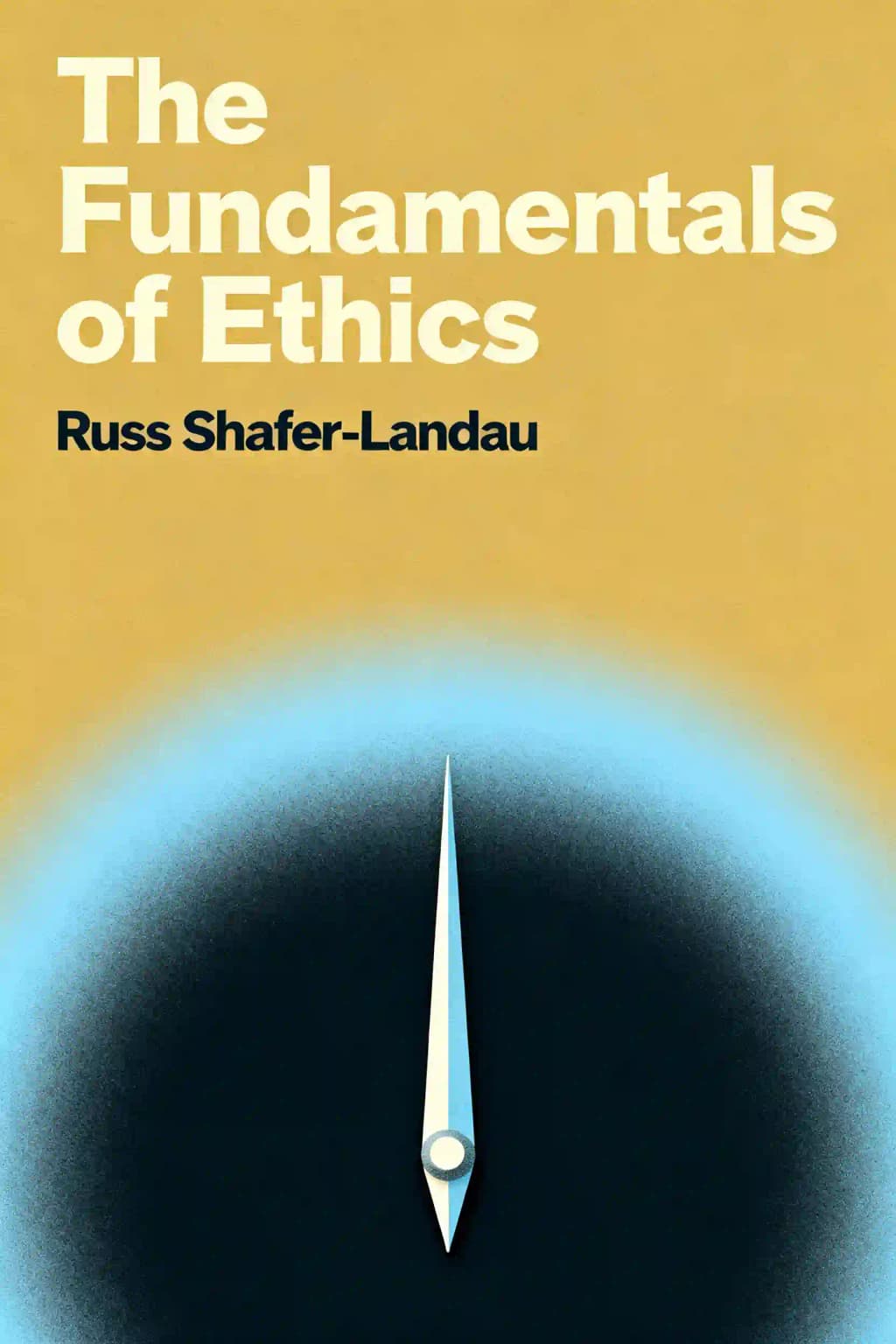
Have you ever wondered why we instinctively feel some actions are wrong while others are right? Russ Shafer-Landau's "The Fundamentals of Ethics" tackles this profound question with remarkable clarity and intellectual rigor. This isn't just another academic text-it's a journey through the most compelling ideas about how we should live. The book has become required reading in philosophy departments worldwide, with luminaries like Peter Singer praising its "lucid explanations of complex ideas." Even beyond academia, its influence extends to fields ranging from business ethics to medical practice. What makes this work particularly powerful is how it transforms abstract philosophical concepts into practical frameworks for everyday moral decisions-something we all face, whether we're conscious of it or not. As you explore these ideas, you might find yourself questioning assumptions you've held your entire life about what makes an action right or wrong, and whether morality is something we discover or something we create.
第2章
The Quest for the Good Life: Happiness and Its Complexities
What makes a life worth living? This question has captivated philosophers since ancient times, and hedonism offers perhaps the most straightforward answer: happiness is all that matters. According to hedonists, a good life is simply one filled with pleasure and lacking pain. This view traces back to Epicurus, who advocated not for wild indulgence but for moderate pleasures and inner peace. Later, John Stuart Mill defended hedonism against critics who dismissed it as a "doctrine worthy only of swine," arguing that intellectual pleasures hold higher quality than physical ones.
Hedonism's appeal stems from several strengths. It accommodates diverse paths to a good life-whether through religious devotion, artistic creation, or family life-since any path that produces happiness qualifies. It grants individuals authority over their own well-being while maintaining that happiness is objectively good. It explains why misery clearly damages lives while happiness improves them. And it provides a foundation that needs no further explanation-when asked why happiness matters, we need only respond, "Have you ever experienced it?"
Yet despite its intuitive appeal, hedonism faces serious challenges. The "paradox of hedonism" suggests that directly pursuing happiness often backfires-those constantly trying to maximize their enjoyment rarely succeed. Consider how vacations become more stressful when we pressure ourselves to have the perfect time. More troublingly, hedonism struggles with cases of "false happiness"-imagine two equally content women who trust their husbands, but one's husband is secretly unfaithful. Though equally happy, most would say the deceived woman's life is worse.
Robert Nozick's famous "experience machine" thought experiment further challenges hedonism. Imagine a device that could simulate any pleasurable experience-you could program it to make you feel like you're climbing Everest, winning Nobel Prizes, or finding true love. If happiness were all that mattered, we should eagerly plug in. Yet most people recoil at the idea, suggesting we value authentic experiences and achievements beyond mere feelings of happiness.
Hedonism also struggles to account for the importance of autonomy. Consider Aldous Huxley's "Brave New World," where citizens are perpetually happy through drugs and conditioning but lack freedom. Despite their contentment, something crucial is missing from their lives. Similarly, patients often refuse pain medication to maintain mental clarity, even at the cost of comfort. These examples suggest autonomy holds intrinsic value beyond its contribution to happiness.
Perhaps most damning is hedonism's inability to recognize that the trajectory of a life matters. A life that begins badly but steadily improves (like Oprah Winfrey's) seems better than one that starts brilliantly but declines (like writer Delmore Schwartz's), even if both contain identical amounts of happiness. The shape of our lives matters, not just the sum of happy moments.
第3章
Beyond Pleasure: The Desire Satisfaction Theory
If happiness alone doesn't constitute well-being, perhaps getting what we want does. The desire satisfaction theory proposes exactly this: your life goes well to the extent that your desires are fulfilled, regardless of whether fulfillment produces pleasure. This approach elegantly explains why there are many paths to a good life-people desire vastly different things, from religious devotion to Star Trek conventions.
Unlike hedonism, this theory gives each person complete authority over what makes their life go well. No one can dictate which desires you should have-that's entirely personal. The theory also avoids thorny questions about objective values by making well-being depend entirely on subjective desires. It creates a clear connection between what's good for us and what motivates us: if something satisfies our desires, we'll naturally be motivated to pursue it.
However, the desire satisfaction theory faces serious problems. For one, it struggles with desires based on false beliefs. If you want to hurt someone because you mistakenly believe they insulted you, does fulfilling this desire really improve your life? Similarly, desires concerning matters unrelated to your welfare-like wanting a beached whale to survive-don't seem to affect your well-being when satisfied.
The theory also can't explain why getting exactly what we want sometimes leaves us disappointed. Tennis champion John McEnroe described feeling hollow after achieving his greatest professional success. If desire satisfaction makes us better off, how could this be?
Perhaps most problematically, the theory suggests that people with severely restricted horizons might live the best lives, since their modest desires are easily fulfilled. Consider someone conditioned from birth to accept servitude-they might have few desires beyond pleasing their masters. According to desire satisfaction theory, their life could be going extremely well if these limited desires were fulfilled. This counterintuitive implication fails to recognize that a life with severely restricted horizons seems inherently limited regardless of desire fulfillment.
The theory also creates a paradox around self-harm. If someone genuinely wants to harm themselves and succeeds, the desire satisfaction theory must count this as making them better off-since they got what they wanted. This contradicts our understanding that self-harm makes someone worse off despite fulfilling their desires.
These problems suggest that the good life must depend on objective values-things worth wanting regardless of whether we actually desire them. Happiness and autonomy might be two such values, though a complete list would require further philosophical inquiry.
第4章
The Religious Foundation: Morality and Faith
Many believe morality requires religious foundation, but this assumption faces several philosophical challenges. Consider the claim that atheism prevents people from seeing why they should be moral. This view suggests that fear of divine punishment and hope for heavenly reward motivate moral behavior. However, this creates an unreliable moral agent who would abandon morality if they stopped believing in divine consequences. True moral goodness comes from doing right because it's right, not from fear of punishment.
Similarly, the claim that moral conduct is rational only if God exists assumes that without divine rewards, acting morally would sometimes conflict with self-interest, making moral action irrational. But we often have good reasons to act that aren't rooted in self-interest. Imagine discovering a bomb in a playground-we have good reason to warn others even if we'll receive no personal benefit. These considerations suggest moral action can be rational even without divine rewards.
Perhaps the most philosophically significant challenge concerns the divine command theory-the view that actions are right because God commands them and wrong because God forbids them. This position faces the Euthyphro dilemma: either God has reasons for His commands or He doesn't. If God lacks reasons, His commands are arbitrary. If God has reasons, then these reasons, not His commands, make actions right or wrong. To preserve God's moral perfection, we must reject the divine command theory-God commands against rape and torture because they are wrong, not the reverse.
While religion might offer moral guidance, this depends on resolving numerous philosophical questions about God's existence, divine communication, and textual interpretation. Even when selecting a text like the Bible, problems emerge-many moral issues aren't explicitly addressed, contradictions exist between passages, and some advice seems morally troubling by modern standards.
第5章
The Natural Law Approach: Human Nature as Moral Guide
Natural law theory proposes that good human beings fulfill their true nature while bad ones don't-the moral law is simply the natural law requiring us to act according to our nature. This theory offers several advantages: it explains how morality can be objective (based on human nature rather than opinion); it clarifies why morality applies specifically to humans (due to our unique reasoning abilities); and it provides a straightforward path to moral knowledge (determine human nature, then assess whether actions fulfill it).
However, applying natural law theory requires a clear understanding of human nature-the essential features that make us human-and here the theory encounters significant problems. Defining human nature as animal nature provides poor moral guidance, since animals sometimes engage in behaviors we'd consider immoral. Identifying human nature with innate traits creates problems because philosophers disagree about whether humans are innately good or innately selfish. The morality of our actions doesn't depend on whether our impulses are innate or acquired-rape and robbery are immoral regardless of their origins.
Natural law theorists often define human nature in terms of our designed purposes, but secular accounts struggle to explain natural purposes without an Intelligent Designer. The Efficiency Model (our purpose is what we do most efficiently) identifies too many purposes, including morally problematic ones like weapon-building. The Fitness Model (our purpose is survival and reproduction) suggests that actions enhancing survival are moral, yet this would justify rape as "natural" while condemning noble self-sacrifice as "unnatural."
These contradictions show that neither model can sustain the natural law claim that natural actions are always moral while unnatural ones are always immoral.
第6章
The Self-Interest Paradigm: Psychological and Ethical Egoism
Is altruism possible, or are we fundamentally self-interested beings? This question has profound implications for how we understand human nature and morality. Psychological egoism claims all human actions are ultimately motivated by self-interest, even when they appear selfless on the surface. This descriptive theory suggests that altruism - the desire to benefit others for their own sake without ulterior motives - is merely a comforting myth we tell ourselves to feel noble. Even seemingly heroic acts of sacrifice, like Private Ross McGinnis throwing himself on a grenade to save his comrades or a parent rushing into a burning building to rescue their child, are reinterpreted as somehow self-interested, perhaps driven by an inability to live with guilt or a desire for posthumous glory.
The theory faces several devastating problems that challenge its credibility. When people help others at significant personal cost and consistently report altruistic motives, psychological egoists must dismiss all such testimony as self-deception or rationalization. This creates an insurmountable dilemma: either allow empirical evidence to settle whether altruism exists or don't. Those who refuse to consider evidence that might disprove their theory are being dogmatic rather than rational. Furthermore, psychological egoism struggles to explain spontaneous acts of kindness where there's no time for calculating self-interest, like instinctively reaching out to catch a falling stranger.
Ethical egoism, unlike its psychological counterpart, is a normative moral theory claiming we have one ultimate moral duty: to maximize our own well-being. According to ethical egoists, whenever we fail to promote our self-interest, we act immorally - even if our actions benefit others or serve some greater good. This view fundamentally contradicts basic moral intuitions and commonly accepted ethical principles. If killing political opponents, exploiting vulnerable populations, or stealing from the weak maximizes self-interest, ethical egoism would make these actions not just permissible but morally required.
Ethical egoism faces three devastating problems that undermine its credibility as a moral framework. First, it violates our deepest moral convictions by requiring acts like murder, theft, and betrayal whenever they serve self-interest - making it incompatible with widely held moral beliefs about human rights and dignity. Second, it cannot accommodate fundamental moral rights that protect individuals from others' interference. While egoism grants everyone permission to pursue self-interest, this "right" offers no real protection when others' interests involve harming you - creating a might-makes-right scenario. Third, egoism arbitrarily prioritizes one's own interests completely over others' without philosophical justification, failing to explain why my interests should count more than yours. This selective favoritism contradicts the principle of universalizability that many philosophers consider essential to any coherent ethical theory.
Recent research in evolutionary psychology and neuroscience has further complicated this debate by revealing both self-interested and genuinely altruistic mechanisms in human behavior, suggesting our moral nature may be more complex than either pure egoism or pure altruism would indicate.
第7章
The Greatest Good: Consequentialism's Promise and Perils
Consequentialism, captured by John Wesley's motto "Do all the good you can," directs us to focus on the future consequences of our actions rather than the past. Act utilitarianism-the most famous form of consequentialism-holds that well-being is the only intrinsic good and an action is morally required just because it maximizes overall well-being.
One of utilitarianism's greatest strengths is its impartiality. It holds that each person's welfare is equally morally valuable regardless of social position, economic status, religion, ethnicity, or gender. This equality, now taken for granted, was radical when advanced by early utilitarians like Bentham and Mill, who championed abolition and women's equality.
Utilitarianism also excels at resolving moral conflicts through its single ultimate rule: maximize well-being. When faced with dilemmas like whether to tell a sensitive friend about hurtful gossip, utilitarians have clear guidance-choose the option that increases overall well-being. The theory offers moral flexibility by holding that no moral rule (except the principle of utility itself) is absolute. Even prohibitions against cannibalism or killing innocents can be violated if doing so maximizes well-being.
However, utilitarianism faces serious challenges. Determining whether an action is morally required involves measuring well-being itself-and there's no precise unit to quantify happiness or welfare. When values like happiness and autonomy conflict, utilitarianism provides no clear guidance on which to prioritize.
The theory also places excessive demands on us. Whenever you could do more good for others than yourself, you must choose others-meaning most of us should give up luxuries to help those in desperate need. While impartiality is a benefit of utilitarianism, it creates problems when morality seems to recommend partiality. Utilitarianism rejects the idea that I should prioritize my son, friends, or fellow citizens simply because of our relationship.
Perhaps utilitarianism's greatest flaw is that it sometimes requires committing serious injustice to maximize well-being. Sherman's random execution of a prisoner of war stopped guerrilla attacks, saving more lives than it cost-making it right by utilitarian standards despite violating the prisoner's rights. Similarly, utilitarianism can justify letting guilty people escape justice when beneficial, such as allowing Nazi scientists to avoid punishment in exchange for weapons intelligence.
第8章
Justice Before Consequences: The Kantian Revolution
Immanuel Kant's moral philosophy offers the primary alternative to utilitarianism. While utilitarians focus on producing good consequences, Kant emphasizes fairness and justice. He identifies inconsistency as the core problem with immoral actions-when people make exceptions of themselves by violating rules others follow, they act unfairly.
Kant's principle of humanity states: "Always treat a human being (yourself included) as an end, and never as a mere means." This principle focuses on respecting rational and autonomous beings. Treating someone as an end means showing them proper respect, while treating them as a mere means involves using them to achieve your goals without regard for their autonomy. Kant argues that our rationality and autonomy make humans infinitely valuable and worthy of respect, beyond any price or material worth.
This approach explains why fanaticism is immoral (fanatics treat others as mere obstacles), why slavery and rape are always wrong (both deny victims' autonomy), and why we hold people accountable for their actions (we respect their capacity to have chosen differently). Unlike consequentialism, which focuses on outcomes, Kant holds that morality depends on intentions rather than results-two identical actions with different maxims may differ morally.
However, Kant's ethics faces several challenges. The notion of "treating someone as an end" is vague, making application difficult in complex cases. Kant's approach to determining just punishment through lex talionis (eye-for-an-eye) fails because it cannot distinguish between intentional and accidental harm and sometimes prescribes deeply immoral punishments. Most problematically, Kant's emphasis on rationality and autonomy excludes infants, severely mentally disabled people, and all non-human animals from the moral community, leaving them without intrinsic moral status.
第9章
The Social Contract: Morality as Mutual Advantage
The social contract theory holds that morality is based on a social contract that free, equal, and rational people would accept as the basis for cooperative life. Actions are morally right when permitted by rules that such people would agree to follow, provided others do likewise. This approach explains morality as essentially social, requiring at least two people to exist-there are no purely self-regarding moral duties.
The prisoner's dilemma illustrates why cooperation is rational even for self-interested individuals. In the classic scenario, two criminals must decide whether to remain silent (cooperate with each other) or confess (betray each other). Though both would be better off if they both remained silent, rational self-interest leads each to confess, resulting in worse outcomes for both. This pattern appears in real-life scenarios like overfishing, political smear campaigns, and drug trade turf wars.
Contractarianism explains why basic moral rules prohibit actions like killing and theft while requiring promise-keeping-these are the rules that free, equal, and rational people seeking mutual benefit would select. The theory also explains morality's objectivity-personal opinion isn't the final authority, and whole societies can be mistaken about what is right and wrong.
However, contractarianism faces significant challenges. It struggles to explain why being moral is always rational, particularly in cases where detection is unlikely and rewards substantial. The theory also excludes the neediest and most vulnerable from the moral community, potentially justifying their exploitation. Since contractors are defined as those who can both help and harm others, beings whose cooperation we don't need-like animals, future generations, or severely disabled humans-receive no moral consideration under strict contractarianism.
第10章
Beyond Simple Rules: Prima Facie Duties and Moral Complexity
Most moral theories assume there is a single fundamental moral rule that is absolute and can never be broken. W.D. Ross challenged this view in his 1930 book "The Right and the Good," proposing at least seven fundamental moral rules, none of which is absolute. He called these "prima facie duties"-excellent, non-absolute, permanent reasons to act in certain ways.
Ross identified seven such duties: fidelity (keeping promises), reparations (repairing harm), gratitude (acknowledging benefits), justice (ensuring virtue is rewarded), beneficence (enhancing others' well-being), self-improvement, and non-maleficence (preventing harm to others). These duties are fundamental and cannot be derived from one another, but may sometimes be overridden by other duties.
This approach offers several advantages. It acknowledges multiple independent moral considerations, explains why moral rules may sometimes be broken when duties conflict, makes sense of moral conflict without generating contradictions, and accounts for moral regret when we must sacrifice one duty for another more pressing one.
However, Ross's theory struggles to provide guidance for resolving conflicts between prima facie duties. Without fixed guidelines for weighing competing duties, it becomes unclear how to decide what to do when duties conflict. Ross argues that his prima facie duties are self-evident-claims that are true and justified after adequate understanding and reflection. When someone fails to see a self-evident truth like the importance of justice, Ross would invite them to reflect more carefully through examples and analogies.
Ethical particularism presents an even more radical challenge by denying the existence of any prima facie duties. Particularists reject the idea that certain features are always morally important, arguing instead that moral importance depends entirely on context. For particularists, there are no moral rules whatsoever-neither absolute nor prima facie. They argue that promise-keeping, for instance, isn't always morally important; promises made by hostages to kidnappers carry no moral weight.
第11章
Character Before Action: The Virtue Ethics Approach
Virtue ethics shifts the central ethical question from "What should I do?" to "What sort of person should I be?" While other theories define moral duty first and then derive what kind of person one should be, virtue ethics begins with ideals of character and human flourishing, then defines duty by reference to these ideals. This approach traces back to ancient Greek philosophy, particularly Aristotle's Nicomachean Ethics.
According to virtue ethics, "An act is morally right just because it is one that a virtuous person, acting in character, would do in that situation." Unlike consequentialist or deontological theories, virtue ethics doesn't define rightness through outcomes or adherence to rules, but through the character of the agent performing the action.
Virtue ethicists reject the idea that morality can be reduced to simple formulas or precise methods. Following Aristotle, they view ethics as complex and messy, requiring emotional maturity and sound judgment rather than mechanical rule-following. Emotions play three crucial roles in moral understanding: they help us see what is morally relevant in situations; they signal what is right and wrong when properly developed; and they motivate us to do the right thing.
A virtue is an admirable character trait that enables its possessor to achieve what is good-not merely a habit but a complex integration of perceptions, thoughts, and motives. The generous person not only acts generously but sees opportunities to help, thinks about others' needs, and is motivated by care for others. Virtuous people are defined by both their actions and inner life-they see what's important, know what is right and why, and want to do things because they are right.
Aristotle believed all humans seek eudaimonia (happiness or flourishing)-not mere enjoyment but an active life filled with wise choices and worthy pursuits. While Aristotle considered virtue essential to a good life, he disagreed with Plato by maintaining that virtue alone doesn't guarantee happiness; sufficient misfortune can make even a virtuous person's life unenviable.
Virtue ethics faces several objections. Tragic dilemmas challenge the view that virtuous actions are always right and praiseworthy. Critics argue virtue ethics fails to provide adequate moral guidance beyond "do what a virtuous person would do." The theory may be too demanding if it requires us to match the extreme sacrifices of moral exemplars like Gandhi. Finally, identifying true moral role models is difficult, especially when people disagree about who qualifies.