第1章
The Moral Battlefield: Nietzsche's Radical Dissection of Human Values
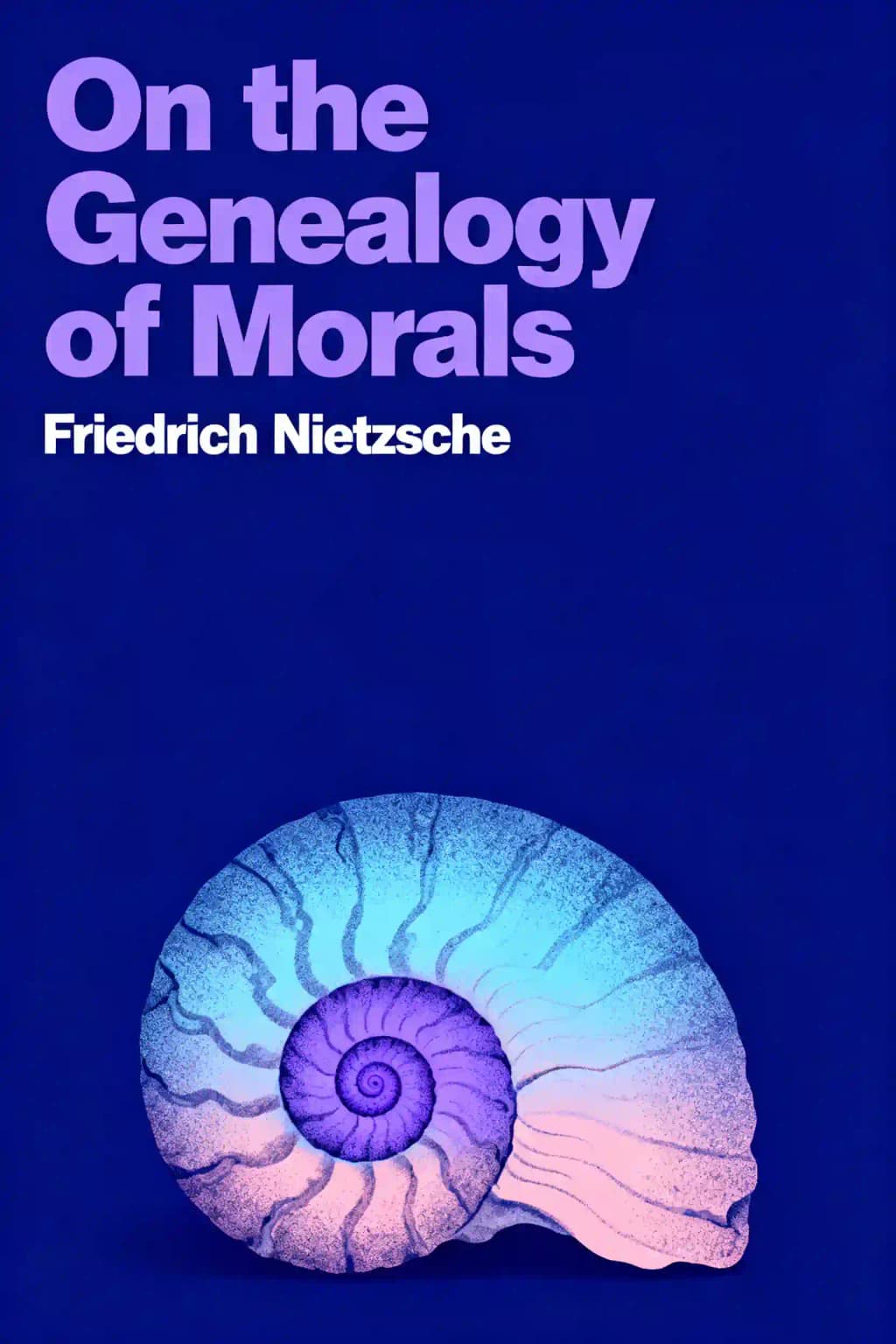
Friedrich Nietzsche's "On the Genealogy of Morals" stands as one of philosophy's most incendiary works-a text that continues to provoke and unsettle readers more than a century after its publication. When it appeared in 1887, Nietzsche was virtually unknown in his native Germany despite having already published fifteen volumes. The book's explosive thesis-that our most cherished moral values originated not from divine inspiration or rational deliberation but from psychological resentment and power struggles-shocked Victorian sensibilities. Today, it remains required reading in philosophy departments worldwide, with figures from Michel Foucault to Jordan Peterson acknowledging its profound influence. Even Sigmund Freud, though reluctant to credit Nietzsche directly, built his theories of civilization on foundations Nietzsche had already laid. What makes this work so enduring? Perhaps it's Nietzsche's uncanny ability to peel back the layers of our moral pretensions and expose the raw, uncomfortable truths beneath-truths we're still struggling to confront in our contemporary moral debates.
第2章
The Birth of Morality: Noble Origins and Slave Revolt
Nietzsche begins his genealogical investigation by challenging the prevailing narrative about morality's origins. English moral philosophers like Herbert Spencer had argued that "good" originally meant "useful," and only later acquired moral significance. Nietzsche demolishes this theory with etymological evidence showing that across Indo-European languages, "good" originally meant "noble" or "aristocratic"-a self-designation of the powerful.
"The judgment 'good' did not originate with those to whom goodness was shown!" Nietzsche declares. Rather, it was the noble, aristocratic, powerful individuals who first designated themselves as "good" in contrast to everything lowly, common, and plebeian, which they labeled "bad." This original moral valuation-what Nietzsche calls "master morality"-springs from a triumphant self-affirmation. The noble person creates values through a spontaneous "yes" to himself.
Consider ancient Greek aristocrats who used "esthlos" (good) to mean "noble-born" and "kakos" (bad) to designate the common man without any particular moral condemnation. The Roman "bonus" similarly indicated the warrior of discord and division (duo) who distinguished himself from ordinary men. These linguistic traces reveal that morality began not as universal principles but as expressions of social hierarchy.
The truly revolutionary moment in moral history came when the priestly caste-specifically the Jewish priests of the prophetic tradition-inverted these aristocratic values. Powerless against their oppressors, they executed what Nietzsche calls "the most spiritual revenge" by declaring: "The wretched alone are the good; the suffering, deprived, sick, ugly are also the only pious ones... but you, you noble and powerful ones, you are for all eternity the evil, the cruel, the lustful, the insatiable, the godless."
This "slave revolt in morality" created our familiar good/evil distinction, replacing the earlier good/bad valuation. Unlike master morality, which springs from self-affirmation, slave morality begins with a "no" to what is outside itself. It requires external stimuli; its action is fundamentally reactive. While the aristocrat barely notices his inferiors, the resentful man obsessively focuses on his enemies, creating values only through opposition to the master.
What makes this analysis so provocative is Nietzsche's refusal to take sides simplistically. Though clearly admiring aspects of aristocratic morality, he acknowledges that slave morality created psychological depth previously unknown. The internalization of hostility-the inability to immediately discharge one's aggressive instincts-forced humans to develop introspection, self-awareness, and conscience. "All instincts that do not discharge themselves outwardly turn inward," Nietzsche writes, creating an inner world that "expanded and extended itself, acquired depth, breadth, and height, in the same measure as outward discharge was inhibited."
第3章
The Machinery of Guilt: How Humans Became Moral Beings
How did humans transform from forgetful animals into beings capable of making promises and feeling guilty? This question drives the second essay, where Nietzsche uncovers the brutal prehistory of morality.
Forgetfulness, Nietzsche argues, is not a passive failing but an active "faculty of repression" that creates mental space for new experiences. To overcome this natural forgetfulness and make humans "calculable," society employed a terrifying "mnemotechnics": "Only that which never ceases to hurt stays in the memory." Through ritualized torture and punishment, early societies literally burned moral obligations into human memory.
The linguistic connection between "Schuld" (guilt) and "Schulden" (debts) reveals morality's economic origins. When a debtor couldn't repay, the creditor received compensation through the right to inflict suffering-a transaction that produced genuine pleasure. "To see others suffer does one good," Nietzsche bluntly states, "to make others suffer even more." This pleasure in cruelty, now hidden beneath layers of civilization, was once openly celebrated.
Imagine ancient festivals where public torture and execution provided entertainment. Even "milder" societies maintained this pleasure principle: Roman aristocrats kept deformed individuals as objects of mockery, medieval courts employed official jesters, and public executions remained popular spectacles well into the 19th century. Our modern discomfort with cruelty doesn't mean the impulse has disappeared-it has merely gone underground.
The "bad conscience" emerged when humans were forced into peaceful society, their aggressive instincts suddenly finding no outlet. Like sea animals forced onto land, these formerly wild creatures found their old instincts useless in the new environment. Unable to discharge aggression outward, these instincts turned inward. "All instincts that do not discharge themselves outwardly turn inward-this is what I call the internalization of man." The human became "an adventure to himself," developing an inner life precisely through this self-torture.
This transition wasn't gradual but violent-imposed by what Nietzsche calls a "blond beast of prey," a conquering race that forced organization upon a formless population. The state began not through contract but through "some pack of blond beasts of prey, a conqueror and master race which... lays its terrible claws upon a populace perhaps tremendously superior in numbers but still formless." This ruthless imposition of order created the conditions for bad conscience by forcing freedom underground.
The feeling of guilt intensified through the concept of debt to ancestors and eventually to gods. As tribes grew more powerful, their sense of indebtedness to founders increased proportionally. Eventually, the maximum creditor-God himself-created an unpayable debt. Christianity's "stroke of genius" was God sacrificing himself for man's guilt, the creditor sacrificing himself for the debtor-a paradox that intensified rather than relieved guilt.
第4章
The Ascetic Ideal: Life's Paradoxical Self-Denial
The third essay investigates the meaning of ascetic ideals-those life-denying practices of self-denial, chastity, poverty, and humility that have dominated human moral systems. Why would life turn against itself? What explains the persistent appeal of these anti-life values?
Nietzsche examines how ascetic ideals function for different types of people. For artists like Wagner, they mean little-artists merely echo others' values rather than creating their own. For philosophers, ascetic practices provide optimal conditions for thinking: freedom from disturbance, clear heads, and independence from social obligations. Philosophers embrace poverty, humility, and chastity not as virtues but as conditions for their work-"their desert is merely their workroom."
The most significant manifestation appears in the ascetic priest, who uses these ideals as instruments of power. The priest serves a vital biological function: managing the suffering of the weak majority. By reinterpreting physical and psychological suffering as punishment for "sin," the priest makes suffering meaningful. "Man, the bravest of animals and the one most accustomed to suffering, does not repudiate suffering as such; he desires it, he even seeks it out, provided he is shown a meaning for it."
This meaning-making function explains the ascetic ideal's tremendous historical power. Humans would rather have a meaningless meaning than no meaning at all-would "rather will nothingness than not will." The ascetic ideal saved the human will itself by providing direction, even if that direction led toward self-denial.
Modern science, far from opposing this ideal, represents its latest and most refined form. Scientists maintain the same unconditional faith in truth that characterized religious devotion, merely substituting one absolute value for another. "It is still a metaphysical faith upon which our faith in science rests," Nietzsche declares, "even we knowers of today, we godless anti-metaphysicians, still take our fire from the flame lit by the thousand-year-old faith."
The ultimate irony is that Christianity's emphasis on truthfulness eventually undermines Christianity itself. "Christian morality itself, the concept of truthfulness taken more and more strictly... forbids itself the lie involved in the belief in God." The will to truth finally questions itself: "What is the meaning of all will to truth?" This self-consciousness will destroy morality-"the tremendous drama of the next two centuries."
第5章
The Psychology of Power: Resentment and Self-Affirmation
Throughout the Genealogy, Nietzsche develops a sophisticated psychology of power that anticipates later developments in psychoanalysis and modern psychological theory. The fundamental distinction between master and slave morality reflects different relationships to power: the master expresses power directly through action, while the slave, unable to act, develops elaborate psychological mechanisms to compensate for their perceived powerlessness. This dynamic plays out not just in ancient societies, but in modern social and political relationships.
Ressentiment-a French term Nietzsche adopts to describe a particular form of resentment-becomes the creative force behind slave morality. Unlike ordinary anger, which discharges immediately in action or confrontation, ressentiment festers and grows more poisonous over time, transforming into a complex web of moral judgments and psychological defenses. The resentful person "loves hidden places, tortuous paths... his soul squints." Unable to respond directly to injuries, he develops elaborate fantasies of revenge disguised as moral principles. This manifests in various ways: the creation of abstract ethical systems, the elevation of suffering as noble, and the denigration of strength as morally suspect.
This psychology explains why the weak insist on concepts like free will and moral responsibility. If the strong simply act according to their nature-"a bird of prey cannot help being a bird of prey"-then moral condemnation makes no sense. But by insisting that the strong could choose to be otherwise, the weak create the illusion that power's non-expression represents moral superiority rather than inability. This mechanism can be observed in various historical contexts, from religious movements that praise humility to modern political ideologies that frame power itself as inherently corrupt.
"To demand of strength that it should not express itself as strength... is just as absurd as to demand of weakness that it should express itself as strength," Nietzsche writes. The lion doesn't feel guilty for devouring the antelope; only humans have developed the psychological machinery to turn natural expressions of power into sources of guilt. This psychological innovation, Nietzsche argues, represents both humanity's greatest achievement and its most dangerous self-deception. The internalization of this guilt creates what he calls "bad conscience," a uniquely human phenomenon that transforms natural impulses into moral failings.
The implications of this analysis extend beyond individual psychology to social institutions and cultural practices. Religious asceticism, moral systems, and even democratic ideals can be understood as sophisticated expressions of ressentiment, transforming the inability to express power directly into a moral virtue. This transformation, while potentially life-denying, has also been incredibly creative, generating much of what we now consider human civilization and culture.
第6章
The Invention of the Soul: Consciousness Through Cruelty
Perhaps Nietzsche's most disturbing insight is that human consciousness itself-our capacity for introspection, self-awareness, and moral reasoning-emerged through cruelty. The "soul" developed not as a divine gift but as an internalization of aggressive instincts that could no longer be discharged outward. This process began, Nietzsche argues, when early human societies first imposed restrictions on violent behavior, forcing individuals to suppress their natural aggressive impulses.
This internalization created an entirely new phenomenon: psychological depth. Animals express instincts immediately; only humans develop complex inner worlds where instincts compete, transform, and disguise themselves. "All instincts that do not discharge themselves outwardly turn inward-this is what I call the internalization of man." The richness of human psychology-our capacity for art, philosophy, and moral reasoning-emerged from this painful process. For instance, the artistic impulse might be understood as sublimated aggression, while philosophical contemplation represents redirected dominance drives.
Nietzsche's account challenges both religious and secular narratives about human development. Against religious views, he shows that conscience emerged not from divine inspiration but from the internalization of violence. The very concept of sin, he suggests, arose from this internalized aggression turning against the self. Against progressive secular narratives, he demonstrates that civilization advances not by eliminating cruelty but by refining it into more sophisticated forms. Modern institutions like education, law, and bureaucracy represent more subtle manifestations of the same fundamental drive to dominate.
This perspective helps explain modern psychological phenomena. Why do people engage in self-destructive behaviors? Why do we often feel guilty even when we've done nothing wrong? Nietzsche suggests these patterns reflect the turning-inward of aggressive instincts that originally evolved for external use. Our psychological suffering represents the price we pay for civilization. Contemporary manifestations include phenomena like perfectionism, obsessive self-criticism, and various forms of mental illness that Nietzsche would view as sophisticated forms of self-cruelty.
The implications extend beyond individual psychology to social institutions. Modern practices of self-improvement, therapy, and moral education can be seen as formalized systems for managing internalized aggression. Even seemingly benign cultural practices-from competitive sports to academic achievement-might be understood as sublimated expressions of primitive violent impulses. This transformation of external violence into internal psychological complexity represents both humanity's greatest achievement and its deepest wound.
第7章
Truth as a Problem: The Self-Destruction of Morality
Nietzsche's most radical move is questioning the value of truth itself. Western philosophy since Plato had assumed truth's absolute value; even those who disagreed about what was true never questioned whether truth should be our highest value. Nietzsche asks: "What in us really wants 'truth'?" This provocative question challenges the foundation of Western philosophical tradition, suggesting that our pursuit of truth might itself be a symptom of psychological needs rather than a purely rational endeavor.
The will to truth, he suggests, originated from the ascetic ideal-the belief that truth has unconditional value regardless of its consequences for life. This ideal emerged from religious and philosophical traditions that privileged the eternal and unchanging over the temporal and earthly. But this will to truth eventually turns against itself, questioning the value of truth itself. "It is still a metaphysical faith upon which our faith in science rests," he writes, "even we knowers of today, we godless anti-metaphysicians, still take our fire from the flame lit by the thousand-year-old faith." Modern scientific thinking, despite its apparent opposition to religious thought, actually inherits its fundamental assumptions about truth's supreme value.
This creates a fascinating paradox: Christianity's emphasis on truthfulness eventually undermines Christianity itself. The moral demand for honesty eventually forces us to admit that morality itself rests on fictions. "Christian morality itself, the concept of truthfulness taken more and more strictly... forbids itself the lie involved in the belief in God." This self-destruction of morality represents "the great spectacle in a hundred acts reserved for the next two centuries of Europe." The very tools that Christianity developed for seeking truth - rigorous self-examination, intellectual honesty, and systematic doubt - ultimately lead to its own undoing.
Nietzsche doesn't simply celebrate this collapse but recognizes its profound danger. Without the ascetic ideal's meaning-making function, humans face a terrifying void. "Man, the bravest of animals and the one most accustomed to suffering, does not repudiate suffering as such; he desires it, he even seeks it out, provided he is shown a meaning for it." The collapse of traditional morality threatens this meaning, potentially unleashing nihilism-the conviction that nothing matters. This crisis of meaning affects not just religious belief but all traditional values and moral systems.
The implications of this analysis extend far beyond religious criticism. Nietzsche suggests that our entire cultural inheritance - our scientific methods, our moral convictions, our philosophical assumptions - all rest on foundations that are themselves questionable. This creates a unique historical situation where humanity must confront the possibility of creating new values without the comfort of absolute truths or divine guidance. The challenge becomes not just surviving the death of God, but finding ways to affirm life in the absence of transcendent meaning.
第8章
Beyond Good and Evil: Toward a New Valuation
Nietzsche's critique isn't merely destructive; it clears space for new possibilities. By exposing morality's contingent historical origins, he frees us to create new values better suited to human flourishing. This creative potential explains why Nietzsche, despite his reputation for negativity, describes his philosophy as a "gay science"-joyful, life-affirming knowledge that celebrates human potential rather than constraining it.
What might post-moral valuation look like? Nietzsche offers hints rather than blueprints, emphasizing the importance of individual interpretation and creative value-formation. He particularly admires the Greek approach to morality, which acknowledged human complexity without demanding impossible purity. When Greeks confronted incomprehensible actions, they attributed them to divine influence rather than moral failing-"a god must have bewildered him." This allowed them to take responsibility without crushing guilt, creating a more nuanced and psychologically sophisticated approach to human behavior.
The Greek model demonstrates how morality can operate without absolute commandments or universal principles. Instead of rigid categorization into good and evil, it allows for ambiguity, contradiction, and the full spectrum of human experience. This approach recognizes that actions can be simultaneously creative and destructive, beneficial and harmful, depending on context and perspective.
Nietzsche suggests evaluating values based on whether they serve life rather than abstract principles. "What is good? Everything that heightens the feeling of power, the will to power, power itself in man. What is bad? Everything that is born of weakness." This naturalistic approach judges values by their consequences for human vitality rather than their conformity to pre-established rules. It asks not "Is this right?" but "Does this enhance life?" This criterion leads to a more dynamic and contextual understanding of value, one that can adapt to changing circumstances and individual needs.
Most radically, Nietzsche envisions the "sovereign individual"-the truly free person who has earned the right to make promises because they've developed genuine self-mastery. Unlike those governed by external moral codes, the sovereign individual creates values through their own will, taking full responsibility for their choices and their consequences. This represents not moral relativism but its opposite: taking responsibility for one's values rather than inheriting them uncritically. The sovereign individual achieves this through rigorous self-examination, psychological insight, and the courage to question inherited beliefs.
This new valuation requires tremendous strength and honesty. It demands that we confront the uncertainty of a world without absolute moral truths while maintaining the discipline to create and uphold our own values. The reward, Nietzsche suggests, is authentic freedom - not the illusory freedom of following predetermined rules, but the genuine autonomy of conscious self-determination.
第9章
The Lasting Impact: Nietzsche's Challenge to Contemporary Thought
Nietzsche's Genealogy continues to challenge us because it strikes at assumptions we haven't fully examined. His insights reverberate through contemporary debates about morality, psychology, and politics, offering frameworks that remain remarkably relevant more than a century after their conception.
In psychology, Nietzsche anticipated Freud's concepts of repression, sublimation, and the unconscious by decades. His account of how aggressive instincts turn inward provides a sophisticated framework for understanding phenomena from depression to self-harm to moral perfectionism. When we feel inexplicable guilt or engage in self-punishment, we're experiencing what Nietzsche identified as the "bad conscience"-aggression with nowhere to go but inward. This insight has profound implications for modern therapeutic approaches, particularly in understanding how cultural and social pressures contribute to psychological distress. His concept of the "internalization of man" helps explain why societies with increasing external comfort often show rising rates of anxiety and depression.
In politics, his analysis of ressentiment helps explain how grievance becomes a powerful political force. When groups feel powerless to change their circumstances directly, they often develop moral narratives that transform their weakness into spiritual superiority. This pattern appears across the political spectrum, from religious fundamentalism to various forms of identity politics. Modern movements, whether populist uprisings or social justice campaigns, frequently demonstrate the dynamics Nietzsche described - the transformation of perceived powerlessness into moral authority. His insights help explain why political movements often frame their struggles in moral terms rather than purely practical ones.
In ethics, Nietzsche challenges us to examine whether our moral principles truly serve life or merely disguise other motives. Do we value honesty because it enhances human flourishing, or because it allows us to judge others? Do our moral principles express genuine strength and self-affirmation, or do they mask resentment toward those with power? These questions become particularly relevant in an era of social media virtue signaling and performative morality. His critique of traditional morality raises essential questions about contemporary ethical frameworks, from utilitarian calculations to rights-based theories.
Nietzsche's method of genealogical critique has influenced numerous fields beyond philosophy, including anthropology, sociology, and critical theory. His approach of questioning not just the content but the very origins of our values has become a fundamental tool in critical thinking across disciplines. This methodology continues to inspire new investigations into how power relations shape our understanding of truth, justice, and morality.
The Genealogy concludes with a striking image: the will to truth finally questioning itself, creating "the most terrible, most questionable, and perhaps also the most hopeful of all spectacles." This self-questioning represents both danger and opportunity-the chance to move beyond inherited values toward something more authentic, more life-affirming, and perhaps more truly human. In our current era of rapid social change and moral uncertainty, this call for radical self-examination and the courage to question our deepest assumptions remains as relevant as ever.