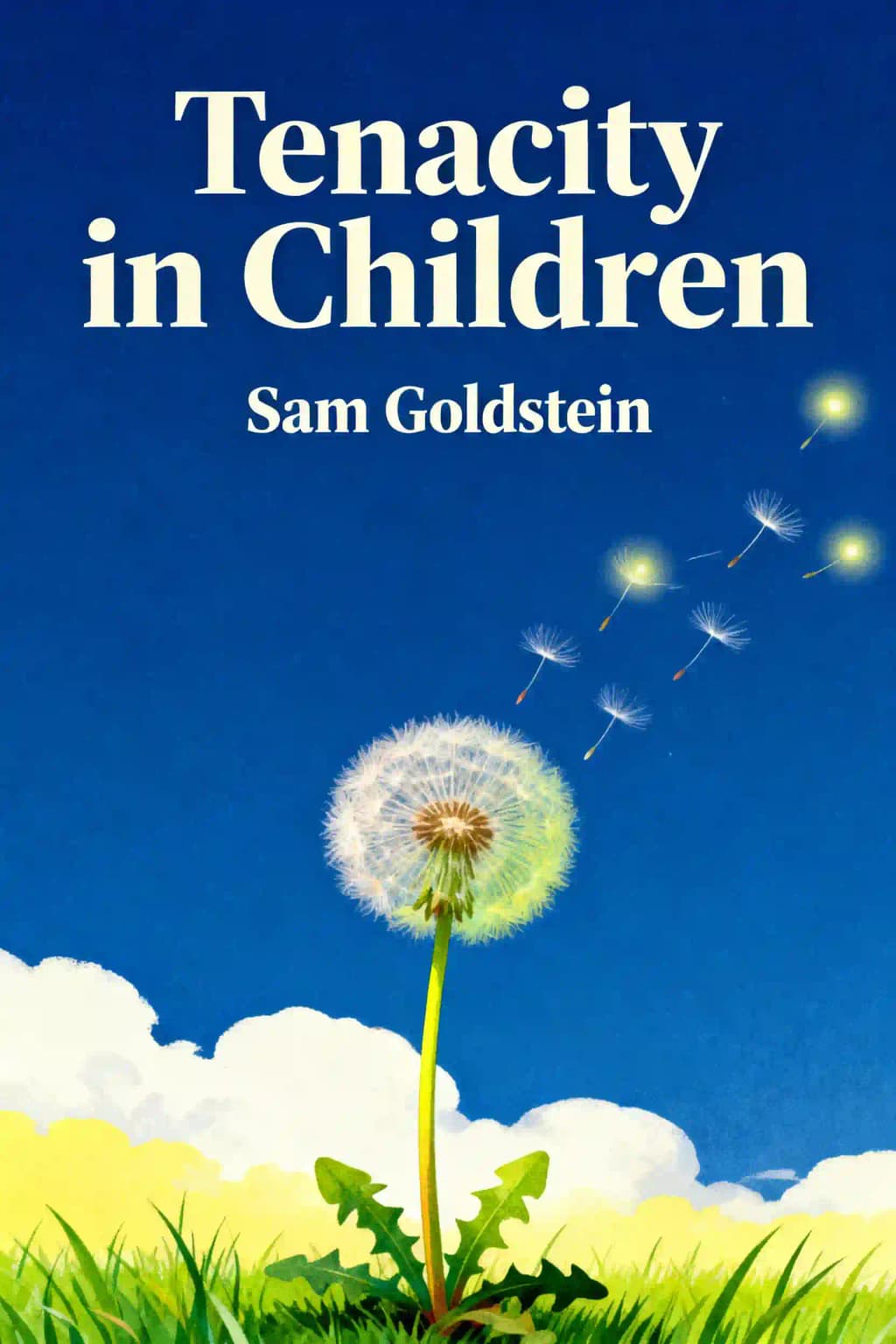
Tenacity in Children
Nurturing the Seven Instincts for Lifetime Success
『Tenacity in Children』の概要
Discover the seven evolutionary instincts that build tenacity in children. Praised by psychologist Maurice Elias as a book that "will change our schools," this groundbreaking guide reveals the surprising connection between intuitive optimism and lifetime success. What ancient instinct is your child missing?

『Tenacity in Children』の主要テーマ
- islands of competence
- strength-based parenting
- childhood resilience
- intuitive optimism
- charismatic adult influence
『Tenacity in Children』の名言
Children don't need to learn solely through experience-they intuitively believe.
Intuitive Optimism is best described as being "born believing."
Controlling responses often fail when underlying needs remain unaddressed.
Working with severely challenged children taught us that assessing what's wrong yields limited information.
The traditional medical model focused primarily on identifying what was wrong with children.
『Tenacity in Children』の登場人物
- Sam GoldsteinAuthor and child psychologist
- Robert BrooksAuthor and child psychologist
- GavinTen-year-old case study on resilience
- SethCase study of a child with behavioral challenges
著者について
『Tenacity in Children』の著者について
Sam Goldstein, Ph.D., a clinical neuropsychologist and bestselling author of Tenacity in Children, brings decades of expertise in child development and resilience-building to this psychologically grounded work. A board-certified forensic neuropsychologist and Adjunct Assistant Professor at the University of Utah School of Medicine, Goldstein draws from his clinical practice at Salt Lake City’s Neurology Learning and Behavior Center, where he treats over 300 families annually.
The book’s focus on fostering perseverance aligns with his extensive body of work, including over 50 publications on neurodevelopmental disorders. His published works include the Handbook of Resilience – 2nd Edition and Raising Resilient Children with Autism Spectrum Disorders.
As Editor-in-Chief of the Journal of Attention Disorders and the creator of the Autism Spectrum Rating Scales, Goldstein’s research-based frameworks inform interventions used in clinical settings worldwide. His prior works, such as Assessment of Autism Spectrum Disorders and Handbook of Executive Functioning, are essential resources for mental health professionals. Over 40 translations of his psychological assessments underscore his global influence in the field of developmental psychology.
Tenacity in Childrenの要約をダウンロード
Tenacity in Childrenの要約をPDFまたはEPUBで無料でダウンロード。印刷やオフラインでいつでもお読みいただけます。
この本に関するよくある質問
Tenacity in Children explores seven innate instincts that foster resilience and lifelong success, including intuitive optimism, intrinsic motivation, and compassionate empathy. Authors Sam Goldstein and Robert B. Brooks use research, clinical stories, and practical strategies to show how nurturing these instincts helps children thrive. The book emphasizes actionable approaches for caregivers to build emotional resilience and adaptability.
This book is ideal for parents, educators, therapists, and professionals in child development or mental health. It offers evidence-based guidance for anyone seeking to foster resilience, emotional intelligence, and problem-solving skills in children. Researchers and graduate students in public health or psychology will also find its frameworks valuable.
Yes, for its actionable insights into nurturing resilience, though some readers note it relies heavily on patient anecdotes rather than broader research. While praised for its practical strategies, critics highlight its narrower focus compared to the authors’ earlier works. It holds a 4/5 average rating, with many calling it a “solid foundation” for child development.
The seven instincts are:
- Intuitive optimism (persistence through challenges)
- Intrinsic motivation (self-driven curiosity)
- Compassionate empathy (emotional connection)
- Simultaneous intelligence (adapting logic and creativity)
- Genuine altruism (selfless concern for others)
- Virtuous responsibility (accountability)
- Measured fairness (balanced equity)
These traits form the core framework for fostering tenacity.
Unlike Goldstein and Brooks’ earlier books, which included comprehensive literature reviews, this work leans more on clinical stories and their professional insights. Some reviewers feel it lacks academic depth but appreciate its relatable, narrative-driven approach.
The book advises caregivers to:
- Model resilient behavior.
- Encourage problem-solving through guided questioning.
- Validate emotions while promoting adaptability.
- Create environments where mistakes are learning opportunities.
These tactics aim to strengthen the seven instincts organically.
Some readers find the patient anecdotes distracting and desire more empirical data. A Goodreads review notes the book prioritizes the authors’ viewpoints over broader research, calling it “less rigorous” than their prior publications.
Educators can integrate its principles by fostering growth mindsets, designing collaborative learning tasks, and prioritizing emotional validation. The book suggests using real-world scenarios to teach measured fairness and altruism.
Notable passages include:
- “Tenacity is not inherited; it is cultivated through deliberate nurturing.”
- “Children thrive when adults provide guideposts, not rigid rules.”
- “Resilience grows where optimism and accountability intersect.”
It tackles issues like screen-time overload and social anxiety by advocating for balanced responsibility, intrinsic motivation, and empathy-building activities. The authors stress adapting strategies to contemporary contexts while upholding core instincts.
Yes, its focus on intuitive optimism and compassionate empathy provides tools to reframe anxious thoughts. The book encourages caregivers to validate feelings while modeling calm problem-solving, helping children build confidence through small victories.
Success is framed as lifelong resilience, emotional well-being, and the ability to adapt to change—not just academic or career achievements. The seven instincts collectively nurture a “meaningful and happy future,” per the authors.