In a world of shrinking attention spans, Emmy-winner Connie Dieken's revolutionary Connect-Convey-Convince method transforms how Fortune 500 leaders communicate. Can mastering these three habits truly make anyone influential? Apple and McDonald's executives already know the answer.
Connie Dieken, bestselling author of Talk Less, Say More, is a globally recognized leadership communication expert and founder of Influence360˚, a research-backed methodology to strengthen executive influence. A former Emmy Award-winning broadcast journalist for ABC and NBC, Dieken leverages her 20-year career interviewing world leaders to distill actionable strategies for concise, impactful communication. Her work bridges leadership development and behavioral science, themes central to her books, including Become the Real Deal, which further explores building authentic influence in high-stakes environments.
Dieken advises C-suite executives at Fortune 500 companies like Apple, Nestlé, and The Cleveland Clinic through her firm, The Dieken Group, and has been named a Top 10 Executive Coach globally. Her insights are frequently featured in The Wall Street Journal, CNBC, and USA Today, and she is the only individual inducted into both the Radio/Television Broadcasters Hall of Fame and the National Speakers Association Hall of Fame.
Talk Less, Say More remains a cornerstone resource for professionals seeking to eliminate communication noise, with Dieken’s Influence360˚ framework validated through studies involving over 20,000 leaders worldwide.
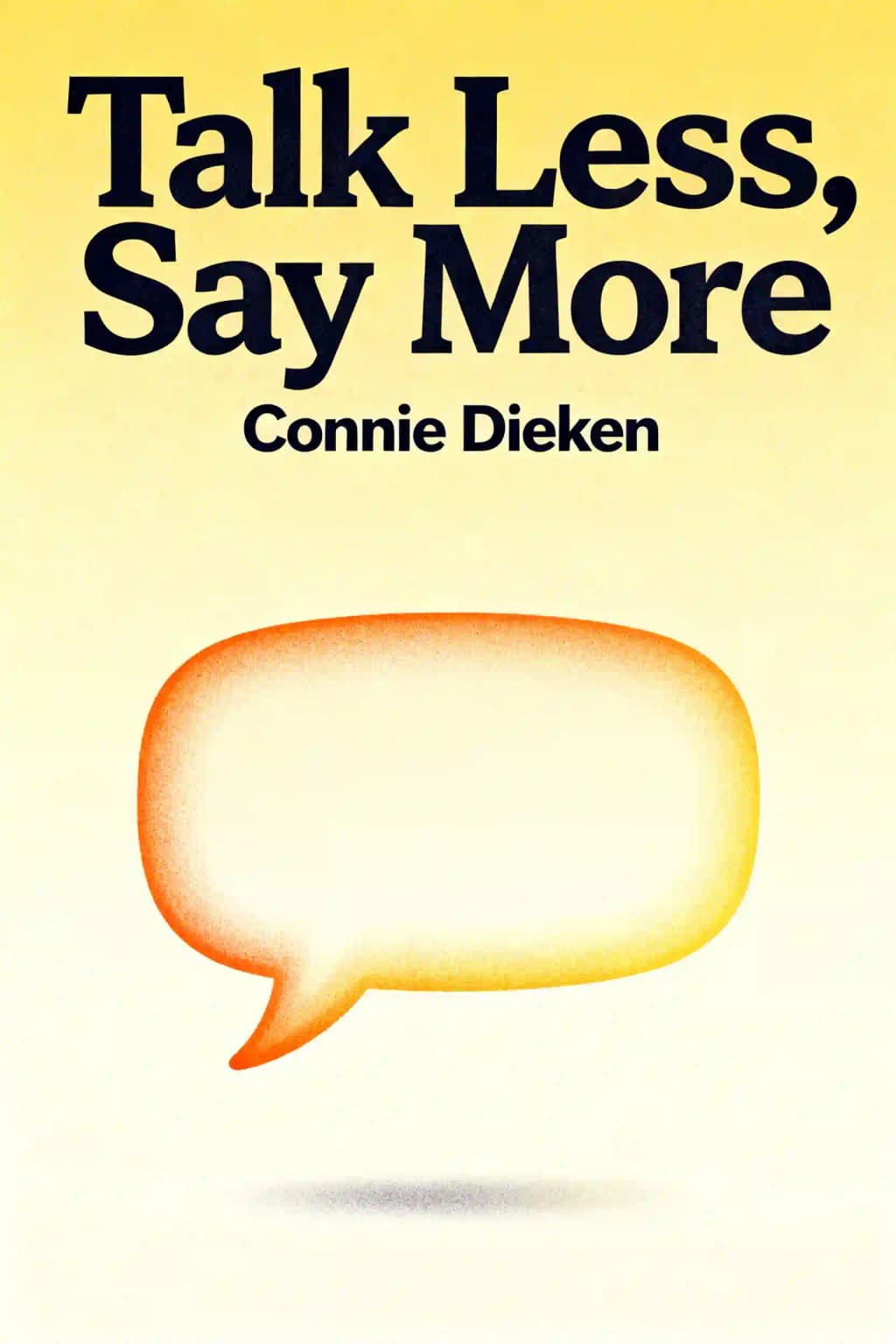
Talk Less, Say More by Connie Dieken outlines three habits to improve influence in communication: Connect (build trust), Convey (deliver clarity), and Convince (drive action). It teaches readers to streamline messaging, use visual aids, and adapt to modern attention spans. The book combines 15+ years of research with real-world examples from Dieken’s career as an Emmy-winning journalist and executive coach for companies like Apple and Coca-Cola.
Leaders, sales professionals, marketers, and anyone seeking to refine communication skills in high-stakes environments will benefit. Dieken’s strategies are tailored for time-pressed professionals navigating distractions, making it ideal for executives, entrepreneurs, and teams aiming to improve persuasion, presentations, or workplace collaboration.
Yes, it’s a #1 Amazon/Audible bestseller praised for actionable frameworks like the 3Cs (Connect, Convey, Convince) and “portion control” messaging. Readers call it “enlightening” for leadership and sales roles, though some note the advice leans general. Dieken’s direct style—honed through 20,000+ coaching sessions—makes complex concepts accessible.
The 3C framework is:
Dieken argues these habits reduce miscommunication and align teams, especially in fast-paced settings.
Dieken advocates “portion control”—breaking messages into digestible chunks. Tips include leading with headlines, using contrast (e.g., graphs), and replacing jargon with storytelling. This aligns with how the brain processes visuals 10x faster than text.
Notable quotes include:
These emphasize emotional engagement and clarity.
Yes. Dieken advises tailoring social content to be personal, clear, and jargon-free, treating platforms as “opt-in” spaces where brevity matters. She warns against overposting and stresses pre-checking content for clarity.
Some readers find the advice too general or reminiscent of common sense. Audiobook listeners critique Dieken’s “overproduced” delivery, though others praise her expertise. The book focuses more on principles than step-by-step guides.
It offers tactics like rethinking PowerPoint slides (fewer words, more visuals), managing tough questions calmly, and aligning messages with listeners’ priorities. Dieken’s research shows these methods boost trust and decision-making speed in teams.
Dieken’s 20-year Emmy-winning TV career, executive coaching for Fortune 500 leaders, and 15-year study of 20,000+ professionals underpin her authority. She’s the only person in the Broadcasters, Speakers, and Million-Dollar Consulting Halls of Fame.
It merges journalistic storytelling with data-driven frameworks like Influence360°, a validated tool for measuring leadership impact. Unlike theoretical guides, Dieken prioritizes brevity and adaptability for today’s distracted audiences.
Absolutely. The book teaches how to structure talks for clarity, use body language to reinforce messages, and handle Q&A sessions confidently. Dieken’s “show, don’t tell” approach is particularly useful for presentations.
著者の声を通じて本を感じる
知識を魅力的で例が豊富な洞察に変換
キーアイデアを瞬時にキャプチャして素早く学習
楽しく魅力的な方法で本を楽しむ
First words are sticky, so make them count by sharing insights rather than just facts.
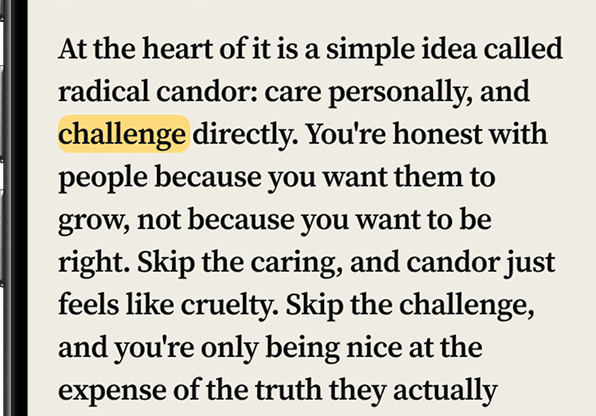
The purpose of workplace candor is improving performance, not winning arguments or avoiding conflict.
Smart candor, like Goldilocks' "just right" preference, demonstrates integrity.
People tune out almost immediately if they don't see immediate value in what you're saying.
Organizations without candor pay devastating prices.
『Talk Less, Say More』の核心的なアイデアを分かりやすいポイントに分解し、革新的なチームがどのように創造、協力、成長するかを理解します。
鮮やかなストーリーテリングを通じて『Talk Less, Say More』を体験し、イノベーションのレッスンを記憶に残り、応用できる瞬間に変えます。
何でも質問し、学習スタイルを選び、自分に本当に響くインサイトを一緒に作れます。

"Instead of endless scrolling, I just hit play on BeFreed. It saves me so much time."
"I never knew where to start with nonfiction—BeFreed’s book lists turned into podcasts gave me a clear path."
"Perfect balance between learning and entertainment. Finished ‘Thinking, Fast and Slow’ on my commute this week."
"Crazy how much I learned while walking the dog. BeFreed = small habits → big gains."
"Reading used to feel like a chore. Now it’s just part of my lifestyle."
"Feels effortless compared to reading. I’ve finished 6 books this month already."
"BeFreed turned my guilty doomscrolling into something that feels productive and inspiring."
"BeFreed turned my commute into learning time. 20-min podcasts are perfect for finishing books I never had time for."
"BeFreed replaced my podcast queue. Imagine Spotify for books — that’s it. 🙌"
"It is great for me to learn something from the book without reading it."
"The themed book list podcasts help me connect ideas across authors—like a guided audio journey."
"Makes me feel smarter every time before going to work"

Talk Less, Say Moreの要約をPDFまたはEPUBで無料でダウンロード。印刷やオフラインでいつでもお読みいただけます。
We've all been there-talking ourselves out of opportunities we desperately wanted. The job interview where you couldn't stop rambling. The pitch meeting where your brilliant idea got lost in a sea of unnecessary details. That moment when you realized the person across from you stopped listening five minutes ago, yet you kept talking. Here's the uncomfortable truth: in a world drowning in information, most of us are our own worst enemies when it comes to communication. The average person now has an attention span shorter than a goldfish-just eight seconds to grab someone's interest before they mentally check out. We're screening calls, multitasking during meetings, and "communi-faking" our way through conversations while mentally composing grocery lists. Yet paradoxically, we keep talking more, believing that volume equals value. It doesn't. What if the secret to influence isn't adding more words, but strategically removing them? What if three simple habits, applied in the right sequence, could transform how people respond to you?
We're drowning in "communiclutter" - a relentless flood of emails, texts, and notifications. People have developed mental filters that screen out anything not immediately relevant. The biggest mistake? Leading with what matters to you rather than what matters to your audience. Consider Linda, a corporate executive who lost her dream job by checking emails during a CEO recruitment call. Or colleagues who take ten minutes to make a thirty-second point. By the time they finish, everyone's mentally checked out. Martin Luther King Jr. understood connection as strategic necessity. During his March on Washington speech, he sensed his audience needed more than prepared remarks. He abandoned his script for the unplanned "I Have a Dream" section, staying present to what listeners needed. The secret? Stop living in your moment and start living in theirs. Watch for subtle signals - posture shifts, glazed eyes, tightening jaws. John, a sales executive, saved a major account by noticing his client's discomfort mid-pitch. Instead of pushing forward, he stopped and asked what was wrong. That moment of genuine presence saved the relationship.
We constantly bury what matters most. Emails hide deadlines in paragraph four. Meetings meander before reaching the point. By then, attention has evaporated. Frontloading delivers relevance immediately. Robert, a new CEO, opened his first annual meeting with tedious housekeeping. By the time he reached his vision, half the board had mentally checked out. First words stick-they set the tone for everything that follows. Frontloading isn't just *what* you say; it's *how* you say it. Joel Osteen begins sermons with jokes to prime receptivity. Greg addressed Mike's performance issues by frontloading genuine praise, lowering resistance enough for hard truths to land. Verizon discovered that letting angry customers vent first, then frontloading with "I can definitely help you," defused hostility better than jumping to solutions. Smart candor balances brutal honesty and conflict avoidance. When Space Shuttle Columbia disintegrated in 2003, investigators found NASA engineers had warned about insulation problems but were dismissed by officials who punished bad news. Communication failure, not technical failure. Effective candor offers solutions, not just criticism. When receiving criticism, resist defensiveness-it ensures harsher future feedback. Ask for clarification, assess whether critics want to help, then incorporate what's useful. Your energy affects receptivity more than your words.
Your brain processes visuals up to ten times faster than text. When a financial advisor verbally explained a complex fund arrangement to a school board, he created weeks of confusion. A simple diagram would have provided instant clarity. The $30 billion weight-loss industry proves this power through before-and-after photos-visual contrast creates instant belief. Attorney Johnnie Cochran demonstrated this during O.J. Simpson's trial with his "if the glove doesn't fit, you must acquit" moment. People responded to what they saw, not what they heard. Most people misuse PowerPoint by cramming slides with dense text or excessive clip-art. Neither works. For effective visual presentations, remember you're the first visual people see. Create a highlight reel, not a comprehensive archive. Use photos and videos instead of text-heavy bullets. Guide attention by highlighting key numbers. Keep social media posts clear and simple. Keep videos brief-attention spans remain ruthlessly short. Convey warmth on camera by lifting your cheek muscles and warming your eyes. Show them what you mean, and they'll remember far longer.
Ready, set, go. Beginning, middle, end. Your mind craves information in threes - it's hardwired into how we process and remember. When a national sales leader condensed twenty priorities to three, confusion evaporated and market share increased. To prompt quick decisions, offer three options. Amazon displays three books per row, iTunes showcases three albums, Apple presents three computer configurations. Infomercials exploit this with "three easy payments" - one TV producer restructured a $500 product into three payments and sales skyrocketed. This "narrow and deep" formula works everywhere. In emails, use three bullets for instant clarity. For presentations, use the "accordion structure" - three key points with subpoints you can expand or contract based on time. The strategic twist: frontload your preferred option. Mattress salespeople start with the priciest bed because once people experience the best, they resist settling for less. Put your top choice first, second choice last for a strong finish, and bury the weakest in the middle. For indecisive people, ask them to eliminate one option - shifting from choosing to rejecting works like magic.
Warren Buffett transforms dry facts into memorable stories. Explaining See's Candies' growth from $5 million to $82 million in earnings, he told shareholders: "Just as Adam and Eve kick-started an activity that led to six billion humans, See's has given birth to multiple new streams of cash for us." That biblical reference creates instant understanding that raw numbers never could. Stories break through noise and stick. Spencer Johnson's "Who Moved My Cheese?"-a short fable about mice and "little people" reacting to change-has sold over twelve million copies, outlasting data-driven business books. Stories make abstract concepts concrete and memorable. Tell success stories featuring a positive future. Reagan's "Morning Again in America" campaign highlighted concrete improvements: more people working, lower interest rates, more families buying homes. The ad ended with the powerful triplet "prouder, stronger, better." When crafting your success story, identify significant accomplishments, link them to concrete outcomes, and end positively. Keep business stories simple. Maintain clear purpose and anchor your story with time and place. Balance preparation with spontaneity-plan your story but sound conversational. Relive the story as you tell it, making it about your audience so they envision themselves in the narrative.
Weak language strips you of power. When you sound uncertain, you'll be treated that way. Confidence is contagious, but so is wavering-needing approval, refusing to take stands, using hesitant words, and backing down when challenged. Stop tagging and hedging. Tagging turns statements into questions: "isn't that right?" or "don't you think?" Hedging starts sentences with "I'm not an expert, but..." or "I could be wrong, but..." Both signal uncertainty and undermine your authority before you've made your point. Don, a director with valuable insights, stayed quiet during executive meetings until he overcame his fear of speaking up-then got promoted to vice president. Ann, the first female board member of a nonprofit, learned that leadership judgments come from contributions after the board president called her out for remaining silent. Voice opinions with sincerity to sound decisive. Don't be a yes-man-both reveal insincerity over time. When apologizing, address issues directly, state solutions, take responsibility, and avoid passive-aggressive phrases like "no offense, but..." Your voice needs more energy than you think. Record yourself-you'll likely be shocked at how flat you sound. Use vocal variety: change tone, shift speed, emphasize action verbs, and employ power pauses. Breathe from your diaphragm for a fuller voice. Match intensity to each situation, because decisive language without energetic delivery falls flat. In a world drowning in words, influence comes from talking less while saying more. The Connect-Convey-Convince method respects human attention in an age of distraction. When you connect by staying in their moment, convey through visuals and stories, and convince by sounding decisive, you cut through noise. In your next conversation, ask: Am I connecting first, or just talking? Am I conveying with clarity, or adding clutter? Am I convincing through confidence, or hoping volume compensates for weakness?