第1章
The Freedom to Be Unapologetically You
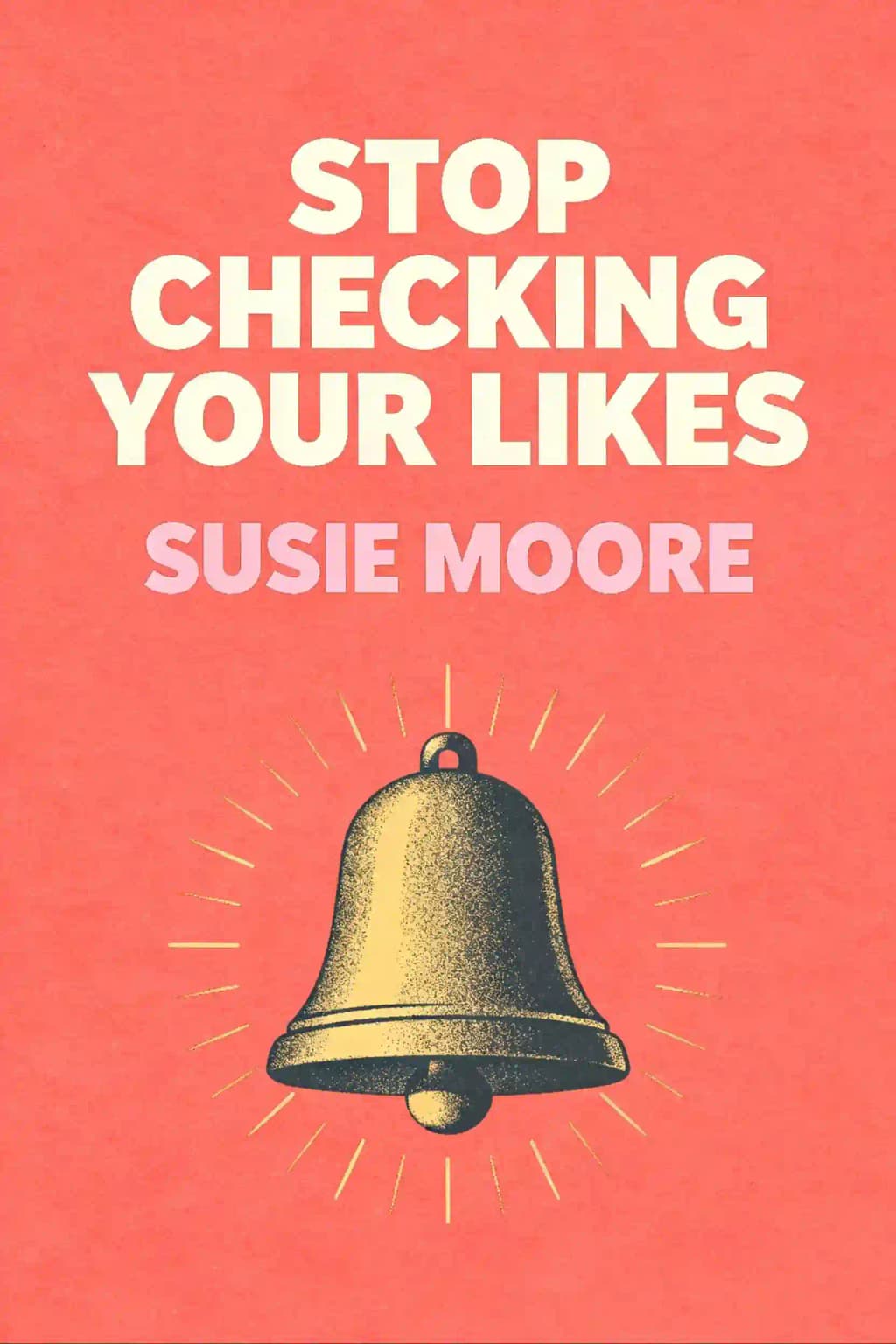
What if your entire life could transform by simply stopping the endless quest for approval? Imagine waking up each day without wondering what others think of you, making decisions based solely on your inner wisdom, and living with a profound sense of freedom that most people only dream about. This is the revolutionary premise behind Susie Moore's game-changing book that's been embraced by everyone from Arianna Huffington to Sara Blakely. As a former Silicon Valley sales director who walked away from a $500,000 salary to build a life on her own terms, Moore doesn't just talk about freedom from external validation-she embodies it. Her work has been featured everywhere from Oprah to the Today show, resonating with millions seeking to break free from the "approval trap" that keeps them playing small. In a world obsessed with likes, followers, and constant validation, Moore's message is both countercultural and desperately needed: your worthiness isn't determined by others' opinions of you.
第2章
Breaking Free From Your Parents' Programming
We all carry the invisible imprint of our upbringing-beliefs, fears, and patterns passed down like unwanted heirlooms. My own unconventional family history includes a sister named after my father's mistress and a childhood punctuated by stays in homeless shelters. My mother, shaped by war-torn Poland and difficult relationships, instilled beliefs like "hardship is necessary" and "don't trust others too readily." Yet she also taught me independence, resilience, and finding joy in simple pleasures. My father, despite his addiction issues and sometimes abusive behavior, gave me a love of literature and taught me how humor can transform pain.
Parents inevitably affect their children's worldviews, often unconsciously passing down their limitations. Growing up poor, I felt a desperate ache for approval, even refusing to remove layers in hot classrooms to avoid being caught in someone else's hand-me-downs. These early experiences shaped my relationship with seeking validation from others.
But here's the liberating truth: we can question these inherited beliefs while still loving our parents. We can recognize that they did their best with what they knew at the time. The most successful people learn to detach from parental expectations and the collective "they"-that internalized voice telling us to conform to societal norms about education, family, and lifestyle.
From my challenging childhood, I learned to tune inward, discovering self-help books at fifteen. This became my salvation. The key is recognizing that you're your own best asset and that your uniqueness is precisely what makes you special. You don't need permission to pursue your dreams or live authentically. The limitations you inherited are just starting points, not final verdicts on what's possible for your life.
What if you forgave your parents for being human and embraced the unlimited possibilities that exist beyond their programming? What if you decided today that your life is truly yours to create?
第3章
Nobody Has It All Figured Out
Despite being "unqualified" on paper with no college degree and no connections, I succeeded by understanding that everything I needed was already within me. When offered a political sales position during the Romney-Obama race, I knew nothing about U.S. politics as a British native. Yet I threw myself into the role, consuming political media and working the complex DC market relentlessly-even having two client steak dinners in one night. Though my boss would have been "thrilled" with $500,000 in advertising revenue, I generated almost $3 million by November.
My success came not from expertise but from my strong work ethic, tolerance for rejection, and optimism. The basics are more than enough when paired with persistence. Action trumps perfect knowledge every time.
Impostor syndrome-feeling undeserving of accomplishments and attributing success to luck-affects nearly everyone who stretches beyond their comfort zone. As a child visiting "nice, normal" homes in England, I behaved like a "wind-up doll," fearing rejection if friends saw my real life. This syndrome particularly plagues high-achieving women, causing them to decline opportunities or sabotage success.
But here's the universal truth: everyone experiences self-doubt. Even seemingly perfect celebrities like Martha Stewart, Oprah, and Michelle Obama have struggled with profound challenges. Winston Churchill's remarkable career was largely driven by seeking his mother's approval. If you research someone you admire, I guarantee you'll discover "stumbles, lack of confidence, failures, and despair" in their journey.
When opportunity knocks but self-doubt creeps in, say "yes" anyway and learn on the job. People achieving your dreams might be less talented but simply more willing to proceed despite uncertainty. The difference is their courage to believe in themselves without knowing the outcome.
Nothing in life is certain except perhaps death and taxes. I've known NASA employees afraid to date, CEOs wanting to fake illness before speaking, and magazine editors-in-chief constantly fearing termination. The world isn't divided between those who know what they're doing and those who don't; it's between those who act despite uncertainty and those paralyzed by fear of failure.
Our hearts function as "cosmic computers" containing all the guidance we need. When something feels deeply right, even when difficult, that's your inner wisdom speaking. The calm confidence you exude when you simply "do you" is magnetic-and it comes from trusting yourself more than seeking external validation.
第4章
Recognizing Your Unique Value
We spend our lives pursuing validation-from wanting to be Mom's favorite as children to counting social media likes as adults. We've created a culture that makes us sad, with antidepressant prescriptions skyrocketing. Why? Because we consistently overestimate others while undervaluing ourselves, assuming they possess special qualities we lack when we only see their curated public personas.
I want you to recognize your own worth, particularly if you're in an undervalued role like being a stay-at-home parent. A friend only realized her value when a divorce lawyer itemized her contributions-from childcare to household management. Taking a career backseat can cost "potentially millions" when you calculate the value of services like nannies ($800/week), personal chefs ($300/week), and home managers ($700/week). There's more value in whatever you're doing than you probably believe.
When I navigated job interviews in New York without a degree, I deflected education questions by redirecting: "Where did you go to school?" I emphasized my experience with American brands, even if I'd only worked with them from Australia. This strategy worked-I started at $75,000 and within five years was earning $500,000 annually in advertising technology, outearning many Ivy League graduates by leveraging my people skills.
As a child from a broken home, I remember feeling jealous of other children's colorful packaged snacks while I had only a peanut butter sandwich and half a banana. This taught me an important lesson about comparison: we often compare single aspects of our lives to others who excel in just that one area. Someone might have better material possessions, but you might have better academic skills or more loyal friends.
The problem with social media is that we're only seeing one dimension of others' lives-their highlight reel-while being blind to their struggles. To overcome comparison, identify what you're fixating on in others, then honestly assess how much you truly know about their complete lives. Create a "What I've Got!" list of your own strengths and advantages. Consider deleting social media apps for a month-Yale research suggests this could make you happier than receiving cash.
Remember Aesop's fable "The Cock and the Jewel," where a rooster prefers a grain of barley over a pearl? The moral: precious things are valuable only to those who prize them. We must recognize and maximize our own unique strengths rather than fixating on what others have.
第5章
The Magic of "So What?"
One morning while enjoying peaceful time with my dog Coco, I discovered someone had commented on my YouTube channel that I "looked like a man" and was "gross." Immediately enraged, I called my Scottish friend and mentor Fiona to vent about the "skanky troll." When I angrily shared this with her, she simply responded, "So what?"
These two powerful words immediately deflated my anger and provided clarity. The comment didn't define my worth or require my attention. "So what?" contains magic because it helps us hold life lightly and remember what truly matters.
This simple question carries ancient wisdom applicable to countless situations. It means doing what feels right for you without worrying about others' opinions. Whether facing rude remarks, exclusion, rejection, unfavorable comparisons, or embarrassing mistakes-"So what?" reduces unnecessary pressure and brings us back to our natural state of ease. When we care less about negative events, others mirror our reaction, making the situation less significant for everyone involved.
The worst part of failure isn't what went wrong but worrying what others will think. An older woman once approached me on my 30th birthday with life-changing wisdom: "I tried so hard to be perfect when I was your age. And then I realized no one was watching." This insight is liberating because most people are too preoccupied with their own insecurities to scrutinize our mistakes.
My friend Renee seemed to have a perfect life-prestigious Wall Street job, marriage, pregnancy, and a beautiful home-yet confessed to feeling "like a loser" after moving from Manhattan to the suburbs. She missed city life and felt trapped by others' expectations. But we can't win by trying to please everyone-even the Dalai Lama has critics who call him a "conman." The only solution is adopting the "So what?" mentality and stopping the quest for external validation.
Our fear of others' judgments often outweighs our fear of actual consequences. I feared judgment about my divorce more than being alone. A friend declined a ski trip fearing friends would discover her modest salary. A manager worried more about appearing incompetent than actually losing an employee. An event organizer was relieved to sell fewer tickets but concerned about appearing unsuccessful. The pattern is clear-the circumstances themselves are manageable, but our anxiety about others' perceptions creates unnecessary suffering.
Being casual about serious life events doesn't make you irresponsible-it makes you a boss. I've skipped college, moved countries alone, taken jobs without qualifications, survived marriages and divorces, left a $500K salary for my side hustle, and grown up with my father's drug-dealing friends. While unusual, these experiences weren't life-threatening. Being lighter in our approach attracts positive energy, while heaviness only brings more heaviness.
第6章
Self-Approval as Your Superpower
My colleague Michael fell in love with Jenny, a beautiful woman who constantly criticized her "big legs." Though Michael initially dismissed Jenny's self-criticism, he eventually began seeing her through the lens she created, ultimately losing interest in her. The lesson is clear: self-criticism can turn others against us.
See yourself as your partner's "prize" and stop seeking reassurance through self-deprecation. As Louise Hay wisely noted: "You have been criticizing yourself for years, and it hasn't worked. Try approving of yourself and see what happens."
The wellness industry has an unspoken rule that we can only describe ourselves as "works in progress," never crossing an "invisible self-approval threshold." I reject this limitation, preferring Kanye West's philosophy that "Everyone should be their own biggest fan." At the very least, be on your own side more often. Notice how easily you think positively about others while denying yourself the same courtesy.
Look at photos from a decade ago and notice how good you looked despite your harsh self-criticism then. This perspective can help you appreciate your current self, knowing that in ten years you'll likely feel the same way about how you look today. Adopt this simple mantra: "I've decided to like what I've got."
Self-affirmation is transformational. Speak positively to yourself in mirrors everywhere-elevators, window reflections, bathrooms-with phrases like "Hello, you clever woman!" or "Good hair day!" I was once caught by a child while doing mirror affirmations in a restaurant bathroom. Rather than feeling embarrassed, I wish I'd told the child: "Do affirmations, not drugs, kid! Lasting happiness!" Daily self-affirmation applies beyond physical appearance to all aspects of ourselves-intelligence, warmth, professional experience. When I once acknowledged doing well at a speaking engagement, my friend realized she never gives herself credit and was inspired to start. Self-affirmation isn't just personal-it gives others permission to appreciate themselves too, creating a ripple effect of positivity.
When struggling to see your own value, try the "Twelve Magic Moments" exercise. Identify three achievements in each of four categories: family, work, friendships, and relationship with yourself. These can range from small acts of kindness to major life milestones-anything that makes you proud, regardless of others' standards. Reflect on each achievement, remembering the feelings and challenges involved, and use these memories as evidence of capability when facing new challenges. Our egos have short memories, typically recalling only recent failures, so it's important to consciously remember past successes as proof that "We can do hard things because we've already done hard things!"
For deeper healing, try the "Loving Little Me" exercise. Find a childhood photo of yourself, look into your own young eyes, and have a conversation with your younger self. After greeting "little you," ask what they have to tell you, listen deeply, and acknowledge everything they endured. When we criticize our current selves, we're actually hurting that innocent child who doesn't deserve it. Promise protection with the mantra: "I love you. Thank you. I've got you." Keep the photo accessible for future moments of self-criticism, challenging yourself to speak to your child-self before putting yourself down.
第7章
Embracing Rejection as Redirection
Other people's opinions of us are actually reflections of themselves rather than accurate assessments of who we are. The term "offense" originally meant "bait" in Greek-we take the bait whenever we let someone's words hurt us. Self-approval requires being willing to experience negative emotions without fear. The most confident people aren't afraid of looking stupid or being wrong because they know uncomfortable feelings are temporary.
As a columnist, I've been called a "gold-digging whore" and received other harsh insults. My advice? Never defend yourself. I once disarmed a critic by agreeing with them rather than getting defensive.
When I discovered I wasn't invited to a friend's party, I felt hurt but realized I probably wouldn't have wanted to attend anyway. Being excluded often makes us irrationally want something more than we actually do. From hosting my own small birthday dinner, I learned that "rejection" is rarely intentional or malicious-it's usually just circumstantial.
Consider whether you're being deliberately excluded and whether you're overreacting. My coworker Daniel panicked about being left out of a project only to discover his boss was trying to protect him from overwork. When feeling left out, view your situation as if it were happening to someone else for perspective. This detachment helps you see that what feels catastrophic to you would seem manageable if happening to another person.
Reframe hatred and criticism as signs of relevance: "No one kicks a dead dog"-people only attack those making an impact. When interviewing Kris Jenner, I witnessed the vicious comments people made and learned that what you don't read can't bother you. Common criticisms have translations: "Sara is full of herself" really means "I envy Sara's confidence." Judgment reflects more about the judge than the judged, so ask "What's happened to this person?" rather than "What's wrong with me?" when facing criticism.
The fable of the fox unable to reach grapes-declaring them "sour" when he couldn't have them-offers a powerful reframing technique. Rather than dwelling on what we can't attain, transform negative thoughts about missed opportunities. As children living in shelters, my sister and I would reframe our circumstances: "Dad's angry a lot. It's good we don't see him much" or "Other kids have houses, but we get to always be together."
During my tech sales career, I thrived despite lacking industry connections or technical background because I rejected the concept of rejection itself and remained unbothered by office politics. I would persistently contact potential clients-sometimes fifty-plus times-ignoring silence or rudeness. My persistence came from understanding that rejection was just part of the job, not a personal affront.
When we welcome uncomfortable feelings instead of fearing them, we become unstoppable. Dan Baker explains in "What Happy People Know" that unless fear is protecting you from danger, all fears fall into just two categories: "I am not enough" or "I do not have enough." These primitive fears evolved from our caveperson days but now manifest in our reluctance to pursue opportunities or take risks. By recognizing which fear bucket your hesitation falls into, you can soothe yourself: "Being scared is normal. I have a good handle on this."
第8章
The Power of Asking
Asking questions creates opportunities that can transform your life. When I was in my twenties, I asked a handsome stranger at a concert for his number-we've been happily married for over a decade. Questions open invisible doors and prevent dangerous assumptions that create needless suffering.
As a recruitment consultant, I witnessed firsthand how asking pays off. One candidate confidently requested not just higher salary but additional benefits like flexible scheduling and training budget-and got everything. Her self-approving style made her appear more valuable despite competing against more experienced candidates.
Since then, I've negotiated my salary for every new job and responsibility increase, turning it into a fun game I almost always win. This approach has earned me equal to or more than male counterparts simply because I asked. Though the ten-minute conversation feels scary, the long-term benefits are worth it. As Tim Ferriss notes, success correlates with willingness to have uncomfortable conversations. Nobody throws money at satisfied employees-you must participate in manifesting your own blessings. Research shows women who routinely negotiate earn over a million dollars more by retirement than those who don't.
Many people feel comfortable giving but guilty about receiving. This creates an imbalance in nature's flow. Deepak Chopra explains that giving and receiving are different aspects of the same energy flow-stopping either interferes with nature's intelligence. We're meant to support each other through dynamic exchange.
My personal mantra-"How can I let this be easier?"-is revolutionary in its simplicity. This perspective can transform any situation: conversations with partners, flight delays, work days, new projects. We don't have to make everything hard.
My asking history includes requesting my husband's number (my best request ever), negotiating family communication expectations after moving, requesting specific restaurant tables, arranging coffee meetings with people I want to meet, asking for more kindness from rude people, requesting reliability from dates, communicating needs to my husband, asking people to stop questioning my childbearing plans, requesting clear directions without confusing terminology, seeking clarity from managers, negotiating hotel late checkouts, demanding punctuality, requesting to present first in group settings, and getting real with myself when course correction is needed.
Perhaps my most important request has been forgiveness-my parents reconciled before my father's death, showing that in the end, only love is real. I challenge you to ask for five things each week. Once you start asking, you start receiving-it's your level of self-approval and acknowledgment of worthiness rising.
第9章
Embracing Ease and Simplicity
My mantra for simplifying life is "Let it be easy." My childhood dream of living in "the place with the big buildings" (New York) materialized unexpectedly when my husband received a job offer there, despite my belief that America would be impossible to access without a college degree. The key insight: it's never about the situation you're facing, but what you're believing about it. As Wayne Dyer wisely noted, "There is no stress in this world. Only stressful thoughts."
When feeling overwhelmed, ask yourself: "What's essential here?" For presentations, focus on essential information and consider turning formal talks into interactive Q&As. For health detoxes during busy social periods, prioritize rest and water while setting reasonable limits rather than becoming a hermit. For difficult conversations with loved ones, remember your shared values and keep communication simple-share your perspective, then truly listen. The message: lighten up. When we're heavy or stressed, we close ourselves off from recognizing the good in our lives and from allowing more good in.
Our best ideas emerge from calm, optimistic mindsets, while stress crushes creativity. We miss opportunities when stressed. During bored office hours, I noticed wellness websites and submitted a 500-word article that was published and shared thousands of times, launching my coaching career-all before completing my certification. When you're stressed and in self-doubt, you deflect opportunity, but the odds for what you want might be better than you think.
Working with my tapping coach Greg, I discovered my "block" was actually protecting me from potential failure. The advantage of indecision was that I couldn't make mistakes. I've seen this pattern in my coaching practice: someone avoiding health improvements because weight provides an excuse for being single; another person keeping friends at arm's length to hide perceived inadequacies; someone not asking for a raise to avoid rejection or causing tension with an insecure spouse. By uncovering these hidden advantages to our blocks, we can begin dismantling them.
To identify where you might be blocked, ask yourself: What's the block? What's the upside of this problem? What's keeping you stuck? How might losing this belief change things? And crucially, if you completely approved of yourself, how would this problem change? Awareness of our secret beliefs is the first step to reducing their power over us.
"Hedonic adaptation" is our tendency to quickly return to baseline happiness despite major positive or negative life events. I once lent gold earrings to a friend, only realizing their value after giving them away and finding they were discontinued. This taught me to look for overlooked "gold" in my life, as we often fail to appreciate what we have until it's gone.
Try this morning ritual to counteract hedonic adaptation: imagine losing your best friend, a limb, your job, access to food and water, or your home. Feel the emotions of loss, then open your eyes to find everything still there. This jarring exercise provides perspective like waking from a bad dream.
第10章
Your Inherent Worthiness
I once raced a stranger around Central Park's reservoir, only to miss my exit because I was so focused on "winning." This perfectly illustrates how we often lose our way by focusing on others rather than our own path. Our worthiness is inherent and unquestionable-we deserve to be loved exactly as we are, not when we achieve some future goal. Nothing can change our fundamental value as human beings.
As my tapping coach wisely noted: "Nothing will wear me out more quickly or more thoroughly than running around trying to be something that I already am." No flaws, mistakes or perceived faults change our deep value. External validation, even prestigious awards like a Nobel Prize, is ultimately of zero consequence to our true worth.
There's an important distinction between introversion (preference for quiet environments) and shyness (fear of criticism). To reduce shyness: stop self-identifying as shy, remember everyone feels uncertain in unfamiliar situations, be a generous conversationalist by asking questions, lose the pressure to be perfect, and understand that visibility isn't vulnerability. Forcing yourself to be visible-like speaking within the first eight minutes of meetings-can advance your career, as "shyness costs more than a little courage does."
I've asked my assistant to stop forwarding praise emails, just as I filter out hate mail, because I want my work to come from intuition rather than external validation. Don't make your internal state dependent on external circumstances-the most courageous people don't let outside events dictate their inner feelings. We can choose which parts of our personal stories to focus on.
My potential TED Talk concept involves two girls with dramatically different childhoods-one growing up in shelters amid addiction and chaos, the other with educated, loving parents-revealing they're both me. We can choose which story to tell ourselves since both are true. Rather than "fake it till you make it," I prefer Amy Cuddy's "fake it till you become it." Beginners aren't fakes but simply at the starting point of mastery. Practice self-approval during all life stages, remembering that "people are rewarded in public for what they practice for years in private."
The ultimate freedom comes from approving of yourself so completely that others' opinions lose their power over you. When you stop checking your likes-whether literal social media validation or metaphorical approval from others-you discover that the only approval that ever mattered was your own. And that approval has been available to you all along, waiting for you to claim it.