第1章
When Your Mind Becomes Your Worst Enemy
Ever caught yourself in a spiral of self-criticism so vicious you wouldn't dare speak those words to anyone else? You're not alone. For eight years as a therapist, Katie Krimer has witnessed countless forms of self-hatred that keep people trapped in cycles of suffering. Her book "Sh*t I Say to Myself" has struck a chord with readers seeking to break free from their inner critic, becoming a favorite among celebrities like Selena Gomez who openly discuss mental health. The book's cultural impact stems from its refreshing blend of psychological expertise and raw authenticity-Krimer doesn't just theorize about negative self-talk; she shares her journey as a recovered negative thinker, worrier, overthinker, and perfectionist. In a world where mental health awareness has finally entered mainstream conversation, this guide offers something increasingly precious: practical tools to transform our relationship with our own minds.
第2章
The Brain's Negativity Bias: Why We're So Hard on Ourselves
Our brains produce upwards of 60,000 thoughts daily, ranging from positive and neutral to negative in valence. Self-talk-our continuous internal monologue-operates on a spectrum from harsh self-criticism to compassionate self-encouragement. But across cultures and personalities, humans demonstrate a remarkable tendency to fixate on the negative aspects of their experience.
Evolution shaped our brains to prioritize survival over contentment or happiness. We're wired with a potent negativity bias that makes threatening or unpleasant events dominate our psychological landscape. Research shows that our brain recognizes and processes negative stimuli faster than positive ones, requiring five positive experiences to counterbalance a single negative one. This heightened sensitivity to negative information served our ancestors well for detecting threats but creates challenges in modern life by perpetuating cycles of anxious and pessimistic thinking.
This negativity manifests through various cognitive distortions-irrational thought patterns that feel convincingly real. Common examples include all-or-nothing thinking ("If I'm not perfect at this presentation, I'm a complete failure"), overgeneralization ("I got rejected once, so I'll always be alone"), and catastrophizing ("This minor mistake will destroy my career"). You might tell yourself, "I'm not good at drawing, so there's no sense in making art," or "I'm never going to meet someone special," presenting these thoughts as realistic assessments when they're actually self-imposed limitations.
The consequences of this negative self-talk extend far beyond momentary discomfort. We spend countless hours ruminating over perceived inadequacies, missing opportunities for growth and connection. These self-defeating thoughts become self-fulfilling prophecies: believing we'll fail makes us less likely to try, confirming our initial fears. Our defensive inner voice damages relationships by making us quick to assume the worst in others, react defensively to feedback, and withdraw from meaningful connections. Imagine having a perpetually critical therapist who follows you everywhere, constantly pointing out flaws and predicting disaster-that's the exhausting reality of living with persistent negative self-talk.
What makes this pattern particularly insidious is its subconscious nature. These thoughts feel so natural and familiar that we rarely question their validity. We mistake our subjective interpretations for objective reality, failing to recognize that our experience is shaped by perception rather than fact. Most critically, we remain unaware that this internal dialogue is malleable-that with awareness and practice, we can reshape our mental habits toward more balanced and constructive patterns of thinking.
第3章
Breaking Through "I Can't Change" Mindset
Despite reading countless self-help books or attending therapy, many secretly believe they can't change. This covert self-talk sneaks into our language and keeps us from committing to healthier thinking habits. While we believe others can transform their lives, we remain certain of our own ineptitude.
Fear of failure creates paralysis, confirming our original belief that we "can't form good habits" or "always stop short." This self-fulfilling prophecy gets reinforced by guilt and shame, creating a negative cycle that feels impossible to escape. Many people intellectually "get it" but struggle with follow-through, leaving them stagnant and increasingly self-critical about their perceived inability to change.
The truth is that change happens naturally with age, but more importantly, our brains possess neuroplasticity-the ability to develop new neuronal connections that can rewire our thinking patterns. This biological fact means we're designed to adapt and grow throughout our lives, not remain fixed in harmful thought patterns.
The choice becomes simple: either scare yourself out of taking steps toward growth and guarantee stagnation, or ditch the old self-talk, be courageous, and experience positive change. If you avoid stepping outside your comfort zone, you forfeit the right to complain about aspects of yourself you're displeased with.
Developing a growth mindset-believing your abilities can improve through effort-rather than a fixed mindset is crucial. Those with growth mindsets cope better with setbacks, reframe perspectives to maintain motivation, learn from experiences, and prioritize becoming their best selves.
Creating lasting change requires building self-awareness first. Reflect on your past change attempts by examining what effort you've put into building new self-talk habits, what barriers prevented change, what fears got in your way, and how you talked to yourself during the process. Then commit to changing your self-talk by writing down your intention and connecting this commitment to your intrinsic values-why changing matters to you personally.
第4章
Befriending Your Mind Instead of Fighting It
Talking negatively about how you talk negatively to yourself creates a meta-level of suffering that's counterproductive. We judge our inner experiences with thoughts like "I shouldn't be thinking this," "I'm weak for feeling this way," or "I hate feeling sad"-essentially criticizing our brain for functioning normally, which is as pointless as fighting gravity.
We often apologize, justify, or feel ashamed when sharing our thoughts, failing to permit ourselves to simply be human. The first step toward change is catching ourselves mid-judgment and normalizing our mind's activity. Once we consistently recognize our inner critic, we can consciously change our response.
Curiosity doesn't come naturally when judging ourselves, but developing it as your default response creates an unmatched superpower. When our mind races or our body responds to perceived threats, we face a choice: let fear dominate through judgment, or become curious about our inner experience by observing without judgment-like scientists studying natural behavior.
Instead of judging your thoughts with an "ugh" response, practice asking curious questions with a "huh" attitude. Transform your tone from attitude to wonder. Try exploratory questions like "I wonder why I just had that thought?" or "What would happen if I just let the sadness stay here for a while?" or "What if I accepted that changing this narrative takes time?" Keep asking questions instead of criticizing the organ keeping you alive.
This shift from judgment to curiosity creates space between you and your thoughts. It allows you to see that you are not your thoughts-you are the awareness observing them. This distinction is crucial for breaking free from the grip of negative self-talk.
第5章
Challenging the Authority of Your Thoughts
When we have thoughts like "I'm the shittiest friend ever" after making a mistake, we often agree with them without question and make decisions based on these beliefs. This can lead to losing relationships not because of our actual mistakes, but because we decided a single error determined our entire worth.
With 50,000-70,000 daily thoughts, our brain can't fact-check each one. Thoughts aren't inherently true or false-they're electrical signals our mind rapidly interprets based on mood, events, and perceptions. Many thoughts are opinions based on years of conditioning. Taking negative thoughts too seriously damages self-belief and worth.
To evaluate a thought's truth, ask if it's 100% true, 100% of the time. Would 100 strangers unanimously agree with your perception? When you stop clinging to every belief, you gain choice in whether to let thoughts influence you negatively or find more supportive self-talk.
Three evaluation tips can help: First, check if emotions are present and potentially distorting thoughts. When we're anxious, sad, or angry, our thoughts tend to align with these emotional states rather than reality. Second, remember thoughts are just electrical brain activity-worth listening to but not necessarily following. Third, create distance by saying "I'm having the thought that I'll fail" instead of "I know I'll fail."
When experiencing negative thoughts, write them down followed by three ways to disprove them. For example, if you think "I'm never going to meet someone," counter with "I cannot tell the future; therefore, I cannot prove this is true." Further fact-check by examining what story the thought upholds, why you're quick to agree with it, how believing it affects your life, and what would change if you no longer believed it to be true.
第6章
The Power of Present-Moment Awareness
For most of us, the present moment remains elusive as our minds wander through the default mode network, keeping us stuck ruminating about the past or anxious about the future. Studies show that the average person spends nearly 47% of their waking hours thinking about something other than what they're currently doing. This mental time-travel manifests in various ways - replaying conversations, worrying about upcoming events, or getting lost in hypothetical scenarios. When we spend life lost in thought, we miss the subtle details of our experiences and fall prey to negative thinking patterns that pull us from experiencing what's happening now.
Mindfulness-paying attention on purpose, in the present moment, and nonjudgmentally-creates space to observe our thoughts without being controlled by them. This practice involves developing a curious, open awareness of our moment-to-moment experience, whether pleasant or unpleasant. By intentionally redirecting our awareness from what our brain evolved to focus on, we can catch ourselves in the act of negative self-talk and address it immediately. This might mean noticing when we're catastrophizing about a future event or getting caught in self-critical loops about past actions.
The benefits of mindfulness extend beyond just catching negative thoughts. Research has demonstrated its profound impact on both mental and physical well-being. It allows us to acknowledge discomfort without adding layers of judgment, helps us accept things as they are rather than how we wish them to be, and significantly improves emotion regulation. Mindfulness encourages self-compassion by creating distance between ourselves and our thoughts, and enhances our relationships by allowing us to observe our behaviors without ego interference. Regular practitioners report reduced stress levels, improved focus, better sleep quality, and increased emotional resilience.
Bring mindfulness into your life through various practical approaches: catch your wandering mind and gently redirect it to the present using anchor points like breath or physical sensations; take regular breaks from electronics to tune into your immediate environment; savor enjoyable moments by fully engaging your senses; connect deeply with others through mindful listening; and establish a regular meditation practice, even if just for a few minutes daily. Remember that mindfulness is most effective when practiced throughout each day rather than only during difficult moments - it's like building a muscle that strengthens with consistent use.
What makes mindfulness so powerful is that it directly counters the brain's tendency to time-travel mentally. While our minds evolved to plan for the future and learn from the past - crucial survival mechanisms that helped our ancestors anticipate threats and remember valuable lessons - this evolutionary advantage becomes problematic when it pulls us away from experiencing our lives as they unfold. Modern life amplifies this tendency through constant digital connectivity and information overload. By anchoring ourselves in present-moment awareness, we reclaim our ability to fully engage with life rather than merely thinking about it. This practice allows us to respond thoughtfully to situations instead of reacting automatically, leading to better decisions and more meaningful experiences.
第7章
From Catastrophizing to Realistic Thinking
Catastrophic thinking robs us of the present by keeping us focused on imagined future disasters. While panic attacks and health anxiety represent extreme versions, catastrophizing serves no one well. Those who catastrophize tend to magnify their struggles and underestimate their ability to cope, often turning minor setbacks into perceived catastrophes. For example, a delayed response to an email becomes evidence of professional failure, or a minor health symptom transforms into an imagined terminal illness.
Understanding why we assume the worst can illuminate our path to change. Some catastrophize to maintain a sense of control - if we imagine every possible disaster, we feel more prepared. Others do it as a defensive mechanism, believing that expecting the worst will somehow cushion the blow if things go wrong. However, research shows that this thinking pattern actually increases anxiety and decreases our ability to respond effectively to real challenges.
To counter catastrophic thinking, several evidence-based strategies prove effective: First, accept that uncomfortable situations are part of life, regardless of our expectations. Second, practice labeling catastrophic thoughts as just thoughts - not facts or predictions. Third, develop a self-reassurance protocol, perhaps writing down three past challenges you've successfully overcome. Fourth, systematically write down negative scenarios alongside more realistic alternatives, noting actual probabilities. Finally, visualize yourself successfully navigating through worst-case scenarios, building confidence in your resilience.
When facing opportunities like dream jobs where we don't meet all requirements, our inner critic often launches into catastrophic thinking, convincing us not to try at all. This self-protective mechanism helps avoid immediate discomfort but creates long-term regret. For instance, studies show that people regret actions not taken far more than actions that failed. Not trying becomes a misguided strategy to create certainty in an uncertain world, but it ultimately stunts personal and professional growth.
To transform your relationship with failure, implement these practical steps: First, reframe failure as a necessary component of learning - consider how every successful person has a history of failures behind their achievements. Second, build trust in your ability to handle undesirable outcomes by recalling past resilience. Third, separate your identity from your attempts - you are not your failures or successes, but rather the person who keeps growing through both. Fourth, remember the "spotlight effect" - research shows that people pay far less attention to our mistakes than we imagine.
When visualizing potential defeat, practice asking yourself "So what?" repeatedly until the scenario loses its emotional charge. For example: "What if I fail the presentation?" So what? "My boss might think less of me." So what? "I might not get the promotion." So what? This exercise helps reveal that most feared outcomes, while uncomfortable, are ultimately manageable. The more we can approach potential outcomes with curiosity rather than fear, the more empowered we become to take meaningful action despite uncertainty.
第8章
Accepting Reality Without Surrendering to It
Reality can indeed be difficult, and we often try to avoid it. Acceptance doesn't mean giving up or settling-it means acknowledging the present moment without judgment or attempts to change it. Our suffering comes from wanting reality to be different than it is, whether it's frustration over a late train or something more significant.
Radical acceptance means stopping resistance with our whole mind, body, and heart-like floating in the Dead Sea, letting the salt cradle us at the surface with nothing to do but be. Humans typically react to distress by trying to change circumstances, changing behavior to cope, continuing to feel miserable, and finally accepting circumstances.
Key reminders for radical acceptance include recognizing that reality cannot be changed regardless of difficulty, that there are causes for our experiences, and that while pain is inescapable, we can reduce suffering by how we respond to it.
To practice acceptance, write down a stressful event and explore why it's difficult to accept. Create acceptance statements (like "I accept that the friendship is over") and practice saying them confidently. Take deep breaths while relaxing your muscles-a calmer body leads to a less resistant mind. When thoughts of "But I don't accept it" arise, focus on the bare facts of what happened without judgments, and acknowledge "Yes, it is part of my reality."
The paradox of acceptance is that it often creates space for change. When we stop fighting against what is, we free up energy that can be directed toward constructive action. By accepting reality as it is right now, we position ourselves to respond wisely rather than react blindly.
第9章
Creating Distance Between You and Your Thoughts
Our struggle isn't with the content of our thoughts and emotions but with our maladaptive reactions to them. We over-identify with thinking and feeling, amplifying negative states instead of viewing inner experiences objectively. This fusion makes perspective difficult and things feel permanent when they're actually transient.
We often incorporate criticism into our identity-like being called "too much" or "anxious"-which solidifies faulty core beliefs, removes our power through labeling, and signals to our brain that change is impossible because it's "just who we are."
Mindful awareness interrupts overidentification with thoughts or beliefs. This practice requires nonjudgment and balance-neither ignoring nor exaggerating negative experiences. Despite their intensity, feelings and thoughts are passing, impermanent states, not representative of our entire being.
Our minds in default mode can be drama queens, but we can choose not to give power to others' perceptions. Transformative self-talk comes when we recognize we take ourselves too seriously and understand that negative inner dialogue can be questioned, ignored, reframed, observed, or accepted-like weather, sometimes it rains, sometimes it shines.
To gain perspective, divide a paper into three sections: Situation, Overidentification, and Eagle Eye. Describe a distressing situation in detail, identify aspects you've overidentified with (triggered beliefs or fears), then zoom out for an objective view. For example, turning "My friend didn't text back, they must prefer their new work friend over me" into "This is my best friend of ten years who I just saw recently; they probably have a normal reason for not texting, and it's good they're making connections at work."
This practice of creating distance doesn't mean disconnecting from your emotions or experiences. Rather, it means developing the capacity to witness them without being completely consumed by them. It's about gaining perspective while remaining engaged with life.
第10章
Breaking Free from Limiting Language
The words "can't," "should," and "always/never" slip into our self-talk with remarkable stealth, limiting our potential and creating unnecessary suffering. When we say "I can't ever get over this" or "I've tried to stop thinking about it, but I just can't," we're limiting ourselves with one simple word.
"I can't" usually codes for "I don't want to," "I've tried and failed," "I'm not ready," "It feels too hard," or "I'm too scared." Being specific creates clarity and opens possibilities. For example, "I can't get over them" becomes "I haven't yet properly processed the pain from that experience." "I can't be around my parents" transforms to "I want to protect my emotional boundaries."
Similarly, "should" statements imply there's a better way to be than how you are, creating anxiety, inferiority, and guilt. These statements are often idealistic and unattainable, beating us down rather than lifting us up. To overcome "should" statements: examine the evidence (according to whom should you be better?); accept your shortcomings as part of being human; put down the measuring stick you're using for comparison; take away guilt while maintaining accountability; and replace "should" with more productive language.
"Always" and "never" are forms of black-and-white thinking that limit our perspective. While sometimes it's easier to use these catchall terms, they often give an inaccurate reflection of reality. The solution is simple: eliminate these words unless they're numerically accurate (always = every single time; never = zero times) or you're deliberately exaggerating.
This shift from limiting language to more accurate, nuanced expression isn't just about words-it's about creating mental flexibility that allows for growth, self-compassion, and a more realistic view of yourself and the world.
第11章
Embracing Imperfection and Human Worth
Perfectionism often stems from conditional childhood validation where being "exactly right" meant being safe, loved or accepted. Our universal craving to feel valued creates a sense that something's missing, driving us to prove our worthiness. Yet perfection is both unattainable and subjective-the goalposts constantly move.
When we inevitably fall short, harsh self-criticism follows, damaging our self-esteem. Many perfectionists avoid tasks altogether rather than confront the painful reality that perfection is impossible. Letting go means radically accepting our reality-that our best at any moment IS enough.
The concept of being unworthy assumes our existence and value are entirely conditional-defined by standards set by parents, society, or relationships. We learned that to be loved, we had to do something, be someone, or prove ourselves. Dr. Glenn R. Schiraldi offers profound wisdom on unconditional human worth: "you are important and valuable as a person because your essential, core self is unique and precious; of infinite, eternal, unchanging value; and good." This principle asserts that we're as precious as any other person, regardless of external validation or achievements.
Many believe they're broken because their body and mind carry a history of pain and trauma. This belief strengthens in a culture that offers little mindfulness and compassion, where few know how to interact in emotionally adaptive ways. The perception of being broken stems largely from a society that devalues imperfection.
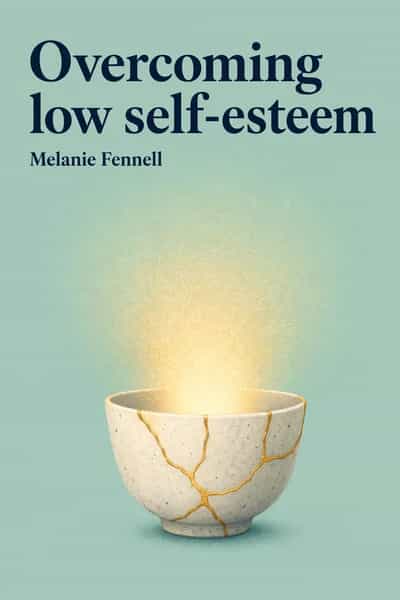
Instead of indulging in thoughts of brokenness and shame, practice repeating statements like "I am a human who has suffered," "I am whole, even though I struggle," or "I do not need fixing. I need healing." Consider exploring the Japanese art of kintsugi, which celebrates the beauty in broken and imperfect things by repairing broken pottery with gold-showing how something broken can become whole again and even more beautiful.