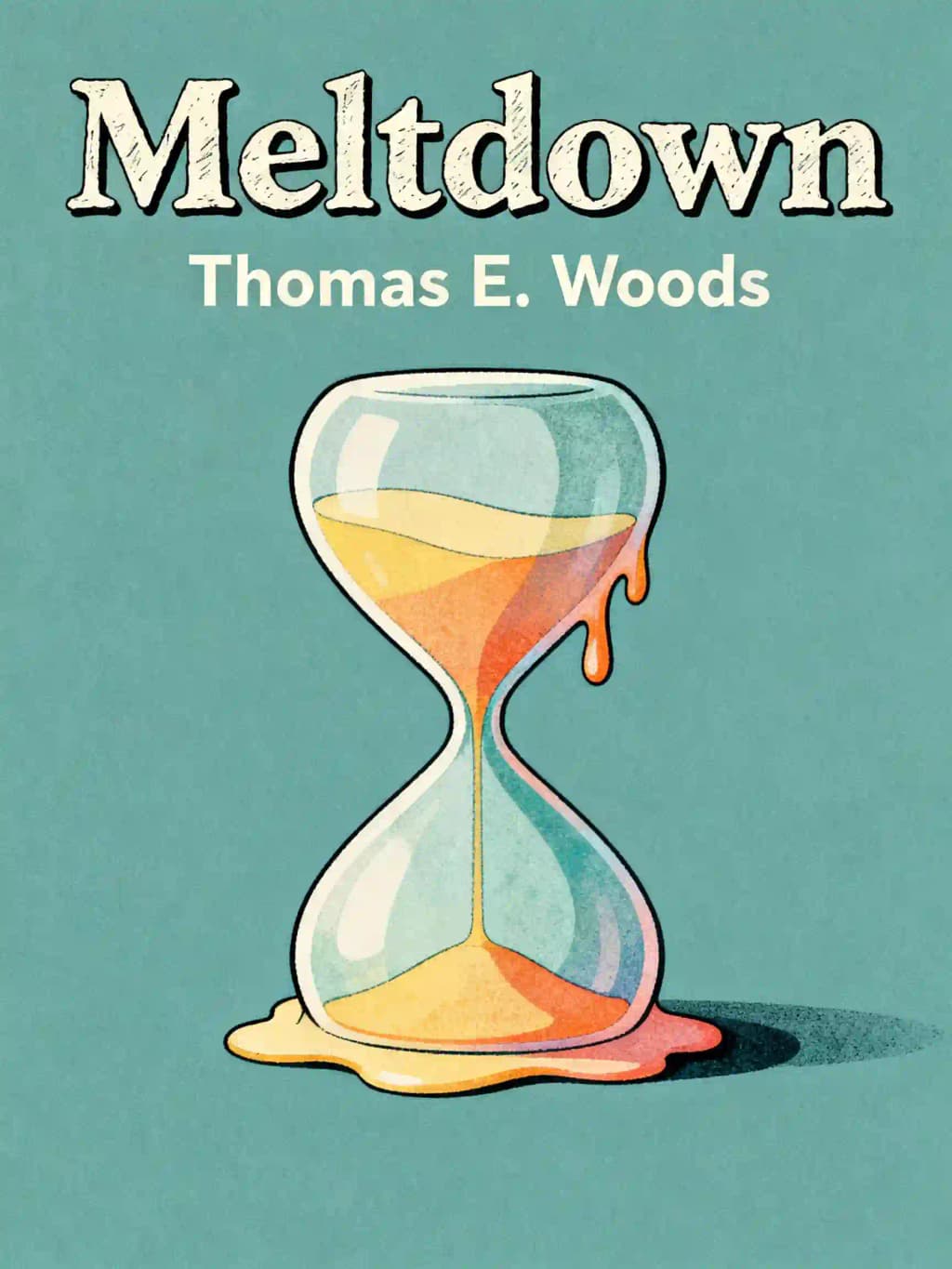
"Meltdown" exposes how government intervention - not free markets - caused the 2008 financial crisis. This NY Times bestseller, featuring Ron Paul's foreword, spent 10 weeks on bestseller lists by challenging conventional wisdom: What if bailouts are actually making everything worse?
著者の声を通じて本を感じる
知識を魅力的で例が豊富な洞察に変換
キーアイデアを瞬時にキャプチャして素早く学習
楽しく魅力的な方法で本を楽しむ
When the 2008 housing market collapsed, triggering the worst financial crisis since the Great Depression, politicians and mainstream economists rushed to blame capitalism run wild. But what if they were pointing fingers in entirely wrong direction? Thomas Woods' "Meltdown" offers a compelling alternative narrative: government intervention, not free markets, caused our economic calamity. While establishment economists dismissed his Austrian School perspective, Google searches for "Austrian economics" skyrocketed as Americans sought genuine answers. The narrative that "free markets failed" conveniently ignores the elephant in the room: the Federal Reserve. Despite posing as our economic savior, the Fed's fingerprints are all over the crisis through its manipulation of interest rates and money supply. Meanwhile, the few voices who actually predicted the disaster - investment experts like Peter Schiff or commentators like James Grant - were mocked by the same mainstream "experts" who now confidently prescribe remedies for a crisis they never saw coming. When the crisis accelerated, the government's response was predictable: misdiagnose the problem, exonerate themselves, and implement the same failed policies used during the Great Depression. Despite overwhelming public opposition - with some Congressional offices reporting 95-98% of constituents against bailouts - legislators rammed through rescue packages with targeted enticements for reluctant representatives. What's remarkable is that hundreds of economists from the Austrian School predicted this crisis years in advance. They warned about the housing bubble before anyone else and identified the Federal Reserve as the primary culprit. Why? Because the Fed represents central economic planning - the great discredited idea of the twentieth century - except instead of planning steel production, it plans money and interest rates, with consequences that reverberate throughout the economy.
『Meltdown』の核心的なアイデアを分かりやすいポイントに分解し、革新的なチームがどのように創造、協力、成長するかを理解します。
『Meltdown』を素早い記憶のヒントに凝縮し、率直さ、チームワーク、創造的な回復力の主要原則を強調します。

鮮やかなストーリーテリングを通じて『Meltdown』を体験し、イノベーションのレッスンを記憶に残り、応用できる瞬間に変えます。
何でも質問し、声を選び、本当にあなたに響く洞察を一緒に作り出しましょう。

"Instead of endless scrolling, I just hit play on BeFreed. It saves me so much time."
"I never knew where to start with nonfiction—BeFreed’s book lists turned into podcasts gave me a clear path."
"Perfect balance between learning and entertainment. Finished ‘Thinking, Fast and Slow’ on my commute this week."
"Crazy how much I learned while walking the dog. BeFreed = small habits → big gains."
"Reading used to feel like a chore. Now it’s just part of my lifestyle."
"Feels effortless compared to reading. I’ve finished 6 books this month already."
"BeFreed turned my guilty doomscrolling into something that feels productive and inspiring."
"BeFreed turned my commute into learning time. 20-min podcasts are perfect for finishing books I never had time for."
"BeFreed replaced my podcast queue. Imagine Spotify for books — that’s it. 🙌"
"It is great for me to learn something from the book without reading it."
"The themed book list podcasts help me connect ideas across authors—like a guided audio journey."
"Makes me feel smarter every time before going to work"

Meltdownの要約をPDFまたはEPUBで無料でダウンロード。印刷やオフラインでいつでもお読みいただけます。