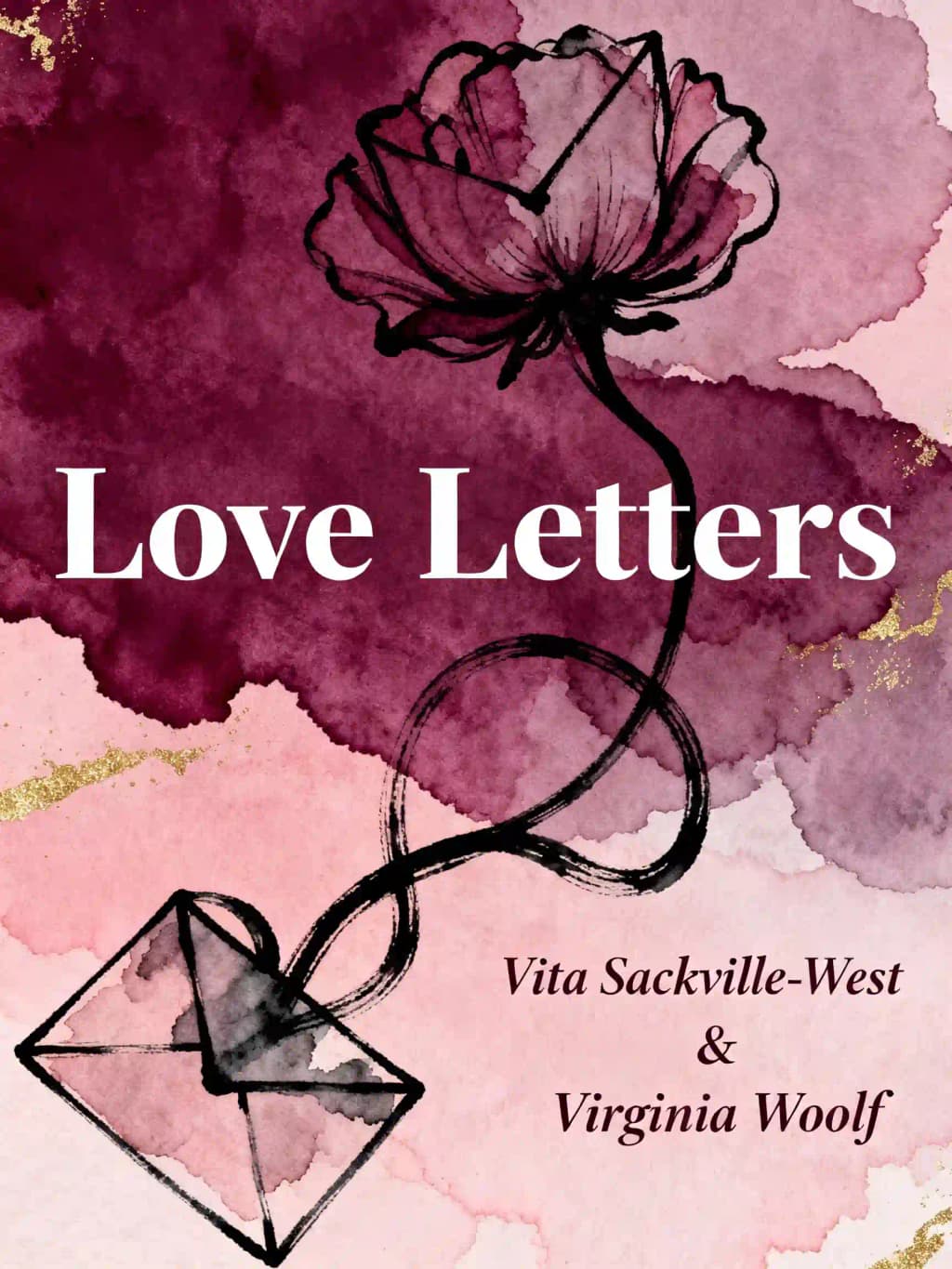
Love Letters
Vita and Virginia
『Love Letters』の概要
Forbidden passion in letters: Virginia Woolf and Vita Sackville-West's 20-year correspondence inspired "Orlando" - what Alison Bechdel calls "the longest love letter in literature." Their defiant romance, spanning 1922-1941, reveals how love persisted when same-sex relationships were criminalized in Britain.

『Love Letters』の主要テーマ
- literary correspondence
- queer romance
- bloomsbury group
- creative inspiration
- gender fluidity
『Love Letters』の名言
I simply adore Virginia Woolf and had quite lost my heart to her.
Style is a very simple matter, it is all rhythm.
I love Mrs Woolf with a sick passion.
I like the story very very much.
I try to invent you but have only 2 twigs and 3 straws to do it with.
『Love Letters』の登場人物
- Virginia WoolfEstablished writer and member of Bloomsbury Group
- Vita Sackville-WestAristocratic writer and author of Seducers in Ecuador
- Harold NicolsonVita's husband and recipient of her confidences
著者について
『Love Letters』の著者について
Vita Sackville-West (1892–1962) and Virginia Woolf (1882–1941), authors of Love Letters, were pioneering literary figures whose correspondence reshaped 20th-century modernist literature. Sackville-West, an aristocratic novelist, poet, and celebrated gardener, gained acclaim for works like The Edwardians and All Passion Spent, which critiques societal expectations through themes of freedom and self-discovery. Woolf, a central figure in the Bloomsbury Group, revolutionized narrative form with classics like Mrs. Dalloway and To the Lighthouse. Their nearly two-decade relationship, blending passion and intellectual kinship, inspired Woolf’s genre-defying novel Orlando—a tribute to Sackville-West’s fluid identity.
Sackville-West’s bestselling novels and horticultural writing, alongside Woolf’s experimental prose, established both as icons of early feminist literature. Their letters, marked by wit and vulnerability, reveal a collaboration that transcended romance, intertwining literary ambition and personal reinvention. Love Letters has been adapted for stage and screen, most notably in the 2019 film Vita & Virginia, cementing their legacy as cultural revolutionaries whose work continues to resonate in discussions of gender, creativity, and love.
Love Lettersの要約をダウンロード
Love Lettersの要約をPDFまたはEPUBで無料でダウンロード。印刷やオフラインでいつでもお読みいただけます。
この本に関するよくある質問
Love Letters is an intimate epistolary collection tracing the 20-year relationship between writers Virginia Woolf and Vita Sackville-West. Through candid letters and diary entries, it reveals their intellectual bond, passionate romance, and emotional struggles—from flirtation and jealousy to mutual support during personal crises. The book offers a raw glimpse into their lives as married women navigating same-sex love in early 20th-century Britain.
This book is ideal for fans of literary history, LGBTQ+ love stories, and epistolary narratives. Readers interested in the Bloomsbury Group, Woolf’s creative process (including her novel Orlando inspired by Vita), or candid explorations of love and identity will find it compelling. Its blend of wit, vulnerability, and historical detail appeals to both casual and academic audiences.
Yes—critics and readers praise it as a poignant, immersive window into a legendary literary romance. Reviewers highlight its lyrical prose, emotional depth, and historical significance, with one calling it “100/5” for its heart-tugging storytelling. The letters humanize both writers, showcasing their humor, insecurities, and enduring influence on each other’s work.
Their relationship blended intellectual collaboration, romantic passion, and occasional turmoil. While both were married to men, they shared a decade-long affair marked by Vita’s adventurous spirit and Woolf’s introspective intensity. Letters reveal mutual admiration, physical longing, and bouts of jealousy, framed by their roles as mothers, writers, and public figures in 1920s–1930s Britain.
Vita inspired Woolf’s genre-defying novel Orlando: A Biography, which reimagined Vita as a time-traveling, gender-fluid protagonist. Woolf’s letters to Vita also showcase how their relationship fueled her creativity, with Vita encouraging her to embrace bold themes. Conversely, Woolf critiqued Vita’s writing, pushing her toward deeper introspection.
Notable lines include:
- “I am reduced to a thing that wants Virginia” – Vita’s longing during separation.
- “Could I ever know her?” – Woolf’s early diary entry about Vita.
- “We’re as near as two people can be” – Woolf’s reflection on their bond.
These quotes underscore their emotional intensity and literary flair.
The book subtly critiques 1920s–1930s norms by portraying Woolf and Sackville-West’s relationship as both socially constrained and privately liberating. While their husbands tolerated the affair, the letters show coded language and efforts to balance public propriety with private desire—a testament to LGBTQ+ resilience in repressive times.
The letters highlight Vita’s aristocratic roots, globe-trotting lifestyle as a diplomat’s wife, gardening passion (she designed Sissinghurst Castle’s famed gardens), and literary success (twice winning the Hawthornden Prize). Her confidence contrasts with Woolf’s neuroses, offering a dynamic character study.
Woolf’s letters reference her depression and anxiety, with Vita serving as an emotional anchor. The collection shows how Vita’s affection provided temporary solace, though Woolf’s mental state remained fragile—a tension that adds depth to their correspondence.
Some readers may find the fragmented, non-chronological structure challenging. Additionally, the focus on romantic drama occasionally overshadows the writers’ literary achievements. However, most praise the editors’ curation for balancing intimacy with historical context.
Unlike traditional biographies, this book prioritizes primary sources, letting the women’s voices dominate. It complements works like Orlando or Portrait of a Marriage (by Vita’s son) by focusing on their private bond rather than public personas.
The book resonates today as a testament to LGBTQ+ love’s complexity and endurance. Its themes—balancing creativity with relationships, navigating societal expectations—remain universal, while its unflinching honesty offers a timeless study of human connection.