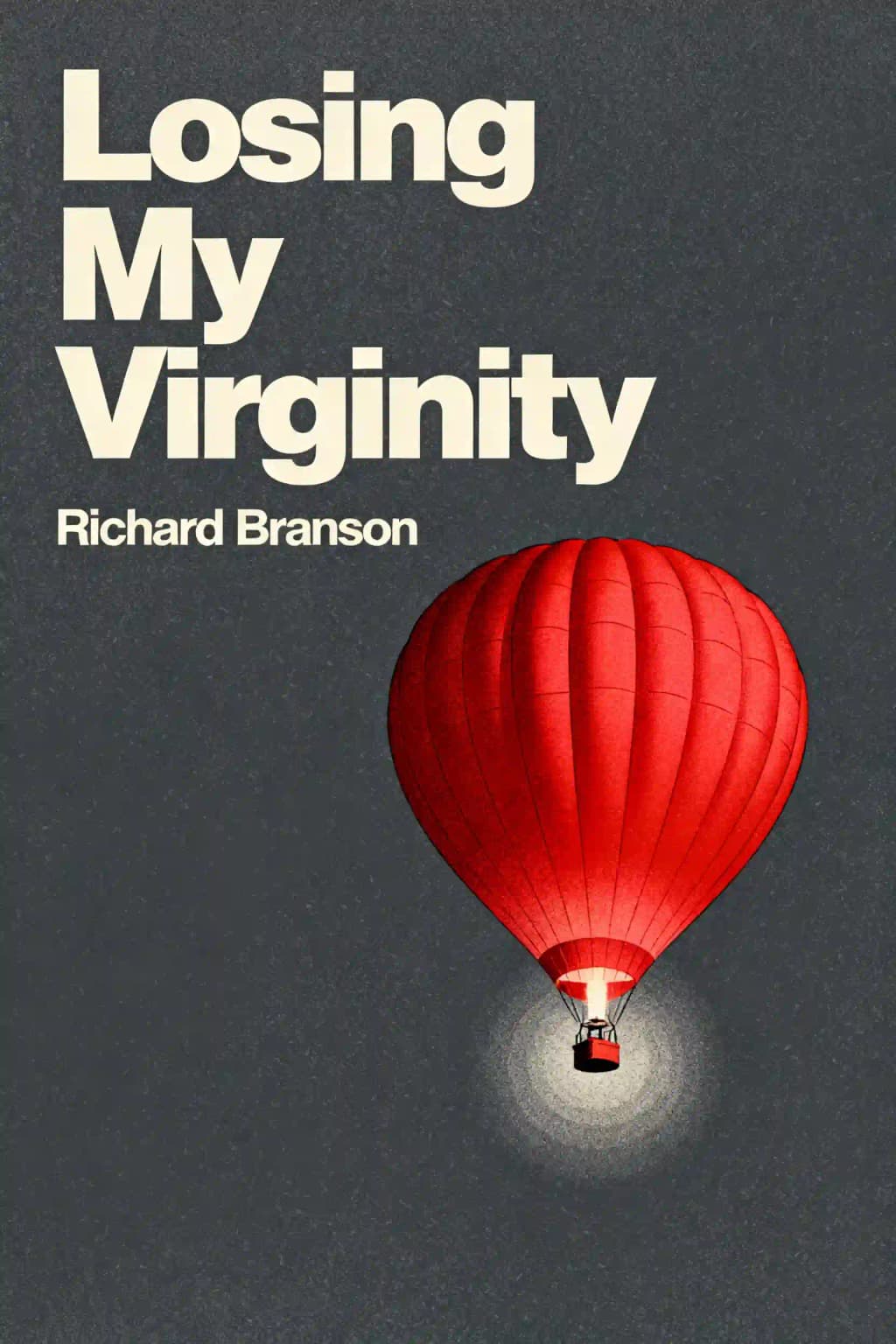
Losing My Virginity
『Losing My Virginity』の概要
Branson's audacious autobiography reveals how a dyslexic dropout built a billion-dollar empire by embracing risk and fun. From crash-landing balloons in Algeria to battling British Airways, his entrepreneurial playbook has inspired a generation. What adventure would you attempt if failure wasn't an option?

『Losing My Virginity』の主要テーマ
- calculated risk-taking
- dyslexic entrepreneurship
- brand building
- radical self-reliance
- disruptive innovation
『Losing My Virginity』の名言
Challenges were deliberately placed in my path.
My mother believed in throwing her children in at the deep end.
Failure was viewed as a learning opportunity.
I felt like I was drowning.
Adventure and purpose can coexist with profit.
『Losing My Virginity』の登場人物
- Richard BransonAuthor and founder of the Virgin empire
- Eve BransonRichard's mother and a former glider pilot
- Ted BransonRichard's father and a former barrister
- ClareRichard's eccentric uncle and survival expert
- Lindi BransonOne of Richard's sisters
著者について
『Losing My Virginity』の著者について
Sir Richard Charles Nicholas Branson, author of Losing My Virginity: How I Survived, Had Fun, and Made a Fortune Doing Business My Way, is a billionaire entrepreneur and founder of the globally recognized Virgin Group. This candid memoir blends business strategy with adventurous storytelling, reflecting Branson’s unconventional approach to entrepreneurship, risk-taking, and innovation across industries like aviation (Virgin Atlantic), music (Virgin Records), and space tourism (Virgin Galactic).
Born in Surrey, England, Branson’s career began at 16 with Student magazine, evolving into a conglomerate spanning 40+ companies in 35 countries.
A knighted philanthropist (1999), Branson shares insights through his blog and social media (41M+ followers) while advocating for business as a force for good via Virgin Unite. His 2024 audiobook Losing and Finding My Virginity expands on his legacy, narrated in his signature charismatic style.
Branson’s ventures have redefined industries, earning recognition as one of Time’s “100 Most Influential People.” In 2021, he became one of the first private astronauts aboard Virgin Galactic’s Unity 22 mission, cementing his reputation as a boundary-pushing innovator.
Losing My Virginityの要約をダウンロード
Losing My Virginityの要約をPDFまたはEPUBで無料でダウンロード。印刷やオフラインでいつでもお読みいただけます。
この本に関するよくある質問
Losing My Virginity chronicles Richard Branson’s journey from dropping out of school to building the Virgin Group empire. It highlights his risk-taking ventures like Virgin Records and Virgin Atlantic, interspersed with adrenaline-fueled exploits like transatlantic ballooning. The memoir emphasizes entrepreneurship as a blend of intuition, boldness, and relentless curiosity, offering insights into Branson’s philosophy of balancing work with adventure.
Aspiring entrepreneurs, business enthusiasts, and fans of autobiographies will find value in Branson’s unorthodox approach to business and life. The book appeals to those seeking inspiration on innovation, leadership, and overcoming failures. Readers interested in unconventional career paths or adventurous storytelling will also enjoy its candid tone.
Yes, for its raw insights into building a global brand through creativity and resilience. Branson’s anecdotes—like suing British Airways or signing the Sex Pistols—blend business lessons with entertainment. However, those seeking structured business advice may find its narrative style less actionable.
- Gut instincts over data: Branson prioritizes intuition over excessive analysis.
- Decentralized leadership: Virgin’s success stems from empowering teams without rigid hierarchies.
- Risk management: Turn setbacks into opportunities, like buying competitors during downturns.
- Brand diversity: Expand into underserved markets to build uncorrelated revenue streams.
- “Screw it. Let’s do it”: Encourages decisive action despite uncertainty.
- “You’ll either go to prison or become a millionaire”: Reflects high-stakes entrepreneurial mindset.
- “Business is a way of life”: Merges passion with profession for holistic success.
Branson launched Virgin as a mail-order record business in 1970, later opening physical stores with a youth-centric vibe. Early success came from signing Mike Oldfield’s Tubular Bells, funding expansion into airlines, telecom, and space tourism. His strategy: challenge complacent industries with better customer experiences.
He rejects rigid hierarchies, favors playful branding (e.g., Virgin Brides), and embraces public stunts for marketing. Unlike data-driven CEOs, he trusts instincts—like launching Virgin Atlantic despite industry skepticism.
Yes. Branson advocates blending work with adventure, family, and fun. Examples include ballooning globally while negotiating deals, and prioritizing employee well-being through flexible policies.
Critics note Branson’s privilege (seed money from family) isn’t addressed, and his risk-taking may seem reckless for non-billionaires. The memoir also skims over Virgin’s financial struggles in the 1980s.
Unlike Elon Musk’s or Phil Knight’s books, Branson’s focuses on joy-driven entrepreneurship over technical detail. It shares Tony Hsieh’s emphasis on company culture but with more globetrotting tales.
- Surviving a balloon crash in Algeria.
- Swimming to safety during a Mexican storm.
- Delivering aid to Baghdad during the Gulf War.
He frames setbacks as learning tools—e.g., Virgin Cola’s flop taught market research limits. His resilience shines during Virgin Atlantic’s battle against British Airways, turning litigation into PR wins.
Its lessons on agility (pivoting industries) and brand storytelling align with today’s gig economy and social media-driven markets. Branson’s emphasis on ethical leadership and climate advocacy (via Virgin Galactic) also resonates in 2025.