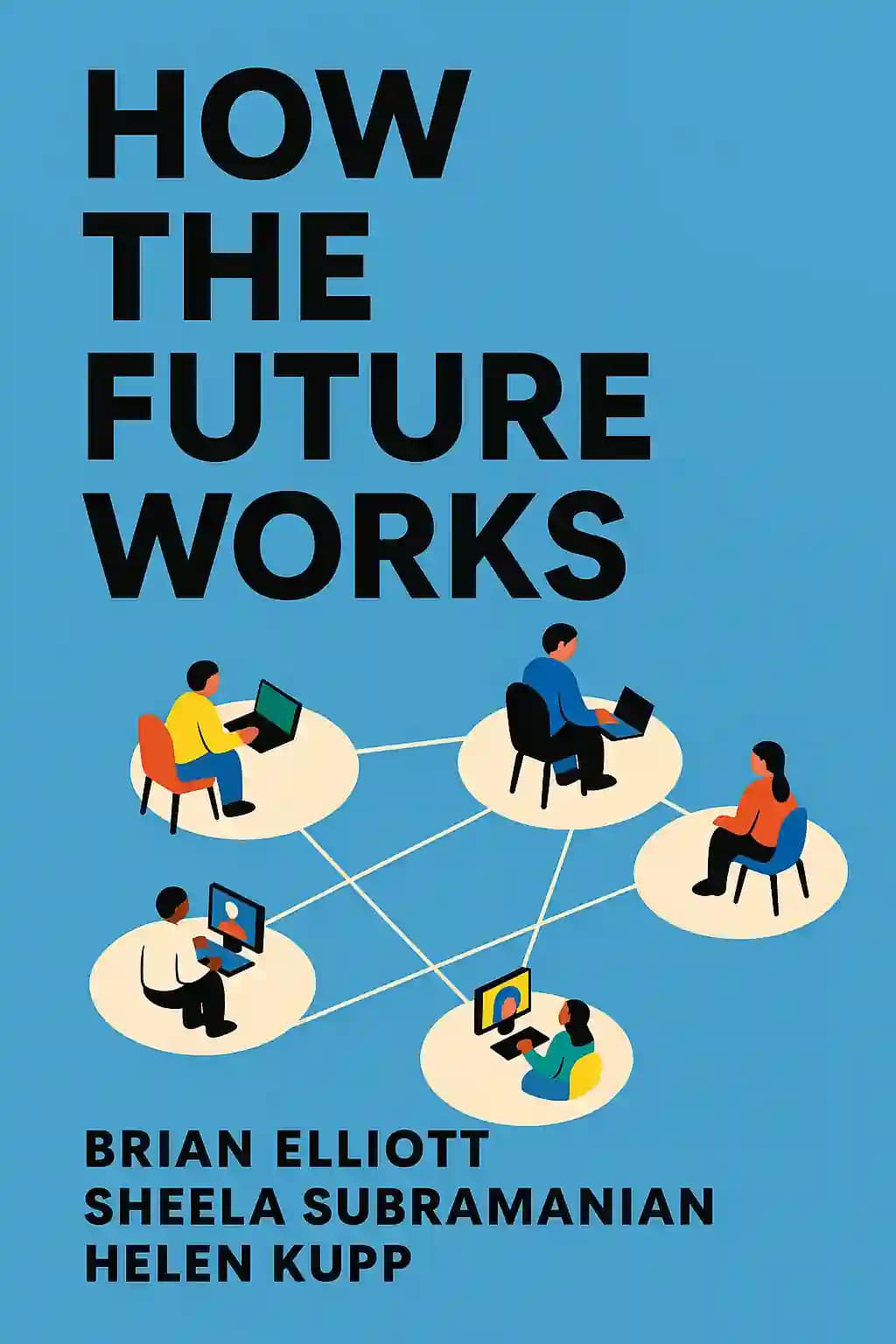
In "How the Future Works," Slack executives reveal the blueprint for flexible work backed by Fortune 500 success stories. As 77% of employees now demand flexibility, this guide shows leaders how to build trust-centered teams that outperform traditional models - without sacrificing connection.
著者の声を通じて本を感じる
知識を魅力的で例が豊富な洞察に変換
キーアイデアを瞬時にキャプチャして素早く学習
楽しく魅力的な方法で本を楽しむ
Something remarkable happened when the world shut down in 2020. Executives braced for productivity collapse. Instead, work continued-and often improved. This wasn't just survival mode; it was a revelation that decades of workplace assumptions might be fundamentally wrong. Companies like IBM, Dropbox, and Levi Strauss discovered what many employees had suspected all along: the traditional office wasn't the productivity engine we believed it to be. This forced experiment exposed a truth business leaders had resisted for years-flexibility isn't a perk, it's a performance accelerator. Yet as offices reopened, a curious tension emerged. Despite overwhelming evidence, many organizations rushed back to old patterns, clinging to industrial-era work models designed for assembly lines, not creative thinking. Picture Henry Ford's factory floor in 1926. Workers arrive at 9 a.m., punch time cards, and leave eight hours later. Nearly a century later, knowledge workers-people whose jobs involve thinking, not manufacturing-follow essentially the same schedule. This makes no sense. Our current work model traces back through layers of history: Benjamin Franklin's "time is money" philosophy, agricultural rhythms dictated by daylight, and factory schedules optimized for machines. Ford standardized the eight-hour day after observing that exhausted workers made costly mistakes. The 1938 Fair Labor Standards Act codified these practices into law. But here's the thing-these systems were designed for physical labor in specific locations at specific times. Knowledge work operates under completely different rules. You can't schedule creativity for 2 p.m. on Tuesday, yet we pretend you can.
『How the Future Works』の核心的なアイデアを分かりやすいポイントに分解し、革新的なチームがどのように創造、協力、成長するかを理解します。
『How the Future Works』を素早い記憶のヒントに凝縮し、率直さ、チームワーク、創造的な回復力の主要原則を強調します。

鮮やかなストーリーテリングを通じて『How the Future Works』を体験し、イノベーションのレッスンを記憶に残り、応用できる瞬間に変えます。
何でも質問し、声を選び、本当にあなたに響く洞察を一緒に作り出しましょう。

"Instead of endless scrolling, I just hit play on BeFreed. It saves me so much time."
"I never knew where to start with nonfiction—BeFreed’s book lists turned into podcasts gave me a clear path."
"Perfect balance between learning and entertainment. Finished ‘Thinking, Fast and Slow’ on my commute this week."
"Crazy how much I learned while walking the dog. BeFreed = small habits → big gains."
"Reading used to feel like a chore. Now it’s just part of my lifestyle."
"Feels effortless compared to reading. I’ve finished 6 books this month already."
"BeFreed turned my guilty doomscrolling into something that feels productive and inspiring."
"BeFreed turned my commute into learning time. 20-min podcasts are perfect for finishing books I never had time for."
"BeFreed replaced my podcast queue. Imagine Spotify for books — that’s it. 🙌"
"It is great for me to learn something from the book without reading it."
"The themed book list podcasts help me connect ideas across authors—like a guided audio journey."
"Makes me feel smarter every time before going to work"

How the Future Worksの要約をPDFまたはEPUBで無料でダウンロード。印刷やオフラインでいつでもお読みいただけます。