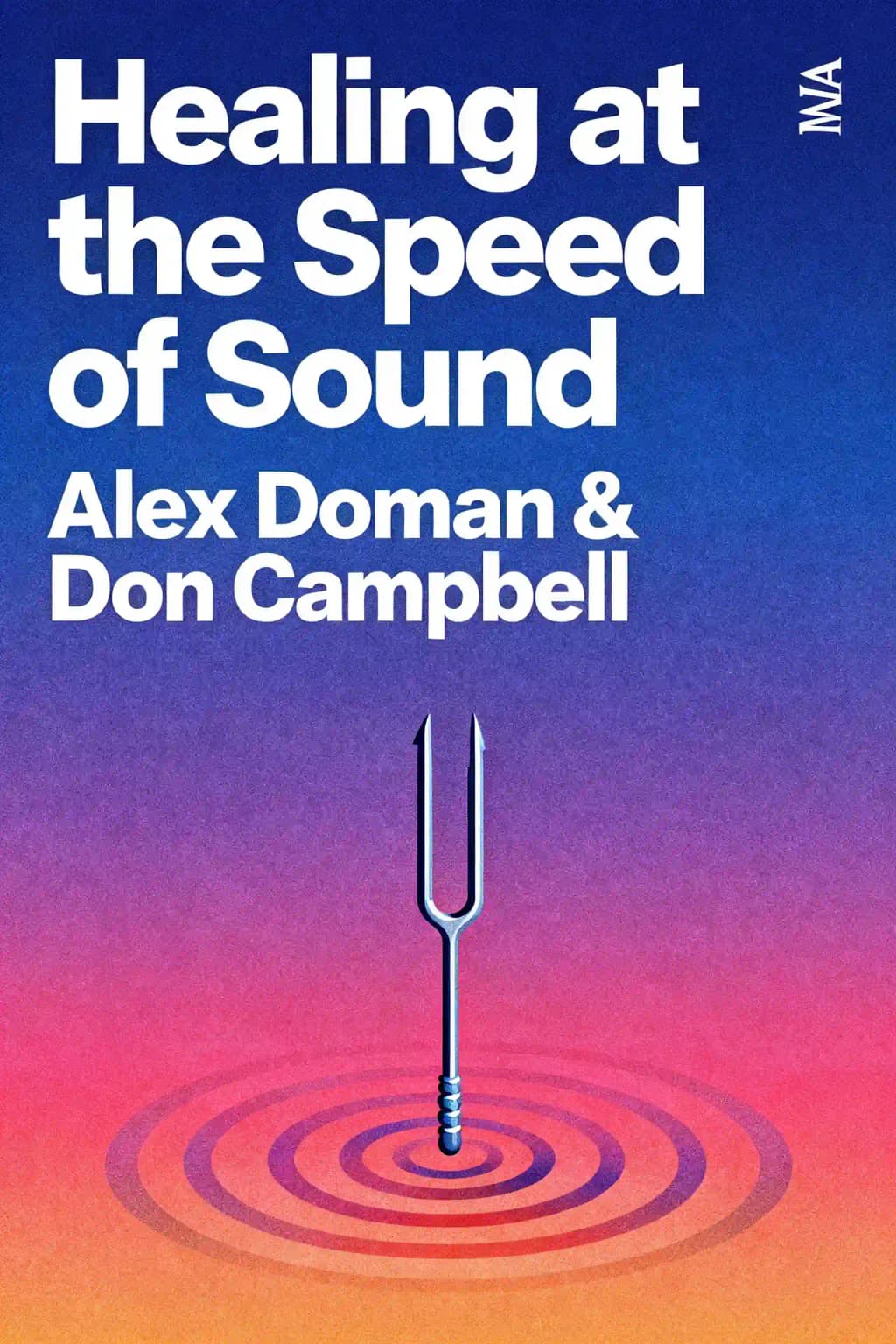
Discover how sound transforms your brain and life in this groundbreaking guide. Backed by science, "Healing at the Speed of Sound" reveals why creating personalized soundscapes can boost productivity, reduce stress, and enhance wellbeing. What's the one sound currently sabotaging your mental health?
Alex Doman and Don Campbell, bestselling authors of Healing at the Speed of Sound, are pioneering voices in the science of sound therapy and neurotechnology. Doman, an entrepreneur and TEDx speaker, founded Advanced Brain Technologies and Vital Neuro, creating evidence-based programs like The Listening Program and Sleep Genius (developed from NASA research). Campbell, renowned for The Mozart Effect, brought global attention to music’s cognitive benefits.
Their collaboration merges decades of research with practical tools, exploring how soundscapes influence mental health, productivity, and healing. Doman hosts the Advanced Brain Podcast and contributes to peer-reviewed journals, while Campbell’s legacy includes transformative works on music’s role in education and wellness.
The book, translated into five languages, synthesizes neuroscience, case studies, and actionable strategies—reflecting Doman’s neurotech innovations and Campbell’s advocacy for music as a therapeutic force. Trusted by professionals and featured in media worldwide, their work remains a cornerstone in sound-based wellness literature.
Healing at the Speed of Sound explores how sound and music impact physical health, emotional well-being, and cognitive performance. Authors Don Campbell and Alex Doman combine neuroscience and practical strategies to show how intentional sound choices—like a personalized “sound diet”—can reduce stress, enhance productivity, and improve healing. The book includes interactive audio resources to help readers apply its principles.
This book is ideal for music therapists, wellness enthusiasts, educators, or anyone seeking to optimize their environment through sound. It’s particularly valuable for individuals managing stress, chronic pain, or neurological conditions, as well as caregivers and professionals interested in non-invasive therapeutic approaches like vibroacoustic or melodic intonation therapy.
Yes—it offers actionable insights backed by a decade of research, including over 100 interactive audio links. Readers gain science-based methods to harness sound for better sleep, focus, and emotional balance, making it a practical guide for improving daily life through auditory mindfulness.
The book explains how noise pollution contributes to stress and aging, while intentional soundscapes can lower blood pressure, accelerate recovery, and improve cognitive function. It also discusses applications for Alzheimer’s care and workplace productivity.
Unlike general self-help guides, it focuses exclusively on auditory science, offering tools like customizable soundtracks for specific tasks. It bridges academic research (e.g., studies on dopamine release from music) with lifestyle design, similar to Atomic Habits but for auditory environments.
Campbell was a pioneer in music therapy (author of The Mozart Effect), while Doman founded Advanced Brain Technologies, creating sound-based therapies for neurological disorders. Their combined expertise spans clinical research and real-world applications.
Some readers may find the reliance on self-reported sound experiments less rigorous. The book also emphasizes individual sound customization, which requires time and effort to implement effectively compared to one-size-fits-all solutions.
It recommends tailoring background music to tasks: instrumental tracks for focus, upbeat rhythms for creativity, and nature sounds for stress reduction. Case studies show reduced errors in noise-controlled environments.
With rising awareness of mental health and sensory well-being, its strategies for mitigating digital-era auditory overload (e.g., Zoom fatigue, urban noise) remain timely. Updated research continues to validate sound’s role in neuroplasticity.
The book includes access to guided audio exercises, video demonstrations of therapies, and a directory of sound therapy organizations. These tools help readers immediately apply concepts like “sound masking” or rhythm-based meditation.
著者の声を通じて本を感じる
知識を魅力的で例が豊富な洞察に変換
キーアイデアを瞬時にキャプチャして素早く学習
楽しく魅力的な方法で本を楽しむ
Sound isn't merely something we perceive-it's a fundamental force.
Music occupies the mind while freeing the body.
Noise is America's most pervasive pollutant.
Silence is equally healing.
Music offers a healthier alternative to cigarette breaks.
『Healing at the Speed of Sound』の核心的なアイデアを分かりやすいポイントに分解し、革新的なチームがどのように創造、協力、成長するかを理解します。
『Healing at the Speed of Sound』を素早い記憶のヒントに凝縮し、率直さ、チームワーク、創造的な回復力の主要原則を強調します。

鮮やかなストーリーテリングを通じて『Healing at the Speed of Sound』を体験し、イノベーションのレッスンを記憶に残り、応用できる瞬間に変えます。
何でも質問し、声を選び、本当にあなたに響く洞察を一緒に作り出しましょう。

"Instead of endless scrolling, I just hit play on BeFreed. It saves me so much time."
"I never knew where to start with nonfiction—BeFreed’s book lists turned into podcasts gave me a clear path."
"Perfect balance between learning and entertainment. Finished ‘Thinking, Fast and Slow’ on my commute this week."
"Crazy how much I learned while walking the dog. BeFreed = small habits → big gains."
"Reading used to feel like a chore. Now it’s just part of my lifestyle."
"Feels effortless compared to reading. I’ve finished 6 books this month already."
"BeFreed turned my guilty doomscrolling into something that feels productive and inspiring."
"BeFreed turned my commute into learning time. 20-min podcasts are perfect for finishing books I never had time for."
"BeFreed replaced my podcast queue. Imagine Spotify for books — that’s it. 🙌"
"It is great for me to learn something from the book without reading it."
"The themed book list podcasts help me connect ideas across authors—like a guided audio journey."
"Makes me feel smarter every time before going to work"

Healing at the Speed of Soundの要約をPDFまたはEPUBで無料でダウンロード。印刷やオフラインでいつでもお読みいただけます。
Our world pulses with sound-from the gentle morning birdsong to the rhythmic hum of office equipment to the cacophony of traffic. Yet few of us recognize how profoundly these sonic vibrations affect our bodies, minds, and emotions. Sound isn't merely something we perceive; it's a physical force that restructures us at the cellular level. When you hear a beautiful melody, your brain waves literally change to match its patterns. Pleasant sounds increase dopamine levels while jarring noises trigger stress responses. Your brain processes sound with remarkable complexity: the right auditory cortex perceives pitch and melody while the left responds to frequency and intensity changes-explaining why the first sounds you hear upon awakening profoundly shape your entire day. This isn't just theory-hundreds of studies confirm that sound affects health at the cellular level, with research showing Mozart's sonatas can improve cognitive performance by stimulating connections between brain cells. Sound's power extends beyond the mind, too-our bodies naturally entrain to musical beats, which is why cyclists use 7% less oxygen when pedaling to music.