第1章
The Art of Asking: Why Questions Transform Leadership
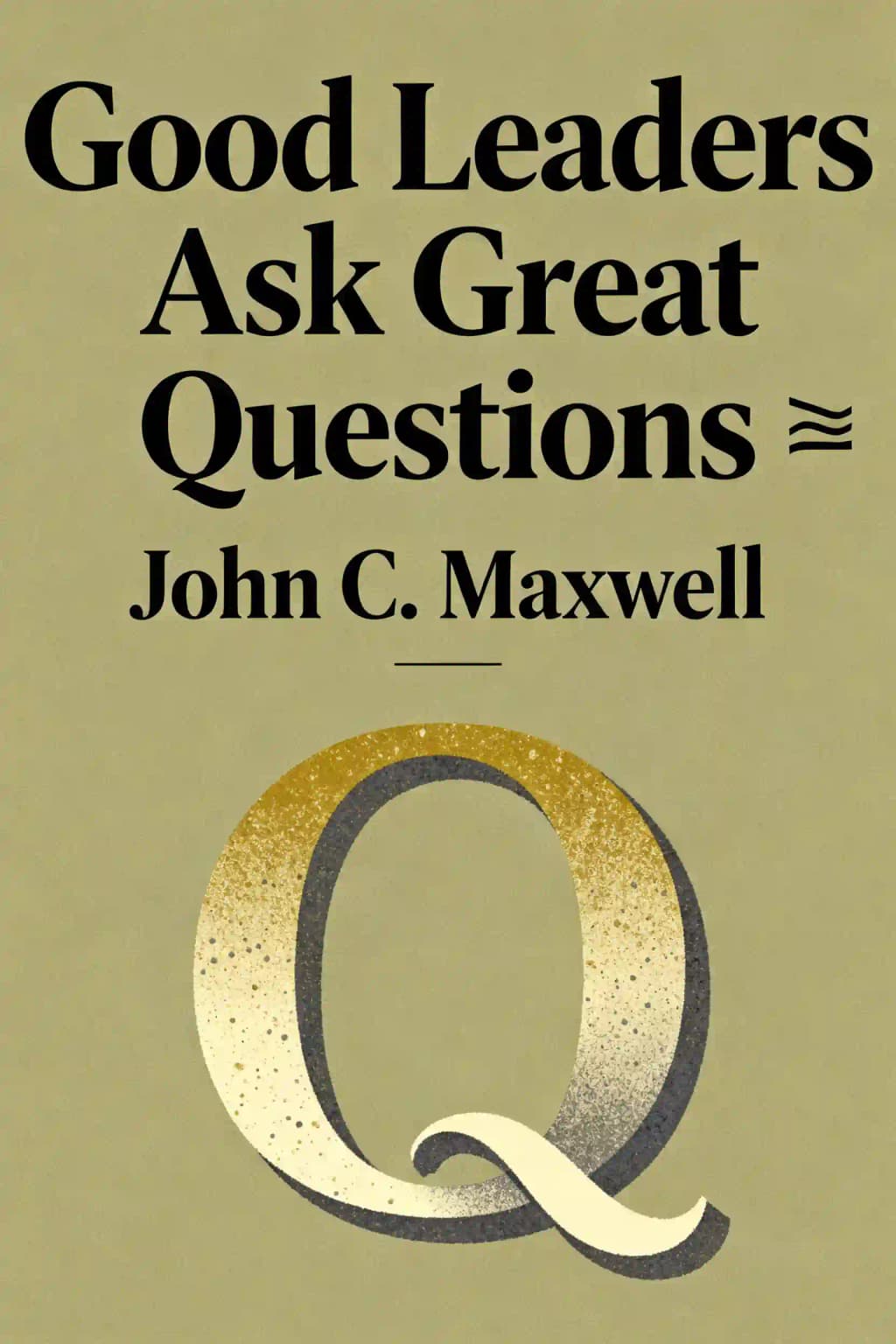
Have you ever noticed how the most effective leaders aren't necessarily the ones with all the answers, but rather those who ask the most insightful questions? John C. Maxwell, named the #1 leadership expert by Inc. Magazine and selling over 34 million books worldwide, reveals this counterintuitive truth in his transformative work. While most leadership books focus on providing answers, Maxwell turns this concept on its head by demonstrating how questions unlock doors to extraordinary leadership.
This book has become required reading at Fortune 500 companies and leadership development programs globally. Even Oprah Winfrey cited Maxwell's questioning approach as influential in her interviewing technique. What makes this perspective so powerful? Perhaps it's because in our answer-obsessed culture, we've forgotten that the quality of our questions determines the quality of our lives and leadership. As Einstein famously noted, "If I had an hour to solve a problem, I'd spend 55 minutes thinking about the question and 5 minutes thinking about solutions."
第2章
Questions: The Hidden Engine of Leadership Growth
Leadership isn't about having all the answers-it's about asking the right questions. For forty years, questions have been the cornerstone of Maxwell's leadership journey. Far from becoming less important over time, they've become increasingly crucial to his growth and success.
The value of questions cannot be overstated. They unlock doors that would otherwise remain closed, serving as keys to possibilities, opportunities, and relationships. When Maxwell interviewed Condoleezza Rice at Stanford University for a Leadercast event, he spent days researching and preparing questions that would help 150,000 viewers learn from her extraordinary knowledge. Each question opened new doors of understanding, and by the end, he'd found a wonderful friend and learned a great deal himself.
Questions also cultivate humility-a quality essential for effective leadership. Early in his career, Maxwell believed leaders should know all the answers, adopting a "fake it 'til you make it" attitude that led to much faking but little making. True wisdom came when he learned to say "I don't know" and "I need your help," following King Solomon's humble example. This transformation began when he became honest with himself, admitted weaknesses, and developed appropriate humility.
Beyond this, questions help us engage others in conversation. Larry King believed asking questions was the secret of good conversation, with "Why?" being the greatest question ever asked. Maxwell prepares for meetings by determining what questions to ask, both to make the most of his time and to engage meaningfully with others. Questions show that he values people and wants to add value to them.
Questions also allow us to build better ideas through shared thinking. Good ideas become great when the right people improve them together. The key is asking the right people the right questions. As Brian Tracy says, "A major stimulant to creative thinking is focused questions." Maxwell's experience with idea exchanges among pastors showed him how successful leaders sharing best practices while answering questions created an atmosphere of contagious hope and creativity.
Perhaps most importantly, questions give us different perspectives. Too often as leaders we fixate on our own viewpoint instead of discovering others'. By asking questions and listening carefully, we uncover valuable perspectives beyond our own. We make faulty assumptions about others: that they're good at what we're good at, energized by what energizes us, and see the big picture as we do. A wise leader told Maxwell, "Before you attempt to set things right, make sure you see things right."
第3章
Life-Changing Questions That Shape Leadership Journeys
Questions have marked significant moments throughout Maxwell's life journey. The word "question" derives from the Latin quaerere meaning "ask" or "seek"-the same root as "quest." Whether questions come from others or ourselves, the answers shape who we become.
Several questions from others dramatically altered Maxwell's path. His father asked, "What do you want to do with your life?" which led him to focus on adding value to people. His fifth-grade teacher Mr. Horton asked, "Do you know you're a leader?" which started his leadership journey. Curt Kampmeier asked about his personal growth plan, which transformed his approach to development. Tom Phillippe offered business help that expanded his horizons, and conference attendees requested ongoing training that launched Maximum Impact Mentoring. His brother Larry's question led to founding EQUIP, and Bob Buford's question about his second half of life redirected his focus.
Just as impactful were questions Maxwell asked throughout his life. As a child, he repeatedly asked his mother, "How much do you love me?" not from doubt but to hear her consistent answer: "With all my heart, unconditionally." For sixty-three years, her genuine unconditional love provided security that empowered him to take risks and succeed.
When he asked successful pastors, "How did you build a great church?" this four-year project led him to his core leadership philosophy: "Everything rises and falls on leadership"-a truth that became the centerpiece of his life's work teaching leadership.
Maxwell never intended to become an author until he asked Les Parrott, "Why do you write books?" His answer-"I write books to influence people I will never meet"-ignited Maxwell's passion to write. Though he loved reading, he hadn't desired to write until he realized how books could extend his influence. Twenty-five million books later, that dream has been realized.
When interviewing to lead Skyline Church after its beloved founding pastor's 27-year tenure, Maxwell asked the search committee, "What am I required to do that no one else can do except me?" The resulting two-hour conversation established a foundation for his leadership. During his fourteen years there, Skyline became one of America's ten most influential churches.
These questions and their answers have shaped Maxwell's journey from childhood through his leadership career, demonstrating how the right questions at the right time can transform a life and leadership trajectory.
第4章
The Self-Leadership Imperative: Questions Leaders Must Ask Themselves
When we asked followers for leadership questions, we were flooded with questions about self-leadership-more than any other category. Many people intuitively understand that if you can't lead yourself effectively, everything else in your life will be a struggle. Self-leadership comes first and makes every other kind of leadership possible.
One reason we struggle with self-leadership is our blind spots-areas where we fail to see ourselves realistically. Everyone has them; few recognize their own. In college counseling courses, Maxwell learned we see ourselves by our intentions, giving ourselves the benefit of doubt by putting actions in context. But we judge others by their actions, making us seem more objective when evaluating them.
The four most common and destructive blind spots among leaders are a singular perspective (forcing your viewpoint on others), insecurity (thinking of yourself first and fearing others' opinions), an out-of-control ego (believing you know everything and seeing others as inferior), and weak character (frequently missing deadlines or prioritizing people-pleasing over maintaining values).
To overcome blind spots, you must assume you have them, ask those who know you best to identify them, recognize you can't remove them alone, openly discuss them with your inner circle, and develop a team to cover them. As demonstrated by Gandhi, when values, thoughts, feelings, and actions align, a person becomes focused and character strengthens, allowing successful self-leadership.
Leadership requires daily self-leadership before leading others. Because people depend on them, leaders must maintain their inner fire and clarity of direction. To stay energized and on course, leaders can sustain themselves through four key areas:
1. Passion - Provides energy and credibility. When you love what you do, others find it inspiring.
2. Principles - Successful leaders stay true to their beliefs, gifts, and personality rather than adopting an unnatural leadership style.
3. Practices - Sustainable success requires implementing right and regular practices, maintaining momentum and making every day a masterpiece.
4. People - Your team will either energize or exhaust you. Work to surround yourself with believers who support your vision, achievers who contribute with excellence, conceivers who bring good ideas, and relievers who complement your skills.
The single most effective daily habit for any leader is giving more than you receive. This mindset offers multiple benefits: acknowledging that others have helped us along our journey, requiring us to get beyond ourselves, and changing the world one person at a time. If everyone tried to give more than they took, people would change fundamentally.
第5章
The Listening Leader: Asking Questions That Transform Teams
Great leadership isn't just about inspirational speeches or battlefield commands-it's about asking questions and truly listening to team members. Unfortunately, many leaders don't view questioning and listening as leadership functions. John Wooden, named the greatest coach of the twentieth century, led by listening first. Good leaders listen, learn, and then lead.
There are three levels of listening that impact leadership effectiveness. The lowest level, internal listening, focuses entirely on ourselves. We hear information but only pay attention to how it affects us. This self-centered listening has limited usefulness in leadership.
At Level II, focused listening, attention shifts from ourselves to the speaker. We tune into not just words but emotions, inflection, facial expressions, and posture-listening with emotional intelligence. People who listen at this level make great conversationalists and friends, earning attraction and respect.
The highest level, global listening, encompasses the speaker, listener, their interactions, the environment, and relies heavily on intuition. Like performers who can "read a room," effective leaders at this level can read people, situations, and intuitively anticipate what's coming.
Asking questions has little value if you don't listen to the answers. When you listen to others, you communicate that you care about and value them. David Augsburger notes, "Being heard is so close to being loved, that for the average person, they are almost indistinguishable." Listening also has high influence value-one of the best ways to persuade others is with your ears. When a leader genuinely listens to team members, it gives the leader greater credibility and therefore influence.
Maxwell asks his team questions continually, and these questions have shaped their team. The question he asks most often-dozens of times daily-is "What do you think?" Mark Cole says being asked this question develops his leadership more than anything else: "When you ask for my skills, you get my strengths. When you ask for my passion, you get my heart. When you ask for my ideas, you get my mind. But when you ask me for answers, you get my strengths, heart, and mind."
He also regularly asks "How can I serve you?" Maxwell learned the importance of this question years ago when he noticed two types of guest speakers: those excited about their platform opportunity and those who arrived asking how they could serve him and his organization. He always invited the second type back. This made such an impression that he adopted this approach himself, asking clients before speaking engagements how he can help them.
第6章
Leadership Fundamentals: How Leadership Actually Works
When Maxwell began his career, leadership wasn't his focus. In his first professional position, he assumed his title made him a leader, but quickly discovered people followed others instead. Then he read J. Oswald Sanders's book Spiritual Leadership, encountering the transformative idea: "Leadership is influence, the ability of one person to influence others to follow his or her lead."
This insight changed his life, clarifying why position and title hadn't helped him lead effectively. Recognizing that leadership was key to building teams, growing organizations, and fulfilling visions, he began teaching leadership principles. Though leadership is complex and Maxwell continues learning at age sixty-seven, he never loses sight of this fundamental truth: leadership starts with influence and builds from there.
Leadership is not an exclusive club for those born with certain abilities. Everyone has leadership potential at some level, and anyone can improve their leadership skills. While some people are born with traits that give them advantages, these natural characteristics are merely starting points. As British author Leonard Ravenhill illustrated through a story about tourists visiting a village and asking if any great men were born there, to which an old man replied, "No, only babies"-great leaders don't begin as great. They start as babies and develop through a process to become adequate, then good, then great leaders.
You can lead from anywhere without needing a title, position, or formal education. All you need is the desire to lead and willingness to learn. The key is influence. Your ability to influence others will be the single greatest factor in your leadership success. Author Harry Allen Overstreet noted that "the very essence of all power to influence lies in getting the other person to participate." Influence is an invitation anyone can extend.
Leadership is fundamentally about adding value to people. Norman Vincent Peale said, "To be successful is to be helpful, caring, and constructive, to make everything and everyone you touch a little bit better." Successful leadership helps others remove self-imposed limitations and reach their potential.
The greatest challenge in leadership is making decisions that affect other people. Making good decisions daily is difficult, which explains why some leaders prefer to follow rather than lead. The loneliest place in leadership belongs to the person who makes the first decision. Though leaders' actions are often misunderstood, declining to make decisions creates insecurity among followers and undermines leadership.
第7章
Navigating Difficult People: The Leader's Toughest Challenge
Dealing with conflict and challenging people represents the second most common area of questions Maxwell receives, after self-leadership. This is among the most difficult aspects of leadership because even when you do everything right, there's no guarantee others will change, succeed, or perform well.
When facing difficult people, you must determine two things: Can they change? (ability) and Will they change? (attitude). Both answers must be yes for success. Most issues stem from attitude, not ability. The process for addressing these issues requires five specific steps:
First, meet privately ASAP to discuss their behavior. Don't wait to address problems. Meet privately and clearly explain the issue with specific examples. Never be vague, use secondhand reports, or attribute bad motives. Assume their intentions are good to keep them open to change.
Second, ask for their side of the story. As Peter Drucker noted, "Erroneous assumptions can be disastrous." Even good judges of character can misread situations or miss important information. Sometimes personal circumstances temporarily affect behavior, and the person simply needs understanding or help.
Third, try to come to a place of agreement. Determine if they agree with your assessment. Some will acknowledge the problem, which opens them to change. Others will blame others. When they deflect, give them time to reflect: "I believe this is your problem. Take a week to think about it."
Fourth, set out a future course of action with a deadline. Regardless of agreement, lay out specific actions they must take or behaviors they must stop immediately. Include deadlines for any required steps. Put requirements in writing if needed.
Finally, validate the value of the person and express your commitment to help. End by expressing care and offering help. As Goethe said, "Treat people as if they were what they ought to be, and you help them become what they are capable of becoming."
When teams underperform, leaders must first examine themselves. Have I settled for mediocrity personally? Have I lowered expectations so far that average seems acceptable? I can't raise the bar for others if I haven't raised it for myself.
Maxwell has learned he can't change people-they must change themselves. But he can create an environment where motivation is valued and rewarded. Start with motivated people, understand the connection between relationships and motivation, hire motivated people, give each person a reputation to uphold, and reward what you want done.
Success requires both starting and finishing. Some people love starting new things but never complete them. This pattern creates several problems: they lose the reward of finishing, lower their self-esteem, sabotage their own success, and lose the trust and respect of others.
第8章
Thriving Under Poor Leadership: Strategies for Success
Working under poor leadership is the most common concern Maxwell has heard in thirty years of leadership conferences. Everything rises and falls on leadership, and with a bad leader, it often falls on you. The process for addressing this issue sometimes works, sometimes doesn't-you can only control your own actions and responses.
Bad leaders create many difficulties, but the outcome is always the same-people and organizations suffer. Though each problem is unique, the process for seeking resolution follows similar steps. You need to do thorough homework before confronting a difficult leader, while maintaining realistic expectations since many poor leaders respond badly to having their methods questioned.
First, consider whether you might actually be the problem. Before pointing out others' faults, examine yourself first. The number one leadership challenge is leading yourself. "Open minds lead to open doors"-if you want to solve a problem with someone else, first acknowledge and fix your own contribution to the situation.
Second, determine whether you have specific evidence to support your opinion. Before meeting with your leader, ensure your concerns are based on solid evidence, not just feelings or hearsay. Document specific problematic actions or statements.
Third, assess your influence and credibility with your leader. Even with perfect evidence, without credibility with your leader, you may get nowhere. Your reputation and integrity are built over time through consistent words and actions.
Fourth, think through every possible outcome. Consider all possible responses from your leader and decide how you'd handle each scenario. Thorough preparation is your best defense.
Fifth, make a decision to act. You must either take action or accept your situation as it is. If you choose not to act, move on without complaining-never complain about what you allow.
Working with a leader who dislikes you presents unique challenges. Most people respond poorly by hiding (avoiding conflict but losing momentum), hindering (being passive-aggressive, which hurts the team), or harming (trying to punish the leader, compromising integrity). Instead, take the high road by managing your emotions, finding common ground, and consistently adding value-even when your leader doesn't reciprocate.
After character, a leader's ability to create, articulate and execute vision determines their success. Working under a visionless leader causes dissatisfaction and discouragement. If you're staying with such a leader, tap into the organization's larger vision, identify a vision for the organization and share it with your leader, or develop your own sense of purpose.
第9章
Leadership Transitions: The Art of Moving Forward
We live in an age of rapid change where standing still is dangerous. One characteristic of good leaders is their ability to navigate transitions-both for themselves and for their organizations. Most people change jobs 15-20 times in their careers, making transition skills essential. Leaders who can't make good transitions either get run over or get left behind.
Leaders must distinguish between good and bad restlessness. Good restlessness pulls you forward toward improvement, coming from your desire to grow and make a greater impact. Bad restlessness comes from boredom or unhappiness and a desire to escape. As Elmer Towns says, "Don't leave something; go to something." Before transitioning, ensure you've given your best where you are now.
As Woodrow Wilson said, "If you want to make enemies, change something." Few people welcome change unless it was their idea. However, all progress requires change, and people often look to leaders for inspiration during times of transition. When organizations struggle, leaders often make cosmetic changes that give the semblance of progress without producing results. The real difference comes from changing what truly matters-organizational culture, values, leadership development-even though these changes are harder.
Most leadership opportunities arise because we've been successful producers. This transition requires shifting focus from personal tasks to team development. Producers concentrate on tasks while leaders focus on people; producers feel indispensable in what they do while leaders feel responsible for what others do; producers have tunnel vision while leaders maintain team vision; producers think "How can I help?" while leaders ask "Who can help us?"; producers add value individually while leaders multiply it through others. Simply put, the shift is from "me" to "we."
When leaders fail, they naturally want to lead again, but must first correct their problems. Before attempting to return to leadership, failed leaders must undergo a three-part process: evaluate what went wrong, rebuild emotional strength to bounce back, and evolve by making necessary adjustments. Once personal work is done, they must rebuild trust with others-a process that begins with honesty about weaknesses and mistakes.
Succession resembles passing a baton in a relay race-the outgoing leader runs full steam until the handoff, while the successor starts running before receiving it. Jack Welch considered choosing his successor his most important decision, thinking about it daily nine years before retirement. Effective succession requires careful planning and preparation of yourself, your successor, and your organization.
第10章
Developing Tomorrow's Leaders: The Ultimate Legacy
Everything rises and falls on leadership. If you want to maximize your potential and make a difference, you must become a better leader. If you want to impact your world, you must help others become better leaders. Leaders are hard to find, hard to train, and hard to hold-they want to go their own way. But developing leaders is perhaps the most rewarding activity you'll ever engage in during your lifetime.
Finding and attracting good people is the most important factor in your success as a leader developer. As Lou Holtz says, "I have coached good players and I have coached bad players. I'm a better coach with good players." You'll develop good leaders only if you find people with strong leadership potential.
Potential leaders have several distinguishing characteristics. They are catalysts who make things happen-this is often how they first get recognized. They are influencers who can affect others' behavior and decisions. They are relationship builders with strong people skills. They are gatherers with a magnetic quality that draws others to them. They are value adders who help others, not just themselves. They are opportunists who see and seize opportunities, constantly looking for ways to help their organization and advance their team. And they are finishers who don't make excuses-they take responsibility, embrace opportunity, and follow through on commitments.
Leadership development is both science and art, not just one or the other. Some want to develop leaders through rigid systems like manufacturers punching shapes from metal sheets. Others prefer entirely organic development without planning. The truth lies in balance: Art is based on intuition while science is rooted in fact. Art recognizes talent while science sharpens it through practice. Art inspires performance while science evaluates it.
Napoleon said, "Leaders are dealers in hope." They help people believe in the vision, in their leadership, and in themselves. Perhaps the most rewarding aspect of leadership is seeing people with hope believe in themselves, develop, and blossom into effective leaders.
To help people realize their potential, find evidence that they want to grow, identify their strengths, increase their confidence, give them a place to practice, coach them to improvement, and keep increasing their responsibilities. Your ultimate goal should be to work yourself out of a job by developing people capable of doing your job.
While everyone in your organization needs support, you can't personally develop everyone. Be kind to all, but focus on developing the top 20 percent of your team-those with highest skills and growth potential-and ask them to help develop the remaining 80 percent.
If you approached this book with questions about leadership, I hope I answered some of them. As you learn more about leadership, you'll find the questions never end. I've studied leadership for over forty years and I'm still seeking answers to new questions. It's at the heart of my continued growth as a leader and human being. I hope you've gained a new appreciation for questions and will make asking them a regular discipline. Remember: good leaders ask great questions. They may not always know the answers, but they are made better simply by asking them.