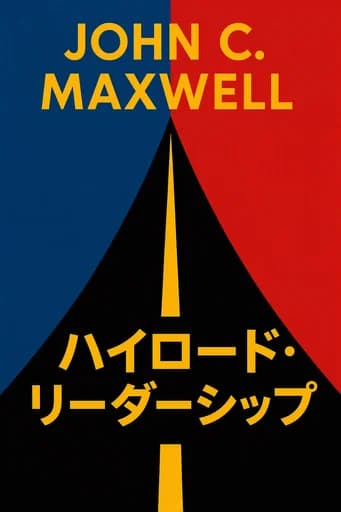
In a world that divides, Maxwell's "High Road Leadership" offers a transformative path. With 35 million books sold globally, the #1 leadership expert reveals how respecting others creates unstoppable teams. What if bridging differences - not exploiting them - is your greatest competitive advantage?
John C. Maxwell, the #1 New York Times bestselling author of High Road Leadership: Becoming a Servant Leader, is an internationally recognized leadership authority whose transformative frameworks have shaped modern organizational and personal development.
A pastor-turned-global leadership coach, Maxwell connects the book’s themes of ethical influence and team empowerment to his decades of experience growing congregations, founding EQUIP (training 5 million leaders across 180 countries), and advising organizations like the United Nations and Fortune 500 companies.
His seminal works, including The 21 Irrefutable Laws of Leadership and Failing Forward, have sold over 24 million copies in 50 languages, cementing his reputation for blending actionable strategies with servant-leadership philosophy. Maxwell’s John Maxwell Team certifies coaches worldwide in his trademark methodologies, while his talks at West Point and Harvard Business School underscore his cross-industry impact.
High Road Leadership expands his legacy of redefining success through collective growth—a vision reflected in the book’s adoption by NFL teams, startups, and NGOs. His works have ranked on Wall Street Journal and Business Week bestseller lists for 15 consecutive years.
High Road Leadership outlines 12 ethical leadership practices to unify teams and foster inclusive environments, emphasizing values like accountability, serving others, and prioritizing long-term vision over personal agendas. John Maxwell provides actionable strategies to bridge societal divides by cultivating self-awareness, emotional resilience, and a "giver’s spirit." The book blends philosophical principles with practical steps for leaders seeking to positively impact workplaces and communities.
This book is ideal for executives, managers, and aspiring leaders navigating divisive workplace dynamics or societal challenges. It’s particularly relevant for those seeking to improve team collaboration, ethical decision-making, and organizational culture. Maxwell’s accessible style also makes it valuable for nonprofit leaders, educators, and anyone committed to personal growth through servant leadership principles.
Yes—readers praise its timely focus on unity, integrity, and empathy in leadership. While some concepts may feel idealistic, the book’s structured frameworks (like the 12 essential practices) and real-world applications offer tangible value. Critics of overly transactional leadership styles will find its human-centric approach refreshing and actionable.
The core practices include:
Unlike his foundational works like The 21 Irrefutable Laws of Leadership, this book specifically addresses modern societal divisions and emphasizes collective well-being over individual success. It integrates Maxwell’s signature leadership principles with contemporary challenges like polarization, offering fresh strategies for fostering inclusivity.
Notable quotes include:
Absolutely—the book provides tools to de-escalate tensions by focusing on shared goals, validating diverse perspectives, and modeling accountability. Techniques like “closing gaps through communication” and “extending goodwill” help leaders transform adversarial dynamics into collaborative opportunities.
Some reviewers argue the principles require significant organizational buy-in to implement effectively, potentially limiting impact in highly hierarchical settings. Others note the advice leans heavily on leaders’ intrinsic motivation, which may not address systemic barriers to ethical leadership.
Maxwell describes it as the ability to manage stress, setbacks, and interpersonal challenges while maintaining compassion. Critical strategies include practicing self-awareness, reframing failures as growth opportunities, and building mental resilience through disciplined habits.
This principle urges leaders to prioritize long-term societal and organizational health over short-term wins. Maxwell advises aligning decisions with core values, investing in sustainable solutions, and mentoring others to perpetuate positive change.
The book’s emphasis on trust, empathy, and clear communication translates well to virtual environments. Leaders can use its “value all people” framework to foster inclusion across time zones and cultural differences, while the “abundance mindset” helps mitigate resource-sharing tensions.
As global challenges like AI disruption and geopolitical tensions persist, Maxwell’s focus on ethical stewardship and unifying leadership offers a counterbalance to transactional trends. The book’s strategies help organizations navigate uncertainty while retaining employee and community trust.
著者の声を通じて本を感じる
知識を魅力的で例が豊富な洞察に変換
キーアイデアを瞬時にキャプチャして素早く学習
楽しく魅力的な方法で本を楽しむ
"Hate has caused many problems but solved none."
"Weaponized cruelty" is mistakenly seen as a path to power.
"The kindest person in the room is often the smartest."
Effective leadership often means "balancing competing valid interests."
People have a remarkable ability to detect authenticity.
『High Road Leadership』の核心的なアイデアを分かりやすいポイントに分解し、革新的なチームがどのように創造、協力、成長するかを理解します。
鮮やかなストーリーテリングを通じて『High Road Leadership』を体験し、イノベーションのレッスンを記憶に残り、応用できる瞬間に変えます。
何でも質問し、学習スタイルを選び、自分に本当に響くインサイトを一緒に作れます。

"Instead of endless scrolling, I just hit play on BeFreed. It saves me so much time."
"I never knew where to start with nonfiction—BeFreed’s book lists turned into podcasts gave me a clear path."
"Perfect balance between learning and entertainment. Finished ‘Thinking, Fast and Slow’ on my commute this week."
"Crazy how much I learned while walking the dog. BeFreed = small habits → big gains."
"Reading used to feel like a chore. Now it’s just part of my lifestyle."
"Feels effortless compared to reading. I’ve finished 6 books this month already."
"BeFreed turned my guilty doomscrolling into something that feels productive and inspiring."
"BeFreed turned my commute into learning time. 20-min podcasts are perfect for finishing books I never had time for."
"BeFreed replaced my podcast queue. Imagine Spotify for books — that’s it. 🙌"
"It is great for me to learn something from the book without reading it."
"The themed book list podcasts help me connect ideas across authors—like a guided audio journey."
"Makes me feel smarter every time before going to work"

High Road Leadershipの要約をPDFまたはEPUBで無料でダウンロード。印刷やオフラインでいつでもお読みいただけます。
In a world where leadership either blesses or curses, John Maxwell's fifty years of experience reveal a stark truth: the difference between good and bad leaders isn't just skill - it's values. We've reached a critical crossroads where politics resembles warfare, public confidence in leaders has plummeted, and as Maya Angelou wisely noted, "Hate has caused many problems but solved none." The fundamental issue? We no longer see people who disagree as simply having different opinions - we see them as fundamentally flawed human beings with wrong motives. This toxic perspective destroys trust and ends relationships before they can begin. The path forward requires developing what Maxwell calls a "collaboration bias" - remaining open-minded and genuinely listening to everyone, including opponents. As former Tennessee governor Bill Haslam discovered through years in both business and government, effective leadership often means "balancing competing valid interests" rather than crushing opposition.
Leaders interact with others along three paths: low, middle, or high road. Middle-road travelers operate on calculated give-and-take, maintaining mental ledgers of favors. While seemingly practical, this scorekeeper mentality ultimately inhibits genuine connection. Low-road travelers focus solely on self-interest, taking without reciprocation. They often view themselves as victims entitled to compensation. As leaders, they damage organizations through public criticism and manipulation, maintaining power by creating division and fear. High-road travelers prioritize others without expecting returns. They don't pursue fairness but focus on creating value for everyone. These leaders openly value contributions, unite people, mentor actively, and consistently treat others better than themselves. Unlike the common definition of "taking the high road," this approach requires a fundamental others-focused mindset. Maxwell's father offered this essential leadership wisdom: "Value people, believe in them, and love them unconditionally." This isn't about superficial gestures but recognizing everyone's inherent worth. People inherently recognize authentic care versus manipulation.
"You're not amazing. Your gift is amazing, but you are not. You're one step from stupid." These humbling words from Maxwell's mentor helped him separate his self-worth from his abilities. A Carl Sandburg quote captures our human condition: "There is an eagle in me that wants to soar, and there is a hippopotamus in me that wants to wallow in the mud." The eagle drives achievement but can breed arrogance, while our flawed nature keeps us humble. To balance humanity with leadership, develop self-awareness. As Maxwell wrote: "I've got to find myself, to know myself, to be myself, to improve myself, to get over myself, so I can give myself to you." This means understanding your impact on others. Maxwell's father - a college president facing fierce opposition - demonstrated high-road leadership by praying for those undermining him. Despite having power to outmaneuver his opponents, he refused, saying: "That's not the way we do leadership here. If you're a Maxwell, you have to take the high road." Years later, when an opponent sought forgiveness, his father had already granted it. The crucial question remains: Why do I want to lead others? Pure motives benefit the majority and follow the Golden Rule - anything serving yourself more than others becomes manipulation, not motivation.
Believing in others means seeing their potential beyond current capabilities. The Pygmalion effect shows that people typically rise to meet others' expectations - when leaders demonstrate genuine belief and paint a vision of possibility, growth naturally follows. Equipping others transforms belief into tangible action. Leaders prove they value potential by investing time in teaching, coaching, and mentoring, whether through formal programs, individual guidance, or connecting people with growth opportunities. Loving people unconditionally creates an environment where they feel safe to grow and take risks. This approach generates a ripple effect - valued people tend to value others, fostering a culture of mutual respect and development. Self-compassion should replace harsh self-criticism in your inner dialogue. When you forgive your imperfections and learn to laugh at yourself, you demonstrate healthy self-awareness. Self-deprecating humor from leaders builds trust by reducing perceived status barriers.
Being a giver isn't about wealth - it's about consistently giving more than you take. While most focus on receiving, high-road leaders prioritize giving through three approaches: open-hearted generosity (adding value to others), open-minded generosity (thinking the best of others), and open-handed generosity (giving freely). Maxwell observes that while successful people can be unhappy, generous people never are. Giving extends beyond money to include talent, time, opportunities, connections, and experiences. It's about intentionally tipping the scales in others' favor and elevating those around you. Today's leadership challenges are unprecedented, with emotional fragility and depression becoming increasingly prevalent. Leaders must maintain high emotional capacity - the ability to respond positively to adversity, failure, criticism, and pressure. To build emotional capacity, reject the victim mentality. Those who see themselves as victims become disempowered, blame others, and resist change. Instead, take ownership of your circumstances by focusing on what you can control while accepting what you can't.
To make right choices, reject actions that undermine leadership: avoid pursuing what's easy, seeking constant approval, insisting on being right, and blaming others. These behaviors prevent growth and authentic leadership. Consider examining your true motives before making decisions. The greatest obstacle to giving is a scarcity mindset - believing there isn't enough to go around. When you hold tight to resources, you can't receive more. Embracing abundance opens possibilities for both giving and receiving. History shows this through innovations like the printing press and new energy sources. Transform your leadership by asking "What can I give today?" instead of "What can I get?" Process emotions quickly without suppressing them. Maxwell achieves this through daily reflection: reviewing his day, self-examination, positive self-talk, planning application, and taking action. Keep short accounts and address conflicts promptly. Don't carry emotional baggage - while you hold grudges, others move forward. Learn to distinguish between solvable problems and facts of life. If you can't change it, it's a fact of life, not a problem.
Good leaders mobilize people to accomplish goals, but agendas become destructive when prioritized over people. Prioritizing people doesn't mean abandoning vision - it means considering others' interests first. Develop empathy through active listening and "walking slowly through the crowd." Create win-win outcomes, as winning at others' expense yields only short-term gains. The "leadership dance" requires adapting your approach: leading from the front to set direction, beside to listen, below to remove obstacles, behind to support, and above to advance the big picture. In our divided world, we need high-road leaders who genuinely desire others' success - those who affirm worth, encourage potential, empower contributions, and serve needs. The question isn't whether we need such leaders, but whether we'll commit to becoming them ourselves.