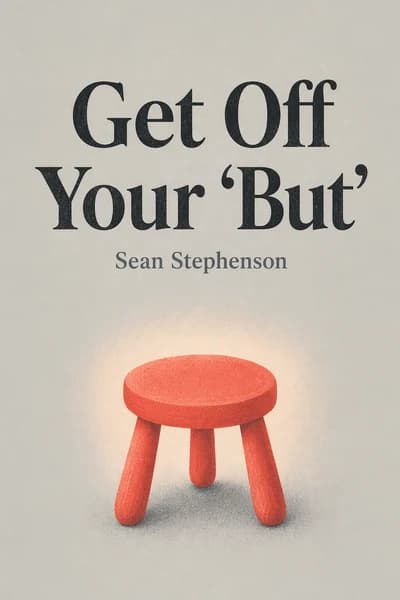
Born with brittle bones disease, Sean Stephenson teaches how to banish self-sabotage. Endorsed by Bill Clinton and Tony Robbins, this transformative guide reveals why suffering is optional. What's holding you back? Discover how one man's resilience became everyone's roadmap to freedom.
Sean Clinch Stephenson (1979–2019), author of Get Off Your "But": How to End Self-Sabotage and Stand Up for Yourself, was a renowned therapist, motivational speaker, and resilience expert celebrated for transforming personal adversity into universal strategies for empowerment.
Born with osteogenesis imperfecta—a rare bone disorder causing over 200 fractures by age 18—Stephenson channeled his lived experience into a self-help classic that blends memoir, actionable exercises, and psychological frameworks to address self-sabotage.
A protégé of Tony Robbins and former White House intern, he held a doctorate in clinical hypnotherapy and delivered high-impact keynote speeches globally, earning $15,000–$30,000 per engagement. His work reached millions through media appearances, including a Biography Channel documentary, Three Foot Giant, and his methods were adopted by leaders like Richard Branson.
Translated into multiple languages, Get Off Your "But" remains a staple in personal development literature, cementing Stephenson’s legacy as a voice of practical optimism.
Get Off Your "But" is a self-help book focused on overcoming self-sabotage by confronting excuses (the "buts" holding people back). Sean Stephenson blends personal stories—including his journey living with a rare bone disorder—with practical exercises to help readers take responsibility, shift mindset, and build resilience. The book emphasizes actionable strategies to replace self-doubt with courage and progress.
This book is ideal for individuals struggling with procrastination, self-doubt, or fear-driven inaction. It’s particularly valuable for those seeking motivation to tackle personal or professional challenges, as well as fans of Tony Robbins (who wrote the foreword). Stephenson’s candid storytelling resonates with readers interested in mindset shifts and practical self-improvement tools.
Yes, particularly for its blend of inspirational narratives and actionable advice. Stephenson’s unique perspective—formed through overcoming 200+ bone fractures and societal prejudices—adds authenticity. The exercises, like identifying "but" statements and reframing obstacles, provide tangible steps for personal growth. Critics praise its accessibility, though some may find the tone overly optimistic for complex issues.
Key concepts include:
The book features exercises such as:
Unlike generic positivity guides, Stephenson’s work blends therapeutic techniques (from his clinical hypnotherapy background) with gritty, lived experience. It shares Tony Robbins’ no-excuses ethos but adds a focus on physical and emotional vulnerability. The book is less theoretical than Atomic Habits but more personal than The Power of Now.
Stephenson argues fear often stems from exaggerated mental narratives. The book teaches readers to:
Some may find the advice oversimplified for deep-rooted psychological issues. The focus on individual responsibility could downplay systemic barriers. Additionally, while Stephenson’s story is inspiring, readers without disabilities might struggle to relate to certain analogies.
In an era of economic uncertainty and AI-driven disruption, the book’s emphasis on adaptability and mental resilience remains timely. Its tools for managing change align with modern workforce needs, while Stephenson’s anti-victimhood messaging resonates in personal development circles.
Stephenson’s first book, How You(th) Can Succeed! (2001), targets young adults seeking career and life guidance. It shares similar themes of goal-setting but lacks the therapeutic depth of Get Off Your "But". Both books reflect his career evolution from motivational speaking to clinical practice.
Born with osteogenesis imperfecta, Stephenson faced constant pain, mobility challenges, and societal stigma. His firsthand battles with limitation and discrimination inform the book’s urgency and empathy. Stories—like meeting Tony Robbins via Make-A-Wish—illustrate turning adversity into fuel, a central theme.
For related themes, consider:
著者の声を通じて本を感じる
知識を魅力的で例が豊富な洞察に変換
キーアイデアを瞬時にキャプチャして素早く学習
楽しく魅力的な方法で本を楽しむ
Pain is inevitable. Suffering, however, is optional.
Pain became his teacher, and he became its dedicated student.
Communication is merely exchanging information, but connection is exchanging our humanity.
『Get Off Your "But"』の核心的なアイデアを分かりやすいポイントに分解し、革新的なチームがどのように創造、協力、成長するかを理解します。
『Get Off Your "But"』を素早い記憶のヒントに凝縮し、率直さ、チームワーク、創造的な回復力の主要原則を強調します。

鮮やかなストーリーテリングを通じて『Get Off Your "But"』を体験し、イノベーションのレッスンを記憶に残り、応用できる瞬間に変えます。
何でも質問し、声を選び、本当にあなたに響く洞察を一緒に作り出しましょう。

"Instead of endless scrolling, I just hit play on BeFreed. It saves me so much time."
"I never knew where to start with nonfiction—BeFreed’s book lists turned into podcasts gave me a clear path."
"Perfect balance between learning and entertainment. Finished ‘Thinking, Fast and Slow’ on my commute this week."
"Crazy how much I learned while walking the dog. BeFreed = small habits → big gains."
"Reading used to feel like a chore. Now it’s just part of my lifestyle."
"Feels effortless compared to reading. I’ve finished 6 books this month already."
"BeFreed turned my guilty doomscrolling into something that feels productive and inspiring."
"BeFreed turned my commute into learning time. 20-min podcasts are perfect for finishing books I never had time for."
"BeFreed replaced my podcast queue. Imagine Spotify for books — that’s it. 🙌"
"It is great for me to learn something from the book without reading it."
"The themed book list podcasts help me connect ideas across authors—like a guided audio journey."
"Makes me feel smarter every time before going to work"

Get Off Your "But"の要約をPDFまたはEPUBで無料でダウンロード。印刷やオフラインでいつでもお読みいただけます。
What if your biggest obstacle wasn't your circumstances, but the excuses you make about them? Born with Osteogenesis Imperfecta (brittle bones disease), Sean Stephenson entered the world with almost every bone in his tiny body broken. Doctors gave him 24 hours to live. Yet this three-foot-tall man who suffered over 200 bone fractures throughout his life became a renowned psychotherapist, motivational speaker, and confidant to presidents. His journey reveals a profound truth: our greatest limitations aren't physical but mental - the excuses, insecurities, and fears (our "BUTS") that prevent us from living extraordinary lives. When Sean's mother asked him after a particularly painful fracture, "Is this going to be a gift or a burden?" something shifted. He realized he was meant to teach others how to embrace life despite pain. This wisdom became his guiding principle: "Pain is inevitable. Eventually, it touches us all. Suffering, however, is optional."