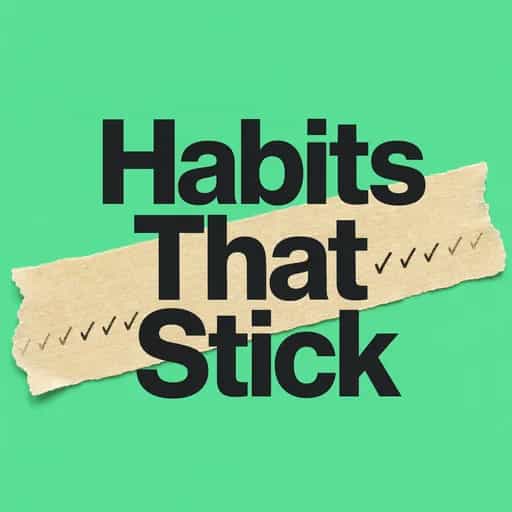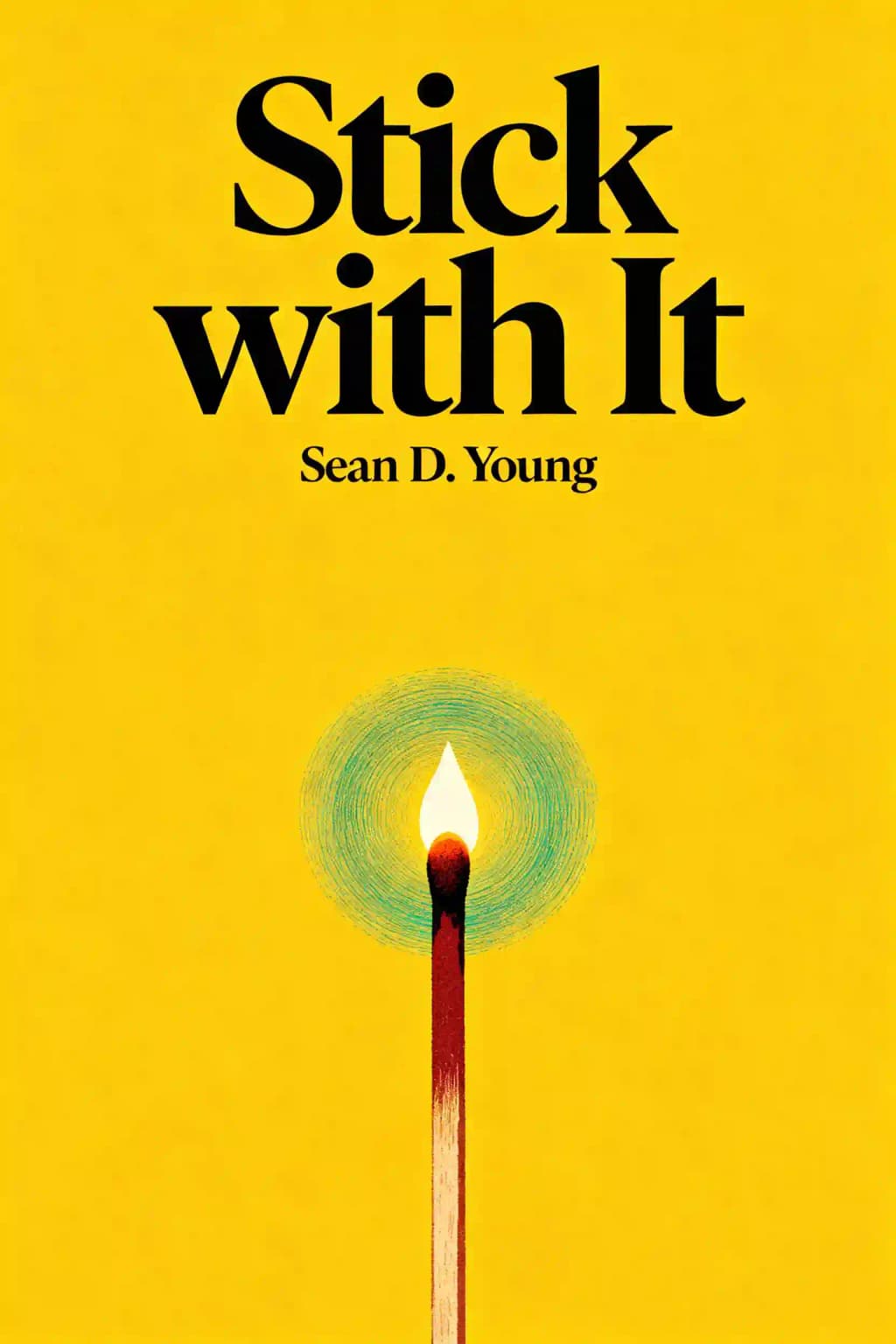
Stick with It
A Scientifically Proven Process for Changing Your Life-For Good
『Stick with It』の概要
In "Stick with It," UCLA professor Sean D. Young reveals the SCIENCE framework that turns fleeting intentions into lasting habits. This #1 Wall Street Journal bestseller breaks down behavior change into seven psychological forces - making personal transformation surprisingly achievable. What's your impossible goal?
『Stick with It』の主要テーマ
- behavioral science framework
- incremental goal setting
- habit sustainability
- environmental design
- psychological neurohacks
『Stick with It』の名言
Willpower is not enough.
Habits are behaviors done with little or no thought.
The key to lasting change is science.
Motivation is not the answer.
『Stick with It』の登場人物
- Sean D. YoungAuthor and behavioral psychologist
- Josh NavaCase study who used stepladders to craft spoons
- Rishi DesaiCase study who overcame social anxiety
- Brad DelsonLinkin Park guitarist used for the rock star case
- Sarah ChenCase study who used micro-goals to run a marathon
著者について
『Stick with It』の著者について
Sean D. Young, #1 Wall Street Journal and international bestselling author of Stick With It, is a leading expert in behavioral science and digital technology.
A Stanford-trained psychologist and UCLA medical school professor, he founded the UC Institute for Prediction Technology and Center for Digital Behavior, where his research on habit formation intersects with AI and social media analytics.
His work has been featured in The New York Times, NPR, and Fast Company, and he advises organizations like the National Academies of Sciences on health innovation. Young hosts the BlackBoxPhD blog and Audible podcast, distilling complex behavioral concepts into actionable strategies.
Stick With It—a neuroscience-backed guide to lasting change—has been translated into 12 languages and adopted by Fortune 500 companies for its scalable frameworks to transform personal and organizational habits.
Stick with Itの要約をダウンロード
Stick with Itの要約をPDFまたはEPUBで無料でダウンロード。印刷やオフラインでいつでもお読みいただけます。
この本に関するよくある質問
Stick with It explores the science of lasting behavior change, offering evidence-based strategies to overcome obstacles and achieve long-term goals. Sean D. Young, a behavioral psychologist, debunks myths about talent and willpower, emphasizing process over personality. The book covers neuroscience-backed methods like "neurohacks," resilience-building techniques, and seven key forces that drive permanent change, from social incentives to practical steps for habit formation.
This book is ideal for anyone struggling to maintain New Year’s resolutions, fitness goals, or career plans. Professionals in coaching, HR, or behavioral therapy will find actionable frameworks, while individuals seeking science-backed self-improvement tools benefit from its strategies for breaking bad habits and sustaining positive routines.
Young identifies seven forces: Stepladders (small, incremental goals), Community (social support), Important (emotional meaning), Easy (simplifying behaviors), Neurohacks (brain shortcuts), Captivating (engagement triggers), and Engrained (repetition until automatic). Combined, these create a roadmap for turning fleeting intentions into lifelong habits.
While Atomic Habits focuses on habit stacking and The Power of Habit examines cue-routine-reward loops, Stick with It emphasizes personalized processes over one-size-fits-all formulas. Young prioritizes neuroscience and social dynamics, offering strategies like "neurohacks" and community-driven accountability absent in other works.
Yes. The book’s "Stepladders" method breaks overwhelming projects into manageable tasks, while "Captivating" strategies use gamification to sustain focus. Case studies show how teams apply these principles to reduce procrastination and improve adherence to deadlines.
Neurohacks are mental shortcuts to bypass the brain’s resistance to change. Examples include reframing negative thoughts ("I get to exercise" vs. "I have to") and using visualization to activate reward pathways. These tactics make new behaviors feel instinctive rather than forced.
Young explains that diets often fail due to reliance on willpower instead of systems. His "Easy" force simplifies nutrition through pre-planned meals, while "Community" leverages support groups to sustain motivation—a science-backed approach contrasting with restrictive calorie-counting methods.
Some reviewers note the strategies require consistent effort, which may challenge those seeking quick fixes. Others highlight that social incentives (the "Community" force) depend on external factors, potentially limiting effectiveness for socially isolated individuals.
As a UCLA behavioral psychologist and NIH-funded researcher, Young integrates clinical studies on HIV prevention and digital behavior into the book. His work at NASA and Cisco informs practical tech-related advice, like curbing screen addiction using "Engrained" repetition techniques.
Yes. With rising interest in AI-driven behavior apps and remote work challenges, Young’s focus on digital tools ("neurohacks") and self-guided accountability remains timely. Updated examples in recent editions address post-pandemic habit formation.
The "Stepladders" and "Easy" forces are adaptable for parenting. Simplifying tasks (e.g., 5-minute cleanup sessions) and creating engaging routines ("Captivating") help children build habits without resistance, per case studies in the book.
“Change isn’t about who you are—it’s about the process you use.” This encapsulates Young’s thesis that lasting transformation stems from systems, not personality overhauls, empowering readers to focus on actionable steps.