第1章
Breaking Free: The Dangerous Art of Being Yourself
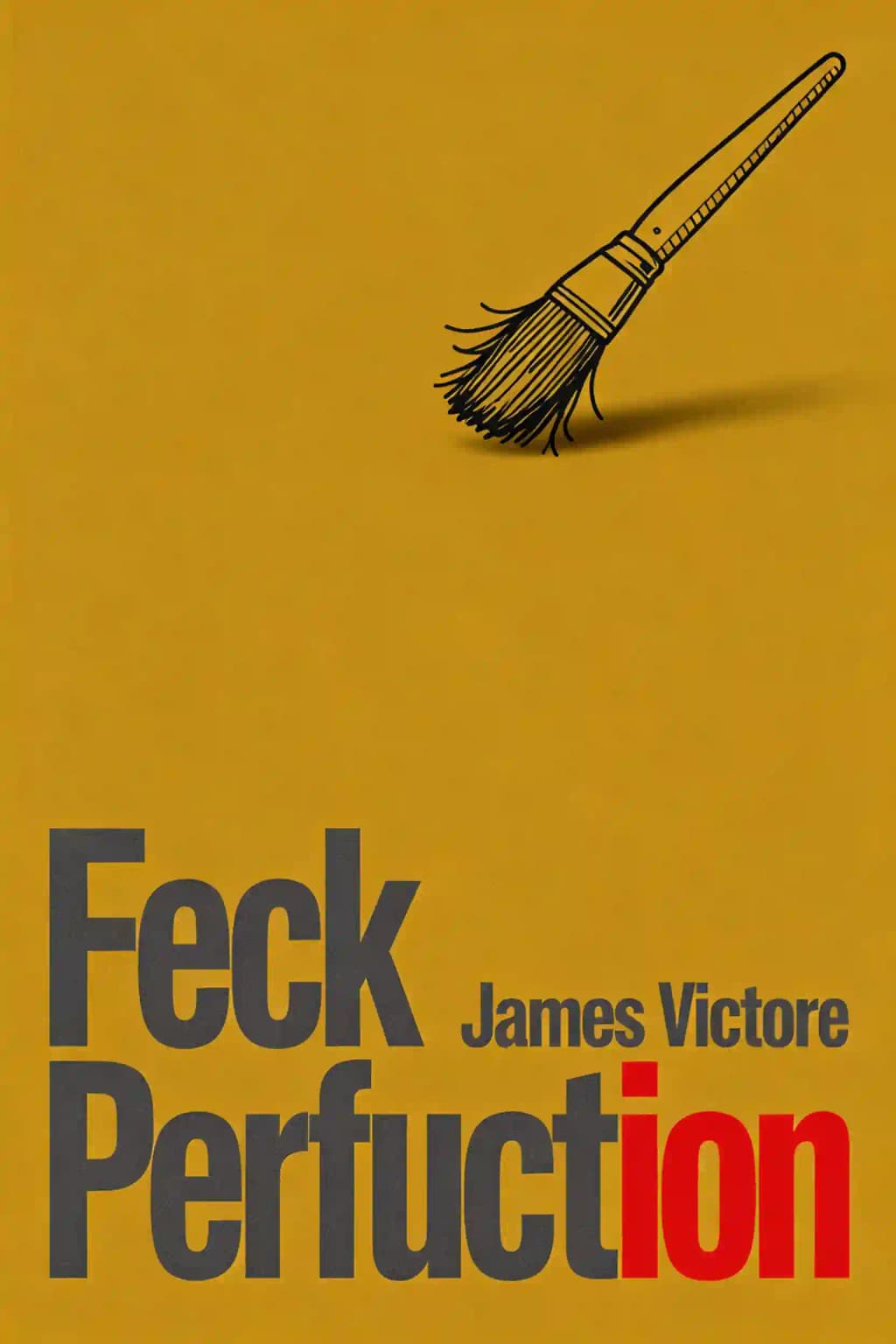
When James Victore's workshop participants timidly presented their ideas, he delivered the wake-up call they desperately needed: "The point... is to have a fucking opinion." This single statement captures the essence of creativity that has made Victore a design legend whose work has been exhibited at MoMA and taught at prestigious institutions worldwide. His book "Feck Perfuction" has become a rallying cry for creatives stuck in corporate environments, with celebrities from Tim Ferriss to Elizabeth Gilbert praising its revolutionary approach to creative liberation. What makes this manifesto so powerful isn't just its irreverent title, but how it systematically dismantles the barriers we place between ourselves and authentic expression. In a world increasingly dominated by algorithm-friendly content and corporate-approved messaging, Victore's philosophy stands as a defiant reminder that our weirdness isn't a liability-it's our greatest asset.
第2章
The Voice That Makes You Unforgettable
Your voice is your authentic self-not the polished version you present at job interviews, but your true inner being demanding to be heard. It's how you uniquely see and translate the world. When you nurture and express this voice, it creates a lifelong path to follow. Failing to use your voice means surrendering control to others. As children, we express our quirks and passions without restraint, running them "full throttle." Growing older, many of us shrink from our weirdness to avoid standing out. But these peculiarities-being nerdy, goofy, or fidgety-are actually gifts that form the foundation of character and creative power.
Your parents, though well-meaning, likely offered limited options for your future-either suggesting you could be anything (even president) or pushing you toward predetermined paths with prestigious titles. But your true purpose isn't wealth or career success-it's discovering who you truly are. Following Dolly Parton's wisdom to "Find out who you are and do it on purpose" is the real challenge. Many of us face prescribed paths that don't align with our authentic selves. The creative urge can be too powerful to ignore, even when we're warned against becoming "starving artists." Denying your true nature to become someone else's vision leads to living what Oscar Wilde called other people's lives-with borrowed thoughts and passions.
We all possess an inner light shaped by our upbringing, history, loves, and fears-our opinion that begs to be shared. Yet most don't let this light shine because it seems simultaneously too easy (familiar and seemingly unremarkable) and too hard (requiring trust and vulnerability). The fear that not everyone will appreciate your voice is valid, but this division actually helps define your true audience. Without expressing your authentic voice, you become directionless, taking cues from external forces rather than asking "What do I have to say?" Your voice is what makes your work memorable and sets you apart.
第3章
When Play Becomes Purpose
Play is essential for human development, helping us learn about ourselves and the world as children. Yet as we enter adulthood, we're instructed to abandon "childish things" and get serious jobs that pay well-with little consideration for whether we actually enjoy the work. This perpetuates the notion that work is merely a means to financial stability, leading many to join the "Working Dead" in unfulfilling jobs.
Every creative job has two parts: the Objective (satisfying commercial requests) and the Subjective (incorporating play). A chef can simply cook food that's hot and good, or through imagination, create memorable experiences that delight customers. Play serves both creator and audience. The beginning of self-expression often requires permission to play, pushing past logical answers to find the good stuff. This process unlocks possibilities and becomes professional shorthand for creativity. New, innovative work comes from unexpected places-from our childlike sense of wonder and curiosity.
Creativity is dangerous-not as mere decoration, but as invention and pioneering. It's Nike's origin story: Bill Bowerman ruining his wife's waffle maker to create innovative shoes for athletes. It's X-Games emerging from skateboarding in empty pools, and NASCAR's roots in outrunning police. Today's dangerous ideas include self-driving cars and private Mars missions. Creative thinking challenges established norms and signals the death of what came before. Human nature instinctively questions and rejects the new, yet change remains inevitable. You can fight it unsuccessfully or grow with it. Creativity produces seemingly wrong, illogical ideas that ultimately lead to a more sophisticated tomorrow. Creativity is dangerous because that is precisely its job.
Being told to be "normal" is really being told you don't fit in. The truth is, it's impossible to behave exactly like anyone else without sacrificing your character. While humans naturally desire belonging and social connection, changing who you are to achieve acceptance means losing what makes you special. People follow leaders who stand for something authentic. Recognizing that you don't fit in isn't a flaw-it's your first glimpse of greatness and the first step toward understanding your creative potential.
第4章
Facing Your Dragons: The Hero's Journey
Your greatest fear isn't spiders or sharks-it's yourself. It's the fear of expressing who you truly are, lest someone actually see you. While instinctual fears serve as healthy protection mechanisms, professionally, FEAR equals STOP. What prevents you from achieving your goals isn't lack of knowledge, talent, or other people-it's your own fear. Your daily task is to overcome yourself, make fear your best friend, stay focused, and keep moving forward.
Dragons are real, and so are heroes-though not everyone becomes one. These dragons aren't physical creatures of scales and fire, but something worse. Every morning, my dragon wraps around my shoulders whispering "Failure" in my ears. It's easier to accept failure than to face it, easier to stay in bed than risk anything. But avoiding the beast only makes it grow larger.
We all hear the call to action at some point-"Carpe diem!"-only to be struck by the enormity of what's required. Opportunity demands we take chances and stretch our limits, but fear makes us reluctant. Whether taking a great photo, leading people, or starting a business, you must risk everything, including looking foolish. Heroes are simply the reluctant ones with enough courage to face their dragons-every damn day.
As a young ski patroller, Victore taught beginners how to ski during downtime. What should have been fun often devolved into frustration when learners fell-they wanted to ski, not fall. Yet falling is integral to learning. We hate failing because it makes us feel we've done something wrong. But putting yourself in position to fail means you've actually done something right. Most success stories begin grimly. Failure is a teacher-not always kind, but instructive. It tests our determination, weeding out those who don't want success badly enough. It presents a choice: stay down or get up and try again.
Our reluctance to accept failure's hard lessons leads to an even bigger failure-settling for mediocrity. We abandon our aspirations for the "easy way"-comfort disguised as success. The path to true success is marked by repeated failures. As Victore still tells ski students: "If you're not falling, you're not skiing."
第5章
Taking the Leap: Action Over Perfection
We're obsessively fixated on perfection, craving it with an iron-fisted control-freak intensity in our lives and nearly killing ourselves pursuing it at work. Perfection is a mind game we play with ourselves-no one else cares about the details we agonize over. The pattern is simple: set impossible goals, fail to achieve them, then sink into depression. You can call yourself a "True Perfectionist," but "Self-Hating Narcissist" is more accurate.
Superficially, perfectionism seems like a professional advantage, a creative accelerator. In reality, it hits the brakes more than the gas. It prevents you from starting projects because you're "not ready" and from finishing them because they're "never quite right." "When it's perfect!" becomes our defense, but this overthinking leaves us paralyzed, unable to move forward. Should you strive for excellence? Absolutely. Pay attention to details? Yes. But never let "perfect" halt progress. You know what's better than perfect? Done. Done is better than perfect.
The world is brimming with would-be authors, dancers, and entrepreneurs full of bright and innovative ideas, holding the future of creativity inside them. Most of their ideas will never make it to market and their talents will remain silenced. The biggest reason for this is too much thinking and not enough doing, too much worry and not enough action. Success goes to those who keep moving, to those who can practice, make mistakes, fail, and still progress. It all adds up. Like exercise for muscles, the more you learn, the more you develop, and the stronger your skills become. Success is about action. Action beats worry. Action beats thinking. Action always wins.
We all desire freedom-to grow, experiment creatively, design flexible lives, do heartfelt work that pays, and explore without constraints. We believe we just need someone's permission to create this magic. So we wait for a savior to unchain us from our desks, waiting for that perfect future moment when circumstances align. "After I make money, lose weight, pay off debt... then you'll see!" But favorable circumstances never materialize, and permission never comes. Freedom isn't given or earned gradually-you take it through bold, brave moves. It's a leap of faith, believing you'll land safely or at least survive. Freedom is the reward for trusting yourself and your voice. There's no warden or knight in shining armor; only you can grant yourself freedom.
第6章
Cultivating Creative Growth
Healthy, steady growth doesn't just happen; you have to plan for it. When Victore's son was a toddler, he bought a secluded house upstate and planted 33 small pine trees for privacy. His Uncle Joe, a floricultural genius, taught him everything about planting and maintenance, guaranteeing, "These suckers will grow a foot a year. Same for your boy." Joe was hinting at universal applications of his plant-based philosophy: systematic growth-for gardens, business, children, even Instagram followers-comes from love, attention, and consistency.
They say if you love your work, the rest is easy. I say there's still plenty to do, but love makes the efforts and late nights worth it. Love gives your work purpose and ensures you'll care when things go wrong. "Multitasking" means doing many things poorly. This is why we pay attention. Focus on one thing. Sometimes this approach is called "Do one thing and do it well." Read, study, and practice to become an expert.
Consistency is the most important trait-and where most people fail. Ask yourself daily, "What am I doing today to make way for growth?" For gardeners, this means knowing when to plant, mulch, feed, water and prune, season after season. For parents, it means consistent messaging and boundaries. In business we must have a plan, get the word out, follow numbers, know our brand, and stay "on brand." Love the game, focus, and follow through. All three help growth happen. Skip one, and the process falls apart.
The muse is an ethereal goddess rumored to be our creativity source. Everyone has their own creative source and way of connecting with her. Some find her during beach walks. Others hunt her down and wrestle truth from her. Some say she's myth, that enlightenment comes only from hacking away at 5am, that salvation is work, work, work. There's no definitive answer on her existence, how to find her, or translate her instructions. Most common knowledge is that she won't find you at your desk, in an office, or on schedule. She appears unexpectedly when we're unaware and open to influence. She visits in the shower, at the gym-exercise seems to release congealed thoughts and free the muse.
Only stepping outside routine allows chaos, madness, and life-changing opportunities to find you. Yes, work, work, work; but get out and wander too. All work and no play makes Terpsichore a dull muse. Go! Seek inspiration, open yourself to her gifts. Avail yourself of the gods and create conditions for them to whisper in your ear. Just remember to bring a pen.
第7章
Breaking Free from Comfort's Prison
Comfort is a prison. One of Victore's mid-career students had an epiphany: he hated his job at a scholastic publishing house where everyone was equally miserable. Returning to his apartment, he saw the ass divot in his leather sectional couch-a physical symbol of his imprisonment. His comfortable apartment, paid for by a cushy job, had become golden handcuffs.
The search for comfort rarely yields what we truly desire. The easy way is a trap. Complacency is the enemy, and settling down is settling. Our desire for ease traps us in smaller lives where we judge everything by comfort, not by what it costs our soul. We kill time "chillin'" while our instinct and intuition atrophy. We have games and toys but remain spiritually empty, ogling others' creativity while postponing our own. Meaning gets replaced by weekend shopping. Even our food is calorie-rich but nutrient-poor.
JFK's 1962 moon speech emphasized doing things "not because they are easy, but because they are hard." Today, this idea seems dated, but hard work-like finding a fulfilling job-benefits our souls and forms our character. By 35 or 40, many reach a plateau rather than the moon they aimed for. The day shift isn't you at your best. Your true voice lives in the uncomfortable spot: shamelessly, outrageously you. The brave ones who risk comfort for beauty and meaning can achieve more-they can move people.
We live in a culture designed for distraction. Screens dominate our lives-at work, in elevators, schools, taxis. We carry screens in our pockets for the moments between other screens. We even have smaller screens within our screens. Emails, chats, texts, pads, pods, and clouds have become leashes yanking us from quiet time. They demand attention, leaving no room for solitude or deep thought.
When Victore was young, phones were nailed to walls-calls happened at specific times and places. Now it's all the time, even at dinner tables and on toilets. We pass this distraction to toddlers, giving them phones as babysitters, ensuring they too become incapable of handling boredom. Our new tools make it too easy to get sidetracked from meaningful experiences. Our brains are being rewired, our etiquette forgotten. We're learning new habits while forgetting powerful innate instincts. We trust our senses, memories, and gut feelings less while putting blind faith in Google. These bad habits rot the discipline needed for contemplation and study, robbing us of the grit necessary for long-term goals.
第8章
Transforming Habits, Transforming Life
Nothing shapes us as much as our habits. The way we move, speak, eat and even think-these are all patterns picked up along our journey. Most habits form unconsciously through repetition and are difficult to break. But we can deliberately form new habits that positively shape our professional practices and perspectives. We must take inventory, choosing which habits to keep and which to discard.
We all have critics, but the cruelest ones are our inner voices that cast doubt over our choices. These voices steal determination and replace it with fear. Where your attention goes, you go-focus on flaws and they'll flourish. Judging yourself wastes energy, and we're typically harsher on ourselves than necessary. To silence these nagging thoughts of failure, we must defiantly take command of our lives, focus on gratitude toward ourselves, and concentrate on our gifts rather than shortcomings.
We pre-emptively criticize ourselves to prevent others from doing it first. This self-deprecation, while seemingly humble or witty, becomes self-sabotage when habitual. It ruins how others experience you. Similarly, rejecting compliments is like spitting in the giver's soup. Words have power-repeat negative mantras about yourself and eventually both you and others will believe them. Watch your words.
Bravery never exists without fear. Every firefighter, athlete, or speaker feels both courage and cowardice simultaneously. Fear shouldn't prevent necessary action-it's merely a reminder that challenges aren't easy. That's life: with courage comes fear, with change comes hesitation. When facing intimidating situations, remember that your fear likely contains a measure of bravery.
We all have excuses: I would be successful BUT I started too late, live in the wrong place, have kids, have bills. These "buts" become crutches-valid-sounding reasons to avoid risks and remain unhappy. Like the fox in Aesop's fable who claimed the grapes were sour anyway, we convince ourselves we didn't want success. At some point, you must stop listening to your "but"-nothing stands in your way except these self-imposed limitations.
第9章
Finding Purpose Beyond Yourself
Most people feel lost, drifting passively from job to job without direction. But you're not truly lost-you're searching for purpose. A purpose gives you reason to wake up excited and ready. It's the spark that drives action and provides focus. Purpose is about finding meaning beyond yourself and serving a larger community through work that matters.
The keys to happiness include expressing feelings, feeling useful, and having friends. While modern solutions involve drugs, therapy or meditation, caring for something beyond yourself might be more effective. Understanding there are bigger things than your ego is the beginning of finding purpose. Purpose gives life meaning and reason to rise each morning. It shifts focus from your needs to serving others and creating meaningful work. Like knights, samurai, scouts, and Jedi, adopt a moral code centered on serving others. Help, teach, lead, or perform unrewarded good deeds.
As a commercial designer, Victore is motivated by sharing creativity, new projects, and getting paid-but nothing kills creative excitement faster than clients who don't trust him. Trust is the lifeblood of business, setting the stage for great work. Without it, we get micromanagement and factory-like conditions where employees feel replaceable. Similarly, parents crush children's spirits by restricting creative freedom and discouraging mistakes. When the Do Books publisher gave him complete creative freedom despite a small budget, their trust inspired his best work. They later wrote: "James Victore asked us to trust him, and we are glad we did." Trust isn't easy in business, but the easy way is always a trap.
We create because we need to. Giving form where none existed drives us and makes us happy. We make art or business to suit ourselves, and are surprised when others acknowledge our talent. Seeking approval is a common mistake. What's important isn't what others think of your work, but how it makes you feel and how you share it with the world. Most of us are terrible judges of our own work-too familiar with our marks to recognize their uniqueness. You're qualified to make work, not judge it. No artist in history knew they were making something important; they lived the questions through daily action. The public's response is unpredictable. Success comes from following through with work you love.
第10章
Making Work That Matters
After teaching at the School of Visual Arts for nearly 20 years, Victore found the best students weren't those straight from high school, but those with life experience-transfer students from nursing or biology, or older students returning to education. Those with "road under them" who had lived and failed brought richness to their work. Young students often search for "right answers" outside themselves, picking from a small menu of safe ideas. The best designers are interesting people first-smart, funny, and curious. His advice: Learn everything, then forget it. Let details blur, put your imprint on content, then create. Study Shakespeare, poetry, nutrition, woodworking, flower arranging, improv, aikido-let it all steep inside you, becoming muscle and memory. Who you are is the most important part of your work.
Whether you like it or not, you're a teacher. You teach through your work, your demeanor, how you treat others and yourself-both good and bad. Children learn from parents not just what they're taught explicitly, but their walk and weaknesses too. "Do as I say, not as I do" creates distrust and lacks conviction. You can't expect greatness while expressing only confusion and pain. The positive side is the impact you can have on the world. We need more teachers sharing compassion, empathy, excitement and enthusiasm. Accepting your role as teacher instantly makes you better. Lead by example, see yourself reflected in others, and take responsibility for your actions and legacy.
Though this advice seems irresponsible and un-American, pursuing financial gain shouldn't be the primary reason we work. Taking jobs solely for money leads to a bad portfolio-crap work attracts more crap work. Making creative career choices based on fear of poverty is shortsighted and shows lack of faith in your creativity. Trust the bigger picture: follow your gut, instincts, and interests. Let money follow you. "Because I wanna" is the only reason you need.
The better you take care of what is within your reach, the farther you can reach. Victore's mother's wisdom "You can't change the world, but you can clean up your room" wasn't just about chores-it was about starting with yourself. He couldn't help others until he could help himself. Whether you call it being the change, leading by example, or doing your best, changing the world starts with your education, empathy, and awareness. Real change begins with what's in your immediate control, then radiates outward to affect others.
When asked to write advice for a colleague's son turning 21, Victore pondered what he would tell his younger self. His answer was simple: "relax." Even today, this remains the advice he needs daily. He tends to turn life into a sausage-making race, grinding everything through a small sphincter, desperately trying to control outcomes. But control is a myth; life refuses to be wrangled, and trying to do so means fighting himself. Better to trust the process, trust the stars, trust yourself-let everything happen in its course, then take a deep breath and relax.
Make work that matters.