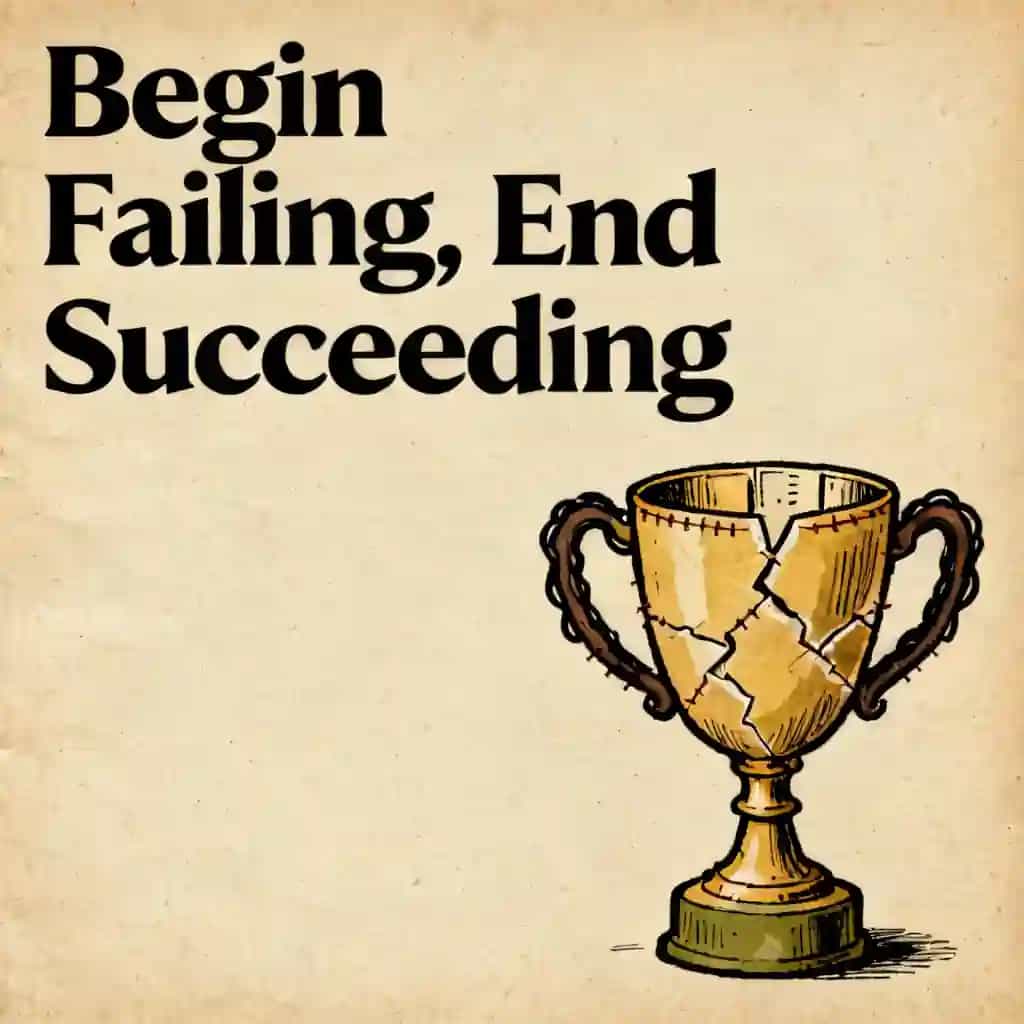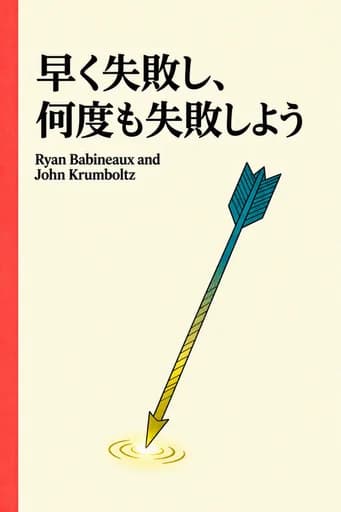
Embrace failure as your fastest path to success. The book that made "fail fast" a Silicon Valley mantra, praised by The New York Times as "bold, bossy and bracing." What counterintuitive strategy do innovators use that most people avoid? Your answer awaits.
Ryan Babineaux, Ph.D., and John Krumboltz, Ph.D., psychologists and career development experts, co-authored the bestselling self-help book Fail Fast, Fail Often: How Losing Can Help You Win. Babineaux, a Stanford-educated therapist and innovation speaker, blends behavioral science with Buddhist principles to create actionable strategies for personal growth.
Krumboltz, a pioneering Stanford counseling professor and creator of happenstance learning theory, revolutionized career counseling with his research on serendipity. Their collaboration originated from their popular Stanford University course “Fail Fast, Fail Often,” which teaches embracing experimentation through small, iterative actions.
The book—an Oprah editor’s choice and New York Times-featured title—distills decades of research into practical tools for overcoming perfectionism. Babineaux’s work has been cited in Forbes, The Atlantic, and NPR’s All Things Considered, while Krumboltz authored 200+ publications on career decision-making.
Translated into 12 languages, their manifesto has influenced corporate training programs and tech accelerators, reflecting its enduring relevance in entrepreneurship and professional development.
Fail Fast, Fail Often by Ryan Babineaux and John Krumboltz advocates embracing failure as a catalyst for growth, urging readers to prioritize action over perfectionism. Based on their Stanford University course, the book combines psychology research and real-world examples to show how rapid experimentation, small steps, and learning from mistakes unlock opportunities in careers and personal life.
This book suits career changers, entrepreneurs, and anyone feeling stuck in routines. It’s ideal for overcoming analysis paralysis, fear of failure, or seeking practical strategies to reignite curiosity. The authors’ actionable advice benefits professionals navigating uncertain industries or those needing motivation to pursue side hustles.
Key lessons include:
The book provides tools to explore new paths without overcommitting, like “micro-actions” (e.g., informational interviews or skill-building side projects). It emphasizes pivoting based on feedback rather than rigid plans, making it valuable for gig workers, freelancers, or post-layoff job seekers.
These underscore the book’s core message: Momentum, not flawless execution, drives progress.
While Atomic Habits focuses on incremental habit-building, Fail Fast prioritizes rapid experimentation to discover purposeful goals. Both emphasize small steps, but Babineaux’s work targets early-stage uncertainty, whereas Clear’s addresses long-term consistency.
Some readers find the advice repetitive or anecdotal, noting it could be condensed. Critics argue it oversimplifies systemic barriers to career change. However, supporters praise its practical exercises and relatable case studies.
In an era of AI-driven job disruption and remote work, the book’s emphasis on adaptability, reskilling, and proactive experimentation aligns with modern career trends. Its strategies help readers thrive in volatile markets.
Ryan Babineaux (PhD, Stanford) and John Krumboltz (Stanford professor) are psychologists and career counselors. They co-created Stanford’s “Fail Fast, Fail Often” course, blending academic research with 20+ years of coaching experience.
The book reframes fear as a natural response to growth, encouraging “failure inoculation” through low-risk actions (e.g., volunteering or prototyping). It teaches resilience by linking setbacks to future success.
Yes. The authors’ Stanford course materials and supplemental exercises (e.g., weekly action challenges) are available online. Summaries.com offers a 30-minute audiobook summary for quick review.
著者の声を通じて本を感じる
知識を魅力的で例が豊富な洞察に変換
キーアイデアを瞬時にキャプチャして素早く学習
楽しく魅力的な方法で本を楽しむ
Happy, successful people spend less time planning and more time acting.
Pursue what you enjoy first, rather than waiting until your problems are resolved.
You can't know what something is like until you're actually doing it.
If you want to succeed at something, you must first be bad at it.
Be playful and curious, focus on learning rather than performance, and expect to make mistakes.
『Fail fast, fail often』の核心的なアイデアを分かりやすいポイントに分解し、革新的なチームがどのように創造、協力、成長するかを理解します。
鮮やかなストーリーテリングを通じて『Fail fast, fail often』を体験し、イノベーションのレッスンを記憶に残り、応用できる瞬間に変えます。
何でも質問し、学習スタイルを選び、自分に本当に響くインサイトを一緒に作れます。

"Instead of endless scrolling, I just hit play on BeFreed. It saves me so much time."
"I never knew where to start with nonfiction—BeFreed’s book lists turned into podcasts gave me a clear path."
"Perfect balance between learning and entertainment. Finished ‘Thinking, Fast and Slow’ on my commute this week."
"Crazy how much I learned while walking the dog. BeFreed = small habits → big gains."
"Reading used to feel like a chore. Now it’s just part of my lifestyle."
"Feels effortless compared to reading. I’ve finished 6 books this month already."
"BeFreed turned my guilty doomscrolling into something that feels productive and inspiring."
"BeFreed turned my commute into learning time. 20-min podcasts are perfect for finishing books I never had time for."
"BeFreed replaced my podcast queue. Imagine Spotify for books — that’s it. 🙌"
"It is great for me to learn something from the book without reading it."
"The themed book list podcasts help me connect ideas across authors—like a guided audio journey."
"Makes me feel smarter every time before going to work"

Fail fast, fail oftenの要約をPDFまたはEPUBで無料でダウンロード。印刷やオフラインでいつでもお読みいただけます。
What if everything you've been told about success is backwards? We're taught to plan meticulously, analyze exhaustively, and wait for the perfect moment before taking action. Yet research reveals a startling truth: the happiest, most successful people spend far less time planning and far more time doing. They don't wait for certainty-they create it through action. This isn't reckless impulsivity; it's a deliberate strategy of learning through experience rather than endless preparation. Think of it like learning to swim: you can read every book about proper technique, watch countless tutorial videos, and study Olympic swimmers for years-but until you actually get in the water, you haven't learned anything meaningful. The most fulfilling life doesn't come from perfect planning. It emerges from bold experimentation, rapid failure, and constant adjustment based on real-world feedback. Jason meticulously researched a trip to Prague for months-comparing hotels, mapping attractions, studying restaurant reviews. Ultimately, overwhelmed by details, he abandoned the entire trip. Many of us excel at planning but struggle with actually doing. We have "Ph.D.s in planning and kindergarten educations in doing." Research confirms that excessive information inhibits action. When a grocery store displayed six jam varieties, sales were ten times higher than when twenty-four options were offered. Faced with too many choices, we become confused and either stick with familiar options or avoid deciding altogether. Worse still, decision-making itself depletes mental energy needed for action-making meaningful progress even harder. The solution is to "shrink the decision." Rather than agonizing over whether to switch careers, simply decide if you're willing to talk with someone who made a similar change. When John received an unexpected Stanford interview while happily employed at Michigan State, he avoided overthinking the implications of potentially uprooting his family. Instead, he asked a much simpler question: "Do I want to take a free vacation in sunny California?" This transforms paralyzing decisions into manageable actions that provide valuable information without requiring major commitments.
We're conditioned to believe happiness follows success: "I'll be happy when I get the promotion." This "not yet" mindset is backwards. Joy actually fuels success. Physicians in positive moods diagnose faster and more accurately. A study of 12,000 workplace diary entries found people generated 50% more valuable ideas on positive days. Psychologist Barbara Fredrickson's "Broaden-and-Build" theory explains why: positive emotions expand cognitive capacity and exploratory thinking, while negative emotions narrow focus to immediate threats. Gary Erickson discovered this on a 175-mile bike ride. Six hours in, choking down his sixth PowerBar, he realized he could create something better. Working with his mother in their kitchen, they created Clif Bar. By 2002, he turned down a $120 million buyout. Pursuing joy requires embracing failure. Jerry Seinfeld tests thousands of jokes before perfecting material. Pixar president Ed Catmull describes their process as going from "suck to non-suck." The original Starbucks featured bow-tied baristas, opera music, no chairs, and Italian-only menus-nothing like today's cafes. Carol Dweck's research reveals the antidote: students praised for effort rather than intelligence tackle harder problems. Approaching activities as a beginner opens exponential possibilities for learning.
Helen's first university lecture was catastrophic-jumbled presentations, technical failures, students walking out. She received the lowest teaching evaluation in the university's history. Rather than quitting, Helen treated her shortcomings as data. She incorporated engaging stories, flexible discussions, and group activities. Ten years later, her classes have waiting lists and she's consistently ranked as the institution's best professor. The pain of failure is temporary and instructive. The paralysis of fear is permanent and soul-crushing. Give yourself permission to be terrible at first. Expect mistakes. Celebrate them as evidence you're learning. We're expected to choose careers before experiencing them-essentially marrying jobs before the first date. The "matching model" fails because our interests constantly evolve, professions contain wildly diverse individuals, and the world rapidly changes. Sara loved crime shows and planned to become a forensic scientist. When she visited a crime lab, the harsh fluorescent lighting, disinterested employees, and antiseptic smell immediately told her this wasn't right. She pivoted to interior design where her personality thrived. Successful companies like Google release minimal viable products quickly, gathering real-world feedback rather than waiting for perfection. This "lean startup" methodology prioritizes small experiments over comprehensive five-year plans. The same principle applies to careers: test assumptions before betting your future on them. Jill loved animals but abandoned veterinary dreams because she feared blood. After years in unfulfilling finance work, she finally volunteered at a vet clinic and discovered blood didn't bother her when working with animals she cared about. At thirty-six, she became a successful veterinarian. Test-drive careers through volunteering, informational interviews, or short-term projects. Validate your assumptions with real experience before making irreversible commitments.
Children explore fearlessly, acting on curiosity without calculating outcomes. Adults lose this instinct, obsessing over what we "should" do rather than what intrigues us. We hesitate to try new things unless we can predict success-like Marie, who kept a guitar untouched for a year because she couldn't decide if she wanted to "commit" to learning it. A visiting Tibetan lama observed how readily Americans "cheat themselves out of the enjoyment of their lives" by talking themselves out of following their interests. Meanwhile, successful innovators remain voraciously curious, connecting diverse experiences into breakthrough insights. As Steve Jobs noted, creativity is simply connecting things-and you can only connect what you've actually experienced. Bill Strickland's life transformed at sixteen when he followed his curiosity into an art classroom. Drawn by sunlight, coffee aroma, and jazz music, he discovered a teacher working clay on a potter's wheel. That moment led him to found Manchester Craftsmen's Guild, which now helps 450 teenagers annually with an 86% college continuation rate-earning Strickland a MacArthur "genius grant." Curiosity functions as awareness, helping you recognize opportunities others miss. It provides energy, propelling you into action. Most importantly, curiosity has an expiration date-it arises in specific moments that vanish if you delay. That fleeting interest in pottery, that passing thought about learning Spanish-these aren't distractions from your "real" priorities. They're invitations to possibilities you can't yet imagine.
Allan, a software engineer who'd gained forty pounds, joined an expensive gym and created an intense workout schedule. Within two weeks, he was overwhelmed, constantly sore, and had gained two more pounds. He quit. This pattern repeats endlessly: lofty goals that paralyze rather than inspire. Stanford professor Bob Sutton argues "stretch goals" are counterproductive. Harvard research shows people are least creative when struggling with overwhelming objectives. Motivation requires frequent task completion, not distant targets. Psychologist Karl Weick introduced "small wins"-breaking complex problems into bite-sized tasks. This approach clarifies actions, reduces uncertainty, and builds momentum. Alcoholics Anonymous exemplifies this: focus on staying sober one day at a time, not for life. Tom Fatjo's garbage business journey illustrates this perfectly. After his truck compactor broke, he found himself manually stomping down garbage. He enjoyed the work and quit accounting. He expanded methodically-adding commercial accounts, buying a landfill. When Houston's mayor asked him to handle city garbage collection, Fatjo seized the opportunity. By 1976, he'd built BFI into a $256 million company with 2,800 trucks. His success came from starting small with one truck and $500, discovering opportunities incrementally. When facing paralysis, find one small thing to do today. Small wins often lead to unexpected opportunities you never could have planned.
Our negativity bias makes us better at spotting risks than opportunities. Counter this with the "One Yes Trumps Three No's" rule-give each positive reason three times the weight of each negative one. Equally important: evaluate the default outcome of doing nothing, which is often the riskiest choice. Staying in an unfulfilling job, remaining socially isolated, or never developing expertise might be the true cost of inaction. When facing complex decisions, find a key "springboard action" that creates momentum. For Jason, who once talked himself out of Prague, buying an airline ticket to Beijing years later became that catalyst. The best springboard actions involve external commitments-scheduling meetings, making reservations, signing up for courses. These create accountability that overcomes internal resistance and transforms abstract intentions into concrete reality. Resistance is that internal voice telling you the timing isn't right, the risks too great, the effort too demanding. It's strongest when facing significant changes-career shifts, creative projects, new relationships, healthier habits. Laney, a bored financial analyst, discovered a perfect university job matching her philosophy background. Initially excited, her enthusiasm mysteriously evaporated when application time came. This pattern repeats constantly: skipping workouts when tired, abandoning promising relationships over vague doubts, declining travel opportunities when feeling overwhelmed. The truth: the best way to get in the mood for something is simply by doing it. Taking action isn't just the fastest way to develop positive attitudes-it's often the only way.
Every significant project has a "malodorous middle"-when progress slows and success feels distant. Design company IDEO visualizes this as a U-shaped curve: starting with "hope," dipping into "insight" where progress seems minimal, before rising to "confidence" when solutions emerge. Success requires what psychologist Angela Duckworth calls "grit"-perseverance and passion for long-term goals despite failure, adversity, and plateaus. The solution: spend thirty minutes daily on your most important projects. Not completing them-just quality, focused work. This breaks inertia and shifts your identity from someone who talks about goals to someone who pursues them. Transform abstract "someday" goals into concrete "today" actions. Instead of "I will lose weight," commit to "I will eat a light lunch." Rather than "I will write a children's book," decide "I will write a few sentences on the bus ride home." Your dreams don't need more analysis or better timing-they need one small, imperfect step today. The barrier between you and the life you want isn't lack of resources or talent-it's the gap between intention and action. Once you begin, opportunities emerge, skills develop, connections form. But none of this happens in your head-only when you move from thinking to doing, from someday to today.