第1章
When Calm Becomes Your Superpower
What do you do when birds strike both engines of your commercial aircraft, disabling them completely at 2,800 feet over one of the world's most densely populated cities? In 2009, Captain Chesley "Sully" Sullenberger faced this exact scenario. Rather than panicking or rigidly following protocols that would have failed, he demonstrated what the authors call "Deliberate Calm" - maintaining a perfect balance between emotional awareness and rational thinking amid chaos. His unprecedented decision to land in the Hudson River saved all 155 lives aboard.
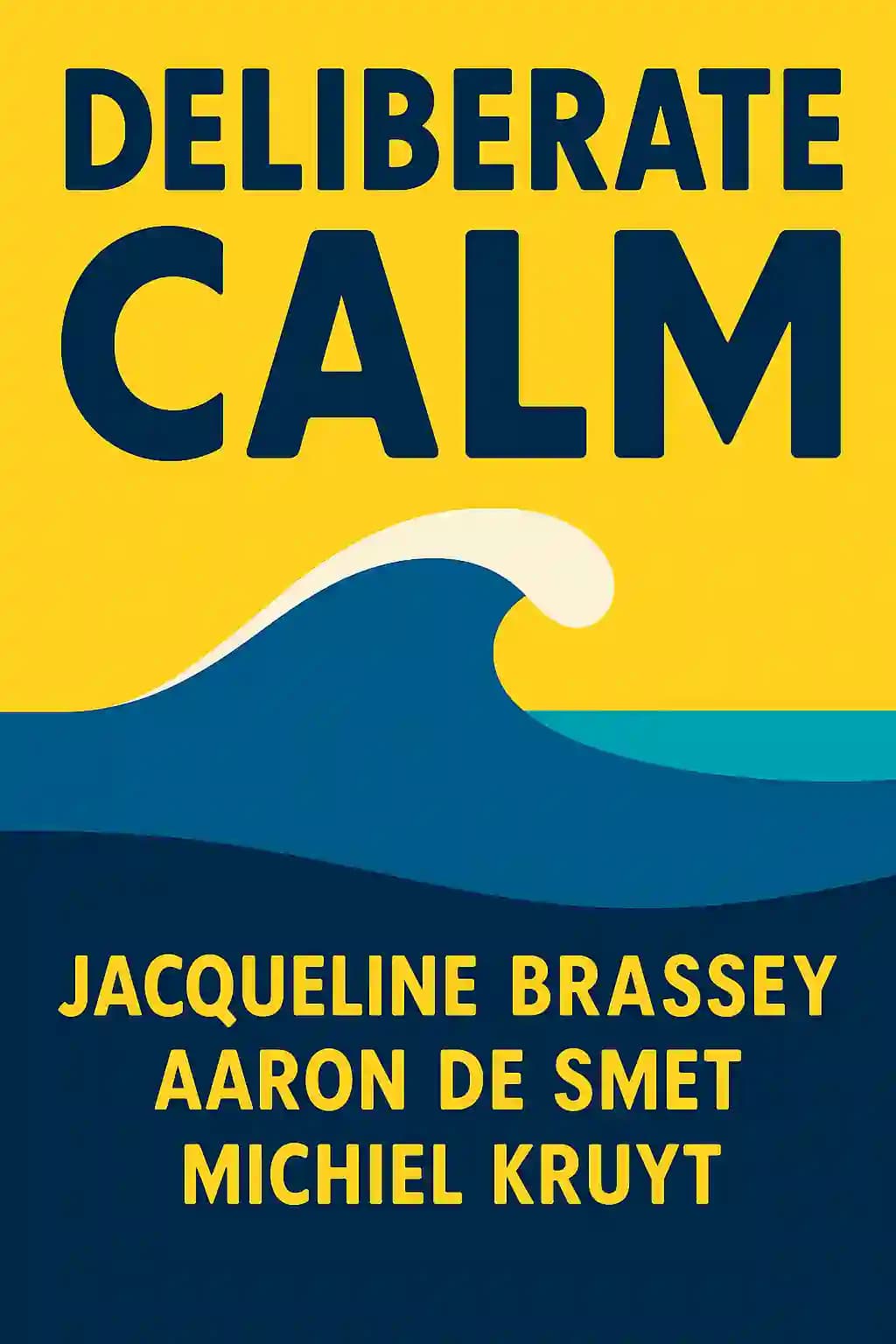
This remarkable story opens Jacqueline Brassey, Aaron De Smet, and Michiel Kruyt's groundbreaking work, which has become required reading for executives at companies like Microsoft and Google. Drawing on neuroscience, leadership development, and team effectiveness research, the book has been praised by Adam Grant as "the ultimate guide to keeping your cool when the pressure's on." Its practical approach to navigating uncertainty has made it particularly relevant in our post-pandemic world, where leaders at every level face unprecedented challenges requiring adaptation rather than mere execution.
第2章
The Deliberate Calm Promise: A New Way of Leading
We all operate in two primary zones: the Familiar Zone, where we understand the rules and have established effective response patterns, and the Adaptive Zone, where we face unfamiliar territory requiring new approaches. The challenge? When stakes are high in the Adaptive Zone - precisely when we most need to transform and learn - our biological response drives us to revert to old patterns instead.
This creates what the authors call the "adaptability paradox." Consider Raymond, a regional energy company CEO facing industry transformation. While normally effective, Raymond struggles when his close executive friends verbally support his transformation plan but secretly undermine it. Despite mounting evidence of their betrayal, Raymond avoids confrontation, allowing the transformation to stall. His stress increases, affecting his sleep, drinking habits, and family relationships as he remains paralyzed about addressing the situation.
Raymond's story illustrates how differently we react to similar high-stakes challenges. He feels safe creating company strategy but threatened when facing interpersonal conflict that challenges his core identity. This demonstrates the second piece of Dual Awareness: recognizing our internal emotional state and whether it serves our external circumstances.
In the Adaptive Zone, we typically shift between two states: protection and learning. Protection activates when we feel threatened, causing us to hunker down, contract, and become primarily concerned with defending our positions rather than considering alternatives. Research shows that raising stakes in the Adaptive Zone often leads to less innovation, as demonstrated by experiments where financial incentives actually reduced creative problem-solving.
In contrast, a learning state adopts a curious, beginner's mindset that allows us to consider others' perspectives and explore new possibilities. With Dual Awareness, we can recognize what external situations demand and consciously enter a learning state, maintaining an inner locus of control. Rather than waiting for circumstances to change, we accept them and embrace our power to change our response.
第3章
The Brain-Body Connection: How We Construct Our Reality
Our brains function as meaning-making machines, constantly creating narratives to explain the world around us. While storytelling is uniquely human, many of these personal narratives are complete fiction. These stories develop from life experiences and color our perceptions as our subconscious searches for confirming evidence. From early childhood experiences to workplace interactions, we build complex webs of meaning that shape how we interpret every encounter.
Take Reshma's experience with her boss Monika. When Monika appears distracted during Reshma's presentation, Reshma experiences physical symptoms of stress-racing heart, sweating, stomach discomfort-and mental spiraling that continues affecting her even after their meeting. Reshma misinterpreted Monika's distracted expression as boredom, reinforcing her personal narrative of being easily overlooked. Her brain perceived this as a threat to her identity, triggering a protective response despite no actual danger existing. In reality, Monika was preoccupied with a family emergency, but Reshma's interpretation created a cascade of physiological and emotional responses that affected her performance for weeks.
The emerging scientific view, championed by Lisa Feldman Barrett, suggests we construct our emotions based on predictions rather than simple external triggers. Our brains constantly scan our environment, integrating information to predict potential danger. These predictions rely on past experiences, current physical sensations, and context-explaining why Reshma panics when seeing Monika in the cafeteria despite no actual threat. This predictive processing happens automatically, drawing on our accumulated life experiences and cultural conditioning to create instant interpretations of events.
The brain-body connection operates through multiple pathways, including the autonomic nervous system, hormonal responses, and neural networks. When we perceive a threat, whether real or imagined, our bodies respond with a cascade of physiological changes: increased cortisol production, elevated heart rate, shallow breathing, and decreased digestive function. These physical responses then reinforce our mental interpretation of danger, creating a self-perpetuating cycle.
Understanding the brain-body connection reveals how we can shift from protection to learning by changing our personal narratives. When we're in a learning state, our nervous system and ventral vagus pathway activate for social engagement, allowing us to connect with others, consider multiple outcomes, experiment, and remain engaged under stress. By recognizing that our interpretations are stories rather than objective truth, we can pause to question our assumptions. This awareness creates space for new interpretations and responses, enabling us to break free from limiting narratives and develop more adaptive patterns of thinking and behaving.
Through practices like mindful awareness, cognitive reframing, and body-based regulation techniques, we can learn to recognize when our brain-body system is reacting to perceived rather than actual threats. This understanding allows us to consciously choose more balanced responses and create new neural pathways that support growth and resilience rather than protection and withdrawal.
第4章
What Lies Beneath: Uncovering Our Hidden Drivers
Our behaviors are like icebergs-only about 10% visible above the waterline, with 90% hidden beneath. These submerged elements-thoughts, feelings, beliefs, mindsets, and core identities-drive our visible behaviors, often without our awareness. These patterns aren't inherently bad; they're shortcuts that simplify decision-making in familiar situations. But when facing novel challenges, these same habits become limitations.
The iceberg model reveals four interacting layers that create our self-reinforcing personal narratives. At the surface, we have our thoughts and feelings that drive our behavior. Our thoughts and feelings create a self-reinforcing loop. Because thoughts and feelings are highly personal and mutually reinforcing, we rarely question our automatic reactions.
Beneath these lie our mindsets and beliefs. Mary, a regional head, had a limiting mindset about leadership as protection that prevented objective performance assessment and growth opportunities for her team. Our mindsets-formed through childhood, culture, and life experiences-act as powerful filters that determine which information we process from the millions of bits available to us each second.
While countless mindsets exist, certain ones either maintain the status quo or open us to learning and innovation. Key mindset pairs include: Fixed versus Growth (believing abilities are unchangeable versus developable); Expert versus Curious (assuming we have all needed knowledge versus asking questions); Reactive versus Creative (applying tested solutions versus exploring new possibilities); Victim versus Agent (believing external factors control outcomes versus maintaining internal locus of control).
The deepest layer contains our values, needs, hopes, dreams, and sense of purpose-elements that form our core identity. Mary's story about protecting her disabled brother Carl revealed how childhood experiences shaped her leadership style forty years later. Being Carl's protector became fundamental to her identity as a loving sister and daughter. This bottom layer is hardest to access and change, often rooted in early childhood.
第5章
Purpose: Finding Your North Star in Uncertainty
Purpose forms a foundational layer of our identity and drives everything above it in our "iceberg." Research demonstrates that purpose-driven individuals experience dramatically better wellbeing-five times higher than those without purpose at work. The health benefits extend beyond professional performance; one study following seven thousand Americans found that those without strong life purpose were twice as likely to die over four years, particularly from cardiovascular causes.
Daniel, a senior executive at a nutritional foods company, faces a devastating competitive threat that his usual problem-solving approach can't address. Through coaching, he realizes his leadership mindset-that good leaders solve problems and others follow-doesn't work for this complex, uncertain situation. By shifting to a collaborative approach focused on facilitating team dialogue rather than providing answers, Daniel helps the team make progress. His physical symptoms (a severe thyroid condition) improve as he embraces this new leadership style, and he begins taking "radical accountability" for all aspects of his life.
Purpose helps us reframe challenges positively, serving as an anchor during turbulent times and helping us stay in learning mode rather than protection mode. Without purpose, we become reactive rather than proactive, like a ship at sea with no destination during a storm.
Finding purpose isn't a one-time event but a lifelong practice of connecting to what matters most and understanding why it matters. Our purpose sits at the bottom of our icebergs and evolves as we gain experience and wisdom. Regularly reconnecting with our purpose fuels us with inner resources and safety needed to shift into learning during adaptive challenges.
第6章
Recover Like an Athlete: Managing Your Energy Reserves
We all possess finite resources across physical, mental, emotional, and cognitive domains that function like a battery powering our ability to learn and adapt. Research shows that highly motivated performers actually learn slower due to stress unless they take short breaks to replenish cognitive resources. Similarly, violin prodigies outperform peers not through more practice but through more frequent recovery breaks.
Alex, a high-energy perfectionist working in airline marketing, lands his dream job as VP of customer experience tasked with turning around plummeting satisfaction scores. Despite assembling a talented team and crafting targeted initiatives, he encounters resistance at every turn. When his personal life simultaneously demands more attention, Alex's work-life balance collapses. His sleep deteriorates, leading to nightly scotch and Ambien, while his behavior grows increasingly erratic.
Recovery and Deliberate Calm exist in a symbiotic relationship: we need adequate recovery to practice Deliberate Calm, while Deliberate Calm helps us recover better and preserve our energy. Our prediction processes create a dangerous cycle where feeling threatened makes us increasingly prone to feeling threatened again. When physical resources are depleted through poor sleep, nutrition, or excessive exercise without recovery, our bodies become stressed and more vulnerable to external stressors.
Our brains constantly assess safety, asking "Am I safe or under threat?"-and when depleted, we're much more likely to perceive threat and react from a state of protection. Studies show that well-rested people can better identify and correct their own biases, while poor sleep quality leads to worse conflicts in relationships.
Alex finally embraces a sustainable approach to recovery and performance. He establishes boundaries by stopping email checks after 8 PM, develops a nightly routine including gratitude practice and novel reading, and eventually sleeps without Ambien. At work, he sequences initiatives rather than launching them all at once, focusing on the most impactful pieces first. Though disappointed he can't meet his ambitious goals immediately, Alex delegates more responsibility to his team leaders and trusts them with implementation.
第7章
Developing Dual Awareness: The Path to Conscious Choice
Dual Awareness is the integrated consciousness of both external and internal environments and how they affect each other. It allows us to act intentionally rather than reactively. When practicing Dual Awareness, we observe ourselves objectively-noting physical sensations, emotions, and thoughts without identifying with them. This means having feelings rather than being them. The distinction is critical: instead of being angry, we have feelings of anger; instead of being a failure, we experience feelings of failure.
We can progress through five levels of awareness. At Level 1 (Unaware), we operate largely on autopilot, viewing the world only through our own lens and assuming we're seeing objective reality. We remain unaware of our hidden iceberg beliefs and patterns, blind to how our behavior impacts ourselves and others.
Level 2 (Delayed) awareness recognizes ineffective behaviors after they've occurred. Feedback, though sometimes uncomfortable, provides crucial insight into our blind spots. The Johari Window model illustrates how feedback shrinks our blind spots and expands shared understanding.
At Level 3 (Perceptive), we begin noticing our patterns in real time-recognizing physical cues like tensing jaw and racing heart, catching negative self-talk and worst-case thinking, and observing others' reactions to our expressions. We see ourselves shifting into protection mode but feel powerless to change course.
Level 4 (Resilient) awareness develops practical strategies for interrupting emotional reactions: taking "time-outs" when triggered, breathing deeply, splashing cold water on our face, and processing emotions, allowing them to pass through us. We reframe situations, shifting from blame to learning.
Level 5 (Adaptive) awareness means anticipating challenging moments by reviewing our day each morning and reframing potential triggers in advance. We develop the ability to "catch the arrow" as it flies toward us-sensing stress in its earliest stages and responding effectively before experiencing a full stress response.
第8章
When Icebergs Collide: Navigating Team Dynamics
When our individual protective responses clash with others', our effectiveness plummets. In a global tech company facing quality and supply issues, Giovanna leads a cross-functional team that's completely stuck. Despite her previous leadership success, her decisive, action-oriented approach fails as team members pull in different directions. Their complex adaptive challenge requires new approaches, but stress triggers protective reactions instead.
Conflict, often perceived as threatening, can actually catalyze learning when approached with an open mind rather than defensiveness or blame. When two people disagree but openly share different perspectives, we gain broader understanding and can solve complex challenges together-but only if we remain in a state of learning rather than protection. In protection mode, we become closed minds talking past each other, strengthening defensive behaviors in both parties.
Chris Argyris's ladder of inference explains how we interpret interactions, starting with objective reality at the bottom and moving up through selective data, meaning-making, assumptions, conclusions, beliefs, and finally actions. When Latha arrived at 9:12 for her meeting with Giovanna, the objective fact was simply the arrival time, but Giovanna focused on "nine" while ignoring Latha's qualifying words "around" and "or so." This selective attention led Giovanna to create meaning (Latha was late), make assumptions (Latha knows she's late and doesn't care), draw conclusions (Latha doesn't value their relationship), and form beliefs (Latha doesn't respect Giovanna and is undermining her authority).
Creating learning dialogue requires balancing effective advocacy (clearly articulating what we believe and why) with inquiry (asking curious questions to understand others' perspectives). When in protection mode during conflict, we withhold information and see the interaction as a battle to win. Effective advocacy means transparently sharing our beliefs and the reasoning behind them, working down our ladder of inference to reveal our observations and interpretations. Equally important is effective inquiry-asking non-judgmental questions to understand others' viewpoints without arguing or defending our position.
第9章
Building Deliberate Calm Teams: Collective Intelligence in Action
Individual learning isn't sufficient for today's complex challenges-collaborative learning is essential for teams and organizations to adapt quickly. This means shifting into learning as a unit, connecting not just individual "icebergs" but also addressing the team iceberg that influences culture and collaboration. Senior teams report spending 60-70% of their time in protection mode, which increases during high-stakes challenges.
Amy Edmondson's research revealed that healthcare teams reporting more errors actually had better patient outcomes-not because they made more mistakes, but because they were willing to surface and learn from them. "Psychological safety" describes a shared belief that a team is safe for interpersonal risk-taking, allowing members to ask for help, share suggestions, and challenge the status quo without fear. Google's Project Aristotle confirmed psychological safety as the top predictor of team performance.
Leaders significantly influence psychological safety through their emotional states, which have multiplier effects on teams. When leaders demonstrate Deliberate Calm-remaining hopeful, calm, open, and curious-groups can approach challenges more creatively. Leaders can foster psychological safety through four key practices: 1) Reframe mistakes by acknowledging them without anger, sharing their own vulnerabilities, and treating errors as learning opportunities; 2) Encourage all voices by avoiding the "sunflower effect" where team members align with the leader's view; 3) Appreciate contributions by recognizing good work; and 4) Coach team members to help and support each other.
Beyond psychological safety, teams facing unfamiliar challenges need to practice Dual Awareness to collaborate effectively. This requires gaining both individual and collective awareness of environmental factors and their effects on internal states and team dynamics. "The Domino Effect" exercise helps teams understand their triggers and protection behaviors, illustrating how one person's protection behavior becomes another's trigger, creating a chain reaction that derails productive discussion.
第10章
Your Personal Operating Model: Designing Life for Deliberate Calm
Consciously designing your life makes it easier to remain grounded regardless of circumstances. Your personal operating model comprises daily choices about time, energy, awareness, relationships, and priorities. Like marathon training preparation, this model establishes the foundation before building your Deliberate Calm muscle.
You already have an operating model, whether intentionally created or not. It's worth examining how well it's working and what needs changing to better face adaptive challenges. This model isn't permanent-it should evolve with changing circumstances, growth, and new support needs.
The personal operating model assesses four pillars supporting Dual Awareness and Deliberate Calm: awareness, purpose, energy, and relationships. The awareness pillar strengthens your Dual Awareness-recognizing whether you're in the Familiar or Adaptive Zone, assessing stakes, monitoring your inner state, and determining if you're in learning or protection mode.
The purpose pillar encompasses your purpose, values, principles, and what matters most to you. If you're unsure of your purpose, begin by reflecting on your values-the beliefs that matter to you and how you want to show up in the world. Values connect directly to purpose; if purpose is your destination, values are how you'll get there.
The energy pillar focuses on well-being, recovery, and the physical, mental, spiritual, emotional, and social practices that recharge you. Taking care of your energy through holistic recovery is essential for well-being, adaptability, and shifting into learning mode during challenges.
The relationships pillar encompasses all the roles you play in different relationships-at work with colleagues and team members, in personal life with family and friends, and in various communities. It also includes the roles others play in your life and whether you've cultivated a supportive network that helps you thrive.
To make personal operating model changes stick, share your goals with an accountability partner, align your time with your intentions by blocking calendar time for priorities, and start with small steps rather than attempting overwhelming changes.
第11章
The Journey of Continuous Adaptation
As Abraham Maslow astutely observed in his hierarchy of needs theory, we must repeatedly choose growth over safety throughout our lives. This choice becomes increasingly critical in our volatile, uncertain, complex, and ambiguous (VUCA) world, where adaptation is not just beneficial but essential for survival and success. The modern workplace demands leaders who can simultaneously serve as learners and guides, maintaining their composure and effectiveness even when facing unprecedented challenges.
Deliberate Calm serves as a practical framework to unlock what experts call the adaptability paradox - the challenge of remaining both stable and flexible simultaneously. This approach enables individuals to learn, adapt, and thrive regardless of external circumstances, much like a tree that bends with strong winds rather than breaking. The practice involves developing three key capabilities: maintaining emotional equilibrium, sustaining cognitive clarity, and fostering interpersonal effectiveness.
The importance of timing in adaptation cannot be overstated. Consider Captain Chesley "Sully" Sullenberger's miraculous Hudson River landing - in just 208 seconds, he had to process information, evaluate options, and make decisions that deviated from standard procedures. His success demonstrates how cultivated calm under pressure can lead to innovative solutions in crisis situations. Similarly, in everyday leadership scenarios, even brief moments of purposeful pause before reacting can dramatically improve decision quality and outcomes.
The four-week Deliberate Calm Protocol provides a structured approach to building these capabilities. Week one focuses on self-awareness and emotional regulation. Week two develops cognitive flexibility and pattern recognition. Week three strengthens interpersonal effectiveness and communication. Week four integrates these skills into daily practice. The emphasis throughout is on progress rather than perfection - acknowledging that we are human beings with natural limitations and emotions, not machines.
The ripple effects of mastering Deliberate Calm extend far beyond individual benefit. When leaders embody these practices, they create psychologically safer environments for their teams, enabling more innovative and collaborative workplaces. These positive effects cascade through families, organizations, and communities, contributing to a more resilient and adaptive society. This optimistic vision is grounded in neuroscience and behavioral research showing that greater awareness and emotional regulation can be learned and improved over time.
The journey of continuous adaptation requires commitment to regular practice, especially during periods of stability when the stakes are lower. This investment in personal growth builds the mental and emotional muscles needed to navigate future challenges with greater skill and confidence. As the pace of change accelerates, those who cultivate Deliberate Calm will be better positioned to lead themselves and others through uncertainty while maintaining their humanity and effectiveness.