第1章
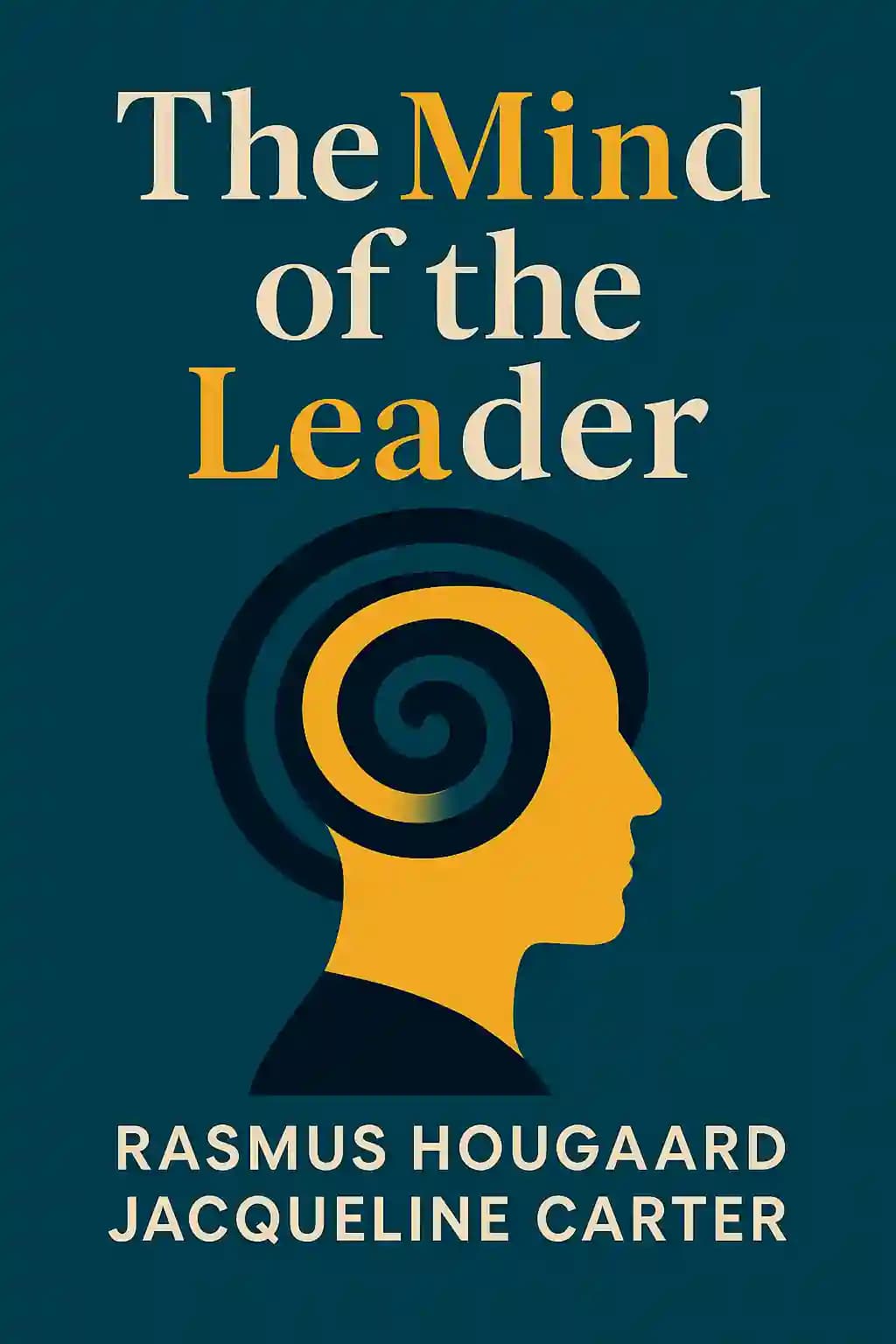
The Mind of the Leader: Harnessing the Power Within
What if the key to effective leadership wasn't found in business school textbooks, but rather within your own mind? This revolutionary perspective forms the foundation of "The Mind of the Leader," a book that has transformed how executives at companies like Google, Microsoft, and Marriott approach leadership. Based on research with over 30,000 leaders across 100 countries, authors Rasmus Hougaard and Jacqueline Carter present a compelling case that traditional leadership approaches are failing in today's complex world. The book has gained particular traction among tech leaders and progressive CEOs seeking to balance high performance with human-centered workplaces. In a business landscape where 82% of employees find their leaders uninspiring and only 13% report being engaged, Hougaard and Carter's framework offers a refreshing alternative-one that begins not with strategy or execution, but with understanding and training your own mind.
第2章
Leadership Begins in the Mind: The MSC Framework
The fundamental premise of effective leadership is deceptively simple yet profound: you cannot lead others well unless you first lead yourself. This principle, articulated by management guru Peter Drucker decades ago, has been largely forgotten in modern leadership development, which typically begins with strategy rather than self-understanding.
The authors' research reveals three mental qualities that form the foundation for effective leadership today: mindfulness (M), selflessness (S), and compassion (C). Together, these qualities create MSC leadership-a framework that addresses our innate human needs for meaning, happiness, human connection, and positive contribution.
Mindfulness represents the ability to be fully present with focused attention and awareness. It's both a practice and a state of mind that enables greater mental effectiveness by teaching you to manage your attention. Research shows mindfulness positively impacts physiology (strengthening the immune system and lowering blood pressure), psychology (improving memory and concentration), and work performance (enhancing creativity and reducing absenteeism). Most importantly, mindfulness shifts cognitive control to the brain's frontal regions, enabling better emotional resilience and decision-making.
Selflessness is the wisdom of getting out of your own way to unleash people's natural energy. It combines strong self-confidence with humble service intention, eliminating hidden agendas and empowering followers. As Jim Collins discovered in "Good to Great," the most successful leaders combine humility with strong will. True humility emerges from recognizing our limited individual importance-even the best CEO is just one contributor among thousands, with company success largely determined by market trends and global forces.
Compassion involves having positive intentions for others and the desire to alleviate their problems. Unlike empathy (where you take on others' suffering), compassion empowers skillful action. It's not soft-it requires courage for difficult conversations and tough decisions. Research shows compassionate leaders are perceived as stronger, and organizations with compassionate cultures enjoy better collaboration, more trust, enhanced commitment, and lower turnover.
This MSC framework applies at three levels: leading yourself, leading your people, and leading your organization. Each level builds upon the previous one, reflecting how leadership begins inwardly before projecting outward. Unlike external motivators like bonuses or perks that provide only short-term engagement, MSC leadership addresses the internal drivers that create lasting commitment and productivity.
第3章
Understanding Yourself: The Foundation of Leadership
Self-awareness forms the cornerstone of effective leadership. When Vincent Siciliano discovered he was the root cause of morale issues at his bank despite business success, he realized he was "leading from his head and not from his heart." Self-awareness-the skill of monitoring your thoughts, emotions, and values moment to moment-enables authentic leadership. Studies show MBA-trained logic alone often produces worse organizational outcomes than leadership balanced with self-awareness.
While leadership assessments provide insights into traits and behaviors, true self-awareness goes deeper-it's knowing yourself moment by moment, monitoring your thoughts and feelings as they happen, and keeping your values in mind. This enables translating assessment insights into meaningful action.
Understanding the distinction between your mind and brain is crucial. The brain consists of billions of neurons in your head, heart, and gut, while your mind encompasses your total experience of being. Neuroscientists have discovered neuroplasticity-by training our mind, we physically change our brain structure. With consistent practice, we can strengthen areas like the prefrontal cortex through focused attention. However, neuroplasticity works both ways-our distracted environments can rewire our brains toward distraction.
Mindfulness-combining focus and awareness-provides the path to self-awareness. Focus allows you to complete projects and stay present in conversations, while awareness helps you notice your thoughts, feelings, and surroundings. When your focus drifts, awareness brings you back.
Scientists estimate 45% of our behaviors operate below conscious awareness-this autopilot is necessary but not always beneficial for leadership. Leaders impact followers through subtle cues, many sent unconsciously. Mindfulness training expands awareness of our mental landscape and creates a crucial one-second gap between impulse and action-the space between making good or bad decisions.
Self-awareness also helps calibrate your value compass. Despite our inherent goodness, corporate scandals continue because pressure to perform erodes self-awareness, causing values to slip. Technology's constant distractions further weaken our moral compass. With heightened self-awareness, we better identify and align with our values, enabling ethical decision-making particularly in morally ambiguous situations.
Perhaps most importantly, self-awareness helps leaders understand what constitutes true happiness-essential knowledge for effective leadership. Research shows two common mistakes: believing happiness comes from external sources and confusing pleasure for happiness. Studies demonstrate that wealth, lottery winnings, or external events only temporarily affect happiness before people return to their baseline. Unlike pleasure (a momentary dopamine-driven experience), true happiness is a lasting experience of fulfillment, meaning, and purpose that persists through life's ups and downs.
第4章
Mindful Self-Leadership: Focus as a Survival Skill
For today's leaders, mindfulness has become a survival skill and cornerstone of self-leadership. As pressures increase alongside the pace of change, information volume, and complexity, many leaders have exhausted conventional productivity tools. A global consulting firm managing director found that despite applying every time-management technique, productivity software, and collaborative platform available, he still couldn't keep up. His solution: train his mind.
Leaders face a critical problem: our ability to focus is deteriorating. Research shows we're distracted 47% of the time, with 73% of leaders feeling distracted from current tasks either "some" or "most" of the time. The biggest distractions come from demands of others (26%), competing priorities (25%), general distractions (13%), and excessive workloads (12%). In today's attention economy, focus has become as crucial as financial analysis or time management.
The productivity equation now becomes Focus x Time x Competence = Productivity. Without focus, tasks take longer and productivity suffers. From a neurological perspective, distraction is our brain's default setting, occurring in older brain regions like the temporal cortex, while focus happens primarily in the newer prefrontal cortex-the home of executive function that allows us to choose our actions deliberately.
While we're genetically predisposed to certain baseline focus abilities, we can improve them through intentional practice. Focus has six distinct faculties: control (prioritizing attention deliberately), capacity (absorbing large volumes of information), speed (processing experiences quickly), agility (switching between tasks without lingering), clarity (registering details in high definition), and durability (maintaining continuous focus without distraction). Different situations require different faculties.
Four strategies are particularly effective for leaders seeking focused performance: understanding what impacts focus, avoiding multitasking, thwarting action addiction, and creating focus time. Focus strength varies throughout the day-judges rule more favorably in mornings than afternoons. Leaders should plan their most important activities around peak focus times and consider how sleep, emotions, and food affect their concentration.
Multitasking is a myth-neurologically, we're incapable of focusing on two things simultaneously. What feels like multitasking is actually "shift-tasking," rapidly switching attention between tasks. This shift-time saps mental energy, reduces effectiveness, increases mistakes, and hinders creativity. Research shows multitaskers become "masters of everything that is irrelevant," with studies demonstrating lower job satisfaction, damaged relationships, impaired memory, and negative health impacts.
Action addiction-an uncontrollable urge to always be doing something like constantly checking emails, texts, or social media-further erodes focus. Studies show managers think they're attending to pressing matters but are "just spinning their wheels," with people spending 41% of their time on low-level priorities. The brain releases dopamine when completing even insignificant tasks, making activity (not productivity) addictive.
Creating focus time requires discipline: block calendar time, schedule during peak focus hours, share its importance with colleagues, set clear goals, and eliminate both external and internal distractions. The key is maintaining discipline during focus time-resisting dopamine cravings like checking email or messages to maximize productivity.
第5章
Selfless Self-Leadership: Managing the Ego
Selflessness represents the appropriate response to understanding that our ego is merely imaginary. Despite extensive research, neuroscientists have found no brain "control center" that houses our self or ego. Instead, we experience a self-referential voice creating the illusion of a fixed identity, when we're actually complex, changing systems of processes. This realization offers freedom-if our ego isn't fixed, we can redefine ourselves beyond self-limiting beliefs.
Research consistently links ego-centrism to negative outcomes. Studies show higher usage of first-person pronouns (I, me, my) correlates with heart disease, depression, anxiety, and even suicide risk. Conversely, using collective pronouns (we, us) improves health outcomes. Leadership studies reveal executives in higher positions use significantly more "we" and "you" language, demonstrating greater concern for group well-being versus self-interest.
When interviewed, senior executives unanimously agreed there are no benefits to having a big ego in leadership. They recognized numerous downsides: vulnerability to criticism, susceptibility to manipulation, narrowed vision, and corruption of values-based behavior. Our ego creates "buttons" representing our self-concept that others can push, making us vulnerable to criticism. When our ego craves positive attention, we become susceptible to manipulation. Ego also creates confirmation bias-we search for information that confirms our existing beliefs while ignoring alternatives.
Power tends to corrupt our behavior. Studies show that people in positions of power are three times more likely to interrupt, multitask during meetings, raise their voices, and say insulting things. While people typically gain power through empathy, collaboration, and fairness, these qualities fade as they become more powerful.
As leaders rise in rank, they acquire more power and become increasingly insulated in what Hal Gregersen calls a "bubble." Breaking free requires constant self-questioning and surrounding yourself with people smarter than you who have the confidence to speak up when you're wrong.
Great leaders exude a strong sense of humility-not just a noble attitude but a realistic perspective on individual worth. Even the best CEO is only one of thousands contributing to a company's success, which is heavily determined by market trends and global forces. Humility helps us recognize our interconnectedness with others and fosters gratitude for their contributions.
Many leaders worry that selflessness will make them pushovers, but effective leadership selflessness must be paired with strong self-confidence. This combination-self-confident selflessness-enables you to stand up for your ideas without being hampered by ego-attachment and pride. Research by Frimer and Walker found that the most successful leaders balance selflessness with confident self-care, combining strong personal ambition with moral conviction-creating "brilliance with wisdom" and "power with conscience."
第6章
Compassionate Self-Leadership: The Oxygen Mask Principle
Just as airline safety instructions direct passengers to put on their own oxygen masks before helping others, leaders must practice self-compassion before they can effectively lead. Many leaders are unnecessarily tough on themselves, engaging in negative self-talk and self-judgment. Our research shows that higher-ranking leaders typically have greater levels of self-compassion than mid-level managers, suggesting this quality enables successful leadership.
Self-compassion doesn't conflict with ambition or a hard-driving attitude-rather, it's about caring for yourself to better succeed. This involves taking care of both body and mind through strategies for better sleep, digital disconnection, and mental breaks.
While most leaders understand the importance of exercise and healthy eating, three critical factors for mental health are often neglected: quality sleep, disengaging from technology, and taking mental breaks. Our research shows that sleep is frequently compromised by busy leaders, with 68% getting only five to seven hours per night, despite recommendations of seven to nine hours. Sleep deprivation negatively impacts logical reasoning, executive function, attention, and mood, while increasing risks of depression, anxiety, and long-term cognitive decline.
Technology addiction severely impacts our presence and well-being. Most people check phones within five minutes of waking, look at them 47 times daily, check before sleeping, and even interrupt conversations with family and friends. This compulsive behavior shrinks our prefrontal cortex and damages social interactions-even a phone's mere presence creates distance between people.
Regular breaks aren't luxuries but necessities for maintaining focus and mental performance. Air-traffic controllers take mandatory fifteen-minute breaks hourly to maintain attention. Without breaks, our brains deplete glucose, leading to distractedness and irritability.
We all swing between euphoric and despondent states based on daily events, but getting too attached to either extreme is dangerous. Equanimity means accepting both good and bad as transitory states, allowing you to enjoy positive experiences without addiction while responding skillfully to negative ones. This mental balance creates consistent contentment rather than dramatic peaks and valleys.
Self-compassion research shows that people who treat themselves kindly experience less emotional intrusion during crises and bounce back more easily from setbacks. Being kind to others also increases your own happiness. Contrary to consumerist beliefs that self-focus brings happiness, research consistently shows that acts of kindness for others make us happier than self-indulgence.
Purpose provides the energy, passion and meaning that helps us carry the responsibility of leadership. Your leadership impacts not only your people but their families too. Ask yourself: What do you want to bring to those you lead? How can you help them find happiness, connection and purpose? Remember, you're not just in finance, consulting or pharma-you're in the people-impact industry with the power to influence for good.
第7章
Understanding Your People: Beyond Bias and Rationality
To effectively lead others, you must first understand them at their core-what motivates them, what they think and feel. This requires overcoming two major challenges: our unconscious biases that distort how we see others, and the reality that people are driven primarily by emotions rather than rationality.
Our minds automatically categorize people based on preconceived judgments, preventing us from seeing their true potential. Like the senior director who dismissed a valuable suggestion because she viewed the team member as a chronic complainer, these biases limit our perspective. Research shows these biases affect everything from hiring decisions to how attentively we listen to different people.
A beginner's mind allows us to see each person and situation with fresh eyes, overcoming habitual perception. This is particularly challenging for leaders, who as perceived experts tend toward close-mindedness. Mindfulness training helps develop this openness, while curiosity serves as a powerful tool-asking questions rather than providing immediate answers.
Despite believing ourselves rational, emotions drive much of our behavior and decision-making. From sunshine affecting stock market performance to stress diminishing rational thinking, emotions steer us in unconscious ways. True engagement happens when leaders connect emotionally with their people, as emotions are both universal and contagious.
Paul Ekman, leading emotions expert, discovered five universal emotions-enjoyment, fear, disgust, sadness, and anger-that exist across all cultures. These emotions serve evolutionary purposes and can be experienced in varying degrees. In the workplace, moods spread among people within hours through mirror neurons in our frontal lobe. These neurons activate when we see others experiencing emotions, creating reflections in our own brains. Leaders' emotions have particularly strong impact because "everyone watches the boss."
While empathy-understanding others' feelings and perspectives-is widely promoted as essential for leadership, research reveals significant drawbacks. When people emotionally connected with a terminally ill boy, three-quarters chose to prioritize his treatment against medical advice, potentially harming sicker patients. Only one-third of objective listeners made the same choice. Humans naturally empathize more with those similar to themselves, which can hamper diversity efforts. The mind struggles to truly empathize with multiple people simultaneously, making empathy insufficient for leaders who must balance different perspectives across teams and stakeholders. Continuously absorbing others' suffering leads to emotional exhaustion, and empathy creates passionate but short-lived responses.
Compassion differs from empathy-while empathy means feeling others' emotions as your own, compassion means understanding perspectives and taking supportive action. By resonating with emotions and applying compassion, leaders can diffuse charged situations and provide concrete next steps without taking on others' emotions.
第8章
Mindful Leadership: The Power of Presence
We're social beings who fundamentally desire human connection, making leadership more than a transactional activity. As organizations become increasingly digital, global and constantly changing, human connection deteriorates. Mindfulness becomes the glue that creates genuine human connections despite distance and disruption.
Being physically present isn't the same as being mentally present. One pharmaceutical company director tracked time spent with direct reports but still received negative engagement reviews. After implementing daily mindfulness practice, his team noted dramatic improvement despite him spending 21% less time with them. The difference was quality of presence. Research from Harvard shows presence benefits both parties-you're happier when present, and those you're with experience greater well-being. Bain & Company research identified "centeredness"-mindful presence-as the most essential leadership trait among 33 important characteristics.
When Douglas Conant became Campbell Soup CEO in 2001, he made presence his guiding principle. During his decade-long turnaround of the company, he created "touchpoints"-brief moments of genuine presence with individuals at all levels. He walked the plant daily, memorized names of employees and family members, and wrote over 30,000 handwritten letters of gratitude and encouragement. These weren't productivity tactics but heartfelt efforts to support his people. Importantly, presence can't be faked-inauthentic presence is worse than absence, as people immediately sense it.
Leaders often rise through ranks by solving problems, but constantly providing solutions can prevent connecting with and empowering others. As Gabrielle Thompson of Cisco notes, "Many situations simply need an ear, not action. Problems don't need solutions, they need presence and time." Through mindful presence, leaders create safe spaces for people to process issues without jumping to fix or control situations.
Exceptional leaders influence their environment nonverbally. Our bodies communicate more than we realize-emotions, sensations and reactions manifest physically whether we intend them to or not. An uplifted, dignified posture positively affects brain chemistry and cultivates higher functioning thought processes. When the body contracts during difficult conversations, so does the mind, limiting logical thinking.
People trust those who are fully present with them. Trust binds employees and leaders together, providing safety, meaning, and contributing to happiness. Research shows that compared to low-trust companies, employees at high-trust companies report 74% less stress, 106% more energy, 50% higher productivity, 76% more engagement, and 60% more job satisfaction. When trust is low, control mechanisms increase bureaucracy, slowing interactions and reducing productivity. Google's extensive study of 180 teams found that presence, trust, and psychological safety were key determinants of team performance.
第9章
Creating People-Centered Organizations Through MSC Leadership
The mind creates behavior, behavior shapes those we lead, and the people we lead create organizational culture and determine performance. Organizations need to become people-centered by creating cultures that cater to intrinsic human drivers like connectedness, meaning, and happiness. While most organizations talk about valuing people, few truly place people at their core.
Culture eats strategy for breakfast, as Peter Drucker famously claimed. Cultures shape organizations just as thoughts shape behaviors-invisible yet powerful. While you can rebuild an office in a month, changing culture takes much longer. Research shows 90% of organizational change initiatives fail because culture isn't sufficiently considered. Culture exists in the minds of people as emotions, values, and principles that operate below our awareness.
According to MIT's Edgar Schein, leaders are the primary source of organizational culture through their ability to influence invisible, unconscious values and beliefs. While most companies establish core values as ideals, simply posting values on walls isn't enough. The disconnect between espoused values and workplace realities happens because leaders often operate on autopilot, unaware of daily realities, or because stated values conflict with business objectives.
Despite humans' neurological drive to feel connected and valued at work, and organizations' claims to value people, engagement remains low. Since 1976, when the "Theory of the Firm" article shifted corporate focus to shareholder wealth above employee wellbeing, companies have prioritized short-term results over long-term benefits. Harvard professors argue boards must prioritize company health before shareholder wealth to regain employee trust and achieve sustainable performance.
To increase engagement and productivity, leaders must focus on people's foundational motivations-the internal drivers rather than external factors like money and perks. Creating environments where employees experience meaning, connection, and contribution leads to fulfillment. When leaders demonstrate genuine concern for employee wellbeing and maintain true presence, workers become more willing, enthusiastic, and collaborative.
Real culture change starts with leadership modeling behaviors, not just talking about them. Leaders must visibly demonstrate mindfulness, selflessness, and compassion rather than merely advocating for them. Barry-Wehmiller exemplifies a genuinely people-centered organization with its mission: "We are in business so that all of our team members can have meaningful and fulfilling lives." During the 2008 financial crisis, instead of layoffs, the company asked everyone to take unpaid leave to spread the sacrifice. By 2010, they emerged with record revenues and unprecedented loyalty.
Creating a mindful organization requires addressing the "PAID" reality affecting organizational focus: Pressure, Always on, Information overload, and Distracted environments. This multipronged attack on attention leads to multitasking and action addiction. Simple practices like beginning meetings with one minute of silence, establishing device-free zones, promoting physical movement, offering healthy food options, and encouraging boundary setting can dramatically improve organizational focus and effectiveness.
In selfless organizations, collective achievements are celebrated rather than individuals, the focus remains on purpose rather than personalities, and people work with healthy confidence for the common good. A selfless culture features more constructive conversations and less blame-focused gossip. People more readily acknowledge mistakes without fearing damage to their egos. Traditional performance management systems fail spectacularly-only 3 percent of companies report their systems deliver significant value. Progressive organizations have replaced annual reviews with more engaging approaches centered on frequent, present, personal conversations.
In compassionate organizations, people support each other's success and happiness while making tough choices that benefit the organization long-term. When employees feel cared for, they become more productive, collaborative, and loyal, directly benefiting the bottom line. Trust and compassion are inseparable-when leaders genuinely care for employees and employees care about the work, trust naturally follows. This trust creates safety, meaning, and happiness while improving purpose, engagement, and performance.
As we face immense global challenges-economic power shifts, unprecedented technological change, aging populations, and climate disruption-leaders must build mindfulness, selflessness, and compassion in their organizations now, establishing trust and social cohesion before crises hit. In our rapidly changing world, we need leaders with stable minds who can respond mindfully, with selfless confidence and wise compassion.