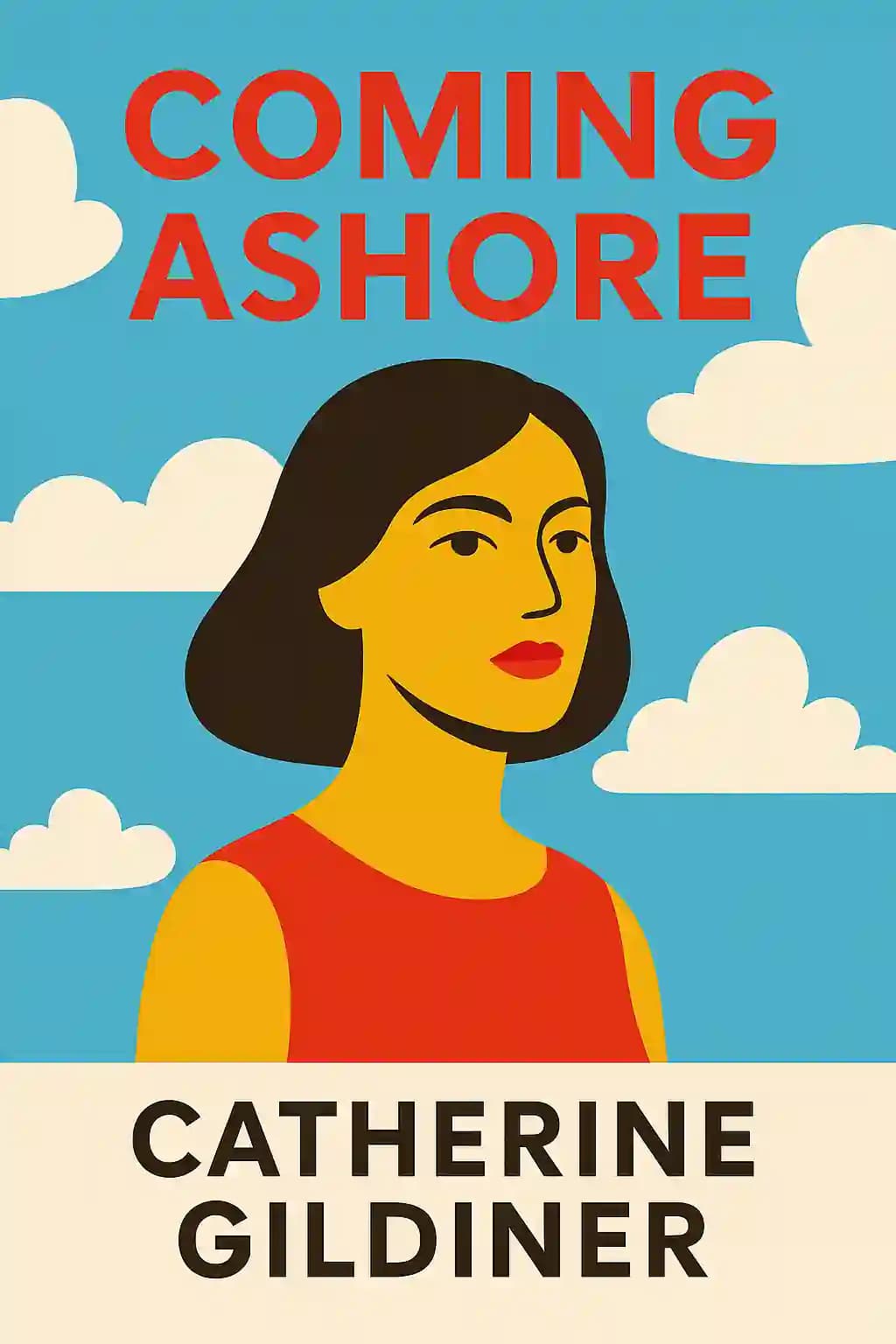
In "Coming Ashore," Catherine Gildiner's acclaimed final memoir, readers journey through the rebellious late 1960s from Oxford to riot-torn Cleveland. The New York Times bestselling author delivers what Publishers Weekly called "an irresistible roller-coaster ride full of humor, wise insights, and poignant reflections."
Catherine Gildiner is the bestselling author of Coming Ashore and a clinical psychologist celebrated for her vivid memoirs exploring identity, resilience, and cultural dislocation.
Born in Lewiston, New York, and later based in Canada, Gildiner draws from her unconventional upbringing and academic journey—including studies at the University of Oxford and a PhD in psychology—to craft deeply personal narratives.
Coming Ashore, her third memoir, continues the coming-of-age saga begun in Too Close to the Falls (a New York Times bestseller that spent 172 weeks on Canadian bestseller lists) and After the Falls, blending humor with sharp observations of 1960s social upheaval.
A seasoned storyteller, Gildiner also authored the Freudian thriller Seduction and the acclaimed case-study collection Good Morning, Monster, which reflects her 25-year psychology practice. She frequently contributes insights to media outlets and donates all speaking fees to the Canadian Cancer Society.
Coming Ashore is the third memoir in Catherine Gildiner’s trilogy, chronicling her life from ages 21 to 25 during the late 1960s and early 1970s. It follows her journey as a poetry student at Oxford, a teacher in racially tense Cleveland, and a graduate student in Toronto, blending humorous anecdotes with insights into feminist awakening and social change.
This memoir appeals to fans of witty, character-driven memoirs and readers interested in the cultural shifts of the 1960s/70s. It’s particularly engaging for those who enjoy stories of personal growth amid historical turbulence, as well as followers of Gildiner’s earlier works (Too Close to the Falls, After the Falls).
Yes, critics praise its sharp humor, vivid storytelling, and historical relevance. The Harvard Review calls it “boisterous” and “well-crafted,” while Quill and Quire highlights Gildiner’s ability to turn life events into compelling, fiction-like narratives. Ideal for readers seeking both entertainment and social commentary.
Key themes include cultural dislocation (U.S./U.K./Canada contrasts), feminist self-discovery, and the collision of idealism with reality. Gildiner explores 1960s civil rights activism, drug culture, and academic life while reflecting on personal identity and societal transitions.
While Too Close to the Falls and After the Falls focus on childhood/teen years, Coming Ashore tackles early adulthood with darker, more complex themes. It retains Gildiner’s trademark humor but adds deeper historical context, particularly regarding race relations and gender roles.
Yes, Gildiner recounts encounters with Jimi Hendrix during her Oxford years and a young Bill Clinton, whom she describes as “already politically ambitious.” These vignettes offer quirky snapshots of 1960s counterculture.
She navigates FBI interrogations over civil rights activism, teaches in post-riot Cleveland schools, and survives a drug-filled stint at Toronto’s Rochdale College—a hub for FLQ radicals. These experiences showcase her resilience and adaptability.
Centrally. The memoir details Gildiner’s accidental scholarship to Oxford (secured via an amphetamine-fueled essay on Milton), her mentorship under Coleridge scholar Kathleen Coburn, and her shift from literature to psychology studies in Toronto.
It confronts race riots, feminist inequities, and drug legalization debates firsthand. Gildiner teaches Black students abandoned by colleagues in Cleveland and observes Oxford’s gender barriers, blending personal reckoning with societal critique.
Absolutely. Highlights include Gildiner’s disastrous attempt at British tea etiquette, using Rochdale’s drug trade to analyze Coleridge’s opium use in academic papers, and her chaotic experience as a “fish-out-of-water” American at Oxford.
Gildiner’s prose is witty, fast-paced, and richly anecdotal. The Literary Review of Canada notes her “self-mocking” tone, while Quill and Quire compares her narrative voice to literary heroines like Jo March—sharp yet endearing.
Yes. Gildiner states this is her final memoir to protect others’ privacy. However, she continues writing fiction, including the upcoming The House of Seven Cellars, exploring the Underground Railroad.
著者の声を通じて本を感じる
知識を魅力的で例が豊富な洞察に変換
キーアイデアを瞬時にキャプチャして素早く学習
楽しく魅力的な方法で本を楽しむ
Life has a way of dropping unexpected challenges into our laps without warning or apology.
How could she have been so blind?
Have you ever felt simultaneously out of place and exactly where you belong?
『Coming Ashore』の核心的なアイデアを分かりやすいポイントに分解し、革新的なチームがどのように創造、協力、成長するかを理解します。
『Coming Ashore』を素早い記憶のヒントに凝縮し、率直さ、チームワーク、創造的な回復力の主要原則を強調します。

鮮やかなストーリーテリングを通じて『Coming Ashore』を体験し、イノベーションのレッスンを記憶に残り、応用できる瞬間に変えます。
何でも質問し、声を選び、本当にあなたに響く洞察を一緒に作り出しましょう。

"Instead of endless scrolling, I just hit play on BeFreed. It saves me so much time."
"I never knew where to start with nonfiction—BeFreed’s book lists turned into podcasts gave me a clear path."
"Perfect balance between learning and entertainment. Finished ‘Thinking, Fast and Slow’ on my commute this week."
"Crazy how much I learned while walking the dog. BeFreed = small habits → big gains."
"Reading used to feel like a chore. Now it’s just part of my lifestyle."
"Feels effortless compared to reading. I’ve finished 6 books this month already."
"BeFreed turned my guilty doomscrolling into something that feels productive and inspiring."
"BeFreed turned my commute into learning time. 20-min podcasts are perfect for finishing books I never had time for."
"BeFreed replaced my podcast queue. Imagine Spotify for books — that’s it. 🙌"
"It is great for me to learn something from the book without reading it."
"The themed book list podcasts help me connect ideas across authors—like a guided audio journey."
"Makes me feel smarter every time before going to work"

Coming Ashoreの要約をPDFまたはEPUBで無料でダウンロード。印刷やオフラインでいつでもお読みいただけます。
The late 1960s threw Catherine McClure into a perfect storm of personal and political upheaval. FBI agents at her door revealed a shocking truth: her political activism had entangled her with individuals involved in drugs and murder. How could she have been so blind? The causes that once seemed righteous now appeared tainted by violence. With her worldview shattered, Catherine fled to Oxford University - an opportunity previously declined in favor of what she now recognized as misguided activism. What does one pack when fleeing one life for another? Each item placed in her suitcase represented a choice about who she wanted to become. The voyage across the Atlantic carried more than just physical transition; it was an internal migration from naivete to wisdom. As the English coastline appeared on the horizon, Catherine stood at the threshold of transformation, her past self receding with the American shoreline. Isn't it remarkable how we often find our true direction only after losing our way? Oxford's ancient halls promised intellectual rigor and a fresh start, but could stone walls really provide shelter from the storms of her past? The academic haven awaited, but Catherine would soon discover that changing locations doesn't automatically change who we are - it simply provides new contexts in which to discover ourselves.
