第1章
Tina Fey's Comedic Journey Through Life's Absurdities
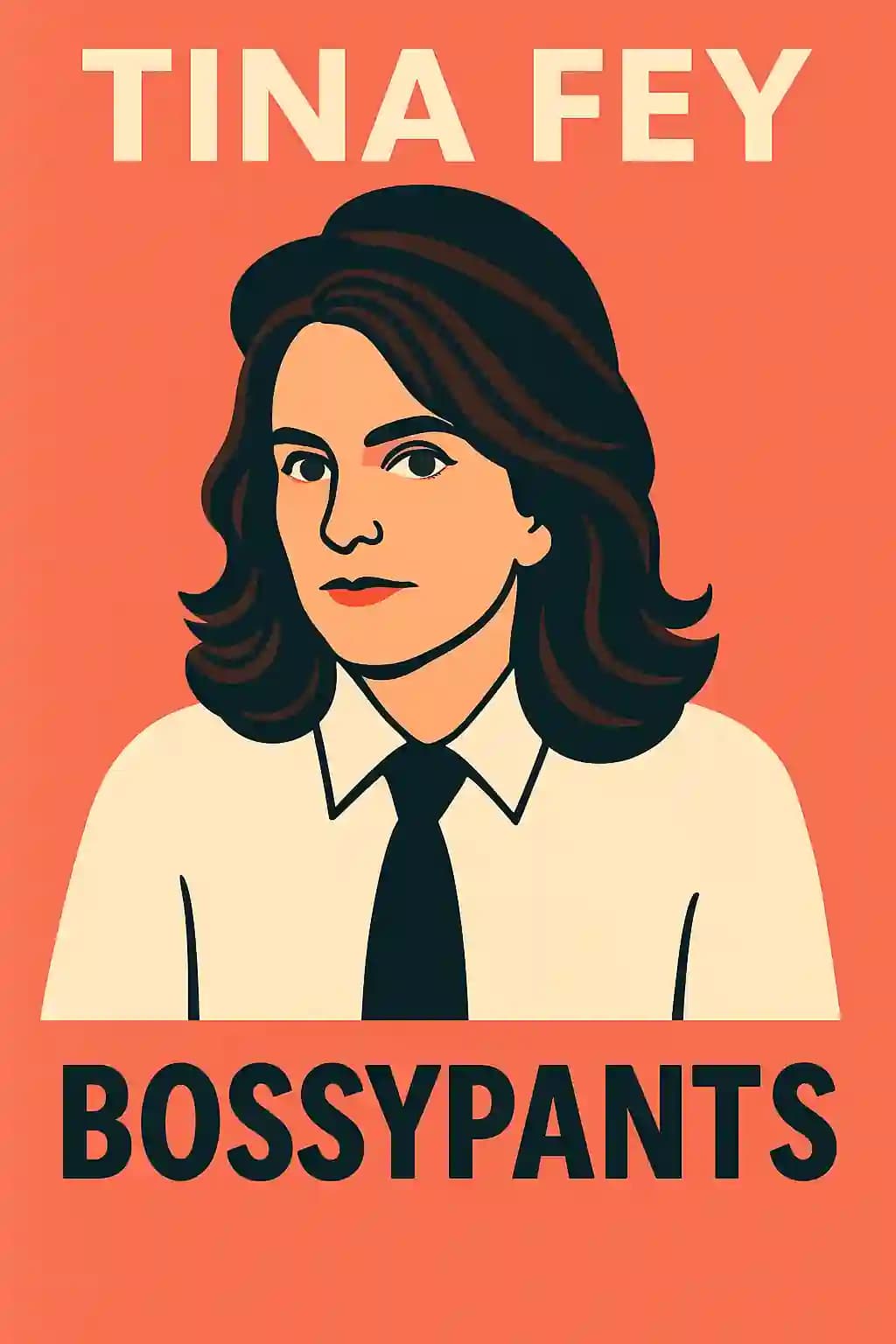
When Tina Fey's "Bossypants" hit shelves in 2011, it rocketed to #1 on bestseller lists across The New York Times, Publishers Weekly, and Wall Street Journal. The memoir became a cultural touchstone that cemented Fey's reputation beyond her Saturday Night Live and 30 Rock fame. Critics universally celebrated her razor-sharp wit and self-deprecating humor, with The New York Times noting she "doesn't need to make an intellectual argument that women are funny. She just is funny." What makes the book so compelling isn't just its humor but its honest examination of workplace dynamics, gender politics, and motherhood. In a world where female comedians were still fighting for equal footing, Fey's unapologetic voice resonated with millions and influenced a generation of women in comedy who followed her path. The book's title "Bossypants" came from her experience as an executive producer, where being the boss rarely involved "marching around, waving your arms" but rather "hiring talented people and getting out of their way."
第2章
From Awkward Girl to Comedy Queen
Born in 1970 as a "change-of-life baby" to older parents, Tina Fey's journey to comedy stardom began with an unusual childhood incident. At a young age, she was slashed in the face by a stranger-an event she mentions briefly but refuses to elaborate on. Rather than diminishing her, this scar paradoxically gave her "an inflated sense of self" as adults showed her extra kindness. This misunderstanding led her to proceed through life as if she were extraordinary-a delusion that served her well.
Growing up in suburban Pennsylvania, young Tina navigated the awkwardness of puberty with characteristic humor. At ten, when she wanted to shave her "dark shin fur," her mother instead gave her a "my first period" kit containing terrifying pamphlets like "Growing Up and Liking It." The kit confused rather than enlightened her until she got her period at ten while singing Neil Diamond's "Song Sung Blue" at a chorus concert.
Her father, Don Fey, looms large in her memories-a Clint Eastwood lookalike with an intimidating resting face that Tina inherited. A Korean War code breaker, Philadelphia fireman, skilled watercolorist, and self-taught Greek speaker, Don Fey was the kind of man who commanded respect. What he gave Tina was "the gift of anxiety"-the fear of getting in trouble, knowing you're loved but not above the law. This anxiety would later fuel her perfectionism and work ethic.
Beauty standards plagued her teenage years, as they do for most women. When thirteen-year-old Tina spent a weekend at Wildwood beach with her teenage cousins, she realized women's bodies are subject to endless scrutiny. After her cousin criticized a passing girl's hips, Tina understood there are "infinite physical deficiencies" women are expected to correct. Rather than chase unattainable standards, she learned to embrace her distinctive features with self-deprecating humor, concluding she wouldn't trade her unique traits-except maybe her feet.
College at the University of Virginia brought new challenges. After growing up as the "whitest girl" in a Greek neighborhood, she suddenly became "exotic"-she was "Frida Kahlo in leggings." Her romantic failures were spectacular, from a brainy boy who literally ran away when she tried to kiss him to climbing Old Rag Mountain at night with "Handsome Robert Wuhl," who used the occasion to tell her about another girl he liked-one so feminine "she could only handle half a piece of Trident gum."
第3章
Finding Her Tribe in Unlikely Places
In 1976, Larry Wentzler's Summer Showtime youth theater program became "a haven for gay teens" and Tina's sanctuary after being dumped by her boyfriend. She found acceptance among the program's gay community, particularly with Tim from the costume department and his brother Tristan. Beyond her gay male friends, she formed lasting friendships with two twenty-five-year-old lesbians, Karen and Sharon, with whom she spent countless evenings watching movies and playing Celebrity, a game "developed by NASA to keep girls virgins well into their twenties."
The contrast between her theater life and school life was stark. Her health teacher Mr. Garth once devoted an entire class to "how to spot and avoid homosexuals," claiming they'd "trick ya" by finding out what music and candy you like. Tina confronted him afterward, suggesting he meant "child molesters" not "homosexuals," but he just stared at her hands "not unlike a dog."
Her second Summer Showtime year brought a humbling realization when she tried preventing Sean from hooking up with Richard through sarcastic comments and judgmental behavior. Sean's annoyance made her see she'd been using her gay friends as props for her entertainment while expecting them to keep their lives secret. She concluded that Summer Showtime created a meritocratic safe space where everyone belonged, "a pretty successful implementation of Christianity."
After college, Tina's first real job was at the Evanston YMCA, taking the 5:10 AM train from Chicago alongside Polish cleaning women sharing "buttery Slavic food combinations." The Y was a fascinating mix-part yuppie fitness facility, part community resource, and part residence for disenfranchised men. Working the front desk, she encountered characters like Mr. Engler with his wig-like hairpiece and Howard Hughes fingernails, who silently collected his weekly Meals on Wheels.
The job revealed a depressing power pyramid: disenfranchised residents at the bottom, hardworking women in the middle, and useless men at the top. After witnessing the heartbreaking Men's Residence Christmas Dinner (tube socks for everyone!), she couldn't take the grimness anymore and ruthlessly outcompeted poor Donna for an office position, using her college education as leverage.
第4章
The Second City: Where Dreams Take Shape
Moving to Chicago in 1992 to study improv was everything Tina wanted. The Second City was cult-like-people devoted their lives to it, working terrible day jobs just to afford classes with legendary teachers like Del Close and Martin de Maat. Unlike traditional acting methods, improvisation made perfect sense to her. She loved how two actors with nothing-no costumes, sets, or dialogue-could create something completely real for everyone in the room.
The rules of improvisation literally changed her life, setting her on a career path toward SNL, changing her worldview, and introducing her to her husband. The first rule-AGREE-taught her to always say YES. When improvising, you must accept whatever your partner creates. The second rule-YES, AND-meant agree and then add something of your own. The third rule-MAKE STATEMENTS instead of asking questions-encouraged her not to put pressure on her partner to provide all the answers. Finally, THERE ARE NO MISTAKES, only opportunities.
Joining the Blue Company touring group, she earned $75 per show plus a $25 per diem, traveling by van to perform in church basements and community centers across America. Despite the grueling schedule, she still feels military-like camaraderie with her BlueCo colleagues.
Her time at Second City was also where she first encountered "institutionalized gender nonsense." A director once justified cutting a scene by saying "The audience doesn't want to see a scene between two women." When someone suggested changing the cast ratio from four men/two women to three/three, producers panicked: "There won't be enough parts for the girls!"-which made no sense since they were creating the show themselves.
She proudly became that third woman in the first gender-equal cast, though she only got the job because Amy Poehler had moved to New York. This was her first encounter with what she calls "The Myth of Not Enough"-the false belief that women must compete against each other for limited opportunities.
第5章
Saturday Night Live: The Dream Realized
In 1997, Tina interviewed at Saturday Night Live, saying words she couldn't believe: "I'm here to see Lorne Michaels." Despite an awkward start when she blurted "Pennsylvania" just as Lorne finished asking if she was from "Chicago," she got the job as a writer, beginning a nine-year relationship with the legendary producer.
Her first SNL writing gig was with Sylvester Stallone hosting. That first writing night, she completely froze, submitting an old sketch from her application. Though her work wasn't chosen, she helped "cover" Cheri Oteri's sketch and nervously delivered Lorne's note to Stallone about enunciating more clearly. She also witnessed Cheri being passed over to play Adrian in a Rocky monologue in favor of Chris Kattan in drag-something that would never have happened years later when women took more control at the show.
From Lorne Michaels, she learned invaluable lessons about producing and television. "Producing is about discouraging creativity"-rather than generating creativity, a producer's job is often to "police enthusiasm" from departments wanting to show off their skills. "The show doesn't go on because it's ready; it goes on because it's 11:30"-this SNL principle taught her not to be too precious about writing. "Television is a visual medium"-prioritize how you look on camera over "street cred" with writers. And perhaps most practically: "Don't hire anyone you wouldn't want to run into in the hallway at three in the morning."
One of her most enlightening discoveries at SNL was about gender differences. Male comedy writers pee in cups and jars out of laziness, despite bathrooms being just steps away. This wasn't "institutionalized sexism"-they literally just had different experiences. Her proudest moment as SNL head writer came when fighting for Paula Pell's brilliant "Kotex Classic" commercial parody. When male producers kept saying it would be "too difficult to produce," they asked bewildering questions about how the pads worked, revealing they'd never personally experienced belted maxi pads. It was an "Aha Moment"-there was no institutionalized sexism, they literally didn't know what the women were talking about.
Amy Poehler transformed the SNL writers' room when Jimmy Fallon reacted to her vulgar joke with "Stop that! It's not cute! I don't like it." Amy went cold, turned to him and said, "I don't fucking care if you like it," before continuing her bit. This cosmic shift made it clear Amy wasn't there to be cute or play wives in boys' scenes-she was there to do what she wanted.
第6章
Rock: Creating Her Own Path
After eight seasons at SNL, Tina needed to figure out her next move. Lorne suggested a development deal with NBC to create a sitcom. Her initial pitch about a cable news producer forced to work with a right-wing pundit was rejected, but NBC executive Kevin Reilly suggested writing something closer to her life-perhaps about working at SNL.
She developed a concept where she'd play a head writer of a comedy show, with Tracy Morgan as a lunatic star and Alec Baldwin (if they could get him) as her conservative boss. Alec agreed to the pilot, and despite her "quirky and unique" (terrible) first episode, NBC picked up the show-largely because of Alec Baldwin.
For her writing team, she implemented a "no hotheads" policy-hiring talented people least likely to throw punches in the workplace, even if this contributed to the "Demasculinization of America." The diverse team included Jack Burditt, a soft-spoken TV veteran; Kay Cannon, a midwestern athlete with a can-do attitude; Dave Finkel and Brett Baer, who contributed their weirdest material; Matt Hubbard, a Harvard graduate whose bedbug infestation transformed him into a joke-writing superhero; and Donald Glover, their youngest writer who was still living in a dorm as an RA after graduating from NYU.
30 Rock premiered October 11, 2006, and was not an instant hit-with only 5.5 million viewers compared to Friends' 25 million in its prime. Despite their precarious position, NBC executives Jeff Zucker and Kevin Reilly championed the show, even allowing them to make jokes about NBC and its parent company GE.
The production schedule was grueling. They shot 30 Rock on film like a little movie each week, filming every line about five times from different angles. Each angle change took twenty minutes to set up, stretching days to fourteen hours. After these long shoots, Tina would meet writers at her apartment until 1-2 AM, watching her sleeping daughter on a baby monitor, occasionally changing her diaper between rewrites.
By episode eleven, "Black Tie" (which they called "Good-bye, America"), the show had found its voice-the voice of a crazy person-featuring Paul Reubens as an inbred Austrian prince with a tiny hand who dies after drinking champagne. Like Gerhardt Hapsburg himself, 30 Rock was "strange but not stupid, desperate to be loved but abhorrent to most," yet miraculously, Kevin Reilly called to renew them for the rest of the season.
第7章
The Sarah Palin Phenomenon
In 2008, Tina's career took an unexpected turn when John McCain selected Sarah Palin as his running mate. People immediately noticed their resemblance-just brown hair and glasses, Tina thought. Emails flooded in from friends and coworkers, and cable news anchors speculated whether she'd play Palin on SNL. This revealed two things: people didn't realize she'd left SNL two seasons ago, and they didn't remember she only did Weekend Update when she was there.
Despite initial hesitation-if everyone had the same casting idea, it couldn't possibly be good-Tina agreed to play Palin on SNL. Her impression became a cultural phenomenon, with the Katie Couric interview sketch using Palin's actual rambling words about the bailout. What made this experience uniquely fun was performing for an audience that actually wanted to see her-after years of begging people to watch her improv teams, having a willing audience felt like a luxury.
The sketches became "a thing" watched globally, even mistaken for reality by a French newspaper. When Sarah Palin's campaign called to say she wanted to be on the show, Tina was against it-they'd been successful writing-wise, the campaign was getting tense with racist incidents at rallies, and she feared the liberal NYC audience would boo her. The show went smoothly, with Palin receiving enthusiastic applause, and scored a 10.7 rating with 14 million viewers.
The experience taught her what it feels like to be a lightning rod, with hate mail and accusations she was "attacking" Palin-criticism male impressionists never faced. Despite 58 million online views, she wasn't paid for internet reuse, and the Palin sketches may have actually hurt her "low-rated TV show" by alienating half the population.
第8章
Motherhood and Identity
Becoming a mother added another dimension to Tina's already complex life. Formula-feeding versus breast-feeding became her first parenting battleground. Despite choosing breast-feeding initially, her underweight "Midge" (one of her daughter's nicknames because she was so small) wanted formula and screamed until she got it. After seven weeks of pumping while watching Entourage, she switched to all-formula. Despite her baby thriving, she felt like she'd failed at something "natural."
Working motherhood proved to be a minefield. The most accusatory question she received was "How do you juggle it all?"-their eyes clearly saying "You're fucking it all up, aren't you?" She had triannual office sobbing sessions realizing there's no future stretch when it's just her and her baby. She fantasized about quitting and moving to Pennsylvania to bake cupcakes, but she had responsibilities to 200 coworkers.
The truth was her work was often deeply satisfying, while full-time motherhood sometimes "stinks like Axe body spray on a brick of bleu cheese." Motherhood surprised her with meaningful moments around toilets at 6 AM while holding fingernail clippings "like a Santeria priestess."
As she approached forty, Tina faced the dilemma of whether to have another child. Her daughter's requests for a baby sister filled her with guilt and panic. In Manhattan, large families had become status symbols-four children named after kings and fruit pieces say "I can afford a four-bedroom apartment and $150,000 in elementary school tuition."
Meanwhile, she could be making cinematic masterpieces or playing "a lesbian therapist who unexpectedly cries during her partner's nephew's bris." She debated the second-baby issue nightly: "Should I? No. I want to. I can't. I must." Work wouldn't visit when she was old or drive her to mammograms. Her daughter needed a sibling as backup in case she "turns on me"-Tina was "pretty hard to like."
She also noticed women in comedy get labeled "crazy" after a certain age, while men who "can barely feed and clean themselves" still work. She suspected that in show business, "crazy" means a woman who keeps talking after no one wants to have sex with her anymore. Only Betty White escaped this label, obviously because people still wanted to sleep with her.
第9章
The Beauty Myth and Media Scrutiny
Magazine photo shoots revealed the calculated deception behind celebrity beauty standards, a carefully orchestrated dance of smoke and mirrors. You arrive freshly scrubbed with damp hair to "set the bar low" at a beautiful studio with free coffee and craft services that no one dares touch. The stylist shows you racks of designer clothes in sizes she's strategically chosen to ignore-all shoes mysteriously two sizes too big, all pants seemingly designed for pre-teens. When you inevitably can't fit into "sample size" garments (made exclusively for runway models with specific measurements), a chic 20-year-old assistant named something biblical like Eden or Genesis will struggle to zip you in while everyone in the room diplomatically blames "those damn invisible zippers!" The unspoken truth hangs in the air: these clothes weren't made for real bodies.
The art of posing for a glamour portrait involves an exhausting sequence of unnatural contortions that somehow must appear effortless. Turn sideways to appear slimmer, lean against a wall but don't actually rest your weight on it, thrust your chin forward to elongate your neck while simultaneously keeping it relaxed, drop your shoulders but keep them back, create angles everywhere - nothing natural is allowed to remain curved. If you're over 24, maintain a constant smile that must appear genuine despite holding these painful positions. Keep arms slightly away from sides to avoid any hint of flesh touching flesh, suck in stomach without appearing to hold your breath, wrap buttocks back Pilates-style as if your life depends on it. Be "yourself" while performing this full-body manipulation against a fake wall that everyone pretends is real.
The democratization of media through the internet brought a new dimension of scrutiny and criticism. Anonymous commenters felt emboldened to make deeply personal attacks, calling her an "ugly, pear-shaped, bitchy, overrated troll," critiques that revealed more about society's treatment of women in the public eye than any actual flaws. She responded with her trademark wit: "I'm offended you called me overrated when you've never seen me guard a bridge-I'm one of the most dedicated bridge-guarding trolls today, always asking three questions (at least two are riddles)." This ability to deflect criticism with humor became a survival strategy in an industry obsessed with impossible standards.
Through it all, Tina maintained her sense of humor and refreshing perspective on aging and beauty standards in Hollywood. When asked what turning forty meant to her, she replied with disarming honesty: "I need to take my pants off as soon as I get home. I didn't used to have to do that. But now I do." This simple observation captured both the physical realities of aging and the liberation that comes with caring less about meeting society's impossible expectations.
第10章
The Mother's Prayer for Its Daughter
Perhaps the most touching and revealing part of Tina's memoir is her prayer for her daughter, a masterful blend of humor and heartfelt maternal concern that perfectly captures the anxiety of modern parenting. It begins with a comedic plea: "First, Lord: No tattoos. May neither Chinese symbols nor Winnie-the-Pooh with FSU logos stain her haunches." This opening immediately establishes the prayer's unique tone, mixing irreverent humor with genuine parental worry about permanent life choices.
The prayer continues with astute observations about female safety and self-worth, asking that her daughter be "Beautiful but not Damaged-it's the Damage that attracts creepy soccer coaches." This line reveals Tina's understanding of predatory behavior while acknowledging beauty's double-edged nature in society. When addressing substance use, she shows pragmatic wisdom, hoping that when offered Crystal Meth, her daughter will remember the parents who meticulously cut her grapes in half and stick with Beer - a darkly humorous acknowledgment that perfect abstinence might be unrealistic.
Career-wise, Tina prays for her daughter to find work with "flexible hours, intellectual fulfillment, outdoor time, and no high heels" - a wish list that subtly critiques traditional female career paths while advocating for genuine satisfaction over conventional success. The prayer takes an amusing turn regarding musicians: May she play Drums with her Own Arms so she need Not Lie With Drummers - a clever way of hoping her daughter will be the artist rather than the groupie.
The prayer's middle section acknowledges the inevitable turbulence of adolescence, requesting a Rough Patch from twelve to seventeen - long enough to build character but not so long as to cause lasting damage. The plea to "let childhood linger" speaks to every parent's desire to protect their child's innocence while recognizing that "adulthood and dry-humping in cars will wait."
Some of the most powerful moments come in the prayer's latter half. When addressing teenage rebellion, specifically when her daughter calls her a Bitch at Hollister, Tina prays for the strength to maintain discipline - "I will not have that Shit." This raw honesty about parent-child conflict feels especially authentic. The prayer culminates in a poignant hope for generational understanding: Should her daughter become a Mother, let her witness herself at 4:50 AM, cleaning baby poop, leading to the realization "My mother did this for me." This moment of clarity beautifully captures the cyclical nature of parenthood and understanding.
The prayer concludes with a touching acknowledgment of the inevitable distance that develops between mother and daughter: She'll forget to call, but her mother will know, because she peeped it with God's eyes. This final sentiment perfectly balances humor with deep emotional truth, suggesting that maternal love transcends regular communication or physical presence.
This prayer serves as the memoir's emotional cornerstone, encapsulating everything Tina values - humor, independence, strength, and the fierce, complicated love between mothers and daughters. It's a fitting conclusion to a memoir that never takes itself too seriously while addressing life's most serious questions with unflinching honesty and razor-sharp wit, offering both laughter and profound insights into modern parenthood.