第1章
A Labyrinth of Fog: Dickens's Masterpiece of Victorian Society
Charles Dickens's Bleak House stands as perhaps his most ambitious and accomplished novel, though its reputation has seen dramatic shifts over time. While Victorian critics questioned its structure, modern readers recognize it as a towering achievement that captures the entirety of mid-Victorian Britain in one sweeping, intricate narrative. What makes this novel so captivating? Perhaps it's how Dickens transforms the dry proceedings of the Court of Chancery into a metaphor for society's paralysis, or how he weaves together dozens of characters from all social classes into a coherent tapestry of human connection. The novel's enduring popularity speaks to its universal themes-justice delayed is justice denied, the corruption of institutions, and the power of compassion in a world of indifference. Even Queen Victoria counted it among her favorites, while modern critics like George Orwell and Edmund Wilson helped resurrect its reputation in the 20th century. Bleak House isn't just a novel; it's a comprehensive vision of an era, as relevant today as it was when first published in 1853.
第2章
The Fog of Chancery: A Society in Perpetual Stoppage
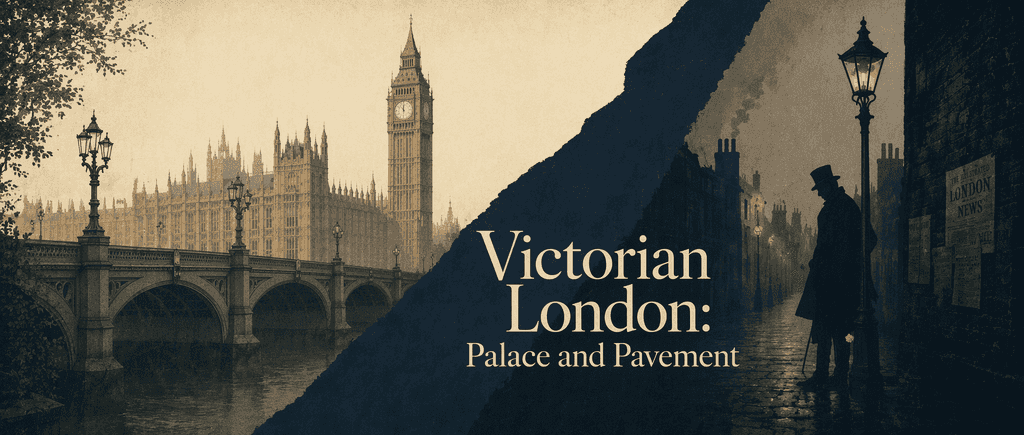
Bleak House opens with one of literature's most famous descriptions: "London. Michaelmas Term lately over, and the Lord Chancellor sitting in Lincoln's Inn Hall. Implacable November weather." From these first lines, Dickens establishes the pervasive fog that symbolizes the confusion and moral blindness of Victorian society. This fog isn't merely atmospheric-it's institutional, spreading from the Court of Chancery throughout all of England, obscuring truth and justice. The fog seeps through every crevice of London, from the highest courts to the meanest streets, representing the interconnected nature of society's corruption.
The novel's central legal case, Jarndyce and Jarndyce, has dragged on for generations, becoming so convoluted that "no man alive knows what it means." This lawsuit serves as Dickens's masterful metaphor for a society bound in what he calls "perpetual stoppage." While the 1850s championed "Progress" as its catchword, Dickens perceived a nation paralyzed by bureaucracy and tradition. The Great Exhibition of 1851 celebrated Britain's industrial and technological achievements in the revolutionary Crystal Palace, but Dickens turned his back on this partial vision to expose the "streets of perishing blind houses" and the human cost of so-called progress. The contrast between the glittering facade of progress and the grinding poverty beneath becomes a recurring theme throughout the novel.
The Court of Chancery represents everything wrong with Victorian institutions-it's inefficient, corrupt, and destructive. As John Jarndyce explains, the lawyers have twisted the case into "such a state of bedevilment that the original merits have long disappeared," yet "everything goes on, constantly beginning over and over again, and nothing ever ends." This circular pattern reflects society's condition, where tradition and precedent prevent meaningful reform. The very language of law becomes a weapon, with legal documents described as "mountains of costly nonsense" that pile up endlessly, enriching only the lawyers while destroying those seeking justice.
What makes Dickens's critique so powerful is how he connects these institutional failures to human suffering. Richard Carstone's gradual destruction as he becomes obsessed with the lawsuit shows how systemic problems destroy individual lives. We witness his transformation from a bright, promising young man to a hollow shell, consumed by the false hope of inheritance. The crossing-sweeper Jo, illiterate and constantly told to "move on" by authorities, embodies the most vulnerable victims of society's neglect. Through these characters, Dickens forces us to recognize that institutional failures aren't abstract problems-they're human tragedies. The death of Jo, in particular, serves as a damning indictment of a society that claims Christian values while allowing its children to perish in ignorance and poverty.
The fog metaphor extends beyond mere institutional criticism to suggest a deeper moral malaise. Characters like Tulkinghorn and Vholes represent the parasitic nature of the legal system, while the philanthropist Mrs. Jellyby, focused on distant causes while neglecting her own children, exemplifies the misguided Victorian approach to social reform. Through these varied portraits, Dickens builds a comprehensive critique of a society that has lost its way in the fog of its own making.
第3章
Dual Narratives: The Omniscient and the Personal
Perhaps Bleak House's most radical experiment is its dual narration. The novel alternates between an omniscient third-person narrator who speaks in the present tense with ironic detachment and Esther Summerson's first-person account written seven years after the events. These two voices couldn't be more different, creating what critics call a "binocular" reading experience that forces us to see Victorian society from multiple perspectives.
The third-person narrator moves "as the crow flies" through the novel's far-flung reaches, connecting seemingly disparate elements with rhetorical questions that emphasize the hidden relationships Dickens wants us to recognize. This narrator is urbane and confident, yet interestingly, not truly omniscient-he cannot "read the heart" or minds of characters.
In stark contrast, Esther presents herself as painfully inhibited and uncertain, repeatedly claiming "I know I am not clever." Her self-denial stems from her childhood as an illegitimate orphan raised by the harsh Miss Barbary, who told her "Your mother, Esther, is your disgrace, and you were hers" and that "It would have been far better, little Esther, that you had never been born!" Growing up feeling she is "no one," self-deprecation becomes her habitual mode even when faced with affirmation.
Modern readers often struggle with Esther's excessive selflessness, not just because she embodies a feminine virtue stereotype, but because her "circle of duty" seems an inadequate response to the systemic problems Dickens identifies. Yet her narrative offers a process of growth and self-discovery-writing seven years after events, she has gained self-knowledge, knowing "now" what she "did not know then."
The alternating narratives create discontinuities that heighten the already fragmented reading experience, keeping us in a "troubled state of mind" throughout. This structure mirrors the novel's thematic concern with connections hidden beneath apparent chaos. As we move between perspectives, we're trained to see relationships between seemingly unrelated characters and events-just as Dickens believed society needed to recognize the connections between the privileged and the poor, the fashionable and the forgotten.
第4章
The Web of Connection: No One Is Isolated
"What connexion can there be?" This question, posed repeatedly throughout Bleak House, drives the novel's complex plot. Dickens creates an intricate web of relationships that spans all levels of Victorian society, from aristocrats to street-sweepers, demonstrating that no one exists in isolation despite social barriers. This interconnectedness serves as both a narrative device and a powerful social commentary on Victorian class divisions.
Lady Dedlock, the fashionable aristocrat with a secret past, and Jo, the illiterate crossing-sweeper, seem worlds apart. Yet they're connected through Captain Hawdon (Nemo), who was both Lady Dedlock's former lover and the man whose grave Jo tends. Their paths cross physically in the novel when Lady Dedlock, disguised in her maid's clothes, seeks out Jo to show her Nemo's grave - a scene that powerfully illustrates how grief transcends social boundaries. Sir Leicester Dedlock and the brickmaker's wife share no social circle, yet they're linked through a chain of relationships involving Lady Dedlock, Esther, and Jo. These connections reveal that the boundaries between social classes are artificial constructs that obscure our common humanity.
Dickens excels at what Samuel Johnson called "discordia concors"-the combination of dissimilar images or discovery of hidden resemblances in unlike things. Throughout the novel, he challenges readers to perceive these connections themselves. The third-person narrator frequently asks, "What connexion can there be between the place in Lincolnshire, the house in town, the Mercury in powder, and the whereabout of Jo the outlaw?" The answer gradually emerges: they're all part of a society that pretends its parts aren't related while suffering from the consequences of this denial. This interconnectedness extends beyond individual relationships to institutions - the law courts, the aristocracy, and the slums are shown to be inextricably linked, each affecting the others in profound ways.
The novel's structure reinforces this theme of hidden connections. Characters who seem peripheral suddenly become central, like Mr. Tulkinghorn, whose initial role as the Dedlocks' lawyer expands to become a crucial nexus of multiple plot threads. Locations reappear in unexpected contexts - Tom-all-Alone's slum connects to the fashionable world through disease and social neglect. Even minor details-a handkerchief dropped at the graveyard, a bundle of letters hidden in Nemo's room, a snuffbox passed between hands-create links between disparate storylines. This narrative technique mirrors Dickens's social vision: just as readers must work to see the connections in the plot, Victorian society needed to recognize its interconnectedness and mutual responsibility.
The fog that permeates the novel serves as a metaphor for these hidden connections, physically linking different parts of London while obscuring the very connections it creates. Through this complex web of relationships, Dickens suggests that social reform can only begin when society acknowledges its fundamental interconnectedness and the responsibilities that come with it.
第5章
The Human Cost of Indifference
At the heart of Bleak House lies Dickens's fierce indignation at society's indifference to human suffering. Through characters like Jo, the illiterate crossing-sweeper, Dickens doesn't merely evoke sympathy but creates profound identification: "It must be a strange state to be like Jo!" the narrator muses, inviting readers to imagine being "stone blind and dumb" to written language, to feel "that I have no business, here, or there, or anywhere." Jo's character represents thousands of forgotten children in Victorian London, wandering the streets without education, shelter, or hope of advancement.
This identification breaks down what Dickens calls the "iron barrier" between classes more effectively than mere sympathy could. By prompting readers to identify with Jo's bewilderment, Dickens forces recognition of how society's disregard has literally bewildered him-made him "of no order and no place." The novel painstakingly traces how systematic neglect creates a permanent underclass, trapped in cycles of poverty and ignorance. Through Jo's encounters with the law, church, and charitable institutions, Dickens demonstrates how each system fails those most in need of protection.
The novel contrasts different approaches to charity and social responsibility through a gallery of memorable characters. Mrs. Jellyby neglects her own children while obsessing over her African project, her house falling into chaos while she writes endless letters about distant missions. Mrs. Pardiggle invades poor homes with aggressive moralizing, forcing religious tracts on families who need bread. Mr. Skimpole, perhaps the most dangerous, abdicates all responsibility under the guise of childlike innocence, manipulating others while claiming to be above worldly concerns. Against these failed models, Dickens offers Esther and John Jarndyce's practical, personal compassion that addresses immediate needs without grand theories. Their approach emphasizes direct action: feeding the hungry, housing the homeless, and showing genuine concern for individuals rather than abstract causes.
Jo's death scene delivers the novel's most powerful indictment of social neglect, made more poignant by its quiet simplicity. As Allan Woodcourt teaches him the Lord's Prayer, Jo dies before completing it, his final words trailing off: "Hallowed be-thy-". This dash represents language's dead end, which Dickens can indicate but cannot transcend. The scene emphasizes how society has failed even to give Jo the basic tools of religious comfort in his final moments. The narrator then directly challenges readers: "Dead, your Majesty. Dead, my lords and gentlemen... And dying thus around us every day." This direct address implicates not just the fictional characters but the novel's actual readers in the ongoing tragedy of social neglect.
Through these interconnected themes of neglect, failed charity, and social responsibility, Dickens creates a devastating critique of Victorian society's moral blindness. The novel suggests that true reform requires not just institutional change but a fundamental shift in how people view their obligations to others, especially those most vulnerable and voiceless in society.
第6章
Secrets, Discoveries, and the Power of Writing
Bleak House is fundamentally concerned with secrets and their discovery, weaving an intricate web of concealed truths that touch every level of Victorian society. Nearly every character harbors something hidden-Lady Dedlock's passionate past love affair with Captain Hawdon, Esther's mysterious parentage, Tulkinghorn's vast repository of dangerous knowledge, Krook's obsessively hoarded documents, and Richard's spiraling, shamefully hidden debts. These secrets don't merely drive the plot; they create a complex tapestry of human concealment that reflects the novel's broader themes about truth and justice. The work achieves distinction as both a penetrating social critique and a groundbreaking detective story, introducing Inspector Bucket, widely recognized as the first professional detective in English fiction, whose methodical pursuit of truth stands in stark contrast to society's willful obscurity.
The novel presents writing as both powerful and deeply problematic, exploring its dual nature as both illuminator and obscurer of truth. Documents literally control lives throughout the narrative-wills determine the fate of generations, letters reveal long-buried identities, and legal papers perpetuate Chancery's "bedevilment" through endless proceedings. Yet writing repeatedly fails in its fundamental purpose to communicate essential truths. Jo, the street sweeper, cannot read the signs that surround him, symbolizing society's failure to communicate with its most vulnerable members. Richard Carstone drowns in an ocean of incomprehensible legal documents that ultimately contribute to his destruction. Even Esther's narrative, with its characteristically self-effacing style and frequent disclaimers, struggles to fully express her deepest feelings about her identity and relationships.
Tulkinghorn emerges as the novel's embodiment of the dangerous power of secret knowledge. His systematic "acquisition of secrets" transforms him from a mere legal representative into a manipulative power broker who exercises control over those he supposedly serves, particularly Lady Dedlock. He collects information not in service of truth or justice, but as currency in a power economy, becoming "the depository of the secrets of many families." His eventual murder by Hortense-another character whose dangerous knowledge makes her both powerful and vulnerable-dramatically illustrates the violent potential of suppressed knowledge in a society built on appearances.
Dickens himself makes a fascinating artistic choice in surrendering some of the novelist's traditional capacity for captivation and mystery. Though he carefully calibrates revelation throughout the narrative ("Carry on suspense" appears repeatedly in his working notes), the novel ultimately drives toward clarification rather than mystification. In a society characterized by what he describes as "groping and floundering," Dickens adopts what he calls a "curious manner" of writing that is simultaneously "very plain" and "backward," requiring readers to actively participate in the interpretive work rather than passively receive revelations.
The novel's structure masterfully mirrors this process of discovery and revelation. Beginning in impenetrable fog and confusion, it gradually reveals connections and relationships until the final chapters bring long-awaited clarity. Yet this clarity comes with a bitter edge-the Jarndyce case concludes with the inheritance money exhausted in legal fees, Lady Dedlock dies in disgrace, Richard succumbs to his obsessive pursuit of justice. These partial and unsatisfying resolutions suggest that while truth is essential, its discovery alone cannot guarantee justice or happiness in a fundamentally flawed system.
第7章
The Struggle for Home in a Broken World
Despite its title, Bleak House is deeply concerned with the concept of home and the struggle to create domestic harmony in a hostile world. The novel presents multiple versions of home-from the chaotic Jellyby household to the grand but empty Chesney Wold, from Krook's decaying shop to the warmth of John Jarndyce's Bleak House.
John Jarndyce's home, ironically named "Bleak House," stands as a counterpoint to the institutional bleakness of Chancery. It's described as "delightfully irregular" with unexpected rooms, passages, and steps leading in all directions. This architectural irregularity reflects Jarndyce's flexible, humane approach to relationships, contrasting with the rigid formality of legal and social institutions. When Esther, Ada, and Richard arrive, they find warmth, comfort, and acceptance rather than judgment or exploitation.
The novel contrasts this ideal with failed homes. Mrs. Jellyby's household collapses into chaos while she focuses on distant Africa. The Dedlocks' grand estate feels empty and haunted by the past. The Smallweeds create a home without imagination or affection, producing generations of "little old men and women" from birth. These domestic failures mirror larger social problems-neglect, hollow tradition, and mercenary values.
Esther's journey from orphaned isolation to becoming mistress of her own Bleak House represents the novel's most hopeful trajectory. Her ability to create home wherever she goes-organizing the Jellybys' chaos, bringing comfort to Caddy, transforming her sickroom-suggests that domestic harmony requires active care rather than passive acceptance of tradition. When she finally establishes her own home with Allan Woodcourt, it represents not retreat from social problems but a model of how compassion can transform even a "bleak" world.
The novel's conclusion, with multiple homes established-Esther and Allan's new Bleak House, Ada and young Richard at the original Bleak House, Caddy's modest home with Prince-suggests that while institutional reform may fail, personal connections can create islands of warmth in a cold society.
第8章
Legacy and Relevance: Dickens's Enduring Vision
Bleak House remains remarkably relevant nearly 170 years after its publication. Its critique of institutional paralysis resonates powerfully in our age of bureaucratic complexity and political gridlock, where simple processes can become mired in endless procedures and paperwork. The novel's depiction of the Jarndyce case, dragging on for generations while lawyers profit and clients suffer, mirrors modern scenarios from healthcare systems to immigration courts where institutional inefficiency creates real human suffering. Its concern with social inequality speaks directly to our ongoing struggles with wealth disparity, particularly in urban centers where extreme poverty and affluence exist side by side, much like Dickens's London. Its exploration of interconnection anticipates our global awareness that problems in one part of society inevitably affect all others - from public health crises to environmental challenges.
The novel's formal innovations have profoundly influenced generations of writers. Its groundbreaking dual narration - alternating between Esther's intimate first-person account and the omniscient third-person narrative - anticipated modernist experiments with perspective and multiple viewpoints. This technique has inspired countless authors, from Virginia Woolf to William Faulkner. Its detective plot elements, particularly Inspector Bucket's methodical investigation, helped establish conventions of mystery fiction that echo through works from Arthur Conan Doyle to contemporary crime writers. Its panoramic social vision, encompassing everything from aristocratic drawing rooms to urban slums, inspired later novelists attempting to capture entire societies, from George Eliot's Middlemarch to Tom Wolfe's Bonfire of the Vanities.
What makes Bleak House truly enduring is Dickens's extraordinary power to act on consciousness through language. His vivid characterizations and emotional impact have shaped readers' understanding of social issues for generations. As one contemporary reviewer noted, "With tens of thousands of Englishmen and Englishwomen, Dickens is a hero... He could do many things among his fellow-creatures" simply because he wrote beloved works that changed how people viewed their world. This power to transform consciousness through fiction remains Dickens's greatest legacy, inspiring modern authors who seek to combine social commentary with compelling storytelling.
Yet Dickens was keenly aware of writing's limitations. In Bleak House, he demonstrates both the potential and constraints of language to effect social change. The dash that marks Jo's incomplete prayer-"Hallowed be-thy-"-acknowledges what writing cannot fully express about human suffering and spiritual yearning. The fog that permeates London becomes a metaphor for the limits of clear vision and understanding. Even at his creative peak, Dickens recognized the boundaries of imagination while still harnessing its power to transform "hours of darkness" into daybreak.
In our own age of institutional failure and social division, Bleak House reminds us that seeing connections is the first step toward compassion. The novel's intricate web of relationships - from Lady Dedlock to Jo the street sweeper - demonstrates how seemingly separate lives are fundamentally interconnected. As we navigate our own fog of complexity, from climate change to economic inequality, Dickens's vision offers both warning and hope - warning about the human cost of systemic indifference and hope that individual acts of kindness, like those of John Jarndyce or Esther Summerson, can create warmth even in the bleakest circumstances. The novel's message about the power of human connection and the importance of social responsibility remains as urgent today as when it was first published.
第9章
A Novel of Contrasts: Light and Dark, Comedy and Tragedy
Bleak House achieves its powerful effect through Dickens's masterful use of contrast. Light battles darkness throughout the novel-from the literal fog that obscures London to the metaphorical illumination that characters seek. Esther brings light wherever she goes, organizing chaotic households and comforting the distressed. Tulkinghorn operates in darkness, conducting his investigations by candlelight in his dusty chambers. The novel's conclusion, with Esther describing her happy home, represents light's triumph over the darkness that dominated earlier chapters.
Similarly, comedy and tragedy exist side by side, often in the same scene. Mrs. Jellyby's obsession with Africa is both ridiculous and devastating to her neglected children. Mr. Turveydrop's absurd "Deportment" coexists with his parasitic exploitation of his son. Even Krook's horrific death by spontaneous combustion contains elements of dark comedy in the reaction of those who discover his remains. This juxtaposition of humor and horror reflects Dickens's view that comedy and tragedy aren't separate modes but intertwined aspects of human experience.
The novel also contrasts movement and stasis. The Court of Chancery represents paralysis-cases that never advance, documents that circulate endlessly, lawyers who profit from delay. Against this stagnation, Dickens sets characters in constant motion-Inspector Bucket pursuing Lady Dedlock, Richard restlessly changing careers, Jo being perpetually told to "move on." This tension between movement and stasis reflects Victorian society's contradictory impulses toward progress and tradition.
Perhaps most powerfully, Bleak House contrasts isolation with connection. Characters like Tulkinghorn, Skimpole, and Smallweed represent self-interest and separation. Others-Esther, Jarndyce, Woodcourt-actively create bonds of compassion and responsibility. The novel's plot gradually reveals connections between seemingly isolated characters, suggesting that recognizing our interdependence is essential to social health.
Through these contrasts, Dickens creates a novel that mirrors life's complexity rather than reducing it to simple formulas. Like the "delightfully irregular" architecture of Bleak House itself, the novel's structure accommodates both darkness and light, comedy and tragedy, stasis and movement, isolation and connection-creating a world as rich and contradictory as our own.