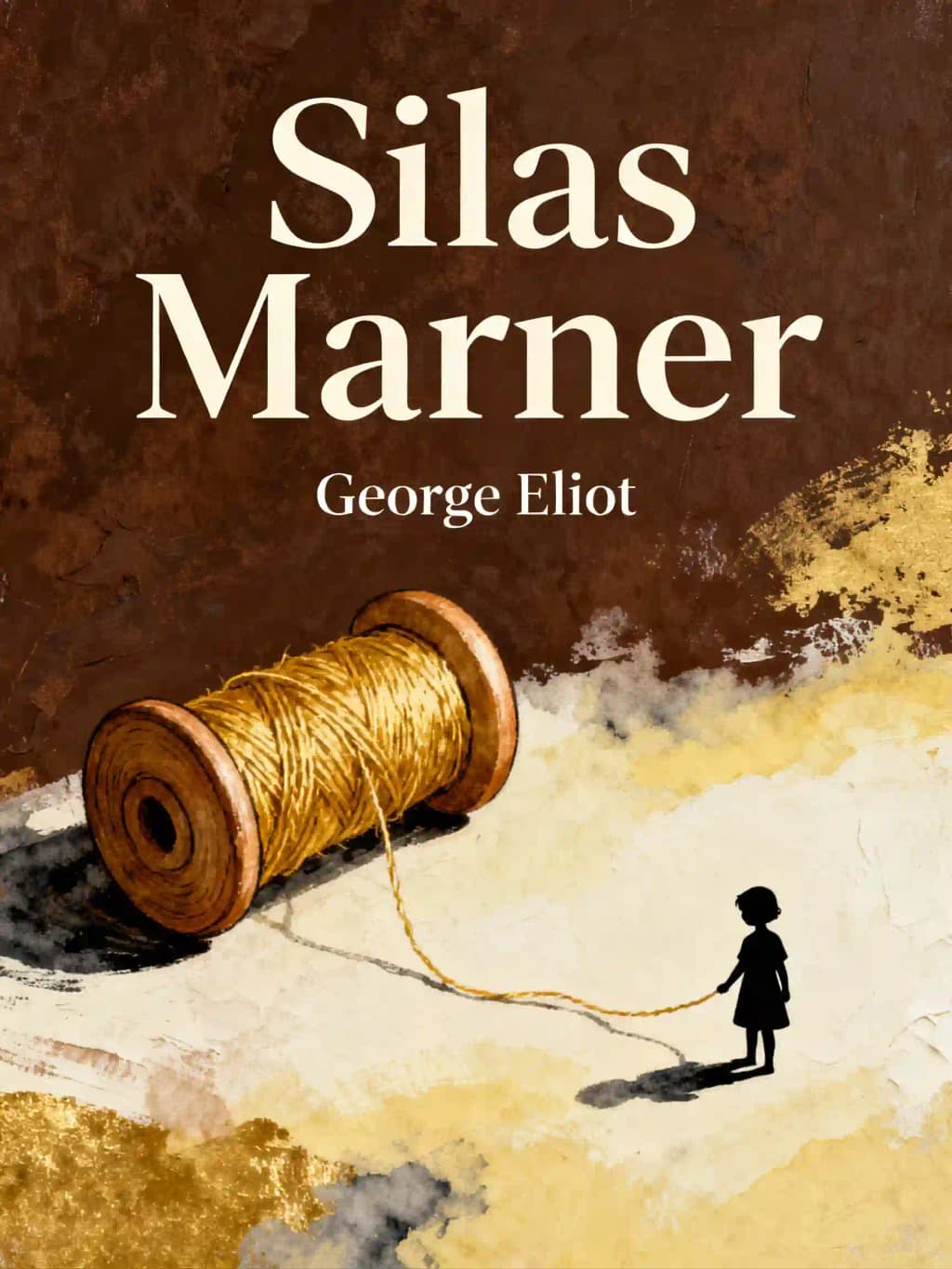
In "Silas Marner," a reclusive weaver finds redemption through an abandoned child. This Victorian masterpiece explores faith, industrialization, and community - themes that influenced Henry James and generations of writers. Can a gold-obsessed hermit teach us what truly enriches the human soul?
George Eliot, born Mary Ann Evans (1819–1880), was a pioneering Victorian novelist and moral philosopher whose Silas Marner exemplifies her mastery of psychological depth and social realism.
Writing under a male pseudonym to bypass gender biases, Eliot crafted novels that dissect rural English life, ethical dilemmas, and human resilience. Silas Marner, a tale of redemption and community, reflects her fascination with societal outcasts and moral transformation, themes also central to her acclaimed works Middlemarch and The Mill on the Floss.
A translator, journalist, and intellectual, Eliot drew from her critiques of Victorian norms to create richly layered narratives. Her novels, celebrated for their intricate character studies and philosophical rigor, remain staples of English literature.
Silas Marner has been adapted into multiple films and television series, underscoring its enduring relevance.
Silas Marner follows a reclusive weaver who finds redemption after adopting an orphaned girl, Eppie. Set in rural 19th-century England, the novel explores themes of isolation, community, and moral rebirth. Silas’s journey from despair to love highlights George Eliot’s critique of industrialization and her belief in human connection’s transformative power. Key symbols like gold and the loom underscore themes of materialism versus nurturing relationships.
Fans of Victorian literature, students analyzing moral allegories, and readers interested in themes of social class and redemption will find value in this classic. Eliot’s rich symbolism and exploration of human psychology appeal to those studying character-driven narratives or societal critiques. It’s particularly relevant for discussions on how communal bonds counter isolation.
Central themes include:
Raveloe’s insular village acts as a microcosm of societal norms. Silas’s initial exclusion (due to his trade and “fits”) contrasts with his eventual acceptance through Eppie. Eliot critiques class divides but affirms communal bonds as vital for moral growth, exemplified by the Winthrops’ support.
Silas’s redemption unfolds through Eppie, who replaces his hoarded gold with purpose. His care for her rebuilds trust in humanity, reversing his disillusionment after being framed for theft. Eliot ties redemption to selfless love rather than religious dogma, emphasizing human connection’s healing power.
Lantern Yard, Silas’s former home, symbolizes rigid faith and betrayal. Its later replacement by a factory mirrors industrialization’s destruction of tradition. Silas’s return to find it gone underscores Eliot’s theme of adapting to change while retaining personal integrity.
The loom and Lantern Yard’s fate highlight industrialization’s dehumanizing effects. Silas’s manual weaving contrasts with factory mechanization, while the village’s agrarian rhythms resist urban alienation. Eliot champions rural community values over impersonal progress.
Like Middlemarch, it examines rural society and moral complexity, but its shorter length and allegorical focus make it more accessible. Eliot’s humanist themes—redemption, community, and empathy—are consistent, though Silas Marner emphasizes personal transformation over broader social networks.
Some critics argue its ending is overly sentimental, with Eppie’s adoption resolving Silas’s struggles too neatly. Others note minor characters (like Godfrey Cass) lack depth. However, its thematic richness and symbolic depth are widely praised.
Its exploration of isolation, materialism, and community resonates in modern discussions about technology’s impact on human connection. The novel’s emphasis on empathy and adaptability offers timeless insights into navigating personal and societal change.
著者の声を通じて本を感じる
知識を魅力的で例が豊富な洞察に変換
キーアイデアを瞬時にキャプチャして素早く学習
楽しく魅力的な方法で本を楽しむ
In the days when the spinning-wheels hummed busily in the farmhouses... that old leisurely, weaving life, now a mere echo of what it had been, was still a respectable and threatened occupation.
The shepherd's dog barked fiercely when one of these alien-looking men appeared on the upland, dark against the early winter sunset; for what dog likes a figure bent under a heavy bag?
When a man turns a blessing from his door, it falls to them as take it.
He loved the child because it was all his own, and the child loved him because he was all that she knew of love.
『Silas Marner』の核心的なアイデアを分かりやすいポイントに分解し、革新的なチームがどのように創造、協力、成長するかを理解します。
『Silas Marner』を素早い記憶のヒントに凝縮し、率直さ、チームワーク、創造的な回復力の主要原則を強調します。

鮮やかなストーリーテリングを通じて『Silas Marner』を体験し、イノベーションのレッスンを記憶に残り、応用できる瞬間に変えます。
何でも質問し、声を選び、本当にあなたに響く洞察を一緒に作り出しましょう。

"Instead of endless scrolling, I just hit play on BeFreed. It saves me so much time."
"I never knew where to start with nonfiction—BeFreed’s book lists turned into podcasts gave me a clear path."
"Perfect balance between learning and entertainment. Finished ‘Thinking, Fast and Slow’ on my commute this week."
"Crazy how much I learned while walking the dog. BeFreed = small habits → big gains."
"Reading used to feel like a chore. Now it’s just part of my lifestyle."
"Feels effortless compared to reading. I’ve finished 6 books this month already."
"BeFreed turned my guilty doomscrolling into something that feels productive and inspiring."
"BeFreed turned my commute into learning time. 20-min podcasts are perfect for finishing books I never had time for."
"BeFreed replaced my podcast queue. Imagine Spotify for books — that’s it. 🙌"
"It is great for me to learn something from the book without reading it."
"The themed book list podcasts help me connect ideas across authors—like a guided audio journey."
"Makes me feel smarter every time before going to work"

Silas Marnerの要約をPDFまたはEPUBで無料でダウンロード。印刷やオフラインでいつでもお読みいただけます。
What would you do if the one thing you trusted most was stolen from you? For Silas Marner, a lonely weaver bent over his loom in rural England, his gold coins weren't just money-they were his heartbeat, his purpose, his only companion in a world that had betrayed him. But sometimes the cruelest losses crack us open just enough to let something better in. This is a story about how a man who lost everything twice learned that the heart's true currency isn't what we hoard, but what we give away.