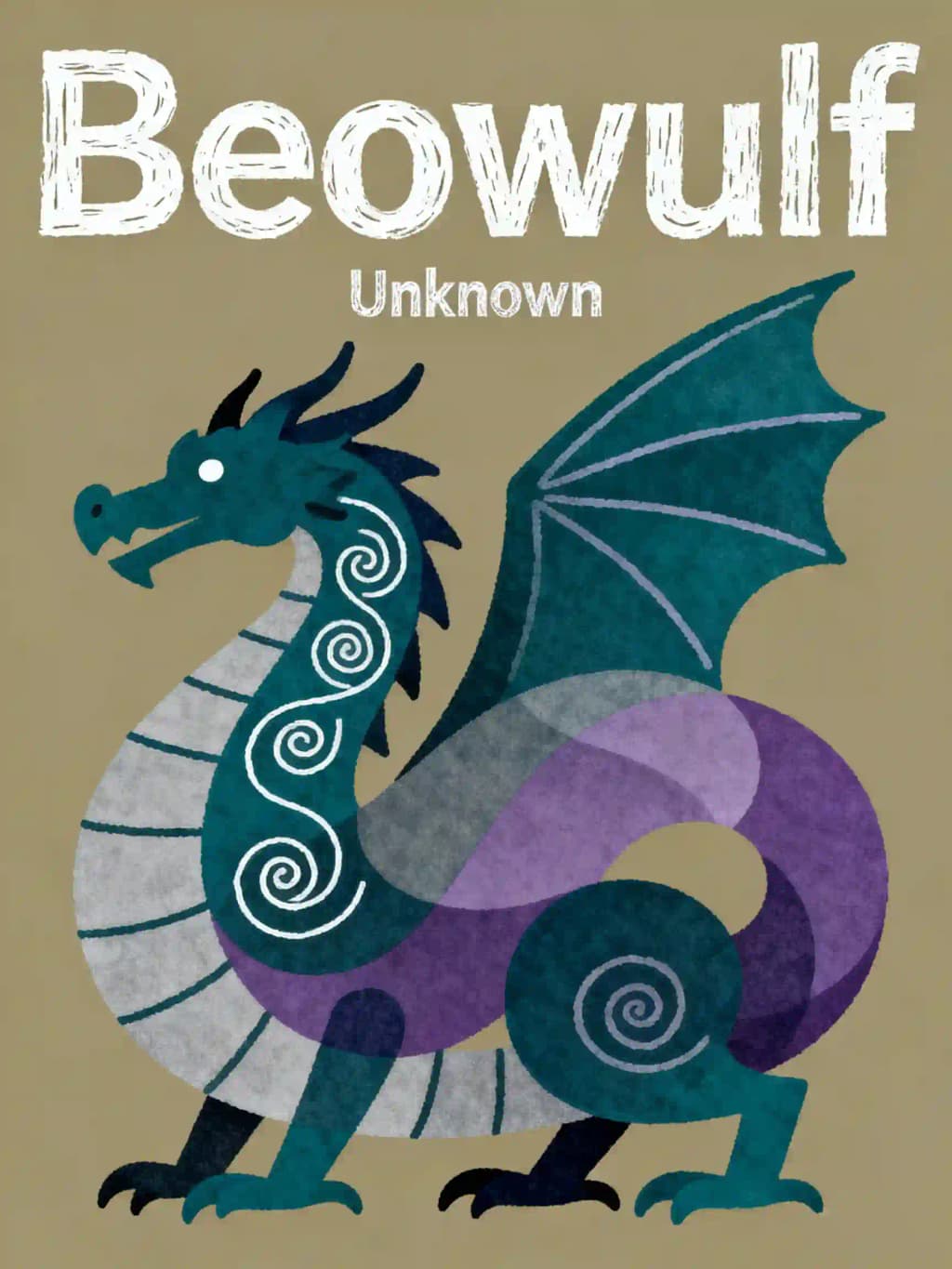
Beowulf
『Beowulf』の概要
Step into the ancient world of heroes and monsters with "Beowulf" - the epic poem that survived a 1731 fire and inspired Tolkien's Middle-earth. This cornerstone of English literature continues to captivate readers with its timeless themes of courage, honor, and the eternal battle between good and evil.
『Beowulf』の主要テーマ
- anglo-saxon warrior culture
- heroic reputation
- comitatus and kinship
- monstrous adversaries
- inevitability of fate
『Beowulf』の名言
When a warrior is gone, that will be his best and only bulwark.
Fate always goes as it must.
The dragon embodies time itself—patient, inevitable, and ultimately victorious even in defeat.
Her attack is not mindless aggression but calculated vengeance.
What remains, the poem suggests, is not gold or weapons but the stories told about those who wielded them.
『Beowulf』の登場人物
- BeowulfA Geatish warrior and hero of the epic poem
- HrothgarKing of the Danes and builder of Heorot
- GrendelA monstrous descendant of Cain who attacks Heorot
- Grendel's motherA monstrous creature seeking vengeance for her son
- The dragonBeowulf's final adversary and a force of nature
著者について
『Beowulf』の著者について
Anonymous, the enigmatic author of Beowulf, remains one of literature’s most enduring mysteries, referred to by scholars as the Beowulf Poet or scop—a masterful Anglo-Saxon bard.
This anonymous storyteller crafted the oldest surviving epic poem in Old English, weaving themes of heroism, loyalty, and the struggle between good and evil against a backdrop of pagan Scandinavia and emerging Christian values.
Though likely composed between the 8th and 11th centuries, the poem’s origins may trace to oral traditions refined by generations of storytellers before being transcribed, possibly by a Christian monk preserving cultural history. While no other works are definitively linked to this shadowy figure, Beowulf’s legacy as a cornerstone of medieval literature has inspired countless translations, academic studies, and modern adaptations.
The sole surviving manuscript, housed in the British Library, has been meticulously preserved for over a millennium, cementing its status as a vital artifact of early English heritage and a timeless exploration of humanity’s moral complexities.
Beowulfの要約をダウンロード
Beowulfの要約をPDFまたはEPUBで無料でダウンロード。印刷やオフラインでいつでもお読みいただけます。
この本に関するよくある質問
Beowulf is an Old English epic poem following the Geatish hero Beowulf as he battles three supernatural foes: Grendel, Grendel’s mother, and a dragon. The story explores themes of heroism, loyalty, and mortality, culminating in Beowulf’s death and funeral after saving his people.
This classic appeals to literature students, enthusiasts of epic poetry, and readers interested in medieval Germanic culture. Its themes of bravery and leadership also resonate with fans of mythological hero narratives. Seamus Heaney’s modern translation makes it accessible to general audiences.
Yes—Beowulf is a cornerstone of English literature, offering insights into early medieval values and storytelling. Its influence spans modern fantasy and academic studies. The poem’s exploration of heroism and fate remains culturally relevant, particularly in translations that balance archaic language with readability.
Key themes include:
- Heroism: Beowulf’s physical and moral courage against impossible odds.
- Loyalty: The bond between warriors and lords.
- Mortality: The inevitability of death, even for heroes.
- “Hwæt! We Gardena in geardagum” (“Listen! We of the Spear-Danes in days of yore”): The iconic opening line, signaling an oral storytelling tradition.
- “Fate will unwind as it must!”: Reflects the poem’s fatalistic worldview.
- Grendel: Represents chaos and otherness, threatening societal order.
- The dragon: Symbolizes greed and the destructive consequences of hoarding wealth.
- Heorot Hall: Embodies human achievement and vulnerability.
Like Homer’s Iliad and Odyssey, Beowulf uses elevated language, supernatural foes, and a focus on kleos (glory). However, its blend of Christian and pagan elements distinguishes it from classical epics.
Critics note its archaic language challenges modern readers, and its female characters (like Grendel’s mother) lack depth. Debates persist about whether its Christian themes were added later, altering the original pagan narrative.
The poem uses symmetry, mirrored in Beowulf’s battles with Grendel and the dragon. It begins and ends with funerals (Scyld Scefing and Beowulf), framing themes of legacy and transience.
Its exploration of leadership, sacrifice, and confronting adversity resonates in modern contexts like crisis management. The poem also inspires adaptations in film, novels, and games, keeping its legacy alive.
The author is unknown, referred to as the “Beowulf Poet.” Scholars debate whether it was composed by a single Christian scribe or emerged from oral tradition. The sole surviving manuscript dates to the 10th–11th century.
- Courage in adversity: Beowulf’s relentless resolve against threats.
- The cost of pride: His decision to fight the dragon alone leads to death.
- Legacy: The poem underscores how deeds outlive individuals.