第1章
Gods, Giants, and the End of All Things: Norse Mythology's Timeless Appeal
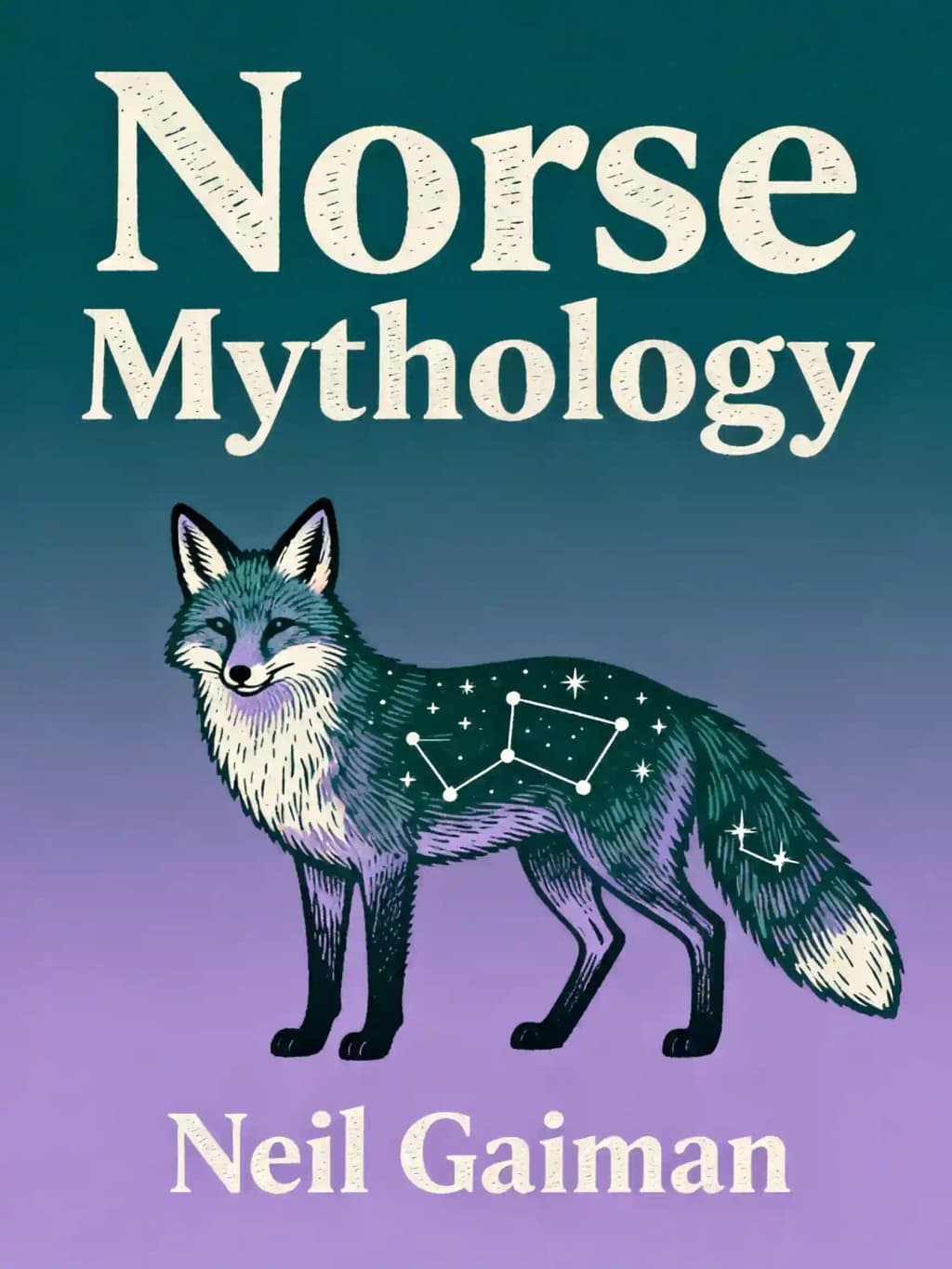
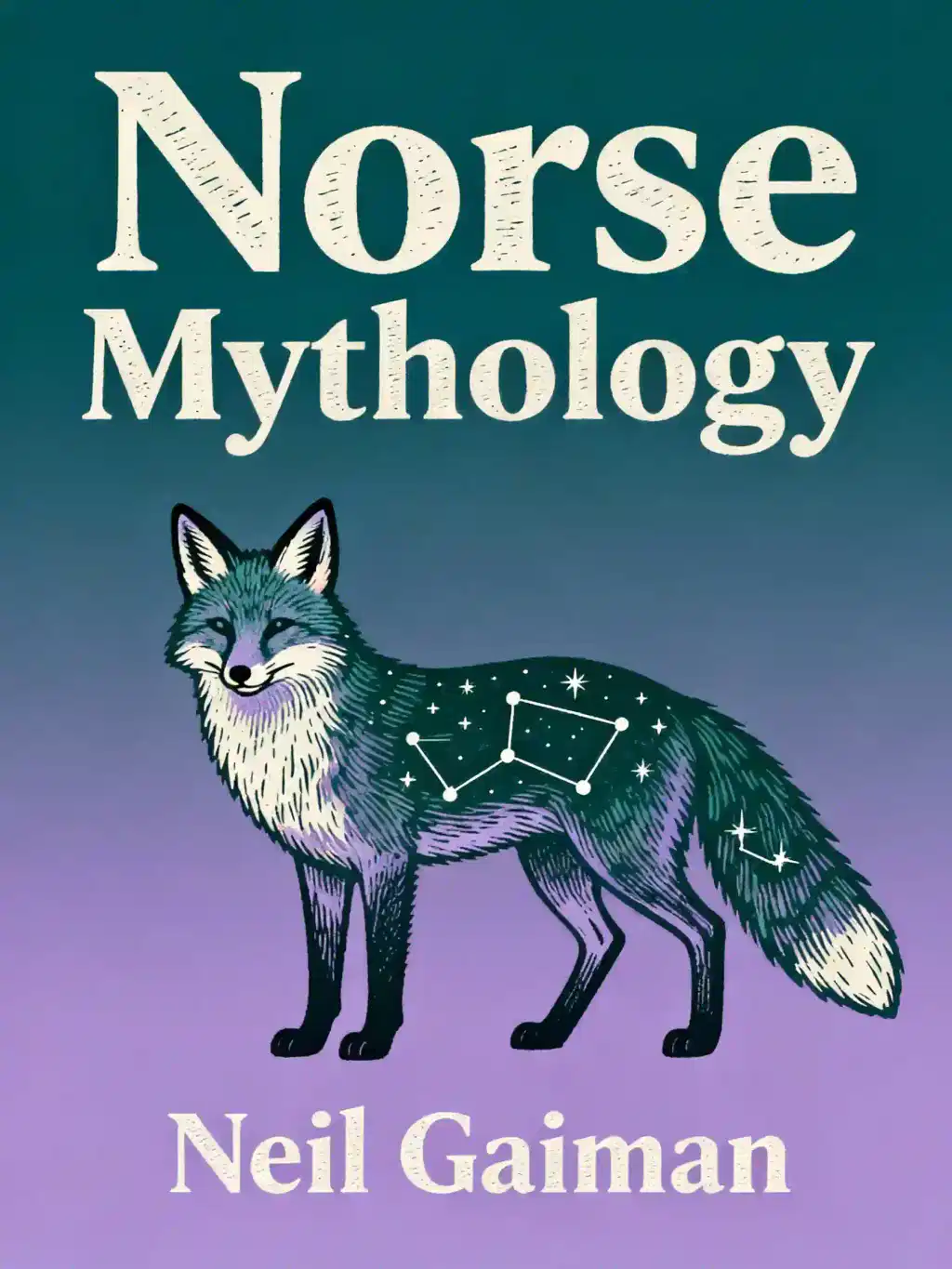
Neil Gaiman's "Norse Mythology" has captivated readers worldwide, becoming a #1 New York Times bestseller and cementing itself as the definitive modern retelling of these ancient tales. What makes these stories so compelling? Perhaps it's how they present gods who are deeply flawed, powerful yet vulnerable, and ultimately doomed-making them more relatable than the perfect deities of other pantheons. Or maybe it's the dark humor and fatalistic worldview that resonates with our modern sensibilities. Even Marvel's billion-dollar Thor franchise owes its existence to these ancient stories, though the comics and films present a significantly sanitized version of the cunning Odin, impulsive Thor, and especially the delightfully wicked Loki. As Stephen King noted, "Gaiman's retelling of these ancient stories reminds us how permanently relevant they are."
第2章
The Players: Gods, Giants, and Monsters of the Norse World
The Norse pantheon centers around three key figures: Odin, Thor, and Loki-each representing different aspects of power and personality. Odin, the All-Father, sacrificed himself to himself by hanging for nine nights on the world tree Yggdrasil, wounded by his own spear, taking neither food nor drink. Through this ordeal, he discovered the runes and gained magical knowledge and power over the world. Far from being a benevolent ruler, Odin introduced war to the world, with battles beginning by throwing a spear in his name. Those who die bravely in combat are collected by his Valkyries and brought to feast eternally in Valhalla-not out of kindness, but to build an army for the final battle of Ragnarok.
Thor, Odin's red-bearded son, contrasts sharply with his father-straightforward where Odin is cunning, good-natured where Odin is devious. The strongest of gods, Thor's might doubles when wearing his magical belt Megingjord. His legendary hammer Mjollnir, forged by dwarfs, makes giants tremble at the mere mention of his name. Born to Jord, the earth goddess, Thor serves as the defender of both Asgard and Midgard, featuring in countless adventures that showcase his immense strength and quick temper.
Then there's Loki-handsome, plausible, likable, yet harboring darkness, anger, envy, and lust. The son of a giantess and a dangerous giant, Loki walks with flying shoes and can transform his shape, but his real weapon is his cunning mind. As Odin's blood brother whose arrival in Asgard remains mysterious, he is both Thor's companion and eventual betrayer. The gods tolerate him because his schemes save them as often as they cause trouble. As the father of monsters and author of woes, Loki makes the world more interesting but far less safe. When Ragnarok comes, he and his monstrous children will fight against the gods of Asgard.
These complex relationships form the backbone of Norse mythology-gods who are family yet enemies, allies yet rivals, creating a dynamic that feels startlingly human despite their divine powers.
第3章
Before the Beginning: The Norse Creation Myth
Before existence itself, there was only Niflheim-the cold, misty world of eleven poisonous rivers flowing from the roaring Hvergelmir-and Muspell, a burning realm of fire and light. Between them stretched Ginnungagap, the "yawning gap" of nothingness. At the edge of Muspell stands Surtr with his flaming sword, who will emerge only at Ragnarok to burn the world and defeat the gods.
Where fire and ice met in Ginnungagap, the melting waters birthed Ymir, the first giant, neither male nor female but both. A giant cow called Audhumla formed from the ice, whose milk nourished Ymir. As she licked the salty ice, she revealed Buri, ancestor of the gods. Buri's son Bor married a giantess, producing three sons: Odin, Vili, and Ve.
These brothers killed Ymir to create the world-its flesh became soil, bones became mountains, teeth formed rocks, blood created seas, and skull formed the sky. Only one giant couple survived the flood of Ymir's blood, becoming ancestors of all future giants. The brothers then created Midgard, a walled realm in the middle of the world to protect against the giants who lived at the edges.
Finding the world empty of conscious life, they discovered two logs on the shore-ash and elm wood. Odin breathed life into them, Vili gave them intelligence and will, and Ve carved them into human form. They named these first humans Ask (Ash Tree) and Embla (Elm), the ancestors of all humanity. This is why Odin is called the all-father-he fathered the gods and breathed life into our ancestors.
What's fascinating about this creation myth is how it differs from others-there is no benevolent creator with a grand plan, just opportunistic gods who repurpose a slain giant's body. The universe begins in ice and fire and will end the same way. This cyclical, somewhat grim worldview permeates all Norse mythology.
第4章
Yggdrasil and the Nine Worlds: The Norse Cosmic Structure
At the center of Norse cosmology stands Yggdrasil, the mighty world ash tree that connects and sustains the nine worlds. Its three massive roots reach into different realms: one to Niflheim where the dragon Nidhogg gnaws at it from the churning spring Hvergelmir; another to the frost giants' realm at Mimir's well; and the third to Asgard at Urd's well where the Norns determine fate.
The tree hosts an eagle at its crown with a hawk between its eyes, while Ratatosk the squirrel scurries up and down the trunk, carrying messages (and insults) between the eagle and Nidhogg. Four stags graze on its branches while countless snakes bite at its roots. Despite this constant assault, Yggdrasil endures, holding the worlds together.
The gods travel between worlds not by climbing Yggdrasil but via Bifrost, the rainbow bridge guarded by Heimdall that would burn any giant or troll who attempted to cross. The nine interconnected worlds include Asgard (home of the Aesir), Alfheim (light elves), Nidavellir/Svartalfheim (dwarfs/dark elves), Midgard (humans), Jotunheim (giants), Vanaheim (Vanir gods), Niflheim (mist world), Muspell (flame world), and Hel (realm of the inglorious dead).
At Urd's well dwell the three Norns-Urd (past), Verdandi (present), and Skuld (future)-who tend Yggdrasil's roots and determine the fates of all beings, even the gods themselves. This fatalistic element is crucial to understanding Norse mythology-even Odin, with all his wisdom and power, cannot escape his predetermined end.
Think of this cosmic structure as an ancient multiverse, with each realm housing different beings with their own rules and powers, connected by the living bridge of Yggdrasil. Unlike modern fantasy that often presents such worlds as places of wonder and exploration, the Norse saw them primarily as sources of danger-especially Jotunheim, home of the giants who constantly scheme against the gods.
第5章
The Price of Wisdom: Sacrifice and Knowledge in Norse Mythology
Norse mythology uniquely portrays wisdom as something that must be paid for with physical sacrifice-a concept embodied in Odin's relentless pursuit of knowledge. This fundamental principle permeates the Norse cosmos, where every piece of wisdom, every magical power, and every divine insight comes at a devastating personal cost. When the worlds were young, Odin journeyed through treacherous giant territory to reach his uncle Mimir's well, the sacred source of wisdom and vital nourishment for Yggdrasil, the world tree. Mimir, the wise being who guarded the well, demanded Odin's eye as payment for a single drink. Without hesitation, Odin cut out his right eye and placed it in the crystalline pool, then drank deeply from the Gjallerhorn, accepting permanent disfigurement for enlightenment.
The wisdom that flooded him transformed his understanding of the nine worlds, allowing him to see more clearly with one eye than he ever had with two. This sacrifice earned him numerous names throughout the Norse realms, including Blindr (the blind one), Hoarr (the one-eyed), and Baleyg (the flame-eyed). This wasn't Odin's only sacrifice for knowledge-he had previously hung himself from Yggdrasil for nine days and nights, wounded by his own spear Gungnir, to gain the knowledge of runes and magic. During this ordeal, he received no food or water, suspended between life and death until the runes revealed themselves to him.
Later, during the complex peace negotiations between the warring Aesir and Vanir gods, Odin sent Mimir to advise Hoenir in Vanaheim as part of a hostage exchange. When the Vanir discovered that Hoenir, despite his impressive appearance, couldn't make decisions without Mimir's constant counsel, they felt deceived. In their rage, they beheaded Mimir and sent his severed head to Odin as a message. Rather than accept this loss, Odin demonstrated his mastery of magic by preserving the head with special herbs and powerful enchantments so it could continue to speak wisdom to him, consulting it before major decisions.
This theme-that knowledge requires sacrifice-appears repeatedly throughout Norse mythology, manifesting in various forms. Thor must sacrifice his masculine pride and dignity to recover his stolen hammer Mjolnir by dressing as Freya in an elaborate wedding dress. Tyr, the god of justice and honor, sacrifices his right hand to bind the monstrous wolf Fenrir, knowing full well the price but choosing to protect the nine worlds. Even Loki, the trickster god who often seeks shortcuts to power and knowledge, eventually pays terrible prices for his cunning, ending up bound with his son's entrails while poison drips onto his face.
What does this tell us about the Norse worldview? Perhaps that nothing truly valuable comes without equivalent cost, that wisdom isn't simply bestowed but earned through painful experience and personal sacrifice. The Norse understood that transformation requires trading what you are for what you might become. In our modern world of instant information and quick solutions, there's something profoundly relevant about this ancient understanding that true wisdom requires giving up something of yourself-whether it's time, comfort, certainty, or even a piece of your identity. The Norse myths remind us that the path to genuine understanding is rarely easy and never free.
第6章
The Children of Loki: Monsters Born of Mischief
Some of the most fascinating elements of Norse mythology are Loki's monstrous children, who embody the consequences of unchecked chaos. During one of his many disappearances from Asgard, Loki had three children with the giantess Angrboda-children Odin foresaw would become the gods' greatest enemies.
The gods journeyed into Jotunheim to seize these children, finding them playing unguarded. The first, Jormungundr, was a growing serpent that could spit burning venom. Odin took it to the shore and released it into the waves, where it would grow until it encircled the earth-the Midgard serpent. The second child, Hel, had one side beautiful like her father and the other side rotted like a corpse. Odin made her ruler of the deepest dark places and queen of those who die in unworthy ways-through disease, old age, accidents, or childbirth.
The third child, Fenrir, was a wolf cub who grew at an alarming rate, becoming fiercer and stronger each day, with only Tyr willing to care for him. Twice the gods attempted to bind Fenrir with chains, and twice the wolf broke free. Finally, the dwarfs crafted Gleipnir, a ribbon made from six impossible things: a cat's footsteps, a woman's beard, a mountain's roots, a bear's sinews, a fish's breath, and a bird's spittle.
When presented with this silken ribbon, Fenrir suspected treachery and refused to be bound unless one of the gods placed a hand in his mouth as guarantee. Only Tyr was brave enough to do so. When Fenrir discovered he could not break Gleipnir, and that the gods meant to leave him bound, he bit off Tyr's right hand. The gods secured Gleipnir to a stone driven deep into the earth and wedged Fenrir's mouth open with a sword.
These children represent different aspects of chaos and destruction-the serpent that poisons the world, the half-dead queen who claims all who die ingloriously, and the wolf that will eventually devour Odin himself. What's remarkable is how the Norse myths acknowledge that even when contained, these forces of chaos cannot be eliminated-they will break free at Ragnarok and fulfill their destiny to destroy the gods.
In many ways, Loki's children represent the Norse understanding that no matter how orderly we try to make our world, chaos and destruction are inevitable parts of existence that can only be temporarily restrained, never permanently defeated.
第7章
Thor's Adventures: Strength, Pride, and Humility
Thor's adventures form some of the most entertaining tales in Norse mythology, often combining humor with profound lessons about the limits of even divine power. In one famous journey, Thor traveled to Utgard, the fortress of giants, accompanied by Loki and a human servant named Thialfi. Along the way, they encountered a giant named Skrymir, who offered to carry their provisions but tied the bag with knots Thor couldn't untie.
Hungry and angry, Thor struck the sleeping giant three times with Mjollnir, each blow seemingly unfelt-Skrymir merely brushed them off as falling leaves, acorns, and bird droppings. At Utgard, the giants challenged Thor and his companions to contests that seemed simple but proved impossible. Thor failed to empty a drinking horn (which was secretly connected to the ocean), lift a cat (actually the Midgard serpent in disguise), and wrestle an old woman (who was Old Age itself).
Humiliated, Thor and his companions prepared to leave when Utgard's king revealed the truth: Thor's drinking had created the tides, lifting the cat was actually raising the world serpent (a feat no one thought possible), and standing against Old Age on one knee was remarkable. The giants admitted they'd used powerful illusions and would never allow Thor to find Utgard again, fearing his strength.
This story brilliantly illustrates Thor's character-powerful but easily tricked, proud but capable of learning. Unlike Odin, who might have seen through the deception, or Loki, who might have appreciated the trick, Thor responds with silent contemplation about his encounter with the Midgard serpent, foreshadowing their final battle at Ragnarok.
Another famous tale shows Thor recovering his stolen hammer by disguising himself as Freya in a wedding dress to trick the giant Thrym. Despite his embarrassment at wearing women's clothes and his near-exposure through his mannish appetite and terrifying eyes, Thor maintains the disguise until Mjollnir is placed in his lap for the wedding ceremony. The moment he grasps his hammer, he reveals himself and slaughters all the wedding guests.
These stories reveal a god who, despite his immense strength, must sometimes rely on cunning or even humiliation to achieve his goals-a surprisingly nuanced portrayal for a thunder deity often reduced to mere brute force in modern adaptations.
第8章
The Death of Balder: Tragedy, Fate, and Betrayal
The most heartbreaking tale in Norse mythology concerns Balder, Odin's second son who shone like the sun-beautiful, wise, mild, and eloquent. Though beloved by all and living in joy with his wife Nanna and son Forsete, Balder began suffering terrible nightmares of worlds ending and brothers slaying brothers. Troubled by these dreams, Odin journeyed to consult a seer, raising a dead wise woman who revealed herself as Angrboda, Loki's giantess lover. She foretold Balder's death and warned that Loki would eventually escape bonds not yet placed upon him.
Determined to protect her son, Frigg traveled the world extracting promises from all things-fire, water, metals, stones, trees, beasts, diseases-that they would never harm Balder. She overlooked only the mistletoe, deeming it too small and insignificant. The gods began testing her claim by hurling weapons at Balder, delighted when everything avoided harming him.
Loki, disguised as a kindly woman, cunningly extracted from Frigg the knowledge that she hadn't secured an oath from the mistletoe. He then crafted a dart from the plant and approached blind Hod, who stood apart from the festivities, sighing as he listened to the merriment. Loki offered to help Hod participate, placing the mistletoe dart in his hand, positioning him, and instructing him when to throw. When Hod threw the dart, it struck true, and Balder fell dead. "You have killed your brother," said Loki, not sounding sad at all.
The gods sent Hermod to Hel's realm to seek Balder's return. Hel agreed to release Balder on one condition: every single thing in the world must weep for him. If even one creature refused to cry or spoke against him, he would remain in her realm forever. The gods sent messengers across the world, and all things wept for Balder-women, men, children, animals, birds, trees, stones, even metals.
As the triumphant messengers were returning, they encountered an elderly giantess named Thokk in a mountain cave. When asked to weep for Balder, she spat on the rock and declared, "Old Thokk won't weep for Balder. Alive or dead, old Odin's son brought me nothing but misery." The messengers realized this was Loki in disguise, ensuring Balder would remain dead.
This tale is remarkable for its emotional depth and the way it interweaves themes of fate, love, and betrayal. Despite all of Frigg's efforts and the gods' power, they cannot prevent what has been foretold. Balder's death marks the beginning of the end for the gods-the first domino to fall in the sequence leading to Ragnarok.
第9章
Ragnarok: The Twilight of the Gods
The final and most powerful tale in Norse mythology speaks not of the past but of the dark days to come-the death of the gods and the end of the world. Unlike most mythologies that focus on creation or the golden age of gods, Norse myths look unflinchingly toward inevitable destruction.
Ragnarok will begin with Fimbulwinter-three successive winters without summer, bringing cold, hunger, and war. Brothers will fight brothers, fathers will kill sons, and society will collapse into savagery. The sun and moon will vanish, plunged into darkness.
Great earthquakes will destroy all fetters, freeing Fenrir the wolf and Jormungundr the Midgard serpent. Fenrir will devour everything in his path while the serpent poisons the seas. Loki will escape his bonds to captain Naglfar, a ship built from the fingernails of the dead, with frost giant Hrym leading an army alongside Loki's legions of the dishonored dead.
When Heimdall blows the Gjallerhorn, the sleeping gods will wake and gather at Urd's well. Odin will seek counsel from Mimir's head before leading the Aesir and Einherjar to Vigrid battlefield. There, the final battle unfolds: Odin faces Fenrir, Thor confronts the Midgard serpent, Frey battles Surtr. The gods fall one by one-Frey to Surtr's flaming sword, Tyr and Garm killing each other, Thor slaying the serpent but dying from its venom, and Odin devoured by Fenrir before Vidar avenges him by tearing apart the wolf's jaws.
Finally, only Loki and Heimdall remain, mortally wounding each other in their ancient rivalry. As they die, Loki gloats over his victory, but Heimdall reveals that Vidar, Vali, and Thor's sons Modi and Magni survive, and two humans-Life and Life's Yearning-hide safely in Yggdrasil, ensuring humanity's rebirth. Surtr then engulfs everything in flames, leaving only ash that the flooding seas will wash away.
Yet after this total destruction comes rebirth. From the ocean's gray waters, green earth will rise again. Though the old sun is devoured, her daughter will shine more brightly. Life and Life's Yearning will emerge from the world ash tree to create mankind anew. Where Asgard once stood, Idavoll will remain. The surviving gods-including the returned Balder and Hod-will gather there, reminiscing about what might have been different.
In the grass, they discover golden chess pieces-miniature versions of the gods and their enemies-glinting in the new sunlight. Arranging them on a chessboard, Balder smiles like the sun coming out and makes the first move. And the game begins anew.
This vision of cosmic destruction followed by renewal reflects a profound understanding of life's cycles. Nothing lasts forever-not even the gods-yet from endings come new beginnings. The Norse didn't flinch from acknowledging the darkness and inevitable destruction in life, yet still found hope in the promise of renewal.
第10章
The Enduring Power of Norse Mythology
What makes these ancient stories resonate so powerfully with modern readers? Perhaps it's their unflinching honesty about the nature of existence-that even gods face limitations, make mistakes, and ultimately die. Unlike the omnipotent, perfect deities of many religions, Norse gods are deeply flawed beings with recognizable personalities and problems.
Odin's wisdom comes at terrible cost. Thor's strength can't solve every problem. Loki's cleverness often backfires. These gods feel human in their failings, even as they wield cosmic powers. Their stories acknowledge that life contains both humor and horror, that fate cannot always be escaped, and that even the mightiest must eventually fall.
The Norse vision of the cosmos-a world tree connecting nine realms, populated by gods, giants, elves, dwarfs, and monsters-has influenced countless fantasy worlds from Tolkien's Middle-earth to Marvel's cinematic universe. The concept of Ragnarok-an inevitable apocalypse where gods fight their final battle-appears in countless stories about the end of the world.
But perhaps most compelling is the Norse understanding that destruction contains the seeds of creation. After Ragnarok's fire and flood, new life emerges. The cycle begins again, different yet echoing what came before. In our uncertain times, there's something profoundly comforting about this ancient wisdom-that endings, however terrible, are not final, and that life, in some form, continues.
As Neil Gaiman himself notes, these stories emerged from a cold land with long winters, created by people who respected but didn't entirely trust their gods. They left their mark in our weekdays-Tuesday (Tyr's day), Wednesday (Odin's day), Thursday (Thor's day), and Friday (Frigg's day)-and continue to shape our imagination thousands of years later. In their beauty, brutality, humor, and hope, they remain as vital and vibrant as when they were first told under northern lights, reminding us that even gods must face their fate with courage.