第1章
The Revolutionary Life of Frida Kahlo
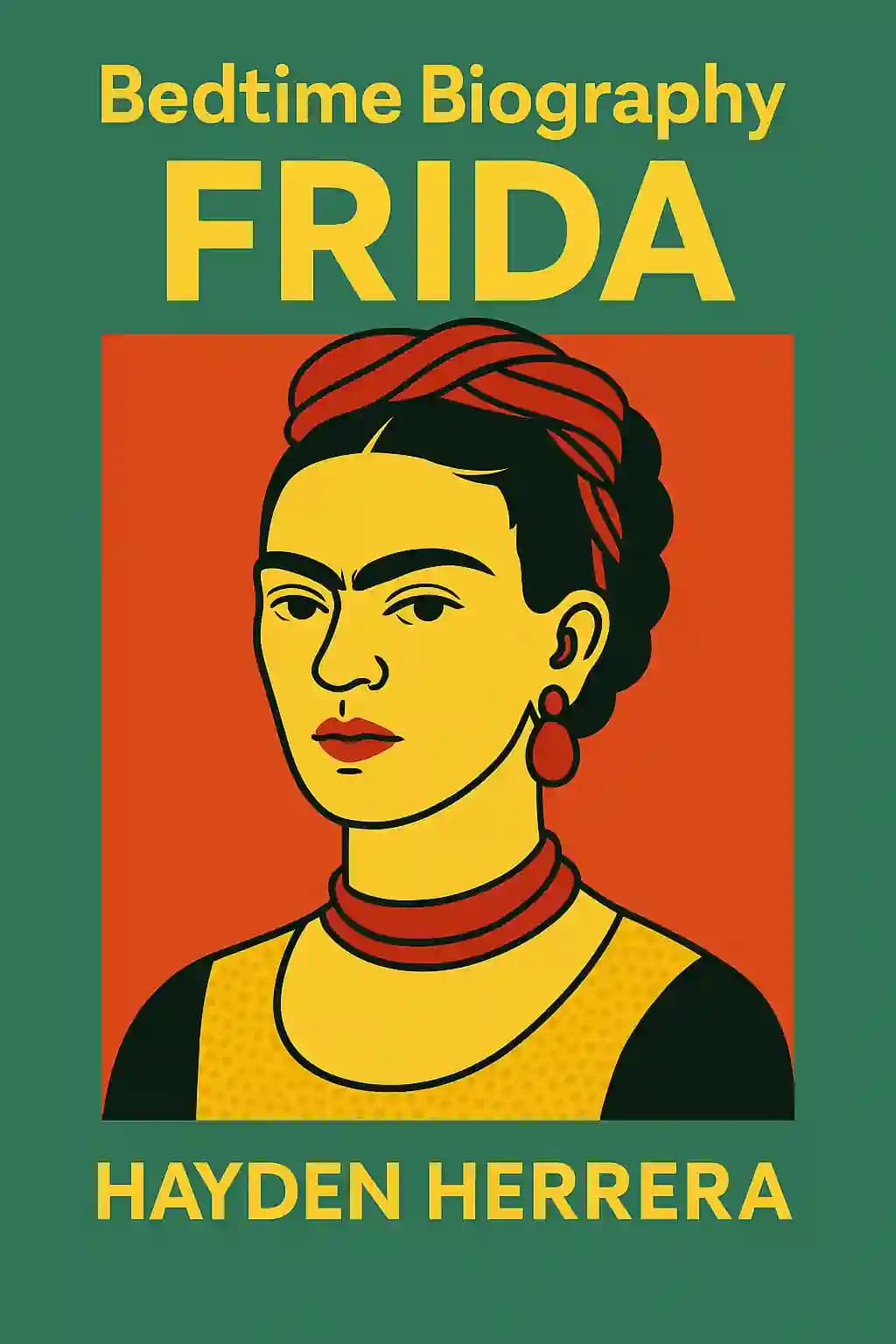
In a world of conformity, Frida Kahlo stood defiantly apart. Her paintings-raw, visceral, and unapologetically personal-have become cultural touchstones that transcend the art world. What began as a private means of processing trauma evolved into one of the most distinctive artistic voices of the 20th century. Today, her face adorns everything from T-shirts to tote bags, her distinctive unibrow and flower crowns instantly recognizable worldwide. Beyonce has dressed as her for Halloween, Madonna collects her paintings, and her 1939 "Two Fridas" sold for $8 million. Yet beneath the commercialized image lies a complex woman whose life was marked by physical agony, passionate love, political fervor, and an indomitable will to create. "I paint myself because I am often alone," she once said, "and I am the subject I know best." Through this intimate knowledge, she created a visual language that continues to speak to millions about pain, resilience, identity, and the revolutionary power of authenticity.
第2章
From Tragedy to Canvas: The Birth of an Artist
Magdalena Carmen Frida Kahlo y Calderon was born on July 6, 1907, in Coyoacan, Mexico, though she later claimed 1910 to align her birth with the beginning of the Mexican Revolution. This small act of reinvention foreshadowed a life in which she would repeatedly transform personal tragedy into powerful artistic expression.
At six, Frida contracted polio, confining her to her bedroom for nine months. This early isolation fostered her introspective nature while simultaneously developing her defiance. To strengthen her withered right leg, her father encouraged physical activities-swimming, boxing, cycling-despite being teased as "pata de palo" (peg leg). Rather than succumbing to victimhood, young Frida compensated by becoming surprisingly athletic, though she cleverly concealed her thinner calf with multiple socks and built-up shoes.
During this childhood confinement, Frida developed an extraordinary imagination. She would breathe on her bedroom window, draw a "door" with her finger, and through this imaginary portal, visit a friend in the world beyond-a creative coping mechanism that would later manifest in her paintings' surreal qualities and double self-portraits.
Her father, Guillermo Kahlo, a German-Jewish immigrant and professional photographer, recognized in Frida his own introspective nature. He called her "the most intelligent" of his daughters and shared with her his interests in nature, archaeology, and photography. Their bond deepened through shared experiences of illness-Frida would help him during his epileptic attacks, developing both compassion and practical medical knowledge that would serve her throughout her pain-filled life.
The defining catastrophe occurred on September 17, 1925, when 18-year-old Frida boarded a bus with her boyfriend Alejandro Gomez Arias. A trolley car crashed into them, and a metal handrail pierced Frida's body "like a sword through a bull," entering her left side and exiting through her vagina. The collision fractured her spinal column in three places, broke her collarbone and ribs, fractured her right leg in eleven places, crushed her foot, dislocated her shoulder, and broke her pelvis in three places. A packet of gold powder carried by another passenger burst during the accident, covering Frida's bloodied body, causing bystanders to cry "La bailarina!" (the dancer).
Doctors doubted she would survive. She lay immobilized in a plaster cast within a box-like structure resembling a sarcophagus. After a month in the hospital, she returned home to Coyoacan to face months of confinement. In poignant letters to Alejandro, she detailed her ongoing suffering-contracted tendons, excruciating pain requiring chloroform and cocaine, and persistent nausea.
During this convalescence, Frida began to paint. Her first serious work, a Self-Portrait as a gift for Alejandro, shows her looking melancholy yet beautiful in a wine-red velvet dress. On its back, she wrote "Frieda Kahlo at 17 years of age" and, in German, "Heute ist Immer Noch"-Today still goes on. This simple statement would become the philosophical underpinning of her approach to suffering: life persists despite pain, and art can transform agony into meaning.
第3章
Diego Rivera: The Elephant and the Dove
In 1928, Frida approached the already-famous muralist Diego Rivera as he worked on scaffolding at the Ministry of Education. According to Rivera's romanticized account, she boldly demanded he evaluate her paintings. Impressed by their "unusual energy of expression" and "fundamental plastic honesty," he advised her to continue painting.
Their courtship intensified rapidly. Diego was captivated by Frida's candor, her mixture of freshness and unmasked sexuality, and her mischievous spirit. During one memorable stroll in Coyoacan, they discovered that street lamps would mysteriously turn off when they kissed beneath them. Their intellectual connection was equally powerful-both possessed quick, unconventional minds that rejected bourgeois morality while blending revolutionary politics with fantasy and imagination.
They married on August 21, 1929, when Frida was 22 and Diego 42. Her parents called the union "the marriage of an elephant and a dove," referencing not just their physical disparity (Diego was 6'1" and 300 pounds; Frida barely 5' and 98 pounds) but their temperamental differences. Yet they shared a deep intellectual bond and mutual artistic respect that would sustain their relationship through decades of turbulence.
Under Rivera's admiration, Frida painted with new confidence. Though briefly adopting a Riveraesque style, she maintained her distinctive vision. "Diego showed me the revolutionary sense of life and the true sense of color," she later said, but wisely, he refrained from formal teaching to preserve her innate talent.
Their marriage was unconventional from the start. While Diego created panoramic murals encompassing all of society and history, Frida focused intimately on particular details-clothing, faces, individual lives, and most significantly, herself. Her subjects came from her immediate world-friends, animals, still lifes-conveying the immediacy of lived experience rather than abstract theory.
Their relationship was complex from the beginning. Frida loved Diego obsessively yet sometimes hated him; she despaired at his infidelities yet sometimes claimed amusement; she mothered him while maintaining a father-daughter dynamic. As Bertram Wolfe noted, "She subordinated her waywardness to his; otherwise life with Diego would have been impossible." Despite quarrels and cruelties, they remained primary in each other's lives, though Diego prioritized his art while Frida put him first.
第4章
Gringolandia: American Sojourn and Personal Tragedy
When Rivera received commissions to paint murals in the United States, Frida accompanied him, beginning a tumultuous period that would profoundly impact both her art and personal life. In San Francisco, Detroit, and New York, she experienced the contradictions of being a Communist artist's wife in capitalist America during the Great Depression.
In Detroit, while Diego painted his famous industry murals at the Detroit Institute of Arts (commissioned by Edsel Ford), Frida discovered she was pregnant. Despite her physical condition, she initially decided to keep the baby, writing to Dr. Leo Eloesser expressing both hope and concern. Her pregnancy ended tragically on July 4, 1932, when she miscarried at Henry Ford Hospital.
From this traumatic experience emerged Frida's first truly original masterpiece, Henry Ford Hospital, which Rivera called the beginning of "paintings which had no precedent in the history of art." In this powerful work, Frida depicts herself naked on a hospital bed floating in a barren landscape, hemorrhaging onto sheets. Six red ribbon-like veins connect her to symbolic objects: a male fetus, a torso showing female anatomy, a snail (representing the slowness of the miscarriage), pelvic bones, a mechanical device, and an orchid Diego had given her.
This painting marked a crucial evolution in her artistic development-moving beyond conventional portraiture to create deeply personal symbolic imagery that communicated her physical and emotional pain. The industrial landscape visible in the background (Ford's Rouge River plant) further contrasted the cold mechanization of American society with her intensely human suffering.
In Self-Portrait on the Borderline Between Mexico and the United States, Frida contrasted Mexico's ancient agrarian beauty with America's bleak factories. While the Mexican side shows the sun and moon together in a fertile landscape with pre-Columbian idols and rooted plants, the American side depicts windowless skyscrapers like tombstones and industrial chimney stacks resembling automatons. For Frida, machines represented trauma-her accident, her miscarriage in "Motor City," and the work that took Diego away from her-while Mexico represented life and human connection.
The couple's time in America culminated in controversy when Nelson Rockefeller had Rivera fired from the Rockefeller Center project for including Lenin's portrait in his mural "Men at the Crossroads." The mural was eventually destroyed, crushing Rivera's dream of painting for modern industrial society. Frida stood firmly by Diego through the controversy, typing his letters and attending protest meetings. When Rockefeller later approached her at a film opening with "How are you, Frida?", she turned on her heels and marched away in protest.
第5章
A Few Small Nips: Betrayal and Artistic Response
Upon returning to Mexico in December 1933, the Riveras moved into their new home in San Angel-two modernist cubes painted pink (Diego's larger house) and blue (Frida's smaller one), connected by a bridge and surrounded by organ cactus. Despite being home at last, Frida's paintings reveal her unhappiness.
Diego was miserable upon returning to Mexico, blaming Frida for making him leave the US. Despite commissions to paint murals, he felt angry and apathetic. Meanwhile, Frida suffered health problems requiring surgery. With Diego depressed and funds low, Frida turned to her sister Cristina for solace, only to be betrayed when Diego began an affair with her.
This devastated Frida, who wrote to Dr. Eloesser about her profound suffering. She tried to forgive her sister and understand Diego's feelings, writing that "it costs me so much to go through this that you can't have any idea of what I suffer." In early 1935, Frida moved to an apartment in Mexico City, consulting a lawyer about divorce.
In July 1935, Frida fled to New York with friends, transforming her pain into art with A Few Small Nips, depicting a murdered woman in a blood-soaked bed. The painting was inspired by a newspaper account of a man who, after stabbing his unfaithful lover to death, told the judge, "But I only gave her a few small nips!" Frida admitted painting this because she felt sympathy with the murdered woman, as she herself had been "murdered by life."
This mordant wit appears in subsequent works like Memory (1937) and Remembrance of an Open Wound (1938), where physical wounds symbolize psychological injury. In Remembrance, she displays two wounds-her bandaged foot and a bleeding gash on her inner thigh that references her sexuality and accident injuries. She candidly told male friends the hand placement beneath her skirt showed masturbation, yet she faces the viewer unabashed.
Just as the accident transformed Frida from a carefree girl into a melancholic young woman with fierce determination, Rivera's affair with Cristina changed her from an adoring bride into a complex, autonomous woman. Though still orbiting in Diego's glow, increasingly the light that attracted people to Frida was her own.
第6章
Trotsky and Political Awakening
After nine years of exile and rejection from multiple countries, Leon Trotsky and his wife Natalia found asylum in Mexico through Rivera's direct petition to President Cardenas in November 1936. When the oil tanker Ruth arrived at Tampico harbor on January 9, 1937, Frida represented her hospitalized husband in the welcoming party.
The Riveras' blue house in Coyoacan became Trotsky's sanctuary. The house windows facing the street were filled with adobe bricks for security, and police guards surrounded the property. The Trotskys were delighted with their new home, which Natalia described as "a new planet in Rivera's house."
Despite his exile, Trotsky immediately resumed his political activities. The resulting Dewey Commission, chaired by American philosopher John Dewey, transformed the Coyoacan house with brick barricades and sandbags for hearings to counter Moscow trials' accusations against him. Throughout the thirteen sessions, Frida sat close to Trotsky, adorned in Tarascan jewelry and Indian costumes.
The Russian's commanding physical presence and intellectual vigor masked a vigorous interest in women. At twenty-nine, Frida was at her prime-seductive, with sensuous lips and appraising eyes as captured in her self-portraits from this period. Their flirtation escalated when Trotsky began slipping letters into books he recommended to her. By summer 1937, they were meeting secretly at Cristina's house.
According to Ella Wolfe, it was Frida who ended the affair during her visit to San Miguel Regla. Trotsky wrote her a nine-page letter begging her not to break relations, expressing his infatuation in language more fitting for a seventeen-year-old than a man in his sixties. Frida showed the letter to Ella, ordering her to destroy it after reading, remarking "Estoy muy cansada del viejo" (I am very tired of the old man).
After her affair with Trotsky ended, Frida and Diego's relationship resumed its pattern of shared activities and mutual autonomy. Between 1937 and 1938, she produced more paintings than in all her previous eight years of marriage, later confiding to Lucienne Bloch that Trotsky's arrival in Mexico was "the best thing that ever happened in her life."
第7章
A Painter in Her Own Right: Surrealism and International Recognition
In summer 1938, Rivera secretly arranged Frida's first major sale when film star Edward G. Robinson visited their studio. While Frida entertained Mrs. Robinson on the roof terrace, Diego showed Robinson her hidden paintings, resulting in the purchase of four works for $200 each. Frida was delighted by this unexpected income: "This way I am going to be able to be free, I'll be able to travel and do what I want without asking Diego for money."
That April, Andre Breton, the "pope of Surrealism," visited Mexico. When he saw Frida's paintings, he was entranced, proclaiming her a self-created Surrealist and offering to organize a Paris exhibition following her New York debut. He wrote a flattering essay for her Julien Levy Gallery show brochure, declaring her work had "blossomed forth in pure surreality" despite having no prior knowledge of Surrealist ideas.
Frida's response to being welcomed into the Surrealist movement was one of innocent dismay: "I never knew I was a Surrealist till Andre Breton came to Mexico and told me I was. The only thing I know is that I paint because I need to, and I paint always whatever passes through my head, without any other consideration." This naive stance masked her sophisticated understanding of art movements, while allowing her to position herself as an original whose fantasy was nourished by Mexican popular tradition rather than European "isms."
At her November 1938 Julien Levy Gallery exhibition in New York, Frida made significant sales despite the Depression economy. Collectors included photographer Nickolas Muray, industrialist Edgar J. Kaufmann Sr., and psychiatrist Dr. Allan Roos. The show stimulated future commissions, including Clare Boothe Luce's request for a commemorative portrait of actress Dorothy Hale.
In January 1939, Frida sailed for France as Europe teetered on the edge of war. Her Paris sojourn began disastrously. She initially stayed with Andre and Jacqueline Breton, but found their apartment cramped and unwelcoming. Worse, Breton had failed to organize her exhibition as promised-her paintings remained in customs, no gallery was arranged, and the photographs Muray sent had supposedly never arrived.
Marcel Duchamp rescued the situation, retrieving her paintings and securing the Pierre Colle gallery. Despite these difficulties, the exhibition attracted notable figures. Miro gave her "a big hug," while Kandinsky, Picasso, Tanguy, and Paalen praised her work. Picasso gifted her tortoise-shell hand earrings with gold cuffs and taught her a Spanish song that became one of her favorites.
Though often labeled a Surrealist, Frida maintained ambivalence about the classification. As Diego argued, she was a "realist," writing in 1943: "In the panorama of Mexican painting of the last twenty years, the work of Frida Kahlo shines like a diamond... clear and hard, with precisely defined facets." Her outlook differed fundamentally from European Surrealists. Her fantasy wasn't an escape from logic into the subconscious but a way of coming to terms with reality. Her symbolism remained autobiographical and accessible.
第8章
The Broken Column: Pain and Artistic Transformation
In one of her most stoic images, Self-Portrait with Small Monkey (1945), a spider monkey holds a ribbon that winds around her signature, encircles a pre-Columbian idol's neck, forms a noose-like loop around her neck, enlaces both her dog's and monkey's necks, and finally loops around a sharp, illusionistically painted nail driven into the painting's background. This yellow ribbon-yellow for illness and madness-hints at psychic asphyxiation while the nail evokes the martyrdom of physical pain.
Frida's health had steadily worsened by 1944. The pain in her spine and foot intensified. Dr. Alejandro Zimbron prescribed complete rest and ordered a steel corset which temporarily lessened her suffering. Without its support, she couldn't sit or stand. She lost thirteen pounds in six months, experienced fainting spells and fever, and was confined to bed.
She endured twenty-eight orthopedic corsets in all-one steel, three leather, and the rest plaster. One particularly torturous device allowed her neither to sit nor recline, angering her so much that she removed it and tied her torso to a chair with a sash for spinal support. At one point, she spent three months in a nearly vertical position with sandbags attached to her feet to straighten her spine.
Her wounded self-portraits were silent cries, projecting her pain outward onto canvas to extract it from her body. These fixed, immutable replicas of her mirror image served as antidotes to suffering-the disjunction between experiencing pain from the inside and seeing an apparently pain-free self from the outside provided a steadying influence.
In Without Hope (1945), she stages her drama in the vast, heaving sea of volcanic rock called the Pedregal. She lies weeping in bed, holding between her lips the tip of a huge, membranous funnel-a cornucopia of gore containing animals, food, and a sugar-candy skull with "Frida" written on its forehead-either vomiting this carnage onto the easel straddling her bed, making suffering the source of her art, or perhaps referencing pre-Columbian speech symbols to symbolize a scream of rage and horror.
In February 1946, Frida traveled to New York with her sister Cristina to see Dr. Philip Wilson, who performed a spinal fusion operation, inserting a fifteen-centimeter metal rod. Despite orders not to paint, she soon disobeyed and created a work in the hospital that she later sent to a landscape exhibition in Mexico City.
In The Little Deer (1946), Frida presents herself with the body of a young stag, her human head crowned with antlers. Running through a glade, the deer is pierced by nine arrows that will slowly kill him-a metaphor for her own journey through life, persecuted by gradually destroying injuries. The deer's wounds bleed, but her face remains calm.
By painting herself as a deer, Frida expressed her feeling of oneness with all living things-a concept rooted in Aztec culture, which assumes humans "participate of the same stuff of being, with other lives not human." Pre-Columbian artists created composite creatures to symbolize continuance and rebirth. As Anita Brenner wrote, Aztec worship involved identification with divine attributes rather than acquiring a god's character.
第9章
Viva La Vida: Final Years and Enduring Legacy
During Frida's hospitalization in the English Hospital, Rivera took a small room next to hers, often sleeping there and showing extraordinary tenderness-rocking her to sleep, reading poetry, and once dancing with a tambourine to distract her from a headache. According to Dr. Velasco y Polo, part of the reason for her hospitalization was Diego's desire for freedom, with Frida's moods fluctuating based on his attentiveness. "She couldn't offer her pain to the Virgin so she offered it to Diego. He was her god."
Despite her suffering, Frida remained an exceptional patient-beloved by nurses for her gaiety and generous tips, admired by doctors for never complaining. She maintained her sense of humor, creating puppet shows with her feet using the metal contraption designed to keep her leg elevated. When given a bone graft from a cadaver named Francisco Villa, she joked about feeling like shooting her way out to start her own revolution.
In 1953, Frida finally received her first solo exhibition in Mexico at the Galeria de Arte Contemporaneo. Despite being bedridden, she insisted on attending, declaring "they'll have to take me in my bed." Her doctor forbade her to go, but she defied him. On opening night, an ambulance delivered her on a stretcher to find a traffic jam outside the gallery. Her hospital bed was placed in the center of the gallery, and she arrived in full Tehuana costume, singing and joking with guests despite her pain.
After her leg amputation, she had a special red leather boot made for her prosthetic leg, adorned with bells and embroidery, and proudly demonstrated it by twirling before friends. She joked about her condition, calling herself "Frida the cripple" and suggesting her wooden leg could be used for firewood after her death.
Her relationship with Diego remained complex but devoted. "No one knew how much I love Diego," she confessed. Despite his infidelities, she recognized his care: "Every night he stays up until three or four in the morning just to be with me." In her final months, Frida continued painting, creating politically charged works like "Marxism Will Give Health to the Sick," declaring "I want my work to be a contribution."
On July 13, 1954, after celebrating her 47th birthday a week earlier, she died, officially of "pulmonary embolism." Diego, who had sat beside her bed through her final hours, was devastated by the loss of his "most precious being on earth." He later wrote, "July 13, 1954, was the most tragic day of my life. Too late now, I realized that the most wonderful part of my life had been my love for Frida."
Eight days before her death, Frida had completed her final painting-a still life of watermelons inscribed with "Viva la Vida" (Long Live Life), a final defiant celebration of existence despite her suffering. Rivera fulfilled her wish that the Blue House become a museum dedicated to her art and Mexican folk art, ensuring her legacy would endure.
Today, Frida's home is open to visitors. Rivera gave the house with its art collection and folkloric furnishings to the Mexican people in 1955 to perpetuate his wife's memory. Her paintings hang on the living room walls, her clothes still occupy the closets, and her bed remains as she left it-a testament to an extraordinary woman who transformed personal suffering into universal art, creating a visual language that continues to speak to us about pain, resilience, identity, and the revolutionary power of authenticity.