第1章
The Voice Between Two Worlds: Malinche's Extraordinary Journey
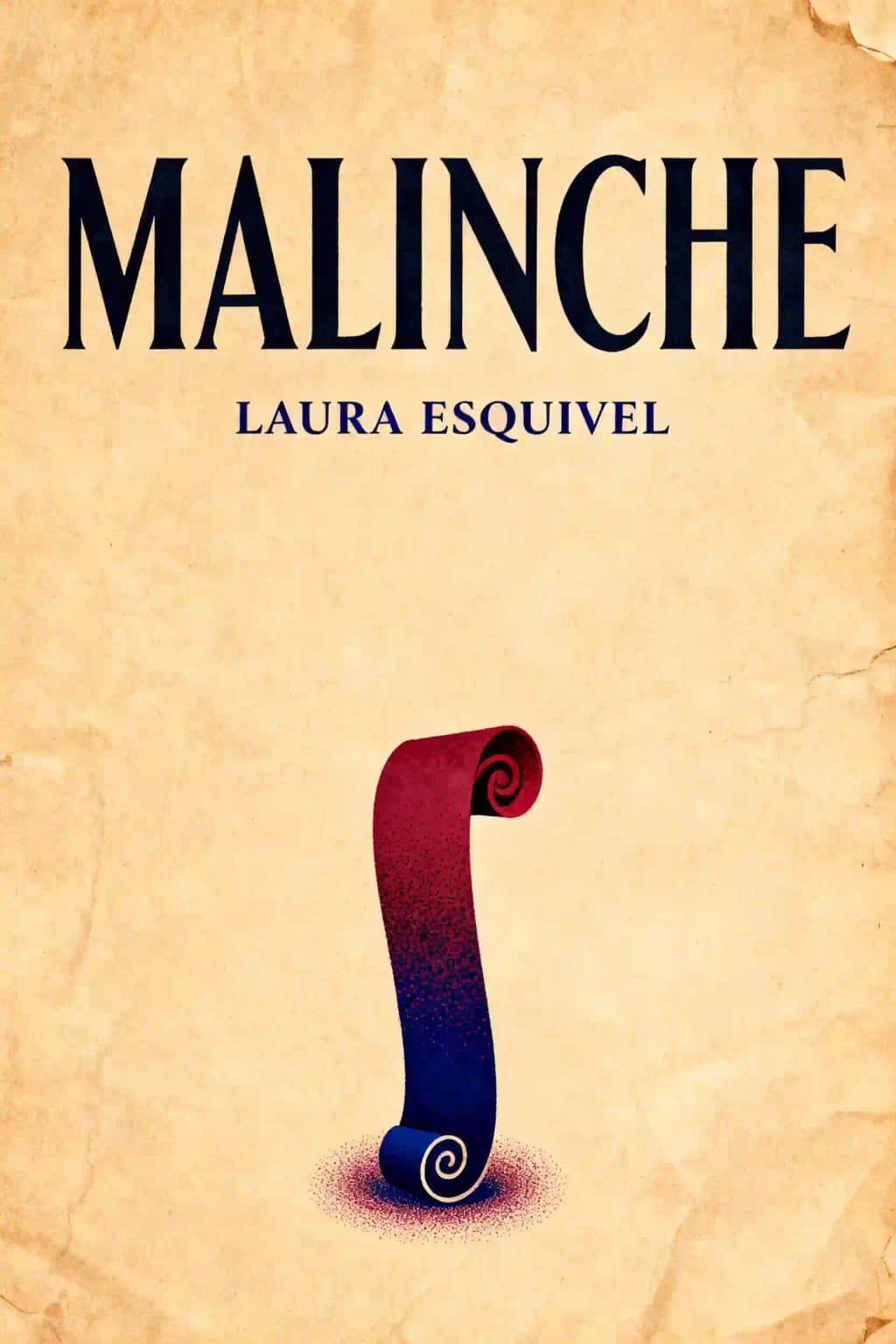
Laura Esquivel's "Malinche" has captivated readers worldwide since its publication, offering a revolutionary perspective on one of history's most misunderstood women. This historical novel reimagines the life of Malinalli (later known as Malinche), the indigenous woman who served as translator between Hernan Cortes and the Aztec Empire during the Spanish conquest of Mexico. Often vilified in Mexican culture as a traitor, Esquivel's portrayal humanizes Malinche, revealing her complex motivations, spiritual journey, and pivotal role in birthing Mexico's mestizo identity. The book has garnered praise from literary critics for its lyrical prose and feminist perspective, while historians appreciate its nuanced exploration of this pivotal historical moment. Even Salma Hayek has reportedly expressed interest in adapting this transformative tale that challenges centuries of patriarchal historical narratives.
第2章
Destiny Written in Corn: Malinalli's Origins
Malinalli's story begins with her birth during a torrential rainstorm, with the umbilical cord wrapped around her neck like a serpent-a powerful omen from Quetzalcoatl, the feathered serpent deity. Her grandmother, who would become her greatest spiritual guide, performed the traditional birth ceremony, offering the infant to the four winds and introducing her to Chalchiuhtlicue, Goddess of Water. During this sacred ritual, her father prophetically declared: "Your word will have eyes and will see, will have ears and will hear, will have the tact to lie with the truth and to tell truths that will seem like lies."
This prophecy would define Malinalli's destiny as a bridge between worlds. Born under the sign of malinalli (sacred grass) in the twelfth house, her name itself symbolized resurrection and transformation-represented by the glyph showing a skull with sacred grass growing from it. From her earliest days, she was marked for a life of profound spiritual significance.
Malinalli's childhood was shaped by her grandmother's wisdom. Though physically blind, the old woman possessed extraordinary spiritual sight: "I see what is behind things," she explained to young Malinalli. "I can't see your face, but I know you are beautiful; I can't see your codices, but I see them through your words." This profound teaching established Malinalli's understanding that true vision comes from within.
When Malinalli was just five years old, her mother abandoned her to new masters after remarrying, an act of betrayal that would haunt her throughout life. As she departed her childhood home, she took only necessities: jade jewelry, embroidered huipiles, ceramic figures, and precious corn grains harvested with her grandmother. These corn grains would become her spiritual anchors, connecting her to her ancestral wisdom even as she journeyed into an uncertain future shaped by forces beyond her control.
第3章
The Arrival of Strangers: Omens and Opportunities
When bearded strangers with golden hair "pushed by the wind" arrived on Mexico's shores, Malinalli immediately connected their appearance to ancient prophecies about Quetzalcoatl's return. Their hair resembled corn silk-the very gift Quetzalcoatl had bestowed upon mankind-a promising sign to a woman desperate for liberation from slavery.
For Malinalli, corn embodied spiritual strength and human connection: as long as men recognized they were sons of the corn, they would understand their essential sameness despite superficial differences. This perspective allowed her to see potential salvation in these foreigners' arrival, hoping they might restore her ancestors' age of glory and end her bondage.
Meanwhile, Montezuma's empire trembled under the weight of eight terrible omens that had preceded the Spaniards: a burning corn ear, a temple conflagration, mysterious lightning, a sparkling tunic traversing the sky, boiling lake waters, the wailing goddess Cihuacoatl, a mirror-headed bird showing visions, and misshapen creatures appearing before the emperor. These omens paralyzed Montezuma with fear of divine punishment, preventing him from mounting effective resistance against what could have been easily crushed military force.
While Montezuma interpreted the strangers' arrival as punishment for the Aztecs' distortion of ancient Toltec religion, Malinalli saw opportunity. After being baptized and renamed Marina (though she struggled to pronounce the "r"), she found comfort in connecting the Christian deity to Quetzalcoatl and the Virgin Mary to Tonantzin, creating spiritual bridges between seemingly disparate traditions.
When she was given to the Spaniards along with nineteen other women as spoils of war, Malinalli noted the timing-during a One Sugarcane year, Quetzalcoatl's year-further confirming her belief that these events signaled profound change. Initially assigned to nobleman Alonso Hernandez Portocarrero, she felt relief in serving a master whose indifferent eyes felt safe compared to Cortes's unsettling gaze that reminded her of "flint knives used for sacrifices."
第4章
The Power of Translation: Words as Weapons
Malinalli's life transformed dramatically when she was appointed "The Tongue"-Cortes's translator between Spanish and Nahuatl. This role thrust her into unprecedented power for a female slave, as men suddenly looked into her eyes and waited for her words. In a society where women were expected to keep their eyes lowered and speak only when addressed, this elevation marked a radical departure from cultural norms. She discovered that controlling information gave her influence: "words are weapons that can unite or divide like warriors." Through translation, she wielded power over how cultures perceived each other, shaping first impressions that would echo through centuries.
This privileged position came with profound moral dilemmas. Should she translate faithfully or shape meanings to ensure her survival by supporting the narrative that Cortes was Quetzalcoatl's incarnation? The weight of this responsibility tormented her-each translation could alter the course of history. This potential rebellion against the gods filled her with fear and guilt-feelings that mirrored Montezuma's own dread as he awaited divine punishment. She found herself caught between multiple loyalties: to her indigenous heritage, to her new Spanish masters, and to the truth itself.
Malinalli struggled with translating complex religious concepts across vastly different worldviews. She once innocently asked Cortes about God's wife, revealing the profound cultural gaps between Mesoamerican polytheism and European Christianity. Her understanding of language was deeply spiritual-she perceived the mouth as a feminine principle containing creation, while the tongue acted as a masculine principle delivering meaning. This metaphysical framework gave her unique insights into her role in reshaping history through language, as she bridged not just vocabularies but entire cosmologies.
Yet doubts persistently plagued her about the Spaniards' divine nature. She observed their behavior with growing skepticism, noting their rudeness, foul odor, and obsession with gold rather than sacred corn. Their disregard for ritual cleanliness and spiritual practices contradicted everything she knew about godly behavior. She wondered if they might instead serve Tezcatlipoca, Quetzalcoatl's deceptive brother-a thought that carried terrifying implications for her role in their conquest.
The crisis point came when a woman in Cholula warned her of a planned ambush against the Spaniards. This moment forced Malinalli to make her most consequential translation decision. Her personal freedom hung in the balance-if the Spaniards fell, she would surely be killed, but betraying Cholula meant betraying a sacred site of Quetzalcoatl himself. The decision would haunt her forever: warn Cortes and facilitate a massacre, or remain silent and potentially die with her Spanish masters. This moral crucible would shape the destiny of two civilizations and forever define her historical legacy, transforming her from mere translator to a pivotal figure in the conquest of Mexico.
第5章
Intimate Conquests: Malinalli and Cortes
The relationship between Malinalli and Cortes embodied the complex power dynamics of the conquest itself - a dance of dominance, submission, and cultural misunderstanding. Their first intimate encounter occurred during a pivotal river washing scene, where the clash between spiritual and carnal desires became evident. As Malinalli attempted to share her deep spiritual connection to water, explaining how "Our god gives us eternal life... Hidden in water, in its invisible parts, is the truth," Cortes's response was purely physical. He approached her with raw desire, his hands exploring her body with increasing urgency while remaining deaf to the sacred knowledge she offered. The rain that began to fall as he forcefully took her seemed to mirror her silent tears - nature itself witnessing this fusion of conquest and intimacy.
This initial violence established a pattern in their relationship, yet Malinalli's response was complex. She discovered an unexpected solace in this physical submission, finding it paradoxically liberating compared to the weighty responsibility of being the tongue that shaped destiny through words. This dynamic revealed much about both characters - Cortes's need for physical dominance and Malinalli's ability to find strength even in surrender. Unknown to them, Jaramillo, one of Cortes's most trusted captains, witnessed their encounter from afar. His observation sparked an obsession with Malinalli that would later reshape the political and personal landscape of their lives.
Their relationship evolved through moments of unexpected tenderness, particularly during a traditional purification ritual in a temazcal (bathhouse). The steam-filled, womb-like space created an atmosphere where cultural barriers temporarily dissolved. Despite her body's memory of his previous force, Malinalli found herself drawn to him again. The semi-darkness allowed for a different kind of vulnerability, as Cortes showed rare moments of curiosity about her culture. His questions about the snake sculptures adorning the space opened a door for Malinalli to share the profound symbolism of Quetzalcoatl - the feathered serpent deity representing the union of opposing forces: bird and snake, rainwater and earth water, sky and earth. This moment of cultural exchange, however brief, revealed the potential for understanding that usually remained buried beneath conquest's brutal surface.
As their relationship deepened, Malinalli developed a keen understanding of Cortes's psychological makeup. She observed his perpetual state of dissatisfaction - a hunger that no conquest, whether of land or flesh, could fully satisfy. Her insight that "this man is insatiable" proved prophetic, as she watched him move from victory to victory without finding peace. She recognized in him a fundamental emptiness that could only be temporarily filled by the thrill of conquest and the spilling of blood. This understanding led her to both accept him as an instrument of destiny and pity his inability to find contentment. She feared that his unquenchable desire for power would eventually consume him, driving him toward madness - a fear that would prove well-founded as the conquest progressed and his actions became increasingly erratic and violent.
第6章
The Massacre at Cholula: A Soul's Fracture
The massacre at Cholula marked an irreversible spiritual death for Malinalli, transforming her from a bridge between worlds into a witness of unprecedented horror. On that fateful day, Cortes, operating under a calculated pretense of self-defense, orchestrated a gathering of three thousand Cholultecan lords in the sacred temple of Quetzalcoatl. The nobles arrived adorned in their finest ceremonial garments, believing they were attending a farewell ceremony - a final gesture of respect between peoples.
Once the temple was filled, Spanish soldiers barred the heavy wooden doors. Cortes, mounted high on his stallion, his armor glinting in the filtered light, thundered accusations of treachery while Malinalli translated his words with trembling voice. When the terrified chiefs finally confessed they had been following Montezuma's orders to ambush the Spaniards, Cortes's face hardened into a mask of cruel determination as he pronounced their death sentence.
For more than two horrific hours, Spanish soldiers methodically murdered the trapped Indians while Malinalli crouched in a corner, her once-pristine white huipil now speckled with crimson droplets. The slaughter spilled beyond the temple walls and continued for two days, claiming six thousand lives - warriors, priests, merchants, and civilians alike. The streets ran red with blood, and the air filled with the acrid smell of death. Afterward, Malinalli's soul felt permanently tethered to the thousands of dismembered corpses. Though physically untouched, she was spiritually eviscerated, her once-bright eyes now dull mirrors reflecting the horror she had witnessed.
At the river's edge, where she sought solace, Malinalli encountered Cortes's blood-stained horse drinking from the crimson-tinted waters. With trembling hands, she cleaned its legs, watching the water turn pink as she worked. Looking into its large, dark eyes, she saw her own terror reflected - neither she nor this magnificent beast were the same beings they had been before the slaughter. She shuddered involuntarily remembering Cortes's hands, which had once caressed her with apparent tenderness, now wielding sword and command with such murderous resolve.
Malinalli grappled desperately with the Spanish concept of the devil as evil incarnate - an idea foreign to her worldview. In her understanding, spirituality was woven into the fabric of existence itself, intimately connected to nature, the cosmos, and the eternal dance of celestial rhythms. She could not reconcile herself with the Spanish god who dwelled unseen in the sky, separate from his creation, dealing in vengeance and destruction. She questioned her very purpose in the grand design - was she truly born to be the instrument through which the Spaniards would destroy her world, demolish her cities, obliterate her beliefs, and dethrone her gods?
Standing mutely beside the horse, watching butterflies with blood-spattered wings flutter past, she wept without tears, her mind desperately seeking refuge in memories of her grandmother. She recalled being taken as a child to witness the migration of monarch butterflies, their orange wings painting the sky like living flames. In that precious childhood memory, her grandmother had shared ancient wisdom: "a still body limits itself, a body in movement expands" - teaching that now seemed both vital and impossible to embrace in this moment of profound spiritual crisis. This massacre had frozen her in place, trapping her between worlds, between loyalties, between the person she had been and the person she was becoming.
第7章
The Fall of an Empire: Tenochtitlan's Destruction
Tenochtitlan dazzled both the Spaniards and Malinalli with its grandeur. In the market of Tlatelolco, she discovered new birds, fruits, and plants that seduced her senses. The market served as the heart of the empire, where commercial routes brought riches from every province under Mexica control.
Despite this splendor, tensions mounted. The Spaniards pillaged treasures, ripping gold from featherworks and melting them into ingots, leaving feathers floating "bereft of their art." When Cortes took Montezuma hostage and later forced him to swear obedience to King Charles, the market exploded with rage.
During Cortes's absence to confront Panfilo de Narvaez, Pedro de Alvarado conducted a massacre at the temple, setting off an uprising. When Cortes returned, he found a changed city with no welcoming nobles-most were dead. After Montezuma's death (either from stones thrown by his own people or assassination by the Spaniards), his brother Cuitlahuac organized resistance.
During their nighttime retreat from Tenochtitlan, Malinalli's beloved horse was wounded. In a moment of profound grief, she delivered a merciful death blow. Juan Jaramillo saved her life from a Tenochan warrior and comforted her as they fled the city.
Cortes regrouped in Tlaxcala while smallpox devastated the native population, killing Emperor Cuitlahuac. Young Cuauhtemoc assumed the throne and prepared defenses, but after a brutal siege cutting off water and food supplies, Tenochtitlan fell. The once-magnificent city lay in ruins, its animals gone, its craftsmen dead or fled, its beauty destroyed.
As Tenochtitlan fell, the people whispered of concealing their culture within their homes until the prophesied sixth sun rose. They vowed that fathers and mothers would become the teachers, preserving memories of Anahuac's greatness while awaiting the "sun of justice." Malinalli recognized that while the Spaniards destroyed what they could see and touch, the spirit remained intact, beyond their perception.
第8章
Motherhood and Marriage: Creating New Life
In Coyoacan, Malinalli gave birth to Cortes's son, finding fulfillment in creating a life that united two worlds. She lovingly embroidered a princely cape for her newborn with treasured feathers, cotton, jade, and shells. While she embraced motherhood, Cortes struggled with guilt over the destruction he'd caused. His joy at having an heir was tainted by the child's illegitimacy and mestizo heritage.
Later, during an expedition to Hibueras, Malinalli confronted Cortes about her desires to be with their son. She pleaded with him to recognize that she and others around him were not mere objects but beings with feelings. Cortes momentarily seemed moved by her truth before dismissing her as foolish, reminding her that her only purpose was to be his "Tongue."
In a shocking betrayal, Cortes forced Malinalli to marry Juan Jaramillo during a drunken celebration. After the wedding, Jaramillo consummated the marriage repeatedly while Cortes fell into a stupor. Feeling utterly humiliated, Malinalli ventured into the jungle and pierced her tongue with an agave thorn-a symbolic vow that her tongue would never again be an instrument of conquest.
On the return journey by ship, Malinalli, pregnant again, gave birth on the deck under starlight to a daughter whom she named Maria. As she released her daughter's umbilical cord into the ocean, she experienced a profound moment of peace. When Jaramillo asked if nursing mothers die a little, she responded definitively: "No, they are reborn."
Upon returning to land, Malinalli anxiously sought her abandoned son Martin. When they met, the four-year-old didn't recognize her and ran away calling for "Paloma," the woman who raised him. That night, she spoke to him tenderly in Nahuatl, singing the lullaby from his infancy. Though asleep, the boy smiled, signaling a spiritual reconnection. By morning, their bond began to heal, and Malinalli discovered a new appreciation for the Spanish language that allowed her to express her love in ways her son could understand.
第9章
A Mestizo Paradise: Reconciliation and Transcendence
Malinalli and Jaramillo created a peaceful life together in a home representing harmonious blending of spiritual traditions. Their patio featured four fountains at the cardinal points with canals forming a silver cross in the center-a design inspired by both Jaramillo's childhood memories of the Alhambra and Malinalli's connection to Tula.
Their garden combined European and Mexican plants, creating new flavors that embraced their mestizo origins. Just as the earth produces corn of different colors that can mix together, Malinalli saw her children as a new race containing all bloods. She delighted in watching them play in the fountains, speaking both Nahuatl and Spanish, eating both bread and tortillas.
To preserve her heritage, she created a codex to teach her children how to read ancient symbols alongside Spanish. The number eight fascinated her as a symbol of mixed ancestry-two circles united through the same invisible point, forever within each other.
When Cortes visited seeking their testimony for his upcoming trial, Malinalli refused to be manipulated. "I am no longer your tongue, Lord Malinche," she declared. She condemned his "cursed mirrors" that distort reality and identity, lamenting how they reflect "the fright of open grimaces in the face of men who have lost their language, their gods."
After this confrontation, Malinalli journeyed to the hill of Tepeyac seeking spiritual renewal. In deep meditation, she connected with Tonantzin, praying for her mestizo children to be protected from feeling inferior or knowing hatred. She asked the goddess to "strengthen the spirit of the new race that with new eyes looks on itself in the mirror of the moon," seeing themselves as "a fulfilled promise of the universe."
At Tepeyac, Malinalli buried her grandmother's necklace and her corn rosary, symbolically burying her past. She experienced a profound spiritual transformation, realizing she was eternal and would continue to exist in everything around her-in water, stars, corn tortillas, wind, and the new city rising from Tenochtitlan.
Returning home transformed and at peace, she spent her final night with her family before experiencing a mystical dissolution, becoming "water of the moon" as her spirit merged with the cosmos. She died on the thirteenth day of the month, the same date that marked the fall of Tenochtitlan years before-completing a cycle of destruction and creation that would define Mexico's mestizo identity for centuries to come.
第10章
The Legacy of La Malinche: Beyond Traitor or Heroine
Laura Esquivel's portrayal of Malinalli challenges us to move beyond simplistic labels of traitor or heroine. Instead, we see a woman navigating impossible circumstances with remarkable spiritual resilience. As a mediator between worlds, Malinalli used her gift for language not merely to survive but to shape the course of history while remaining true to her deepest values - ending human sacrifice while preserving the spiritual essence of her culture. Her mastery of Nahuatl, Maya, and Spanish allowed her to serve as more than just a translator; she became a cultural interpreter who could convey not just words but entire worldviews.
Through Malinalli's eyes, we witness the birth of Mexico's mestizo identity - not as a violent collision of incompatible worlds, but as a sacred marriage of complementary forces. Her children embody this new reality, speaking both languages, eating both foods, and inheriting both spiritual traditions. They pray to both the Christian God and honor the ancient deities, celebrate Spanish festivals while maintaining Indigenous ceremonies. The water motif throughout the novel symbolizes this fluidity of identity - the ability to adapt, transform, and find new channels when blocked. Like water, Malinalli learned to flow around obstacles, carving new paths while maintaining her essential nature.
Perhaps most powerfully, Esquivel reveals how Malinalli's greatest conquest was not of empires but of herself - learning to forgive her mother's abandonment, reconnect with her son Martin, and ultimately transcend the trauma of conquest through spiritual integration. Her journey from slave to interpreter to spiritual bridge-builder mirrors Mexico's own journey of cultural synthesis. Her final pilgrimage to Tepeyac Hill (which would later become the site of the Virgin of Guadalupe's appearance) symbolizes this reconciliation of seemingly opposed spiritual traditions into a unified whole. Here, Indigenous and Christian spirituality would later merge in the form of the dark-skinned Virgin, speaking to her people in Nahuatl.
In the end, Malinalli's story reminds us that in times of profound cultural collision, the most revolutionary act may be to create spaces where different worlds can coexist - not through domination but through translation, understanding, and the recognition of our shared humanity. Her legacy lives on not just in Mexico's mestizo identity but in every act of cultural bridge-building that seeks understanding rather than conquest. Modern Mexican artists, writers, and activists continue to reinterpret her story, finding in Malinalli a symbol of cultural resilience and transformation. Her life demonstrates how individual choices in moments of historical crisis can create new possibilities for cultural dialogue and understanding.
The complexity of her position - caught between loyalty to her people and the need to prevent further bloodshed, between old gods and new faith, between two languages and worldviews - makes her story deeply relevant to contemporary discussions about cultural identity, translation, and the role of women in times of social transformation. Through Esquivel's narrative, Malinalli emerges as neither villain nor victim, but as a conscious agent of change who helped birth a new cultural reality.