第1章
A Journey Through Bullets and Borders: The Harrowing Tale of Survival
Have you ever wondered what it would feel like to have your entire world shattered in an instant? To watch as everything you love is ripped away, leaving you with nothing but the desperate need to survive? This is the reality that Lydia Quixano Perez faces in Jeanine Cummins' gripping novel that has captivated readers worldwide, including celebrities like Oprah Winfrey who selected it for her book club. The book sparked intense debate upon its 2020 release, with some praising its humanizing portrayal of migrants while others questioned the author's perspective. Regardless of controversy, the novel's raw emotional power and unflinching look at the migrant experience has resonated with millions, becoming a New York Times bestseller and cultural touchpoint in discussions about immigration and human resilience.
第2章
When Death Comes Knocking at Your Door
The horror begins on an ordinary day during a family celebration. Eight-year-old Luca is using the bathroom when bullets start flying through the window. His mother Lydia bursts in, shoving him into the shower stall where they hide, frozen in terror, as armed men enter the house and systematically murder sixteen members of their family who had gathered for Luca's cousin Yenifer's quinceanera celebration. Through Luca's terrified perspective, we experience the surreal horror-the sound of gunfire mixing with cheerful music from the radio, the casual conversation of the killers, even one using the bathroom without discovering them hidden behind the shower curtain.
When the sicarios finally leave, Lydia and Luca emerge to discover the unimaginable-everyone is dead. Sebastian, Lydia's journalist husband; her sister Yemi; her mother; her niece Yenifer still in her white quinceanera dress; young cousin Adrian; and eleven others. They sit stunned on the curb outside, waiting for authorities, both unable to process the horror they've just survived.
The massacre wasn't random. Lydia's husband Sebastian had published an expose on a powerful cartel leader known as La Lechuza (The Owl). What makes this particularly devastating is that La Lechuza is actually Javier Crespo Fuentes-a cultured, poetry-loving man who had become Lydia's friend and regular customer at her bookstore. Their friendship had been genuine and deep; they connected over literature and shared personal vulnerabilities. Javier had even confessed his love for her, though Lydia remained faithful to Sebastian. When she discovered Javier's true identity, she was shocked but believed their connection would protect her family. She was catastrophically wrong.
Now, Lydia realizes they must flee immediately. Javier's reach extends throughout Mexico, and his men will surely return to finish the job. With only the clothes on their backs and what little cash they can gather, mother and son begin a desperate journey north, toward the distant promise of safety across the American border.
第3章
Running from Shadows, Chasing Hope
Their escape is immediately perilous. Lydia knows Javier's network is vast-his men could be anywhere. At the Duquesa Imperial hotel, they narrowly avoid capture when Javier's men arrive moments after they've slipped out through a service exit. A chilling note from Javier confirms he knows where they are: "I cry for your pain and mine. We are forever bound by this grief."
This sets the pattern for their journey-moments of brief respite followed by terrifying close calls. They travel by bus when possible, but must abandon conventional transportation when they realize checkpoints are everywhere, manned by corrupt officials who might recognize them. Their path becomes increasingly desperate as they're forced to join the stream of Central American migrants heading north on La Bestia-the notorious freight trains that carry thousands of migrants toward the U.S. border.
The journey transforms them. Lydia, once a middle-class bookstore owner who enjoyed coffee and comfortable evenings with her husband, becomes hardened by necessity. She attaches a machete to her calf, learns to sleep with one eye open, and develops an almost animal-like instinct for danger. Luca, just eight years old, is forced to grow up overnight. The boy who once worried about geography competitions and soccer practice now concerns himself with survival tactics and how to jump onto moving trains.
"This situation isn't normal," Soledad, a fellow migrant, observes during one particularly tense moment. The understatement captures the surreal nature of their new reality-a life where danger is constant and trust is a luxury they cannot afford.
第4章
Unexpected Bonds in Broken Places
Along their journey, Lydia and Luca form profound connections with fellow migrants, particularly two teenage sisters from Honduras-Soledad and Rebeca. The girls are fleeing their own nightmare: Soledad was claimed as property by a local gang leader, who marked her with a distinctive tattoo and threatened to do the same to her younger sister. Their father, a schoolteacher who spent his life savings helping them escape, remains behind in their small mountain village, unaware of the full extent of the danger that forced his daughters to flee.
These relationships become the emotional core of their journey, transforming from tentative alliances into deep bonds that sustain them through the darkest moments. Despite their differences-age, background, nationality-they form a makeshift family united by shared trauma and the desperate hope for a better future. Soledad becomes like an older sister to Luca, teaching him survival skills and sharing stories of her childhood in Honduras, while Rebeca's quiet resilience reminds Lydia of her own determination to protect her child at all costs.
When Lydia receives word through underground channels that the sisters' father has been brutally attacked in retaliation for their escape-left beaten and blinded on his front porch as a warning to others-she makes the heart-wrenching decision to keep this devastating news from them. She understands that the weight of such knowledge could break their spirit when they need all their strength to survive the perilous journey ahead.
Their small group grows to include others, each carrying their own heavy histories: Beto, a street-smart ten-year-old boy from Tijuana's garbage dumps who masks his pain with humor, claiming to be "just a poser" rather than a real migrant while hiding the scars of abandonment; Lorenzo, a former sicario whose mysterious motives gradually reveal a quest for redemption; and Elena, a pregnant woman from Guatemala fleeing domestic violence. At various migrant shelters and aboard La Bestia, they encounter countless others-teachers, farmers, students, mothers-each forced from their homes by circumstances beyond their control.
The journey strips away pretenses and reveals the complex humanity of those who risk everything to reach el norte. In the cramped spaces of cargo trains and the tense silence of desert crossings, they share fragments of their lives: childhood memories, favorite recipes, dreams of reunion with loved ones. They are not a faceless mass but individuals with rich inner lives, carrying both visible and invisible wounds, yet maintaining their dignity and hope. As one character observes, "Every migrant has a story that would break your heart," and through these intimate portraits, the true human cost of displacement becomes devastatingly clear.
第5章
The Beast: Riding the Rails North
La Bestia-"The Beast"-is both salvation and danger. These freight trains represent the migrants' best hope of covering the vast distances between southern Mexico and the northern border, but they're notoriously perilous. Riders must jump onto moving trains, risking life and limb. Once aboard, they face new threats: thieves, kidnappers, corrupt officials, and the elements.
Lydia watches in horror as Soledad and Rebeca demonstrate how to board the train by leaping from a bridge onto the moving roof. "Like it's a diving board?" Luca asks, remembering the El Rollo water park his father once promised to take him to. But this is no game-they've witnessed others attempt similar jumps and fall to their deaths beneath the train's wheels.
When it's their turn to jump, Lydia must make an impossible choice: push her eight-year-old son onto a moving train or stay behind and face certain death at Javier's hands. In that moment of decision, she hears Sebastian's voice cutting through her fear: "Go, Luca! Jump!" Luca leaps, lands successfully, and Lydia follows, their bodies now committed to this dangerous northward journey.
Aboard La Bestia, they witness the brutal realities of migration. A man falls from the train and is cut in two before their eyes. Migrants dehydrate under the scorching sun or freeze during desert nights. At one point, they're captured by corrupt police who extort money and sexually assault female migrants. Lydia must pay their ransom with nearly all their remaining funds.
"Each of you will be robbed," a priest at a migrant shelter warns them. "Without exception. If you succeed in reaching el norte, it will be without a penny. That's guaranteed."
第6章
The Truth Behind the Massacre
Midway through their perilous journey north, Lydia finally uncovers the devastating truth behind the massacre that claimed her family. Sebastian's expose article about Javier had included something deeply personal - a poem Javier had once shared privately with Lydia during their intimate bookstore conversations. This detail, seemingly minor at the time, represented a profound betrayal of trust that wounded Javier's carefully guarded pride. But the true catalyst for his vengeful response came from an unexpected source: his beloved teenage daughter Marta, studying abroad in Barcelona, discovered the article that exposed her father as Los Jardineros' brutal cartel leader. Unable to reconcile the loving father she knew with the monster described in the article, Marta took her own life in her dormitory room, leaving behind a haunting note that read: "One more death shouldn't matter much."
This revelation shatters Lydia's understanding of everything that happened. She had convinced herself that her family was targeted simply because Sebastian had fulfilled his journalistic duty to expose criminal activities. The reality proves far more complex and personally devastating - a tragic cascade of unintended consequences stemming from her misplaced trust in Javier, her naive belief in their friendship, and her husband's unwavering commitment to journalistic integrity. Each decision, each moment of trust, formed links in a chain that led inexorably to destruction.
"It wasn't supposed to happen," Lydia repeats to herself like a mantra, her voice hollow with the weight of responsibility. The memory of the night before the article's publication torments her with crystal clarity. Sebastian, always the more cautious one, had suggested they go into hiding as a precaution. "No, I think we're safe," she had replied with confident certainty, drawing on her belief in her special connection with Javier. "One hundred percent?" Sebastian had pressed, giving her one final chance to doubt. "Yes, one hundred percent," she had affirmed, sealing their fate with her misplaced confidence.
This knowledge becomes a constant companion on her journey, more burdensome than any physical load she carries. Her presumption that she truly understood Javier, that their shared love of books and conversation would somehow transcend his brutal nature, led directly to the annihilation of her entire family - her mother, niece, sister, and beloved Sebastian. The weight of this responsibility shapes every step she takes now, as she fights desperately to protect Luca - the sole surviving piece of her shattered world. Each mile traveled is both an escape from the past and a reminder of how thoroughly she misread the man who destroyed everything she loved.
The irony is not lost on her that she now finds herself seeking refuge in the same country whose border Javier's cartel controls, running from the man she once considered a friend, all while carrying the crushing knowledge that her trust in him contributed to her family's destruction. This truth becomes both her burden and her motivation - driving her forward while threatening to break her spirit with each step.
第7章
The Desert's Brutal Judgment
After weeks of harrowing travel, they reach northern Mexico and connect with a coyote-a human smuggler-who will guide them across the border. El Chacal charges them $11,000, nearly all the money Lydia managed to withdraw from her mother's bank account. Their group includes the sisters, Beto, and several other migrants, each with their own reasons for risking the dangerous desert crossing.
The desert becomes a character itself-beautiful, merciless, and indifferent to human suffering. As they trek through the Sonoran Desert's harsh terrain, the migrants face new challenges: blistering heat by day, freezing cold by night, limited water, Border Patrol surveillance, and the constant threat of dehydration or injury.
When a flash flood rushes through a canyon they're traversing, one of their group-a teenager named Ricardin-breaks his leg. His father and uncle make the heartbreaking decision to stay behind with him while the others continue. "Ruby Road is less than a kilometer and a half from here," El Chacal tells them. A kilometer and a half with a broken leg, Luca thinks, understanding the grim implications.
Later, young Beto collapses from asthma, his empty inhaler providing no relief as he struggles to breathe in the desert heat. Despite desperate attempts to save him, he dies. El Chacal wraps the boy's body in a tarp, promising to return for him later. As they continue their journey, Luca doesn't look back.
These losses illustrate the desert's brutal judgment-it doesn't distinguish between the innocent and guilty, the young and old. It simply tests each person's limits and claims those who cannot endure.
第8章
The Crossing: America's Dirt
After days of grueling travel, they finally approach the border. The moment of crossing-the line between danger and safety, between past and future-happens almost without Lydia noticing. There is no ceremonial step, no clear demarcation. One moment they're in Mexico, the next in the United States, still facing the same desert, the same stars overhead.
"What seemed like a victory minutes ago-successfully boarding the bus-might prove a mistake," Lydia reflects at one point in their journey, and this sentiment applies to their border crossing as well. They've made it to American soil, but their ordeal isn't over. They must still evade Border Patrol, survive the desert, and somehow reach civilization.
In the final stretch, they hide in compartments beneath RV benches, holding their breath as Border Patrol agents consider searching the vehicle but ultimately wave it through. As they feel the vehicle cross onto smooth asphalt, Lydia slips Sebastian's wedding ring onto Luca's little finger-a symbolic passing of legacy from father to son, from past to future.
The epilogue finds them fifty-three days and 4,260 kilometers from the massacre, building a new life in Maryland. Lydia works as a housekeeper, Luca attends school, and they share a home with Soledad, Rebeca, and their cousin. In their fenced garden, they've buried eighteen painted stones-memorials for those they've lost. Luca visits his father's stone daily, telling it about his new life.
"Papi visited me in my dreams," Luca tells his mother one night. "What did he say?" she asks, desperate for connection. "He never says anything," Luca replies. "He just sits with me. Or we walk together." Lydia's body vibrates with longing for her husband, but she finds solace in her son's continued connection to his father.
第9章
Beyond the Border: The Lasting Journey
The physical journey may be complete, but the emotional and psychological journey continues. Trauma doesn't end at the border. Lydia still barely sleeps. The sisters struggle to adapt to American high school after experiencing such adult trauma. They all jump at sudden noises and sleep with lights on.
Yet amid this ongoing struggle, there are moments of grace and healing. Luca forms a special bond with Rebeca, their connection "swirling above them like a force field." Lydia finds comfort in books again, reading Love in the Time of Cholera first in Spanish, then in English. "No one can take this from her. This book is for her alone."
The novel doesn't shy away from the complexities of immigrant life in America. When Luca is invited to participate in a geography contest, then disqualified because he's undocumented, Lydia feels devastated despite the seeming insignificance compared to their recent traumas. These everyday indignities and exclusions form a new kind of struggle.
Through it all, Lydia remains anchored by her love for Luca-a love that has become "more intense, more vigorous" through their ordeal. She "overflows with life" despite carrying the weight of all she has lost. Her strength lies not in forgetting or moving on, but in bearing witness to both the horror and beauty she has experienced.
In the end, the novel reminds us that migration isn't just about crossing physical borders-it's about the human capacity for resilience, for carrying the past while still reaching toward the future. As graffiti on the border wall in Tijuana proclaims: "Tambien de este lado hay suenos." On this side, too, there are dreams.
第10章
The Price of Safety: What We Leave Behind
The journey from Acapulco to Maryland costs Lydia and Luca nearly everything-their family, their home, their previous identities. Yet throughout their ordeal, they discover reserves of strength they never knew they possessed. Lydia, who once agonized over which face cream to use before bed, learns to wield a machete and navigate treacherous train routes. Luca, who had never spoken until age four, finds his voice again after trauma-induced silence.
Their transformation reflects the broader reality of migration-it changes people fundamentally. As one character observes, "Only migrants venture out in this rain," to which another responds, "Only the crazy ones." This madness, this willingness to risk everything for the mere chance of safety, is both desperate and deeply human.
The novel forces readers to confront uncomfortable questions: What would you do to save your child? How far would you go? What parts of yourself would you sacrifice? For Lydia, the answers come through action rather than philosophy. She does what she must, moment by moment, decision by decision, until finally they reach safety.
In one powerful scene near the end, Lydia confronts Javier via video call. "I will survive," she tells him defiantly. "Because I still have Luca. I have Luca." Her words capture the essence of her journey-not just physical survival, but the preservation of what matters most. In saving her son, she has saved the future itself.
As the novel closes, we're left with an image of Lydia reading by lamplight while Luca sleeps beside her. Despite everything they've endured, despite all they've lost, they have found their way to this moment of quiet peace. It's not a perfect ending-their trauma remains, their legal status is uncertain, their grief still raw-but it's a testament to the resilience of the human spirit and the power of a mother's love.
第11章
The Journey Continues: A Legacy of Hope
The final pages remind us that Lydia and Luca's story is just one among countless others. In an author's note, Cummins reveals the stark reality of migration: in 2017, a migrant died approximately every twenty-one hours along the Mexico-United States border. Globally, a migrant died every ninety minutes. These statistics represent real people with dreams, fears, and loved ones-people like Lydia, Luca, Soledad, and Rebeca. Behind each number lies a complex tapestry of family bonds, desperate choices, and unfulfilled aspirations.
The novel transcends mere documentation of suffering; it illuminates the extraordinary resilience of the human spirit. Through the interconnected stories of its characters, we witness how hope persists even in the bleakest circumstances. Whether it's Soledad's determination to pursue education in America, or Rebeca's unwavering protection of her sister, each character demonstrates that survival requires more than physical endurance-it demands emotional fortitude and the courage to trust again.
The formation of unexpected bonds along the journey serves as a powerful testament to human connection. From the kindness of strangers offering shelter to the solidarity among fellow migrants, these relationships challenge the notion that trauma inevitably leads to isolation. The novel shows how shared experiences of loss and displacement can forge profound connections, creating makeshift families among those who have lost everything else.
As Lydia reflects while watching the sisters visit their father's memorial stone in the garden: "They still sleep with the light on-at least Luca does. Lydia barely sleeps. She sits beside him in the bed, stroking his hair, hoping Sebastian will slip from their son's dreams into hers." This poignant scene encapsulates the lasting impact of trauma and the enduring nature of love. The light remains on as a shield against darkness, both literal and metaphorical, while Lydia's vigil represents the eternal connection between those who survive and those they've lost.
The novel concludes by emphasizing how healing is not a destination but a continuous journey. The characters carry their experiences like invisible markers, their stories becoming part of a larger narrative of human migration and resilience. Their struggles and triumphs remind us that survival often means learning to hold both grief and hope, past and future, loss and possibility in delicate balance. The garden memorial becomes a symbol of this duality-a place where pain and healing coexist, where memories are honored while new roots take hold in foreign soil.
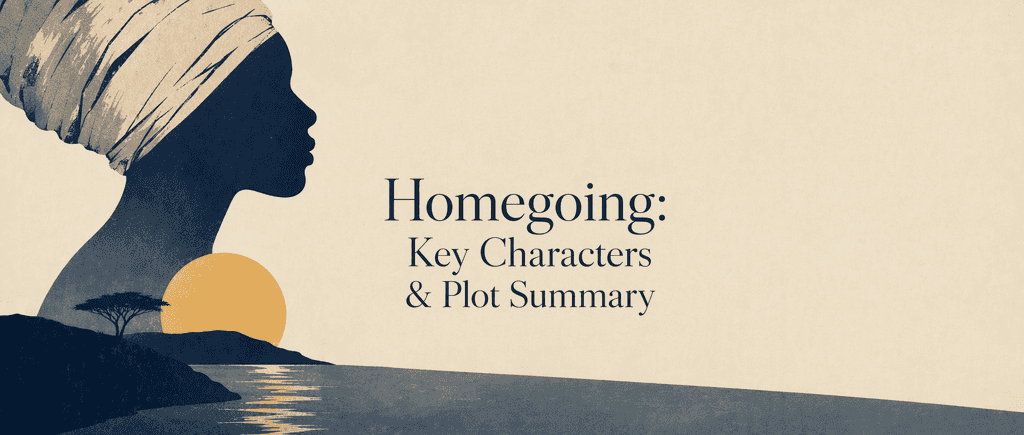
This image captures the novel's emotional core-the intertwining of past and present, loss and love, memory and hope. The journey continues, not just physically but emotionally and spiritually, as these survivors carry their stories forward into an uncertain but possible future, their experiences contributing to the broader tapestry of human migration and the universal search for safety, dignity, and belonging.