Tughlaq: The Brilliant Mind and Bloody Reign
Explore Girish Karnad's masterpiece as we dissect the tragic paradox of Mohammad bin Tughlaq, a visionary ruler whose utopian ideals descended into a nightmare of political intrigue and madness.

Miglior citazione da Tughlaq: The Brilliant Mind and Bloody Reign
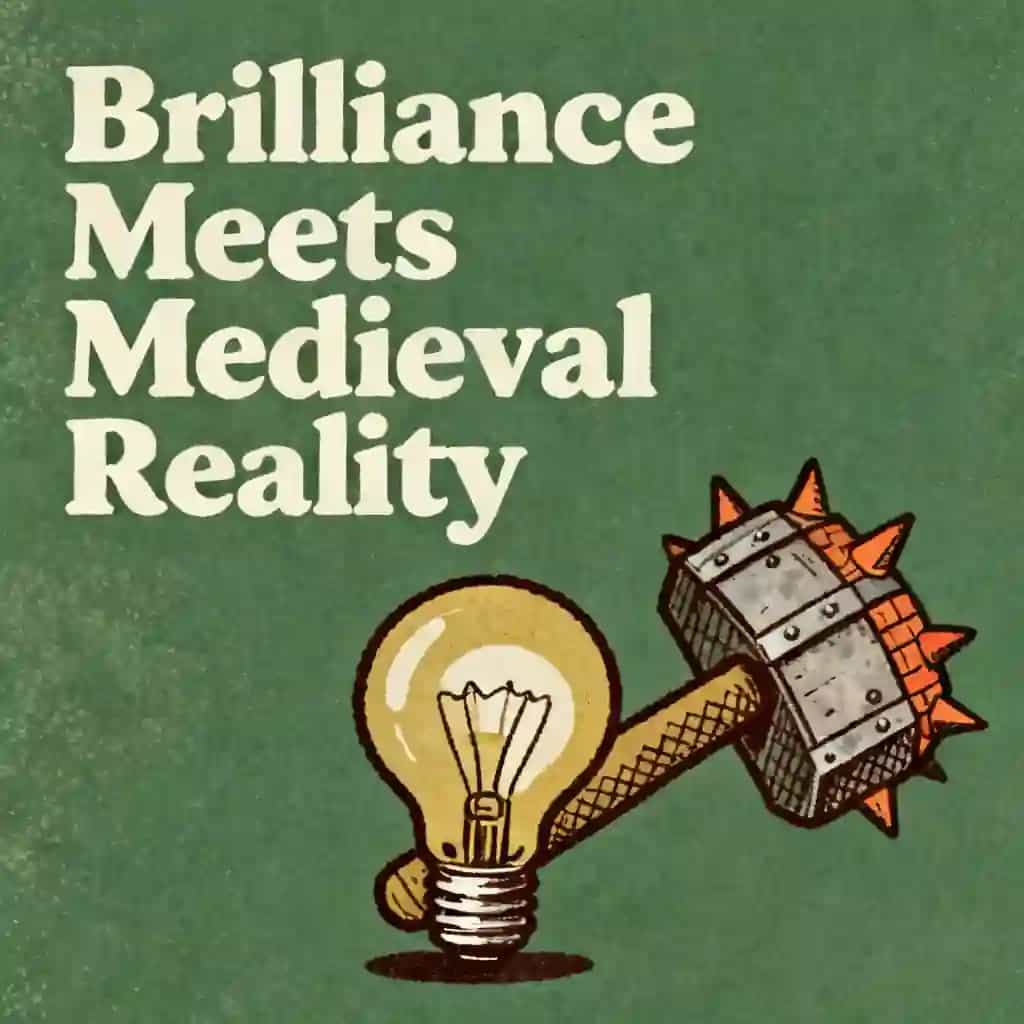
A leader can have the most brilliant, farsighted plan in the world, but if it doesn't account for the immediate reality of the people, it is doomed.
Generated by ajay charan
Tughlaq drama by garish kanad

Domande frequenti
Tughlaq earned these contradictory titles because of the massive gap between his intellectual brilliance and his practical failures. He was a deeply learned scholar of mathematics, philosophy, and medicine who envisioned a secular, just utopia. However, his methods for achieving these ideals—such as forced mass migrations and the introduction of token currency—resulted in widespread suffering, economic collapse, and mass death. His "madness" was seen as a form of uncompromising idealism that refused to account for human reality.
Written in 1964, the play mirrors the disillusionment that followed the high idealism of the Nehruvian era. Like Tughlaq, Prime Minister Jawaharlal Nehru was a charismatic intellectual who sought to modernize India through secularism and grand industrial planning. Karnad uses Tughlaq’s 14th-century failures to illustrate how top-down, rationalist "social engineering" can become alienated from the actual needs and deep-seated communal tensions of the populace, leading to corruption and frustration.
Tughlaq moved the capital from Delhi to Daulatabad to create a more centrally located administrative hub and to force a cultural synthesis between Hindus and Muslims. While logically sound on paper, the execution was a humanitarian disaster. By ordering the entire population to march hundreds of miles, Tughlaq turned a symbol of national unity into a "geography of disillusionment." The move resulted in countless deaths and illustrated the Sultan's tendency to treat his subjects as pawns in a grand symbolic game.
Tughlaq’s attempt to replace silver coins with copper and bronze was an early experiment in fiat money, based on the "currency of confidence" rather than the value of the metal itself. However, because he had already exhausted the people's trust through previous tyrannies, the public did not believe in the new coins. This led to mass counterfeiting and economic ruin. The failure highlights a recurring theme in the script: a leader cannot simply decree trust or logic if they are disconnected from the material reality of their subjects.
Chess serves as a metaphor for Tughlaq’s cold, analytical approach to governance. He views political rivals and religious leaders as pieces to be manipulated or sacrificed to achieve a "checkmate." While he is a master of this high-level intrigue, he is ultimately outmaneuvered by "rogue" characters like Aziz, who represent the unpredictable, dishonest reality of the common man. The symbol suggests that treating human lives as mere moves on a board leads to isolation, madness, and eventual defeat.
Creato da alumni della Columbia University a San Francisco
"Instead of endless scrolling, I just hit play on BeFreed. It saves me so much time."


"I never knew where to start with nonfiction—BeFreed’s book lists turned into podcasts gave me a clear path."


"Perfect balance between learning and entertainment. Finished ‘Thinking, Fast and Slow’ on my commute this week."
"Crazy how much I learned while walking the dog. BeFreed = small habits → big gains."
"Reading used to feel like a chore. Now it’s just part of my lifestyle."

"Feels effortless compared to reading. I’ve finished 6 books this month already."
"BeFreed turned my guilty doomscrolling into something that feels productive and inspiring."

"BeFreed turned my commute into learning time. 20-min podcasts are perfect for finishing books I never had time for."
"BeFreed replaced my podcast queue. Imagine Spotify for books — that’s it. 🙌"

"It is great for me to learn something from the book without reading it."
"The themed book list podcasts help me connect ideas across authors—like a guided audio journey."
"Makes me feel smarter every time before going to work"
 Ask ChatGPT
 Ask Claude
Creato da alumni della Columbia University a San Francisco
"Instead of endless scrolling, I just hit play on BeFreed. It saves me so much time."
"I never knew where to start with nonfiction—BeFreed’s book lists turned into podcasts gave me a clear path."
"Perfect balance between learning and entertainment. Finished ‘Thinking, Fast and Slow’ on my commute this week."
"Crazy how much I learned while walking the dog. BeFreed = small habits → big gains."
"Reading used to feel like a chore. Now it’s just part of my lifestyle."
"Feels effortless compared to reading. I’ve finished 6 books this month already."
"BeFreed turned my guilty doomscrolling into something that feels productive and inspiring."
"BeFreed turned my commute into learning time. 20-min podcasts are perfect for finishing books I never had time for."
"BeFreed replaced my podcast queue. Imagine Spotify for books — that’s it. 🙌"
"It is great for me to learn something from the book without reading it."
"The themed book list podcasts help me connect ideas across authors—like a guided audio journey."
"Makes me feel smarter every time before going to work"
"Instead of endless scrolling, I just hit play on BeFreed. It saves me so much time."
"I never knew where to start with nonfiction—BeFreed’s book lists turned into podcasts gave me a clear path."
"Perfect balance between learning and entertainment. Finished ‘Thinking, Fast and Slow’ on my commute this week."
"Crazy how much I learned while walking the dog. BeFreed = small habits → big gains."
"Reading used to feel like a chore. Now it’s just part of my lifestyle."
"Feels effortless compared to reading. I’ve finished 6 books this month already."
"BeFreed turned my guilty doomscrolling into something that feels productive and inspiring."
"BeFreed turned my commute into learning time. 20-min podcasts are perfect for finishing books I never had time for."
"BeFreed replaced my podcast queue. Imagine Spotify for books — that’s it. 🙌"
"It is great for me to learn something from the book without reading it."
"The themed book list podcasts help me connect ideas across authors—like a guided audio journey."
"Makes me feel smarter every time before going to work"
"Instead of endless scrolling, I just hit play on BeFreed. It saves me so much time."
"I never knew where to start with nonfiction—BeFreed’s book lists turned into podcasts gave me a clear path."
"Perfect balance between learning and entertainment. Finished ‘Thinking, Fast and Slow’ on my commute this week."
"Crazy how much I learned while walking the dog. BeFreed = small habits → big gains."
"Reading used to feel like a chore. Now it’s just part of my lifestyle."
"Feels effortless compared to reading. I’ve finished 6 books this month already."
"BeFreed turned my guilty doomscrolling into something that feels productive and inspiring."
"BeFreed turned my commute into learning time. 20-min podcasts are perfect for finishing books I never had time for."
"BeFreed replaced my podcast queue. Imagine Spotify for books — that’s it. 🙌"
"It is great for me to learn something from the book without reading it."
"The themed book list podcasts help me connect ideas across authors—like a guided audio journey."
"Makes me feel smarter every time before going to work"




![[genghis-khan-and-the-making-of-the-modern-world-by-jack-weatherford:c0000] Genghis Khan and the Making of the Modern World p1-1](/_next/image?url=https%3A%2F%2Fd1y2du6z1jfm9e.cloudfront.net%2Fassets%2Fpodcast%2Fgreen.png&w=1024&q=50)
![[genghis-khan-and-the-making-of-the-modern-world-by-jack-weatherford:c0002] Genghis Khan and the Making of the Modern World p1-1](/_next/image?url=https%3A%2F%2Fd1y2du6z1jfm9e.cloudfront.net%2Fassets%2Fpodcast%2Fpurple.png&w=1024&q=50)