Capitolo 1
The Lost Art of Connection in a World That Won't Stop Talking
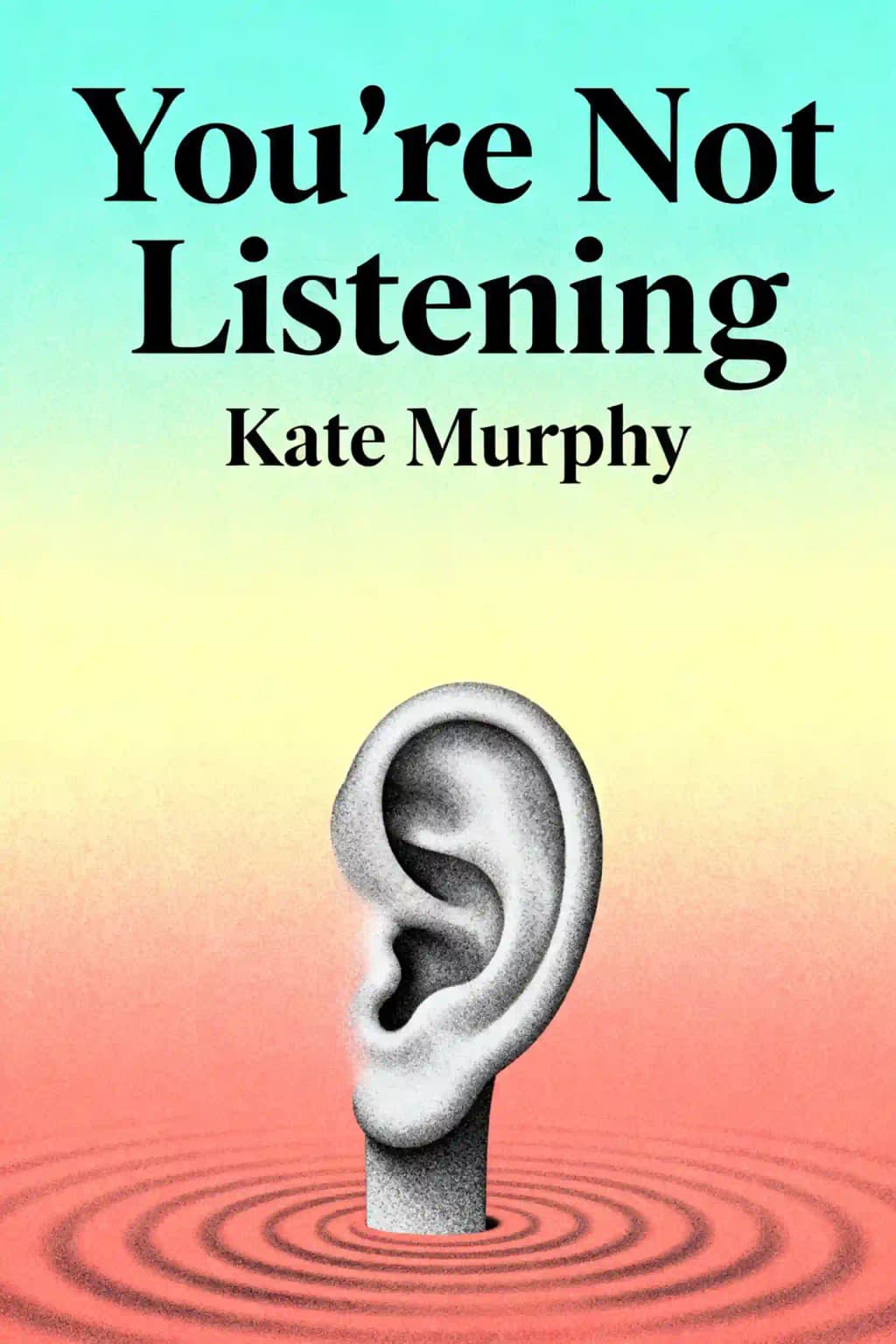
When was the last time someone truly listened to you? Not the polite nodding while checking a phone, but genuine, undivided attention that made you feel truly seen and understood? Kate Murphy's "You're Not Listening" has struck a cultural nerve precisely because this experience has become increasingly rare. The book has been praised by psychologists, relationship counselors, and business leaders alike for identifying what many feel but few articulate: we're experiencing a listening crisis. Celebrities from Oprah Winfrey to Adam Grant have recommended it as essential reading in our distracted age. Murphy, whose journalism career spans decades at publications like The New York Times and The Economist, spent years researching the science of listening and interviewing professional listeners-from CIA interrogators to focus group moderators-to understand why this fundamental human skill is disappearing and how we might reclaim it.
Capitolo 2
The Vanishing Art of Listening in Modern Life
We live in a paradoxical era where everyone has a platform but few feel heard. Social media has given us unprecedented opportunities to broadcast our thoughts while simultaneously reducing our capacity for meaningful exchange. The statistics are sobering: nearly half of Americans report lacking meaningful daily conversations, and loneliness has become so prevalent that the U.S. Surgeon General has declared it a public health epidemic. Suicide rates have climbed 30% in the United States since 1999 and 60% globally in 45 years. Recent studies show that the average person spends less than 10 minutes per day in meaningful face-to-face conversation, while spending over three hours on social media platforms.
This listening deficit begins early and permeates our developmental years. From childhood, we're conditioned to associate "Listen to me!" with unpleasant directives and punishment. Our educational system reinforces speaking skills through debate teams and public speaking courses but offers little training in listening. Even in professional development, presentation skills are prioritized over active listening techniques. Media showcases shouting matches rather than thoughtful dialogue, while politicians grandstand instead of engaging with opposing views. Popular talk shows and news programs frequently feature guests talking over each other, normalizing this behavior.
When Murphy asked people "Who listens to you?", most paused uncomfortably before naming only one or two people-typically a spouse or close family member. Others admitted to paying therapists, hairdressers, or life coaches simply to be heard. Many consider it "burdensome" to ask friends to listen to anything meaningful beyond social pleasantries. Research indicates that the average friendship conversation lasts only 10 minutes before switching speakers, with minimal deep engagement or follow-up questions.
Self-proclaimed "good listeners" often undermine their claims through multitasking during conversations, interrupting, finishing others' sentences, or quickly pivoting to their own experiences. Studies show that people typically interrupt within 17 seconds of someone else speaking, and 85% of people check their phones during conversations. In our culture of personal branding and self-promotion, silence feels like falling behind. The rise of "productivity culture" has transformed even casual conversations into networking opportunities, where listening is seen as passive and unproductive. But without genuine listening, we miss the wisdom within others and withhold the gift most desired by those who love us-our full attention. Workplace studies reveal that employees who feel heard are 4.6 times more likely to perform their best work, yet only 30% of workers feel their voices are valued.
The cost of this listening deficit extends beyond personal relationships into healthcare, where doctors interrupt patients within 11 seconds on average, leading to misdiagnoses and reduced patient satisfaction. In education, students retain only 25% of what they hear because they haven't developed strong listening skills, creating a cycle of poor communication that continues into adulthood.
Capitolo 3
The Neuroscience of Connection: What Happens When We Truly Listen
When we truly listen to someone, something remarkable happens in our brains. Neuroscientists using fMRI technology have observed a phenomenon called "neural synchrony"-the listener's brain activity begins to mirror the speaker's. This isn't just poetic metaphor; it's measurable science. Our brains literally sync up when we engage in deep listening, creating what Murphy calls "snatches of magic"-those moments of connection that make life meaningful.
This synchronization happens because listening engages multiple brain regions simultaneously. Wernicke's area processes language comprehension, while other regions interpret emotional tone, facial expressions, and body language. The right hemisphere generally processes emotional content of speech while the left handles linguistic content-explaining why someone might understand your words but miss your meaning.
Interestingly, our brains process speech at about 120-150 words per minute, but we can think at 400-500 words per minute. This "speech-thought differential" creates a fundamental listening challenge: our minds have excess capacity while someone speaks, leading to mental wandering. Good listeners use this extra bandwidth to process nuance rather than planning their response or mentally shopping for groceries.
The highest form of listening involves curiosity rather than judgment. When we listen with genuine interest rather than waiting to insert our opinion, we create space for authentic connection. This approach is exemplified by skilled clinicians who ask open questions like "What is it about the crying that bothers you?" instead of offering quick explanations or reassurances.
These meaningful connections form the foundation of our attachments in life. Unlike our eyes, which have lids, our ears remain perpetually open-suggesting that listening is essential to our very survival as social creatures.
Capitolo 4
Curiosity: The Secret Weapon of Exceptional Listeners
The best listeners share one fundamental trait: genuine curiosity about other people. Former CIA chief interrogator Barry McManus wasn't specially trained-he was born with natural curiosity. While most adults have lost their childhood inquisitiveness, McManus demonstrates how powerful genuine interest can be. He once got a Pakistani nuclear scientist to admit meeting Osama bin Laden not through harsh interrogation but through curious conversation. By asking open-ended questions about the scientist's background, family, and career journey, McManus created an environment of trust that led to unexpected revelations.
Our instinctive avoidance of uncertainty makes us cling to routines and assumptions, yet paradoxically, uncertainty and novelty make us feel most alive. The dopamine released during surprising encounters creates greater pleasure than planned interactions. Research from the University of Chicago proves that people who engage with strangers during commutes feel happier, despite our fears of rejection. In one study, train commuters who initiated conversations reported a 67% more pleasant journey than those who remained silent, even though most participants predicted the opposite outcome.
Curious people forget about their phones and books because they're fascinated by others' unpredictability. They listen well because they genuinely want to understand, connect, and grow-which makes their own lives more interesting too. As Murphy writes, "Curious people make the best conversationalists not because they have fascinating things to say, but because they want to hear what you have to say." This manifests in their body language, follow-up questions, and ability to remember details from previous conversations.
This curiosity-driven listening creates a virtuous cycle. The more genuinely interested you are, the more people reveal themselves. The more they reveal, the more interesting they become. The novelist Elizabeth Strout captures this perfectly: "People are always telling you who they are if you just pay attention." Studies show that people who feel truly heard are more likely to share meaningful information and form deeper connections.
Cultivating curiosity means approaching conversations with a beginner's mind-assuming you don't already know what someone will say or mean. It means asking questions that don't have predetermined answers and being willing to be surprised by what you hear. Practical techniques include: asking "what" and "how" questions instead of "why," showing genuine interest in others' expertise regardless of the topic, and practicing active curiosity by challenging your own assumptions about people you meet regularly.
The most successful leaders and relationship builders often credit their achievements to this fundamental trait. Warren Buffett, for instance, attributes much of his investment success to his insatiable curiosity about how businesses work and the people who run them. Similarly, television host Terry Gross has conducted over 13,000 interviews, maintaining her enthusiasm by approaching each conversation with fresh curiosity about what makes her guests unique.
Capitolo 5
The Assumption Trap: Why We Don't Listen to Those Closest to Us
Counterintuitively, the closer we are to people, the worse we often listen to them. Harvard sociologist Mario Luis Small found that over half the time, people confide pressing concerns to acquaintances rather than intimate partners. Why? They fear judgment or drama from those closest to them.
In long-term relationships, we develop mental shortcuts about our partners-what psychologists call "assumed similarity." We think we know exactly what they'll say and how they think, so we stop truly listening. As psychologist Judith Coche observes in her couples therapy practice, "People stop being curious about each other." Her year-long therapy groups transform even habitual "mansplainers" who never learned proper listening skills.
Yet Bishop Daniel Flores reminds us that complete understanding between people is impossible-his grandmother once remarked after 65 years of marriage, "I will never understand that man." This longing for perfect understanding often leads to relationship disappointment.
Beyond intimate relationships, we struggle with assumptions about strangers based on superficial categories-gender, profession, appearance, or political affiliation. These mental shortcuts create what Murphy calls the "Yeah, yeah, I got it" syndrome, making us listen selectively to confirm preconceptions.
Social signaling through bumper stickers, clothing choices, or social media profiles encourages these shortcuts, but listening helps discover the person behind the persona. As T.S. Eliot lamented about preparing "a face to meet the faces that you meet," true listening requires moving beyond superficial signals to understand someone's evolving reality.
The assumption trap is particularly dangerous because it's invisible to us. We don't realize we're filling in gaps with our own projections rather than hearing what's actually being said. Breaking free requires the humility to recognize that people-even those we've known for decades-can still surprise us if we give them the chance.
Capitolo 6
The Art of Response: Why "I Know How You Feel" Often Fails
Responding effectively to someone's troubles requires more than platitudes or making the conversation about yourself. When someone shares difficult news-like losing a job-generic responses like "I'm sorry" or "You'll find another job" feel dismissive, while "When I got laid off..." shifts focus to yourself. Research from communication experts shows people feel most understood when listeners provide thoughtful, interpretive responses rather than just nodding or offering quick solutions. Studies indicate that validation of emotions increases trust by 67% in interpersonal relationships.
Good listening means detecting what matters emotionally beneath words - a skill psychologists call "emotional attunement." The meaning behind someone's words is crucial-like a coworker mentioning an office move might indicate excitement about recognition, anxiety about heights, or sadness about distance. Not actively listening means missing these emotional undercurrents. For example, when someone says "I'm fine" after a setback, their tone, body language, and context often tell a different story that requires deeper attention.
Former FBI hostage negotiator Gary Noesner describes listening as understanding "two concentric circles"-facts inside, surrounded by more important feelings and emotions. Through his 30-year career, his success came not from persuasive arguments but from genuinely hearing people's perspectives. He recalls a particular 12-hour standoff where simply acknowledging a perpetrator's sense of injustice led to peaceful resolution. When we listen effectively, we become incredibly likable-Noesner found perpetrators surrendered not because of what he said but how attentively he listened.
The most effective responses acknowledge both the content and the emotional weight of what's being shared. Instead of "You'll be fine" or "That happened to me too," try "That sounds really challenging. What's been the hardest part?" This approach validates feelings while inviting deeper sharing. Other powerful responses include "Help me understand more about..." and "What does this mean for you?" These questions demonstrate engagement while allowing the speaker to elaborate on their experience.
Murphy notes that many mass shooters share a profound sense of alienation and a belief that no one listened to them. While this doesn't excuse their actions, it highlights the profound human need to be heard and understood. Studies of workplace violence show that 82% of perpetrators had previously attempted to communicate their distress to others but felt ignored. When we listen effectively, we satisfy this fundamental need and often prevent problems from escalating. Active listening creates psychological safety, reduces workplace conflicts by 48%, and builds stronger community bonds.
Effective listening also involves recognizing cultural differences in communication styles. What might be considered attentive listening in one culture could be perceived as intrusive or disrespectful in another. For instance, maintaining direct eye contact, while expected in Western cultures, may be considered aggressive or disrespectful in some Asian cultures.
Capitolo 7
Bridging Divides: Listening Across Political and Ideological Boundaries
Our brain treats opposing viewpoints as existential threats. Harvard Law professor Gillien Todd teaches her students to maintain an internal stance of curiosity when negotiating, but many fear that truly understanding opposing views might weaken their own positions. This fear is neurologically real-fMRI scans show that when deeply held beliefs are challenged, our brains activate the same regions as when we're physically threatened.
This explains why political discourse has deteriorated so dramatically. College students increasingly support shouting down speakers they disagree with, politicians refuse to consider opponents' proposals, and social media allows people to create insular realities where they never encounter challenging views. The Pew Research Center found that over half of Democrats and nearly half of Republicans actually fear members of the opposing party.
Organizations like the National Institute for Civil Discourse report surging requests to mediate political conflicts in families, workplaces, and churches. The solution lies in cultivating curiosity instead of hostility. When feeling defensive, ask questions to understand how others reached their conclusions rather than trying to expose flaws.
Ralph Nichols advised listening for evidence you might be wrong rather than looking to poke holes in others' arguments. This approach engages higher-order thinking, which reduces activity in the amygdala-the brain region responsible for threat responses. Research shows an inverse relationship between amygdala activity and careful listening.
John Keats called the ability to exist comfortably with uncertainty and contradictions "negative capability"-a quality essential to good listening. In psychology, this is known as cognitive complexity, which correlates with self-compassion and creativity while reducing dogmatism. Steve Jobs recognized this value, famously hiring people who would challenge his ideas and even creating an award for employees who best stood up to him.
Capitolo 8
The Power of Professional Listeners: What We Can Learn from Experts
Some of the most valuable insights about listening come from those who do it professionally. At NPR's Fresh Air, host Terry Gross interviews subjects while three producers listen intently, each catching different elements. This collaborative approach recognizes that we all hear conversations differently.
Gross's talent lies in nudging guests away from tired talking points into authentic territory. She establishes trust by demonstrating she's done her homework and respects boundaries, telling guests they can stop her if she ventures into uncomfortable areas. These are techniques anyone can emulate: demonstrate interest, find what excites people, and respect boundaries.
Focus group moderator Naomi Henderson stands as another master listener. At 76, she's moderated nearly 6,000 focus groups over five decades, listening to more than 50,000 people. Her work shaped the modernized Aunt Jemima, the American Express centurion, and KFC's "We Do Chicken Right!" slogan. Henderson's genius lies in asking questions that don't rob people of their stories. Rather than asking "Why do you shop late at night?" which makes people defensive, she invites stories: "Tell me about the last time you went to the store after 11:00 p.m."
This approach revealed unexpected insights like one quiet participant who admitted she shopped late after smoking marijuana, seeking "a menage a trois-me, Ben, and Jerry." Henderson's exceptional listening skills were honed through childhood experiences as a mixed-race military child who attended fourteen elementary schools before age ten and helped integrate her Washington D.C. middle school in the 1950s.
For Henderson, the hardest part of listening is resisting the urge to insert her own viewpoint. She maintains the "listener's demeanor"-calm, interested, accepting, with relaxed body language that never suggests impatience. "The real secret to listening I've learned is that it's not about me," she says. "I'm holding my cup out in front of me. I want them to fill my cup and not pour anything in their cup."
Capitolo 9
Support vs. Shift: The Conversational Responses That Make or Break Connection
British politician Benjamin Disraeli mastered what sociologist Charles Derber calls the "support response"-focusing attention on the speaker rather than shifting it to himself. This skill made him beloved by everyone from Queen Victoria to working-class voters. Lady Randolph Churchill (Winston's mother) famously noted that after dining with Disraeli's rival Gladstone, she thought him the cleverest man in England, but after dining with Disraeli, she felt like the cleverest woman.
Support responses encourage elaboration and understanding, while shift responses (more common) redirect attention to the respondent. Research indicates women are generally viewed as more open and empathetic listeners, focusing more on relational information and gaining more trust and self-disclosure. However, this gender difference may be due to cultural influences rather than inherent traits.
Listening to others' emotions can be uncomfortable-negative emotions are perceived as significantly louder than positive ones, and negative interactions have five times more impact than positive ones. This explains our instinct to avoid emotional conversations or quickly shift them to more comfortable territory.
Beyond narcissistic shift responses, there's another type where people try to solve problems rather than truly listening. Authors Crowe and McDowell advise against suggesting you know how someone feels, identifying causes, telling them what to do, minimizing concerns, forcing positivity, or admiring their strength when someone is sharing difficulties.
The Quaker practice of "clearness committees" demonstrates the power of supportive questioning. Parker Palmer's experience with such a committee helped him avoid taking a job for the wrong reasons through deep listening and open questions. The Center for Courage & Renewal now teaches these "faithful" or "open and honest" questions that have no hidden agenda of fixing or advising.
Good listening helps people find their own solutions. Research shows children and adults develop better problem-solving abilities when explaining solutions to attentive listeners. Asking exploratory questions builds intimacy. Psychologist Arthur Aron's experiment with 36 personal questions between strangers created such closeness that some participants later married.
Capitolo 10
Protecting Our Listening: Physical and Environmental Challenges
Our listening abilities face unprecedented threats in modern environments. The World Health Organization now calls teenagers "Generation Deaf" due to chronic earbud use, warning that 1.1 billion young people risk hearing loss. About 15% of Americans (48 million people) have hearing loss, with 65% under age sixty-five.
Many don't realize they're losing hearing until it's severe because the brain fills in missing words-often inaccurately. This leads to mishearings or "mondegreens" in song lyrics. Hearing loss leads to irritability, social withdrawal, loneliness, reduced job performance, and diminished health-primarily because it prevents human connection.
While normal conversation (60 decibels) causes no damage, high-volume earbuds (100 decibels) can permanently damage hearing in just fifteen minutes. Even moderate volume (88 decibels) damages hearing after four hours. Many everyday activities can damage stereocilia: drying hair, using blenders, rock concerts, noisy restaurants, and power tools.
Beyond physical hearing, our attention spans have dropped from twelve to eight seconds since 2000-shorter than a goldfish's nine seconds. Media companies have adapted with briefer content, and digital platforms deliberately exploit our psychology to capture attention through sophisticated design that plays on social anxieties and vanity.
This constant digital bombardment has reduced the time people spend listening to each other by nearly half-from 42 to 24 percent of waking hours. Even recorded speech is consumed at accelerated speeds through "podfasting." After regular exposure to faster speech, normal conversation pace feels unbearably slow.
Modern environments further impede listening. Open-plan offices create constant noise, restaurants average 80 decibels (conversation is 60), and retail stores blast music to encourage impulse purchases. Despite what we believe, multitasking is impossible-each input degrades attention, making meaningful listening increasingly difficult without deliberate effort to create quiet, interruption-free spaces.
Capitolo 11
The Ethical Dimension: Listening as a Moral Act
Listening is ultimately an ethical act-a way we demonstrate respect and acknowledge others' humanity. As philosopher Emmanuel Levinas believed, listening to the "other" reminds us of our common vulnerability and imposes an ethical duty. When we prioritize self-promotion over listening, we lose connection and diminish what we can achieve together.
People tend to regret not listening more than listening-a "sweet spot" for regret since it's under our control but can't be redone once the opportunity passes. Ghosting-cutting off communication without explanation-is particularly painful. Research shows it provokes more anger and resentment than other breakup strategies.
Father Jorge Gomez, who hears confessions for hours daily at the Basilica of Our Lady of San Juan del Valle, believes we're experiencing a "crisis of listening"-people desperately need someone to hear them. This phenomenon reflects our fundamental human need to be heard. When something significant happens, our first instinct is to tell someone.
Listening heightens awareness and deepens our experience of life. Without it, we exist in a muted cocoon of unquestioned beliefs. Today's discourse often resembles what Piaget called the "collective monologue" of preschoolers-people talking at rather than with each other.
Though often seen as talking's meek counterpart, listening is actually the more powerful position. It's how we learn truth and detect deception. Being a good listener doesn't mean suffering fools indefinitely-it helps identify foolishness and prevents becoming foolish ourselves.
In our frenetic culture, listening requires slowing down, but it's the only path to what we truly want: to understand and be understood. As Murphy concludes, "Listening is not about teaching, shaping, or critiquing, but about experiencing the experience of another person." In that shared experience lies the essence of human connection-the thing we all ultimately seek.