Capitolo 1
Into the Heart of the Wild: Where Humanity Meets Nature's Raw Truth
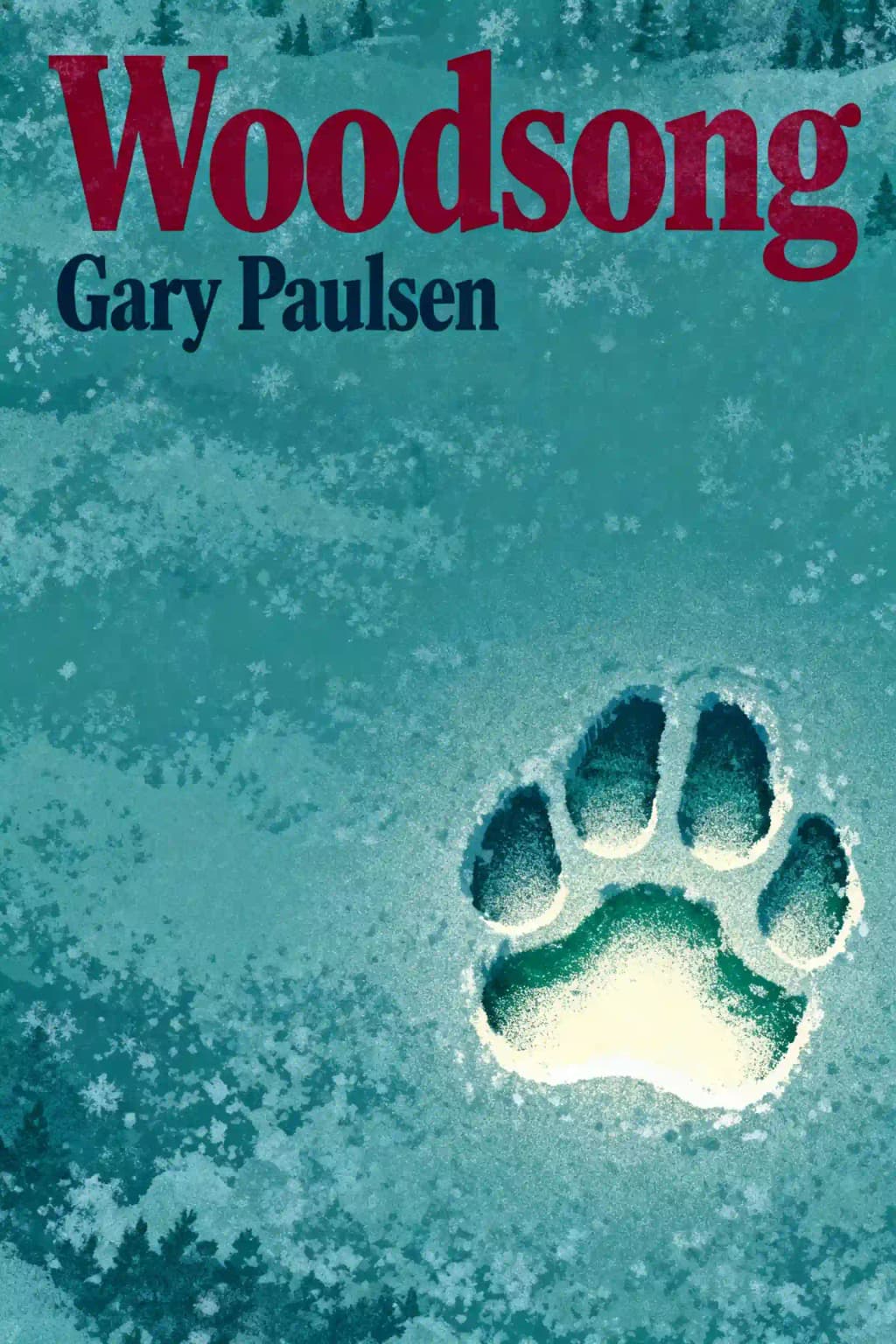
In the frozen wilderness of northern Minnesota, Gary Paulsen experienced an awakening that would forever change his relationship with the natural world. Until his forties, Paulsen had been a hunter and trapper who, despite spending most of his life in forests, understood "almost nothing about the woods." His transformation began with a brutal encounter-witnessing wolves taking down a deer in a killing far more violent than anything portrayed in documentaries. In that moment, looking into the blood-covered face of a wolf, he realized: wolves aren't right or wrong-they simply are. This epiphany sparked Paulsen's journey from exploiter to observer, culminating in "Woodsong," a memoir that has captivated readers since its 1990 publication. The book has become required reading in many schools, praised for its unflinching honesty about wilderness life. Even celebrities like Nick Offerman have cited it as influential in shaping their understanding of humanity's place in nature. What makes Paulsen's work so compelling isn't just his adventures with sled dogs or his participation in the grueling Iditarod race-it's his rare ability to articulate the profound lessons learned when humans strip away civilization's comforts and truly connect with the wild.
Capitolo 2
The Awakening: From Hunter to Observer
I understood almost nothing about the woods until nearly too late. Though I'd spent most of my life in forests or at sea, hunting small and large game, I learned nothing. The paradox is that many who enjoy the woods spend their time trying to kill parts of it. This contradiction defined my relationship with nature for decades-I was a hunter and trapper who believed in fairy-tale versions of nature where nothing really got hurt.
Everything changed one December morning while running my dog team around a lake on my trapline. The winter day was perfect-ten below with sparkling ice crystals, my eight-dog team working flawlessly. Suddenly, a white-tailed deer burst from the willows in a shower of snow, the stink of fear overwhelming as she crossed our path with bulging eyes and mouth open wide. Behind her came seven wolves, completely ignoring me, focused only on their prey.
The deer fled onto thin ice, crashed through, managed to scramble out, but the wolves caught her. What followed wasn't the clean, quick death portrayed in nature documentaries. Two wolves held her by the nose while others tore at her rear, pulling out her insides while she remained standing, alive. When I could bear no more, I yelled. The wolves paused-one standing on hind legs, head covered in steaming blood-and looked at me. In that moment, I understood: wolves aren't wrong or right-they just are. With that small understanding came my desire to truly learn about all things in the woods.
This pivotal moment marked my transformation from someone who took from nature to someone who sought to understand it. I continued running my trapline, but increasingly found myself questioning the ethics of trapping. Columbia, one of my sled dogs, provided the final push when I witnessed her cleverly pranking Olaf, another dog, by pushing a bone just barely out of his reach and then seemingly laughing at his frustration. That display of complex humor made me realize if dogs could think this way, so could wolves, deer, beaver, and all animals. I couldn't kill anymore.
Still, I maintained an imaginary trapline as justification for running the dogs until I discovered the Iditarod race-a new purpose that would align with my evolving relationship with nature and my beloved sled dogs.
Capitolo 3
The Soul of a Sled Dog: Lessons in Humility
I was so ignorant about running dogs that I didn't know what I didn't know. With seven dogs pulling my sled, I imagined myself as Sergeant Preston from the old radio shows, expanding my trapline to nearly sixty miles. Despite sleeping with these animals-sometimes bringing them into my tent on extremely cold nights, their hearts beating against me through my sleeping bag-I wasn't truly learning about their nature.
One frigid night about twenty miles from home in forty-below temperatures, I decided to run home rather than camp. What I thought would be a three-hour journey became a nine-hour ordeal through new snow and hilly country with a five-hundred-pound sled. Early in the run, Storm-my most reliable dog who pulled relentlessly from some primitive core-began spraying bright red blood in the snow. Horrified, I tried everything: carrying him on the sled, letting him trot alongside on a rope. But Storm fought desperately to return to his position in harness. Finally, I realized I had to let him do what he needed-pull. For seven more hours he ran without faltering, teaching me that I understood nothing about the drives that make these animals work. The blood that terrified me meant nothing to Storm compared to his need to pull with the team.
This lesson in humility continued when my entire team once turned against me during a blizzard. My leader Cookie kept trying to guide us safely, but I stubbornly challenged every decision, believing I knew better. After hours of my interference, the team grew increasingly uncooperative. When I forcibly redirected Cookie over a ridge she knew was dangerous, we all paid the price-tumbling down a steep drop into a gully, tangled in a heap of dogs, sled and gear.
After repacking everything, the team's silent treatment was unnerving. When I was ready to continue, all eight dogs simultaneously lay down in the snow and refused to move-for eighteen hours. I had crossed a line, and they were teaching me who really ran the show. In that wild place, they made it clear: ignore their wisdom at your peril.
The real difference between people and animals is fire-we create it, they don't. This became clear when I made a small campfire during a training run with year-old pups. The young dogs, who'd been fascinated by cows, grouse, and squirrels all day, went crazy with fear at the sight of flames. Yet within an hour, they progressed from genetic fear to understanding to actually mourning when the fire died down, singing their sad song as they stared at the empty fire pit.
Capitolo 4
Storm's Legacy: The Language Beyond Words
Storm was my first dog and greatest teacher. Brindle-colored with bear-like rounded ears, he possessed both tremendous pulling power and a sense of humor. He'd snort wind into other dogs' ears during runs and cleverly hide my belongings by burying them in snow. Storm could judge the weight of sled loads with uncanny accuracy, once growling directly at a heavy stove we needed to transport.
Over thousands of miles together, Storm developed a ritual of carrying sticks during runs-a communication system between us. If I pushed too hard, he'd drop his stick, refusing to take it back until I corrected my mistake. When he grew old and blind, he retired but stayed in the kennel, still greeting me with his stick. When death came, I had mistakenly left him chained, preventing him from facing east as dying animals prefer. Despite my failure, his last act was one of forgiveness-he died with a stick in his mouth, his final message that everything was still right between us.
The dogs' capacity for running defies belief. Once I let them set their own pace, and they ran for seventeen hours straight-175 miles without tiring. This wasn't just physical endurance but joy in their purpose. They weren't just working animals; they were teachers showing me how to live fully in the moment, how to find purpose in doing what you're meant to do.
These lessons extended beyond running. Fred, our yard dog who gained unrestricted access to the kennel after being neutered, taught me about animal intelligence when he systematically retrieved food he'd buried throughout the property over the previous year after being put on a diet. When his weight dropped too much, his surgical strike bite to my kneecap delivered a clear message about proper care. With dogs, communication happens on multiple levels-some obvious, some subtle-but always honest.
Through these relationships, I began to understand that the animals I'd once seen as simple creatures to be used were in fact complex beings with their own wisdom, humor, and ways of understanding the world-often surpassing human perception in the wilderness.
Capitolo 5
Mysteries of the Woods: Beyond Human Understanding
Sometimes the woods reveal mysteries that defy explanation. Once while mushroom hunting, I watched in horror as a red squirrel-normally a pine cone eater-brutally killed and devoured a chipmunk that had been approaching me for a cookie. One moment of senseless violence I've never seen before or since.
Night brings its own ghosts. During a midnight run with my eight-dog team, my headlamp failed, plunging us into complete darkness on an unfamiliar logging trail. Suddenly the dogs stopped and began singing their death song-a haunting melody I'd heard only once before when an old dog died. Before us glowed an eerie green-yellow light emanating from a standing form. Terrified but curious, I approached to discover it was merely a phosphorescent rotting stump. My fear dissipated only when my dog Fonzie sniffed it and casually peed on it.
Fresh snow usually reveals all secrets, yet once I found where a fox had killed a grouse in a clearing's center without leaving a single track approaching or departing-an impossible mystery I spent an hour trying to solve. Another time, I witnessed cedar waxwings demonstrating remarkable organization, lining up on branches and passing high-bush cranberries down their rows until each bird had one before eating in unison.
On a frigid night run with my sled team, the dogs suddenly stopped, nervous and whining. Ahead stood a doe, impossibly still. Drawing closer, I discovered she had frozen solid while standing-dead but upright, guarding the winter night. The dogs refused to look at her as we passed, spooked by this inexplicable sight.
These woodland mysteries continue to haunt me, defying simple explanation. They remind me that despite our technological advances and scientific understanding, nature holds secrets that human minds may never fully comprehend. The wilderness operates by ancient rules that we can observe but perhaps never truly understand-a humbling realization for someone who once believed he could master the woods through hunting and trapping.
The more time I spent observing rather than taking, the more these mysteries revealed themselves. Early summer brought magical moments, like when a fawn walked into shallow water and touched a four-year-old boy's outstretched finger-youngster meeting youngster-while the mother deer watched nervously from the brush. We sat in grateful silence afterward, awed by this Disney-like encounter that seemed to bridge the gap between our worlds.
Capitolo 6
The Eskimo Guide: Between Reality and Vision
The wind screamed as we cut through the night. It had been brutally cold-fifty-three below one night, forty-five below for two more, never rising above twenty below, with wild northwest winds the entire week. We got caught in the worst of it eighty miles from home. I wasn't dressed for such extreme cold, and two dogs had frostbitten ears. After treating them with ointment, I decided to wait out the weather, building a snow shelter with a tarp lean-to and digging snow caves for the dogs.
On the third morning of this ordeal, I became violently ill-perhaps from flu or the dog fat I'd been eating out of desperation. High fever and delirium set in, and I began hallucinating. In my confused state, a man I didn't know "helped" me harness my team. He was short, thick through the middle with curved shoulders, and had a flat, oval face with gentle eyes. He helped shake the dogs from their snow caves despite their reluctance to face the wind.
Throughout that nightmarish journey home, I was too sick to stand, eventually tying myself to the sled and later crawling inside my sleeping bag. The mysterious Eskimo man appeared repeatedly-pulling my lead dog from a drift, untangling fighting dogs, helping after a crash, and putting gear back in the sled.
I wouldn't see this man again until years later during the Iditarod race when I hit a place called the Burn-a ninety-mile stretch of devastated land where forest fire had destroyed everything. As warned, there was virtually no snow, just rocks, dirt, dead grass and fallen burned trees. All night we slammed from tree to tree, with me cutting through each obstacle with a bow saw.
Around midnight, hallucinations returned. I encountered another musher threatening an empty sled, convinced he'd carried a lazy passenger for two hundred miles. My exhausted brain wondered if everything-the race, the dogs, my life-was just a hallucination when suddenly the dogs stopped. An enormous bull buffalo stood before my leader, smelling his head. I realized the dogs wouldn't stop for something that wasn't real.
Later, in a large clearing, snow began falling and wind kicked up until I couldn't see the dogs. Wilson lost the trail and wandered in a circle, leading us into a box canyon. We'd run thirty or forty miles off trail, and snow had covered our tracks. I sank to my knees in surrender when my Eskimo friend appeared, took Wilson's harness and guided us. Hours passed with him appearing whenever I hesitated until I spotted fresh sled tracks.
Was he real? A hallucination? A spirit guide? I couldn't say for certain, but his presence-whether physical or metaphysical-saved me twice in moments of desperate need. The line between reality and vision blurs in the extreme conditions of the wilderness, where the mind and body are pushed beyond normal limits. Perhaps some mysteries aren't meant to be solved but simply experienced.
Capitolo 7
The Iditarod: A Journey Beyond Civilization
The Iditarod-a focused madness where mushers travel from Anchorage to Nome, over eleven hundred miles across Alaskan wilderness, mountain ranges, the Yukon River, and along the Bering Sea coast. In our modern world of planes, computers, and comfort-controlled environments, this elemental challenge seems almost impossible.
At dawn on the second day, we emerged from dark forest to a spectacular sight-the entire Alaska Range spread before us, with Mount McKinley towering in dazzling white as the sun warmed our backs. The night's madness faded as front-runners pulled ahead, leaving us to settle into the serious business of covering more than a thousand miles.
The dogs were magnificent athletes, displaying incredible endurance, joy and intelligence. Their needs were constant-snacks hourly, three hot meals daily, shoulder rubs every hour, and constant foot care. With fifteen dogs, that's sixty feet to monitor, rub with ointment, and protect with booties when necessary.
After two sleepless nights, sleep deprivation hit hard and I began hallucinating. Unlike dreams or delirium, these visions came with eyes wide open, roaring with complete realism-a unique exhaustion born from the intense focus of the race. I saw my dogs running with their feet and legs engulfed in flames. Terrified, I stopped to put out fires that weren't there, eventually reconciling myself to the impossible vision. The hallucinations grew more elaborate-I followed non-existent rivers, chased phantom lights, and even had a boring man in a trench coat sitting on my sled talking about federal educational grants until I yelled at him to shut up.
We crossed the Alaska Range, the highest mountain range in North America. As we climbed above timberline to Rainy Pass checkpoint, where thirty other teams rested, I entered a state of almost idiotic bliss. I was tired beyond anything I'd known-beyond army training, beyond all experience-but the team was healthy, everyone was eating and drinking, and the scenery was breathtakingly beautiful.
I was steeped in beauty, feeling like I'd gone back twelve thousand years, running over mountains with dogs like a true human before civilization's clutter. It felt like becoming a cave painting.
Capitolo 8
The Transformation: Becoming One with the Team
The Yukon River run was horrific-180 miles straight north into the wind, up the frozen highway that cuts through Alaska. All the cold air in the state seemed to settle here, hitting like a hammerblow at forty or fifty below. I turned backward on the sled, hooked my elbows and rode, but it was still too cold. I put on all my extra clothes, but the cold cut through everything. I checked the dogs-no signs of frostbite-so we continued through the night, with nowhere to stop but flat ice and wind.
Another brutal night on the Yukon, the cold descended like death itself. I had to run fifty paces, ride fifty, run fifty, ride fifty all night to maintain my body temperature. When I pulled down my wool masks to breathe better, the raw air froze my throat, bursting blood vessels. My throat produced so much mucus I had to clear it with my finger. When I spat it on the ice, the wheel dogs turned and ate it, which made me vomit-which they also ate. The entire day and night became an endless cycle of hacking blood and mucus, vomiting, and hallucinating.
But everything changed on day twelve. We ran downhill from the river toward the Bering Sea in perfect conditions-zero degrees, sunshine, and ninety miles of downhill trail. The dogs ran to my mind. I'd entered an altered, primitive state. When we hit a long uphill grade, I loped alongside the sled with the same rhythm and flow as the dogs. We'd become one, and I knew we could run forever into the wind, across the short grass, for all time.
At an Eskimo village on the coast, an older man took me in for the night, feeding me with great gentleness. As my eyes closed, I saw him walk by wearing only long underwear, looking like the same man who saved me in the Burn and when I was sick-curved, strong shoulders and quiet strength.
The ocean affected us all. Though twenty below, it was a soft cold, and the dogs were energized by it. They refused to rest, constantly hitting their harnesses. Blue, one female, playfully shredded her harness whenever I was slow with her food.
At the fourth-to-last checkpoint, I learned the race had officially ended. The winner was being paid and celebrated while we still had 200 miles to go. And we didn't care. We ran the hills easily, no longer concerned with winning or losing-only the dance mattered. The beauty remained staggering-clouds of ptarmigan rising like white snowflakes, arctic hares standing on hind legs watching us pass. The dogs, humming with energy, even chased a hare down a long hill in a thrilling ride before wheeling back in a single, sweeping circle, unconcerned about failing to catch it.
Capitolo 9
The Journey's End: A New Beginning
We ran along the rugged Alaskan coast, beside towering granite cliffs that dropped straight into the Bering Sea, until the encroaching ocean water forced us up and over a snow-covered mountain, then down across another windswept, icy bay. The relentless Arctic wind acted as a powerful sail, repeatedly pushing my sled sideways across the ice as I desperately rode the brake. The dogs - especially Cookie and Storm up front - seemed to smell Nome now, running with renewed purpose along the forty-mile beach stretch, their breath creating small clouds in the frigid air.
As darkness began to fall over the landscape, I could see Nome's twinkling lights twenty miles ahead, a constellation of warmth in the vast darkness, and I pulled the team to a stop. In that moment, I realized I didn't want to finish. The Iditarod had become something mythical, something that didn't seem humanly possible to complete, yet here we were, doing it. Even crossing the treacherous Alaska Range, running through the dangerous Burn, traversing the desolate interior, mushing along the coast through remote villages like Kaltag, Unalakleet, and Koyuk - it never seemed like something mere mortals could actually accomplish. And now, facing the end, I felt an overwhelming reluctance to let it go.
I seriously considered turning around, extending our journey into the wilderness, until my wife's voice broke through the spell of the moment. We continued toward the finish line where Cookie, my trusted leader, stopped short before the ceremonial arch, momentarily afraid of the cheering crowd and flashing cameras. I took time to hug my wife, embrace my son, and individually thank each dog - Cookie, Storm, Wilson, Gus, and the others - before telling the mayor of Nome something that surprised even me: "We'll be back to run it again." Deep in my heart, I knew it was true.
The journey had fundamentally transformed me. I was no longer the same man who had started this adventure understanding almost nothing about the woods or himself. Through my remarkable dogs - Storm with his unwavering loyalty, Cookie with her natural leadership, Wilson with his endless determination, and all the others - I had learned to see the world through different eyes. The wilderness had methodically stripped away my civilized pretensions and revealed fundamental truths about myself and nature that I could never have discovered in the comfort of civilization.
In the end, "Woodsong" transcends the simple tale of a man and his sled dogs running through the wilderness. It's a profound journey from ignorance to deep understanding, from thoughtless exploitation to genuine respect, from isolation to profound connection with the natural world. It's about discovering that the perceived boundary between human and animal consciousness isn't as definitive as we might think, and that sometimes, in the heart of the wild, stripped of our civilized armor, we can find our most authentic selves. The trail had taught me that true wisdom often comes not from conquering nature, but from learning to move in harmony with it.