Capitolo 1
The Art of Seeing What Matters
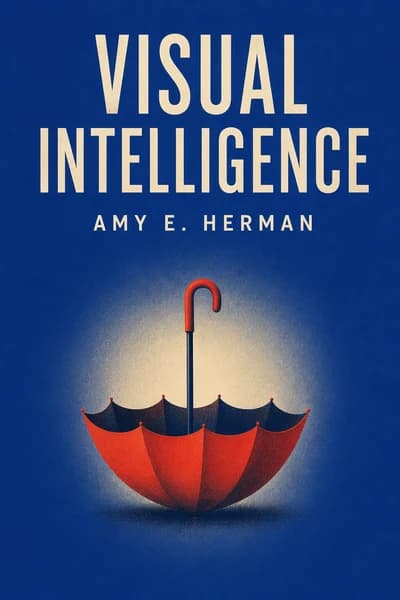
When a doctor misses a tumor on an X-ray, a police officer fails to notice a weapon, or a CEO overlooks market signals before a crash, these aren't just simple mistakes-they're profound failures of visual intelligence. Amy Herman's groundbreaking approach to observation has transformed how FBI agents, emergency room doctors, and Fortune 500 executives perceive their world. Her book "Visual Intelligence" has become required reading at Yale Medical School, the Pentagon, and Google's innovation labs. What began as a bold experiment bringing police officers to art museums has evolved into a methodology that's helped solve murders, prevent terrorist attacks, and save countless lives. Celebrities from Gwyneth Paltrow to Richard Branson have praised Herman's techniques, with Branson noting, "I've built my businesses on noticing what others miss-this book teaches exactly that skill." The Wall Street Journal called it "the most important book you'll read this year," while the New York Times described it as "a masterclass in attention that could change how you see everything."
Capitolo 2
The Power of Truly Seeing
When Derreck Kayongo noticed hotels discarding barely-used soap bars daily, he didn't just see waste-he saw opportunity. Having grown up in African refugee camps where soap was precious, he recognized what others missed: millions of people die yearly from diseases preventable by handwashing, while hotels throw away perfectly good soap. This realization led him to found the Global Soap Project, which has since recycled over 100 tons of hotel soap and distributed it to people in 32 countries.
This ability to see what others miss defines modern success stories from Bill Gates to Oprah Winfrey. It's how a housekeeper spotted a sex trafficking victim, a waiter prevented a bombing, and inventors created products like Velcro. As Steve Jobs noted, creative people "just saw something" others didn't.
Leonardo da Vinci attributed all his accomplishments to saper vedere-"knowing how to see"-what we now call visual intelligence. But seeing involves more than just open eyes; it's a complex neurobiological process. Meeting with Princeton neuroscientist Dr. Sebastian Seung revealed that seeing engages 25% of our brain and over 65% of all brain pathways. The process begins when light passes through the pupil and is converted to electrical patterns by the retina, which isn't merely like camera film but is actually part of the brain itself, formed from neural tissue in utero.
Our ability to see and interpret visual information depends entirely on our brain's neural connections. Mental inactivity slows neural transmission, decreasing visual processing speed, while stimulating environmental input increases cortical growth at every age. To develop these connections, we can use art as a training tool. Looking at paintings might not seem cutting-edge, but art provides "exorbitant stockpiles of experience and information." If you can analyze what's happening in artwork, you can apply those same skills to boardrooms, crime scenes, and everyday life.
Unfortunately, we often operate on autopilot, missing crucial details around us. Alexander Graham Bell once confessed to being inattentive after discovering a moss-covered valley on his own property he'd never noticed before: "We are all too much inclined to walk through life with our eyes shut." In our age of distraction, the average person checks their phone 110 times daily-nearly every 6 seconds in the evening. These perpetual distractions hurt our intelligence; a King's College study found distracted workers suffered a 10-15 point IQ loss-greater than from smoking marijuana.
We've also allowed technology to become a sensory substitution. As Beyonce once scolded a fan too busy recording her on his phone to sing along: "I'm right in your face, baby. You gotta seize this moment. Put the damn camera down!" By trusting our inherent observation skills rather than devices, we can discover possibilities around and inside us that we never knew existed.
Capitolo 3
The Difference Between Seeing and Observing
Mastering observation requires distinguishing between passive seeing and active assessment. Dr. Joseph Bell, the real-life inspiration for Sherlock Holmes, demonstrated this by identifying patients' occupations and histories through careful observation of small details like calluses and clothing. As he reminded his medical students: "Most people see but do not observe."
When shown a photograph of a young woman walking outdoors, most people describe her appearance and surroundings but fail to mention the giant 60-foot-tall letter C painted on a rock wall in the background. This oversight demonstrates how normal people with normal vision often miss significant details-inconsequential while reading a book but potentially critical when driving or in professional contexts.
This phenomenon, called inattentional blindness, was famously demonstrated in the gorilla experiment where 50% of participants missed a person in a gorilla suit walking through a basketball game when focused on counting passes. Even radiologists missed a gorilla image on lung scans 83% of the time. Fortunately, research shows we can train ourselves to overcome inattentional blindness through practice.
Art observation demonstrably improves these skills. A Yale study found medical students who studied artwork improved their observational abilities by 10%, which Dr. Braverman called "statistically significant." Medical student Allison West transformed her patient documentation after taking the Art of Perception course, noting not just clinical details but meaningful personal items that revealed crucial information about patients' lives and recovery prospects.
Like any skill, observation improves with deliberate practice. Cambridge scientist William Beveridge noted that observation begins as conscious effort but becomes automatic with practice, physically rewiring our neural connections. By studying artwork carefully, drawing from memory, and gradually building observational stamina through daily exercises with everyday objects, we can dramatically improve our ability to see what truly matters.
Capitolo 4
How Our Filters Shape What We See
Our perceptual filters fundamentally alter how we observe reality. Arthur Lintgen demonstrated this through his remarkable ability to identify classical music compositions by examining vinyl record grooves, despite being extremely nearsighted. His skill came not from special eyes but from practiced, conscious observation that overcame his physical limitations.
We all see differently because our perceptions are shaped by unique internal filters that color, cloud, or transform what we observe. These perceptual differences can be dramatic even between people experiencing the same event, as demonstrated by Claire and Matt's radically different accounts of their 9/11 evacuation experience despite being together the entire time.
This extends to art interpretation, where viewers bring their own backgrounds to works like Tony Matelli's "Sleepwalker" sculpture-a realistic-looking man in underwear installed at Wellesley College that provoked dramatically different reactions ranging from amusement to fear. Some viewers saw a lost, sympathetic figure while others perceived a threatening attacker in the exact same bronze statue.
To overcome our powerful but nearly imperceptible perceptual filters, we must first bring them into consciousness through practice. Our neural pathways that process visual information are remarkably malleable-studies show people can increase finger strength 35% through mental training alone, and pupils constrict by up to 87% when thinking about imaginary light.
Once we become aware of our subconscious filters, we can address and overcome them by examining what influences our perceptions: past experiences, geographic location, values, education, physical state, current mood, group affiliations, media consumption, and information from others.
One of the most common perceptual filters is confirmation bias-seeing what we want or expect to see while ignoring contradictory information. This "wishful seeing" appears across professions: police officers engaging in racial profiling, journalists interviewing only experts who support their opinions, academics constructing biased case studies. Our desires even alter our perception of physical qualities-dieters estimate chocolate muffins as larger than non-dieters do, and thirsty people perceive water bottles as closer.
Our perceptions can also be manipulated by what others tell us to look for. If told that an exhibit was being censured for obscenity, we would immediately notice the nudity of the statues. Similarly, a story about jewelry smuggling would direct our attention to bulges in a sculpture's clothing. To combat this, we must look first without external influence, then consult additional information, and look again with fresh eyes.
Change blindness-our failure to notice fluctuations in our visual field-is another powerful perceptual filter. In Daniel Simons' experiment, only 50% of people noticed when the person asking them for directions was switched during a brief interruption. This happens because our brains encounter an estimated eleven million bits of information each second but can process only a fraction.
Illusionists, magicians, and con artists exploit these perceptual filters. As Apollo Robbins notes, our best defense is "the knowledge that you're always vulnerable to a thief with the right skills." Similarly, we're all vulnerable to the tricks our brain plays on us through unconscious filters. Only by acknowledging and examining these filters can we see past them and perceive reality more accurately.
Capitolo 5
The Art of Objective Observation
The 2013 Westgate Mall terrorist attack in Nairobi, where just eight terrorists held hundreds captive for four days, killing 68 people, demonstrates the deadly consequences of observation and communication breakdowns. The chaotic response featured no coordination among responders, conflicting radio frequencies, no building blueprints, and confusion about who were terrorists versus rescuers.
To find truth in information haystacks, we must collect all observable facts without assumptions. When examining anything-paintings, patients' rooms, public spaces-we should use the journalist's model: who, what, when, and where. Facts are truths known through actual observation or experience, not assumptions.
When analyzing the subject of a scene like Hopper's painting of a lone woman, we must be precise about what we can factually observe. We can determine she appears white, between late teens and early forties based on lack of wrinkles, likely of average or below-average weight based on visible features despite her bulky coat. She wears a green coat with brown fur trim, a yellow cloche hat with artificial cherries, and notably, only one glove on her left hand.
Small details matter tremendously-the missing glove could indicate distraction, concealment, or become crucial evidence like in the O.J. Simpson trial. During crises like the Nairobi mall attack, those who carefully assessed what was happening found safe hiding places, while those who fled without evaluation ran into gunfire.
To ensure observations remain objective, quantify whenever possible. Replace vague terms like "small" or "many" with specific measurements or counts: "one inch across" instead of "small," "two rows of seven lights" rather than "many lights." Even subjective qualities can be quantified using scales ("the smell was a four out of five") or comparative nouns ("smelled like dead fish").
Assumptions create dangerous errors. As Lemony Snicket writes, they mean "believing things are a certain way with little or no evidence," potentially leading to "terrible trouble." Even small descriptive differences matter-calling a table "white marble" versus "white-topped" introduces unproven facts. The 2005 Iraq Intelligence Commission found that America's intelligence community misjudged Iraq's WMD program largely because "analysts were too wedded to their assumptions" with conclusions resting on inferences rather than evidence.
Capitolo 6
Finding What's Hidden in Plain Sight
We often overlook crucial information hiding in plain sight, missing the metaphorical "mahogany table" even when it dominates our view. In Mrs. John Winthrop's 1773 portrait by John Singleton Copley, most observers miss the magnificent mahogany table reflecting her skin, fingers, and lace patterns, despite it occupying the bottom third of the painting.
This phenomenon-called "inattentional blindness"-affects us daily, from overlooking condiments to missing critical evidence. When emergency room residents failed to notice a patient's wife who could provide his medical history, or when investigators initially missed that murder suspect Natavia Lowery had turned her pants inside out to hide bloodstains, these weren't mere oversights but demonstrations of how our brains are wired to filter information.
Our brains deliberately filter the overwhelming amount of visual information we encounter-not because of physiological defects but as an adaptive skill for efficiency. Standing in Times Square, our eyes encounter thousands of stimuli simultaneously, but our brain allows only a small percentage through to prevent paralysis from information overload.
While this gap-bridging ability historically aided survival, it can undermine observation skills in modern contexts-as demonstrated when most people can't correctly count all seven Fs in a sentence because our brains automatically process the F in words like "of" as a V sound.
Small details make enormous differences-from time zone confusion to salt measurements. Missing details erodes trust in business and causes catastrophes in life. Conversely, attention to detail drives success at companies like Apple, which scrutinizes every pixel, and Virgin Atlantic, which prioritizes customer experience touches.
To become more detail-oriented, we must first recognize our inherent "inattentional blindness"-our unawareness of being unaware. Like learning to check a car's blind spots, we must actively compensate for our perceptual limitations. Body language reveals vital information hiding in plain sight. Insurance investigator Bonnie Schultz can detect lies through subtle shifts in eye contact and body tension. People don't always verbalize their needs, but their bodies speak volumes if we're attentive enough to notice.
Beyond awareness and attention, we can employ specific strategies to overcome visual blindness using the COBRA approach (Camouflaged, One, Break, Realign, Ask). This method helps uncover hidden details by focusing on what's camouflaged, working on one thing at a time, taking breaks, realigning expectations, and enlisting others' perspectives.
While hunting for meaningful details is crucial, we must avoid tunnel vision. Eastern Air Lines flight 401's tragic crash in 1972 demonstrates this danger-the pilots became so obsessed with a non-functioning landing gear indicator light that they failed to notice their plane gradually descending into the Everglades, killing 101 people. The landing gear had actually been properly deployed; the issue was merely a burned-out bulb.
Capitolo 7
Shifting Perspectives to See New Truths
The power of perspective is illustrated through the story of JR, a French "photograffeur" who transformed Rio de Janeiro's oldest favela, Morro da Providencia. After three young men were murdered by soldiers, JR helped the ignored community gain visibility by plastering enormous black-and-white photographs of residents' eyes across the shanty houses. This changed how outsiders viewed the favela and how residents saw themselves.
Dr. Wayne Dyer's maxim-"Change the way you look at things, and the things you look at change"-captures the essence of physical perspective. Viewing objects from different angles reveals hidden truths, as demonstrated by Arcimboldo's painting that transforms from a bowl of vegetables to a bearded man when viewed upside down.
Toyota's genchi genbutsu concept-"go and see"-emphasizes physically going to where work happens rather than managing from behind a desk. Companies adopt this through gemba walks, where employees visit production floors, marketing departments, or customer sites to better understand their work. Detroit's Beaumont Health System sends kaizen teams to observe areas outside their departments, discovering inefficiencies like wasteful sprinkler systems that saved $180,000 when fixed.
When collecting observations, we must engage more than just our visual sense. Though we default to the visual, objective analysis requires cataloging information from all five senses. The smell of a hospital lobby versus the emergency room, the decibel level of someone's voice, the strength of a handshake-all provide valuable data. This was demonstrated in the Annie Le murder case at Yale, where an FBI agent solved the mystery through smell when a constantly running fan had masked the odor of decomposition.
Beyond physical perspective, we must develop mental perspective-the ability to see through others' eyes. As Atticus Finch told Scout in To Kill a Mockingbird, "You never really understand a person until you consider things from his point of view." This empathy is vital for collaboration, conflict management, and creative thinking.
Our perspective can change dramatically over time, altering how we see the same scene. Henri Matisse's paintings of the same window in Collioure demonstrate this perfectly. His 1905 "Open Window" captured the Mediterranean's vibrant colors, while his 1914 "French Window at Collioure" rendered the same view in somber black. What changed wasn't the landscape but Matisse himself-World War I had begun, his hometown was invaded, his mother trapped behind enemy lines, his brother a prisoner of war.
Capitolo 8
The Art of Prioritizing Information
After my shooting simulator experience, I struggled to understand why I made such different decisions across scenarios. Though I'd collected objective facts in each simulation-noting gender, height, facial features, clothing-what made me act on some information and not others was how I prioritized it. I shot the unarmed retreating man because my child's safety is my absolute priority.
Prioritization is context-dependent and purpose-driven. When analyzing Magritte's "Time Transfixed" painting, the same elements take on different importance based on the scenario-whether investigating a murder, searching for a missing person, documenting an art heist, redesigning an interior, or preserving a historic space. For a murder investigation, candlesticks might be potential weapons; for a missing person case, the clock time becomes critical; for an art theft, the train itself matters most.
Acknowledging what we don't know is as crucial as identifying what we do know. This includes not just pertinent negatives (missing elements) but also subjective or unclear information. Many avoid admitting knowledge gaps fearing it shows incompetence, but asking "What don't I know?" actually demonstrates observational skill and creates opportunity for collaboration.
The final analytical question helps prioritize follow-up work by identifying which missing information would be most valuable to obtain. When faced with the shooting simulation involving an intruder in my home, I rapidly prioritized: first what I knew (strange man in house, son home alone), then what I didn't know (son's location, stranger's identity), and finally what I most needed to know (whether my son was safe).
When prioritizing information, distinguish between urgent matters that demand immediate attention and important ones that provide long-term value. President Eisenhower's Decision Matrix separates these categories, recognizing that urgent tasks put us in a reactive mode while important activities allow us to remain responsive and open to opportunities.
Our priorities reveal our values and character. A homeless child choosing necessities (Cheerios, toilet paper, toothpaste) over toys communicates his life circumstances without words. Northwest Airlines' reputation for prioritizing passenger comfort over fuel costs by flying around turbulence signaled their values to customers. Whether we're conscious of it or not, our priorities are constantly being advertised through our actions.
Capitolo 9
Communicating What You See
Communication failures can have devastating consequences. In the Chandra Levy case, a single miscommunicated word ("roads" instead of "trails") likely delayed finding her body by ten months. Similarly, a 2014 friendly fire incident in Afghanistan that killed five Americans resulted from ineffective communication. Poor communication costs businesses an estimated $37 billion annually, with an average productivity loss of $26,041 per employee.
Effective communication requires selecting objective rather than subjective language. Objective words include numbers, colors, size, sounds, position, placement, materials, location, and time. We should avoid subjective signal words like "obviously," "clearly," "never," "always," and "actually" as they can alienate listeners. Instead of vague descriptors like "bad," use concrete actions: "You were yelling" rather than "You acted badly."
Just as artists must know their intended audience, effective communicators must tailor their message to specific recipients rather than trying to reach "everyone." Medical student Josh Bright describes himself as a translator, converting patients' subjective complaints into objective symptoms, then translating medical terminology back into language patients understand.
Like artists who create sketches, rough drafts, and models before final execution, effective communicators must practice their delivery. Author Dani Shapiro compares this to a ballet dancer at the barre: "There is no difference between practice and art. The practice is the art." Practice helps refine our message and increases our comfort in delivering it.
Effective communication requires knowing what to remove as much as what to include. Just as artist Jan Frank applies "as little to the surface as possible" and knows a painting is finished when "adding one more stroke would be one too many," communicators must edit ruthlessly. The KISS principle-"keep it short and simple"-helps combat "verbal vomit" that occurs when we're uncomfortable.
When artists find something isn't working in their composition, they don't ignore it-they correct and rework it through a process called pentimento (Italian for "repentance"). John Singer Sargent learned this lesson when his portrait of Virginie Gautreau scandalized Paris due to a fallen shoulder strap, ruining his French career. Though he fixed the painting, the damage was done. Similarly, the International Coal Group's devastating two-and-a-half hour delay in correcting false reports about miners surviving an explosion turned jubilation into pandemonium and ultimately contributed to the company's downfall.
Capitolo 10
Communicating Difficult Truths
When we need to communicate difficult, stressful, or uncomfortable truths, we must resist our natural tendency to avoid them. As David Hume noted, humans "avoid uncomfortable truths," but ignoring problems only allows them to escalate. Like Navy SEALs, we must "get comfortable with the uncomfortable"-the more we confront what makes us uneasy, the better we become at handling it.
When confronting uncomfortable subjects-like nude paintings of Goya's "The Naked Maja" and Lucian Freud's "Benefits Supervisor Sleeping" (often called "Big Sue")-we must stick to objective facts rather than turning away in discomfort. Art serves as the perfect vehicle for learning to communicate when uncomfortable: it doesn't move, talk back, or follow you home.
Ignoring uncomfortable truths can have devastating consequences. In Coventry, England, four-year-old Daniel Pelka was starved and beaten to death despite authorities being called to his home twenty-six times. School officials documented his broken arm, black eyes, bruises, and extreme weight loss. They saw him stealing food from garbage cans, yet everyone rationalized away the evidence of abuse. The official review found that practitioners "were not prepared to think the unthinkable."
True leaders can handle uncomfortable conversations by separating objective facts from emotions. When a Manhattan headmaster had to tell parents their honors student daughter was performing sexual acts in the school bathroom, the parents refused to believe it, potentially harming their relationship with their child. Effective communication during stress requires using the investigative model of who, what, where, and when to gather facts rather than letting emotions dictate responses.
When caught in heated discussions, we can use the technique of repeating back the other person's position clearly and fairly. Philosopher Daniel Dennett suggests restating the other's view so effectively they might say, "Thanks, I wish I'd thought of putting it that way." When trapped in a complicated interpersonal situation, rename the entire messy exchange as a "miscommunication" to remove blame and emotion. Transform accusations into questions to make communication a give-and-take exchange rather than confrontational. Instead of stating "X is wrong," ask "Is it true that...?" or "Did you mean to...?"
Capitolo 11
Overcoming Our Biases
Our perceptions and internal biases profoundly affect how we interpret the world around us. The case of Lucy Agate investigating a "nursing home stripper scandal" illustrates this perfectly. What appeared in headlines as elder abuse was actually a democratically chosen activity by nursing home residents who were disappointed by the tame performance. Our inherent biases-like assuming elderly people lack sexual desires-can lead us to misinterpret situations entirely.
Unconscious biases function as mental shortcuts that help our brains filter overwhelming information. While these biases apply to situations and things-like suddenly noticing food commercials when dieting-they become concerning when directed at people. Jose Zamora discovered this when simply changing his name from "Jose" to "Joe" on his resume led to numerous interview offers after months of silence.
Our experiences shape our perceptions in profound ways. When Herman shows a photo of her fair-skinned son with his darker-skinned babysitter, people make immediate assumptions about their relationship. One woman accused Herman of racism when she stated the woman wasn't the child's mother, revealing the woman's own bias from defending a friend constantly mistaken for her light-skinned son's nanny.
To effectively manage our biases, Herman offers three essential rules. First, become aware of your biases and eliminate harmful ones-acknowledging they're normal but recognizing which limit your perspective. Second, don't mistake biases for facts; instead, use them as starting points for further investigation by turning assumptions into questions. Third, run conclusions past others who can help identify faulty reasoning.
Research confirms we can overcome implicit biases through awareness and conscious replacement, with psychologists like Nilanjana Dasgupta noting these attitudes "can form quickly, and they can change quickly" with proper environmental restructuring. Studies show our brains are malleable-even infants can be trained to overcome the inborn other-race effect through perceptual training.
Capitolo 12
Finding Clarity in Chaos
When crises strike, we often face overwhelming uncertainty with limited resources. Herman shares the story of nurses at University of Colorado Hospital following the 2012 Aurora theater shooting, who had to treat seventy injured victims while knowing less about the situation than people watching news reports at home.
When facing ambiguous situations without clear answers, we must approach subjective problems with objective methodology. Herman illustrates this through two examples: In 2011, sixteen-year-old Jasmine Thar was killed by a bullet from a neighbor's rifle. Despite finding neo-Nazi materials in the shooter's home, local police avoided escalation by inviting community leaders into the investigation and objectively testing the gun, which the FBI confirmed had accidentally discharged.
In crisis situations, leaders must work with limited resources rather than shutting down. Herman argues that constraints can actually inspire creativity and innovation. She highlights Ghanaian artist El Anatsui, who creates magnificent room-sized mosaics from discarded bottle caps and wire found along roadsides. His work transforms industrial waste into beautiful art through communal effort, demonstrating how limited resources can spark ingenuity.
Humans instinctively crave completeness and closure. The Metropolitan Museum of Art displays unfinished works to show the artistic process, but many visitors find these incomplete pieces unsettling. This discomfort stems from what psychologists call an "incomplete complex"-our brains prefer efficiency through closed cognitive loops. Unfinished tasks consume mental energy as our minds continually search for resolution.
When facing unfinished projects, we must separate our subjective emotions from objective facts. Like examining Gustav Klimt's unfinished portrait of Amalie Zuckerkandl, we can still extract valuable information from incomplete work. By methodically analyzing what we can see-a woman with dark hair, light eyes, sitting for a portrait-we discover the rich story behind the painting, including how it was commissioned by Ferdinand Bloch-Bauer and later stolen during Nazi occupation.
When Derreck Kayongo's Global Soap Project evolved from recycling hotel soap for Ugandans to fighting Ebola in Sierra Leone, it demonstrated how noticing the overlooked can produce paradigm-shifting results. The Art of Perception isn't rocket science-it's better. By reawakening our senses and re-engaging our curiosity, we unlock endless possibilities for transformative change.