Capitolo 1
The Gothic Seduction of Forbidden Knowledge
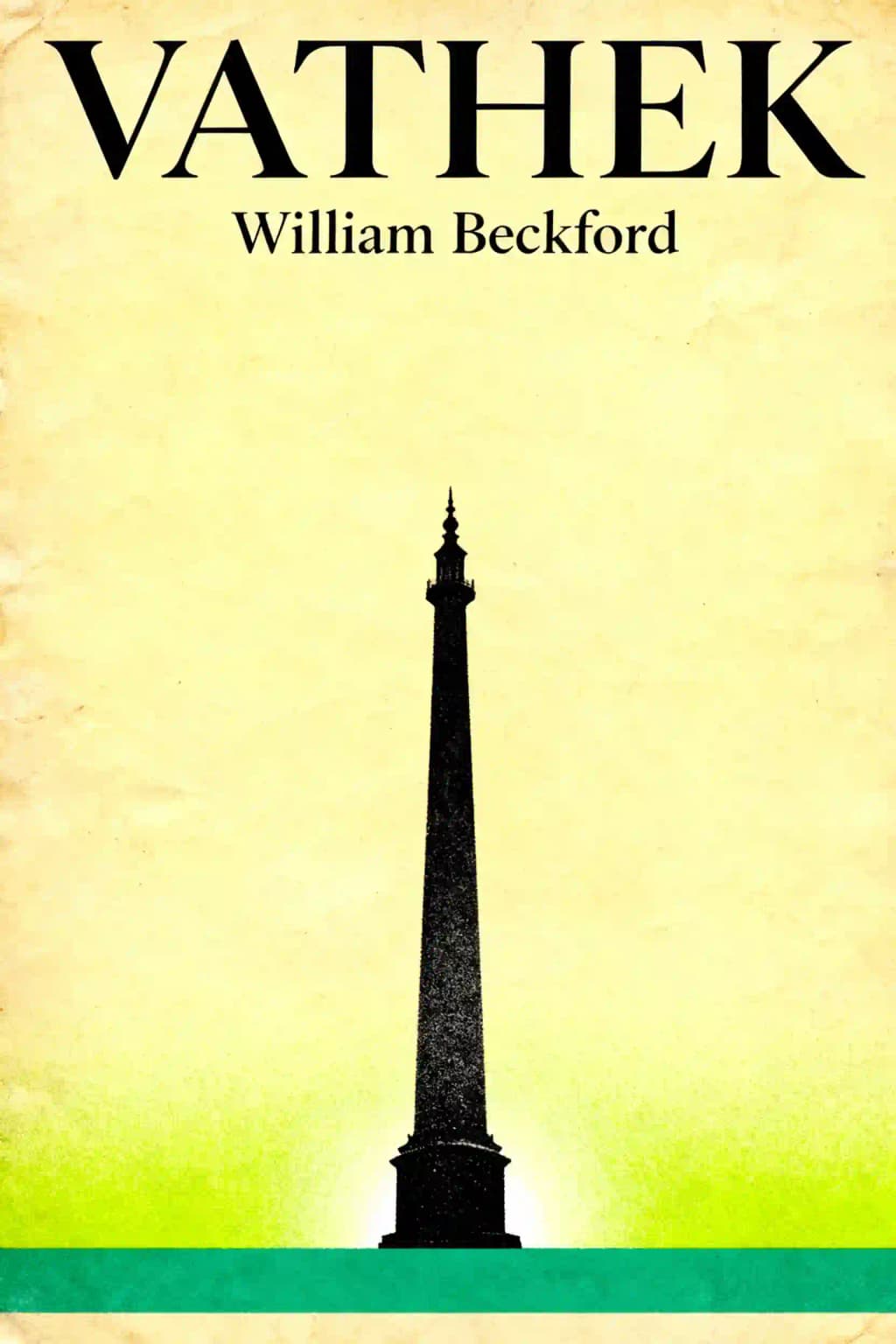
In the shadowy corners of literary history lies William Beckford's "Vathek," a novel that shocked and enthralled 18th-century readers with its exotic blend of Oriental fantasy and Gothic horror. Written in French when Beckford was merely 21 and published in English in 1786, this dark tale emerged from the author's own controversial life. As the son of London's wealthiest citizen and later exiled from British society for homosexual scandals, Beckford channeled his outsider status into creating one of literature's most memorable antiheroes. The novel's influence extends far beyond its time-Lord Byron counted it among his favorites, and it's considered a foundational text of Gothic literature that inspired generations of horror writers from Edgar Allan Poe to H.P. Lovecraft. In an era fascinated with Orientalism but constrained by Christian morality, "Vathek" dared to explore the seductive power of evil and the destructive nature of unchecked ambition-themes that continue to resonate with readers seeking to understand the darker impulses of human nature.
Capitolo 2
The Magnificent and Terrible Caliph
Vathek, ninth Caliph of the Abassides and grandson of the legendary Haroun Al Raschid, embodied extraordinary potential and terrifying power. Majestic in appearance, he stood taller than most men, with a commanding presence that drew all eyes. His most fearsome feature was his terrible eye - a penetrating gaze so potent it could strike dead any who earned his displeasure. This lethal power, which he carefully restrained for fear of depopulating his dominions, became legendary throughout his realm. His subjects would avert their eyes during his processions, dreading the moment his gaze might fall upon them.
Unlike his predecessors who found contentment in traditional pleasures of court life, Vathek's ambitions transcended ordinary bounds of both morality and physics. He constructed five extraordinary palaces, each a monument to sensory excess. "The Eternal Banquet" operated continuously, with three hundred cooks working in shifts to prepare exotic dishes from across the known world, while rivers of wine flowed through golden channels. "The Temple of Melody" housed not just musicians but entire orchestras performing day and night, with acoustic chambers designed to amplify and blend sounds in ways never before achieved. "The Delight of Eyes" displayed artistic treasures plundered from ancient civilizations, including mechanical wonders that seemed to defy natural law. "The Palace of Perfumes" burned rare incense in censers crafted from precious metals, with gardens designed to produce intoxicating natural fragrances. "The Retreat of Joy" maintained a rotating collection of the world's most beautiful women, trained in arts of pleasure from every culture.
Vathek's intellectual pursuits proved even more dangerous than his sensual indulgences. He surrounded himself with scholars from every tradition - astronomers, alchemists, mystics, and mathematicians. Those who pleased him received wealth beyond imagination; those who disappointed him faced imprisonment or worse. His theological debates became increasingly heretical, challenging fundamental tenets of faith. Despite divine warnings, he persisted in building a tower rivaling Nimrod's - a massive structure reaching toward heaven itself, from which he studied celestial movements and awaited a prophesied stranger who would unlock even greater mysteries.
The citizens of Samarah initially found entertainment in their Caliph's excesses, viewing his elaborate festivals and philosophical pursuits as grand spectacle rather than signs of dangerous obsession. His charisma created a cult of personality that masked growing darkness. Like many powerful figures throughout history - from Roman emperors to modern dictators - Vathek's magnetic personality disguised the corruption eating at his soul.
What makes Vathek's character particularly relevant is how his flaws mirror contemporary concerns about power and its abuse. His addiction to novelty and stimulation reflects modern society's endless pursuit of new sensations. His belief in his exemption from moral law echoes the behavior of today's autocrats and corporate titans. His conviction that knowledge should have no ethical boundaries parallels current debates about scientific research and technological advancement. In Vathek, Beckford created not just a cautionary tale about power's corruption, but a prophetic warning about the dangers of unlimited ambition divorced from moral consideration.
Capitolo 3
The Mysterious Stranger and the Caliph's Obsession
The arrival of a hideous black merchant at Vathek's court set in motion the central conflict that would drive the Caliph to his doom. This stranger-later revealed as the Giaour, an emissary of evil-brought magical items that defied natural laws: self-cutting knives, walking slippers, and enchanted sabres inscribed with mysterious characters. When questioned about these wonders, the merchant responded only with mocking laughter, triggering Vathek's rage and fascination in equal measure.
Imprisoned in the great tower, the merchant vanished overnight, leaving dead guards in his wake. This supernatural escape only intensified Vathek's obsession. Following his mother Carathis's advice-herself a Greek woman versed in dark arts-he issued a proclamation throughout his empire: anyone who could decipher the mysterious inscriptions on the sabres would receive magnificent rewards, while failures would have their beards burned rather than suffer death.
The proclamation brought a parade of scholars to court, each failing miserably and suffering the humiliation of singed beards. Only one elderly man with an extraordinarily long beard successfully translated the characters: "We were made where everything good is made; we are the least of the wonders of a place where all is wonderful; and deserving the sight of the first potentate on earth." Yet by the next day, the inscription had mysteriously changed to read: "Woe to the rash mortal who seeks to know that of which he should remain ignorant and to undertake that which surpasseth his power!"
This shifting text perfectly symbolizes the novel's central warning about forbidden knowledge. What initially appears as an invitation to glory reveals itself as a threat. Yet Vathek, like so many tragic heroes before and after him, cannot resist the allure of the unknown. His obsession with these daily-changing inscriptions soon manifested physically-he developed an unquenchable thirst and debilitating fever that conventional medicine couldn't cure.
The Giaour's appearance represents that critical moment when temptation enters our lives disguised as opportunity. Like the serpent in Eden, he offers knowledge and power while concealing the terrible price. Vathek's inability to recognize this deception-despite clear warnings-reveals how easily ambition blinds us to danger when it promises to fulfill our deepest desires.
Capitolo 4
The Bargain with Darkness
When the Giaour reappeared at the mountain paradise where the weakened Caliph sought relief, he offered a red and yellow potion that instantly restored Vathek's health. In his ecstatic gratitude, Vathek embraced and kissed the hideous Indian, shocking his jealous wives and revealing how completely the stranger had captivated him. The citizens of Samarah, witnessing their sovereign's miraculous recovery, now celebrated the once-feared stranger with festivals and songs declaring "He hath healed our sovereign; he hath spoken!"
This public adulation masked the growing darkness of their relationship. During a magnificent feast where the Indian ate voraciously and drank prodigiously, Vathek found himself annoyed at being outdone at his own table-a small but telling sign of the power dynamic shifting between them. When Vathek finally demanded explanations about the mysterious sabres and potion, the Indian merely laughed mockingly and began rolling through the palace like a ball, drawing everyone into an irresistible pursuit that emptied the entire city.
This bizarre chase led to an immense chasm where the Giaour plunged into the abyss with lightning speed. Despite warnings from his advisors, Vathek ordered his tents pitched at the precipice's edge, spending nights trying vainly to peer into the darkness below. His obsession had become complete.
The true nature of their relationship emerged when the earth trembled and the Giaour's thunderous voice offered Vathek access to "subterranean fire" and Soliman's treasures if he would renounce Muhammad. When Vathek eagerly agreed, the sky brightened to reveal a vast black chasm with an ebony portal where the Indian stood holding a golden key. But before granting entry, the Giaour demanded a horrific price: the blood of fifty beautiful sons of Vathek's viziers and nobles.
This bargain represents the moment when temptation transforms into corruption. What began as intellectual curiosity has become willingness to commit atrocity. The pattern mirrors countless historical examples where leaders justified horrific actions in pursuit of power or knowledge. Like Faust selling his soul to Mephistopheles, Vathek's bargain reveals how easily moral boundaries dissolve when confronted with sufficient temptation. The Giaour doesn't force Vathek's hand-he merely offers what the Caliph already desires, allowing Vathek's own ambition to corrupt him from within.
Capitolo 5
The Sacrifice of Innocence
With calculated kindness and meticulous planning, Vathek organized an elaborate celebration on the vast plain near the mysterious chasm, carefully selecting and inviting the fifty most handsome boys from noble families throughout his realm. The children, resplendent in their finest garments, played innocently in the warm afternoon sun, chasing iridescent butterflies and gathering fragrant wildflowers, completely unaware of their impending doom. Their laughter echoed across the plain - a sound that would later haunt those who witnessed what followed.
As twilight painted the sky in deepening shades of purple, Vathek initiated his horrific plan. He called each successful child forward individually, his voice honey-sweet with false benevolence. The prizes he displayed were beyond magnificent - diamond bracelets that caught the dying light, emerald collars that gleamed like captured starlight, ruby aigrettes that seemed to pulse with their own inner fire. Each treasure was carefully chosen to entrance its young recipient. But as he extended these glittering rewards with one hand, his other hand - swift and merciless - pushed each trusting child into the waiting gulf, where the Giaour's dark presence muttered its insatiable demand: "More! more!"
This scene represents the novel's moral nadir - the moment when Vathek's corruption transcends mere ambition and becomes truly irredeemable. The calculated juxtaposition of childhood innocence with premeditated betrayal creates a horror that overshadows even the supernatural elements of the story. The children's absolute trust in their sovereign, their wide-eyed delight in the promised rewards, and their complete vulnerability make their sacrifice particularly disturbing. Each child's individual moment of betrayal compounds the horror - fifty separate acts of ultimate treachery.
After the fiftieth child disappeared into the abyss, Vathek stood expectantly, awaiting his promised key to supernatural power. Instead, the chasm sealed itself with a thunderous finality. Enraged at this double betrayal, he stamped and cursed with such violence that the earth trembled, eventually collapsing in frustrated fury. When the desperate viziers approached seeking their children, Vathek fabricated an elaborate lie, claiming the boys had accidentally fallen while playing near the precipice. The horrified parents, seeing through his deception, quickly realized the terrible truth and incited the gathering crowd against their murderous Caliph.
As the vengeful mob surged forward, threatening to throw Vathek into the same gulf that had claimed their children, his mother Carathis - herself no stranger to dark deeds - desperately begged the loyal vizier Morakanabad to save her son. Despite his own devastating heartbreak over lost sons, Morakanabad honored his position and led the palace eunuchs in rescuing the Caliph before withdrawing to mourn in private. This poignant moment of loyalty amid betrayal highlights how entrenched power structures enable evil - even those personally devastated by Vathek's actions feel bound by duty to protect him, solely by virtue of his position.
The sacrifice scene deliberately echoes historical atrocities where children became victims of adult ambition, from ancient religious sacrifices to modern exploitation in wars and labor. It forces readers to confront uncomfortable questions about how societies sometimes sacrifice their most vulnerable members in pursuit of power, progress, or supernatural favor. By making this horror the centerpiece of his narrative, Beckford suggests that the corruption of innocence represents the ultimate transgression - one that marks Vathek as irredeemable long before his final judgment in the halls of Eblis.
Capitolo 6
The Dark Rituals of Carathis
While Vathek initially appears as the novel's villain, his mother Carathis emerges as an even more disturbing figure-one who actively encourages her son's corruption rather than restraining it. Far from being horrified by his crimes, she was excited by the promised rewards and volunteered to prepare another offering using his treasures.
Carathis's true nature revealed itself in her tower rituals. From ancient catacombs she retrieved mummies, and from a gallery guarded by one-eyed female mutes, she collected venomous serpent oils, rhinoceros horns, and exotic woods-treasures she had long hoarded for communion with infernal powers. The Princess lingered among her grotesquely squinting negresses, admiring skulls and skeletons until their gibbering and foul exhalations drove her out.
When loyal citizens rushed to save their sovereign from what appeared to be a tower fire, Carathis suggested these exhausted rescuers would make perfect offerings to the Giaour. The mutes and negresses efficiently strangled all one hundred forty men, adding their bodies to the sacrificial pile. The tower shook as the corpses vanished in flames that transformed from crimson to rose, replacing stench with fragrance and revealing a magnificent feast where the pile had been.
This grotesque transformation-from death to pleasure-encapsulates the novel's moral universe. Evil promises transformation and reward but requires increasing depravity to sustain itself. Carathis represents the intellectual justification of evil-the cold calculation that views human lives merely as currency to purchase power. Her Greek origin and scientific knowledge position her as an outsider to both Islamic and Christian moral frameworks, allowing her to pursue forbidden knowledge without the cultural restraints that might otherwise apply.
Carathis functions as both enabler and accelerant to Vathek's corruption. When he might hesitate or feel remorse, she pushes him forward with promises of greater rewards. Her maternal influence perverts the natural protective instinct into something monstrous-she doesn't shield her son from danger but actively propels him toward damnation. Through Carathis, Beckford explores how evil often requires rationalization and intellectual framework to flourish-how the mind can justify atrocities the heart would naturally reject.
Capitolo 7
The Journey to Damnation
With the Giaour's instructions in hand-"At the full moon, depart from thy palace surrounded by all pageants of majesty... set forward to Istakar"-Vathek prepared an expedition of unprecedented splendor. Before departure, Carathis reminded him of the parchment's decree not to enter any habitation along the way, warning him against his appetite for "good dishes and young damsels."
The journey began in perfect order but soon encountered difficulties. Violent storms erupted, and when the governor of Gulchissar offered shelter, Vathek refused, adhering strictly to the Giaour's command. This decision proved disastrous as they entered mountainous terrain. Wild beasts attacked from surrounding forests-wolves and tigers devoured the advance guard while vultures circled overhead. The expedition's luxurious provisions vanished, replaced by crude offerings of roasted wolf and acrid herbs.
Salvation appeared in the form of two cubit-high dwarfs bearing baskets of fruit, claiming to be servants of the emir Fakreddin. Despite Carathis's tablets warning against these "puny messengers," Vathek's hunger and thirst prevailed over caution. He followed the religious Emir Fakreddin into a lush valley with flowering shrubs and palm trees, reaching a magnificent stone building crowned with nine domes-"the asylum of pilgrims."
This detour introduced Vathek to Nouronihar, the emir's beautiful daughter betrothed to her cousin Gulchenrouz. Despite initial resistance, Nouronihar soon fell under Vathek's spell after experiencing a vision in an enchanted grotto where mysterious voices declared these treasures were prepared for "the charming daughter of emir Fakreddin" and that she should abandon the "giddy child" Gulchenrouz for the Caliph, "sovereign of the world."
When Fakreddin attempted to separate them through an elaborate deception-drugging both children to appear dead and convincing them they had entered the afterlife-Vathek discovered Nouronihar alive. Their passionate reunion revealed the emir's scheme, and Vathek declared the Giaour's palace could wait, as he preferred to possess Nouronihar "in open day for many a moon."
This interlude represents Vathek's final opportunity for redemption-a chance to abandon his dark quest for genuine human connection. Yet even this relationship becomes corrupted by ambition as Nouronihar, transformed by her vision, becomes not his savior but his accomplice. Their mutual obsession with the promised treasures transforms what might have been love into shared damnation.
Capitolo 8
The Final Descent
The arrival of Carathis on her camel Alboufaki interrupted Vathek and Nouronihar's idyllic retreat. Bursting through the pavilion veils, she found them bathing together and thundered: "Thou double-headed and four legged monster! Is it for this paltry doxy that thou hast violated our pact with the Giaour?" Though initially furious, Vathek insisted Nouronihar would accompany them, as he could no longer sleep without her.
Their journey resumed with renewed purpose. As they approached the mountains of Istakar, a Genius disguised as a pious shepherd played such pathetic melodies that the sun hid behind clouds, nearby lakes turned blood-red, and all listeners grew remorseful. Vathek and Nouronihar heard what seemed like the groans of her dying father and the sobs of the fifty sacrificed children. The shepherd warned Vathek this was his last chance for redemption, urging him to return Nouronihar to her father, destroy his tower, banish Carathis, and atone for his crimes.
This moment represents the novel's moral fulcrum-the final opportunity to choose good over evil. Though momentarily afraid, Vathek's pride prevailed: "I have traversed a sea of blood to acquire power," he declared, refusing to turn back when so close to his goal. Most of his attendants fled by nightfall, leaving only a few loyal followers as they pressed on by moonlight.
At the black marble terrace, they encountered ancient watchtowers and mysterious inscriptions that transformed into Arabic, informing Vathek he had violated their pact but would be admitted for what he had done. The mountain trembled and revealed a marble staircase descending into darkness. As they descended with haughty determination, their steps accelerated unnaturally until they reached an ebony portal where the Giaour awaited with a key, welcoming them "in spite of Muhammad."
They entered an immense hall where countless pale figures moved about, each with a hand pressed to their heart, avoiding one another despite the crowd. Some walked in reverie, others shrieked in agony or foamed with rage. In a vast tabernacle carpeted with leopard skins, they found Eblis seated on a globe of fire-appearing as a young man with noble features tarnished by malignant vapors, large eyes showing pride and despair, and flowing hair reminiscent of an angel of light.
This descent into hell inverts traditional religious imagery-Eblis appears beautiful rather than monstrous, the palace magnificent rather than horrific. Evil presents itself not as obvious horror but as seductive splendor, revealing how temptation works through misdirection rather than force.
Capitolo 9
The Eternal Punishment of Unrestrained Ambition
The true nature of Vathek's "reward" revealed itself gradually. The Giaour led them to a vast hall with fifty bronze portals where the fleshless forms of preadamite kings lay on cedar beds. Still conscious of their condition, these former earth-monarchs regarded each other with dejection, each holding his right hand motionless on his heart. At their feet were inscriptions recounting their reigns, power, pride, and crimes.
Soliman Ben Daoud occupied the loftiest position, appearing more animated yet sighing profoundly. Through his transparent crystal bosom, Vathek and Nouronihar beheld his heart engulfed in flames-a sight so horrifying that Nouronihar nearly collapsed. Soliman recounted how, despite his former glory and magnificent achievements, he was seduced by women and forbidden curiosity, listening to Aherman and worshipping fire. His punishment came when thunder destroyed his palace at Istakar.
Realizing their terrible mistake, Vathek begged the Giaour to release them, offering to relinquish all promised rewards. The malicious Dive refused, revealing they were in the abode of vengeance and despair, their hearts soon to be kindled like other votaries of Eblis. He granted them a few days before this fate and vanished, leaving them to wander the endless subterranean domain.
Carathis's arrival completed the tragedy. Undaunted by her son's warnings, she seized the talismans and attempted to usurp Soliman's throne when a voice proclaimed "All is accomplished!" Instantly her forehead contorted in agony, her right hand fixed eternally upon her heart-now a receptacle of eternal fire.
The same voice pronounced the irrevocable decree upon Vathek, Nouronihar, and the princes they had met in the underworld. Their hearts ignited and hope-heaven's most precious gift-abandoned them. Where once was love now dwelled only rage, aversion, and hatred. All plunged into the accursed multitude to wander in eternal anguish-the just punishment for unrestrained passions and blind ambition that transgresses the bounds of human knowledge.
The novel's final contrast delivers its moral with devastating clarity: "While Vathek suffered endless grief and remorse for his thousand crimes, the humble Gulchenrouz passed ages in undisturbed tranquility and pure childhood happiness." This juxtaposition of eternal torment against eternal innocence emphasizes that the novel's true horror lies not in supernatural elements but in the human capacity for evil when ambition overrides compassion.
Beckford's vision of hell is psychologically sophisticated-the damned suffer not from external torture but from internal burning, eternally conscious of their crimes yet unable to connect with others. Their punishment is perfect isolation amid crowds-the ultimate fate for those who placed selfish desire above human connection. In this eternal burning of the heart, we find the novel's most enduring image: ambition without moral restraint ultimately consumes itself, leaving nothing but endless regret and the knowledge of what might have been.