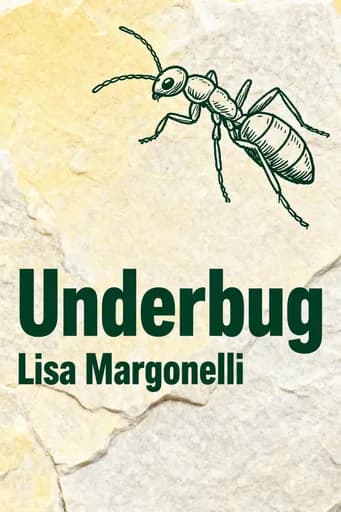
Underbug
An Obsessive Tale of Termites and Technology
Panoramica di Underbug
Termites outweigh humans 10:1 and might save our planet. In "Underbug," Lisa Margonelli's obsessive exploration reveals how these tiny engineers - not just pests - could revolutionize renewable energy through their remarkable gut microbes. What secrets do these underestimated insects hold?
Temi chiave in Underbug
- superorganism intelligence
- biomimetic architecture
- microbial gut symbiosis
- biofuel engineering
- eusocial behavior
Citazioni da Underbug
termites represent nothing less than "the poster bug for the twenty-first century"
Nearly half of all termite research focuses on extermination.
termites-those unassuming architects of negative space-may hold keys to our collective future.
the queen was monstrous-as big as a finger with a fluid-filled, pulsing body
The termite mound functions as what Eugene Marais called a "composite animal"
Personaggi di Underbug
- Lisa MargonelliAuthor and journalist exploring termite science
- Rudi ScheffrahnPassionate termite expert and safari guide
- Scott TurnerBiologist studying termite mound architecture
- Eugene MaraisNaturalist who conceptualized the superorganism
- William WheelerEntomologist who originated superorganism theory
Sull'autore
Sull'autore di Underbug
Lisa Margonelli is an acclaimed science writer and the author of Underbug: An Obsessive Tale of Termites and Technology. She masterfully combines investigative journalism with deep scientific inquiry in her explorations of insect behavior and bio-inspired innovation.
As a senior editor at Issues in Science and Technology, Margonelli bridges complex scientific concepts and public understanding. Her work has appeared in outlets such as The Atlantic, Wired, and The New York Times. Her debut bestseller, Oil on the Brain: Petroleum’s Long Strange Trip to Your Tank—a 2007 American Library Association Notable Book—established her reputation for weaving global energy systems into compelling narratives.
Trained as a journalist and former director of the New America Foundation’s Energy Policy Initiative, Margonelli spent nearly a decade researching termites’ ecological impact and technological potential for Underbug. Her TED Talk on post-oil futures and science communication further underscores her authority. Oil on the Brain remains widely cited in energy policy discussions, with translations reaching international audiences.
Scarica il riassunto di Underbug
Ottieni il riassunto di Underbug in formato PDF o EPUB gratuito. Stampalo o leggilo offline quando vuoi.
FAQ su questo libro
Underbug explores the hidden world of termites and the scientists studying their potential to revolutionize renewable energy, robotics, and ecology. Lisa Margonelli delves into termite mounds, gut microbes, and swarm behavior, connecting these insects to broader themes like human obsession, technological ethics, and sustainable innovation.
This book suits science enthusiasts, biology buffs, and readers curious about interdisciplinary research. It appeals to those interested in entomology, biofuel technology, or existential questions about humanity’s relationship with nature. Fans of narrative nonfiction blending adventure, humor, and scientific inquiry will also find it engaging.
Yes—Underbug offers a unique blend of ecological insight and philosophical reflection. While some critics note occasional tangents, most praise its accessible storytelling, global research scope, and thought-provoking links between termite behavior and human challenges like energy sustainability.
Termites’ gut microbes efficiently break down cellulose, inspiring scientists to develop “grassoline”—a sustainable biofuel alternative to fossil fuels. Margonelli highlights how decoding termite digestion could transform energy systems, though challenges like microbial complexity remain.
Swarm intelligence refers to termites’ collective problem-solving without centralized control. Researchers study this behavior to design autonomous robots, optimize traffic systems, and model decentralized decision-making, mirroring how termites build intricate mounds collaboratively.
Certain termite species farm fungi in specialized chambers, creating a 250-million-year-old mutualism. The fungi break down plant matter into digestible nutrients, while termites provide ideal growing conditions—a relationship studied for agricultural and industrial applications.
Margonelli critiques unchecked technological ambition, such as militarized robot swarms or bioengineered microbes. Scientists in the book grapple with unintended consequences, echoing concerns about exploiting nature without understanding ecological or moral ramifications.
Termites challenge assumptions about efficiency and labor—colonies include “slackers” and diverse roles. Margonelli draws parallels to human social structures, questioning myths of productivity and hinting at deeper evolutionary truths about collaboration.
Margonelli joins scientists in Namibia’s deserts, Australian mines, and U.S. labs, documenting termite mound thermodynamics, gut microbiome analysis, and robotic swarm experiments. These vignettes humanize the research process, revealing obsession, failure, and 偶然 breakthroughs.
Some reviewers note uneven pacing or excessive focus on researchers’ quirks over termite biology. Critics argue Margonelli’s philosophical musings occasionally overshadow concrete scientific takeaways, though others praise this blend as its strength.
The book dismantles myths of termites as mere pests, recasting them as ecological engineers and biochemical innovators. Their mounds inspire climate-resilient architecture, while their guts model circular economies—reframing them as vital to planetary health.
“For scientists, the great danger of seeing social insects anthropomorphically is that it obscures their true bugginess.” This line underscores balancing human curiosity with respect for nature’s complexity—a central tension in the book.