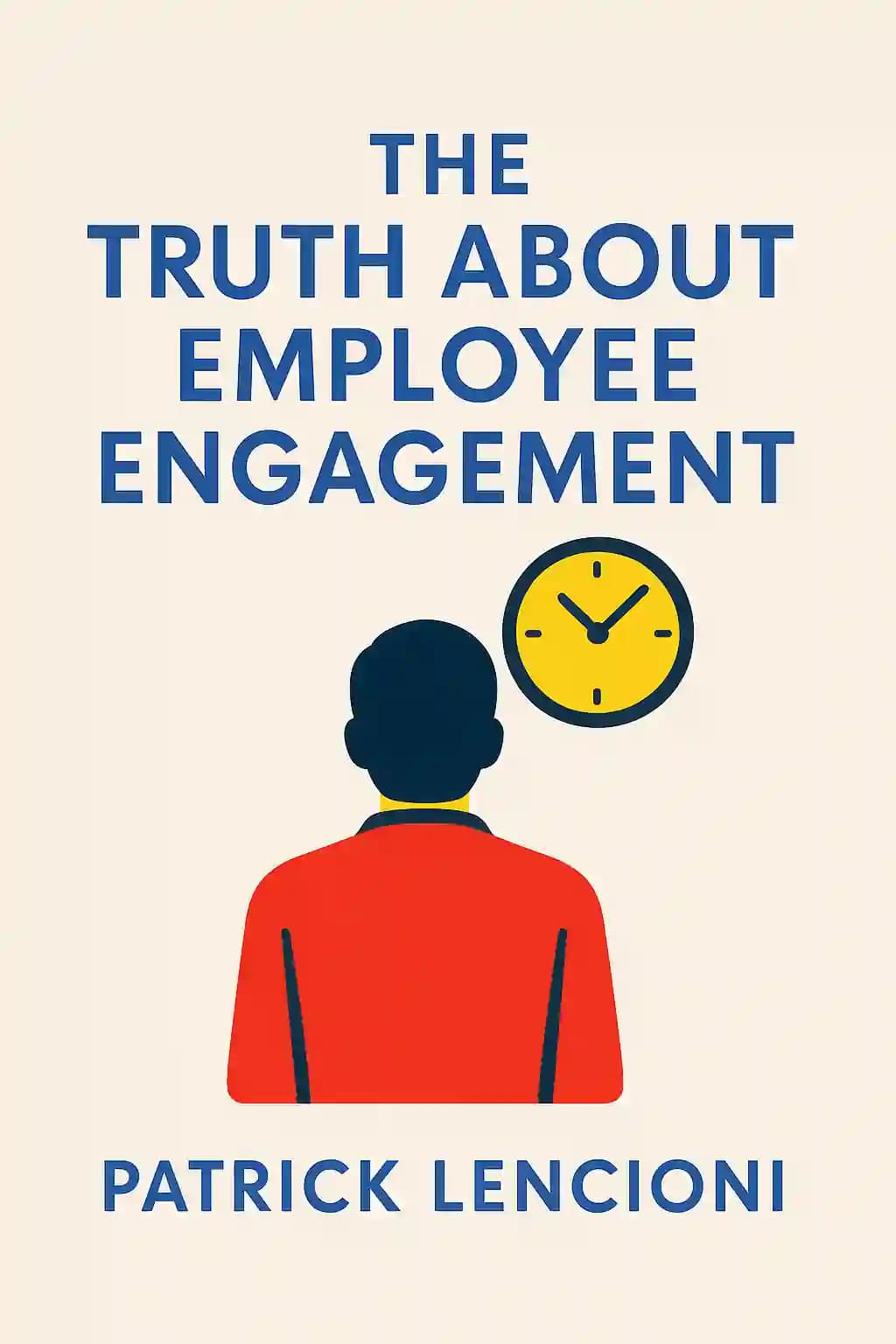
Discover why job misery isn't inevitable. Lencioni's business classic reveals the three hidden factors destroying workplace engagement. Recommended in Fortune 500 training programs, this leadership gem asks: What if your employees' biggest problem isn't what they do, but how they feel about it?
Patrick Lencioni, bestselling author of The Truth About Employee Engagement, is a globally recognized pioneer in organizational health and leadership development.
Founder of The Table Group, he specializes in transforming workplace dynamics through actionable frameworks for teamwork, clarity, and employee engagement. A Claremont McKenna College graduate, Lencioni honed his expertise at Bain & Company and Oracle before launching his consultancy, whose clients include Google, Microsoft, and the NFL.
His influential business fables like The Five Dysfunctions of a Team—a New York Times bestseller—and The Advantage have sold over 8 million copies across 30+ languages.
Regularly featured in The Wall Street Journal and Harvard Business Review, Lencioni ranks among America’s top-paid business speakers, with his organizational health principles now operationalized through digital platforms like Leadr. His work remains required reading in Fortune 500 boardrooms and MBA programs worldwide.
The Truth About Employee Engagement explores why employees feel disengaged at work, identifying three root causes of job misery: anonymity (not feeling known), irrelevance (not seeing how work impacts others), and immeasurement (lacking clear success metrics). Through a relatable fable about a CEO-turned-pizzeria-manager, Lencioni provides actionable strategies for managers to foster fulfillment, productivity, and retention.
This book is essential for managers, HR professionals, and leaders seeking to reduce turnover, boost morale, and create a culture of accountability. It’s particularly valuable for those managing frontline teams or navigating organizational change, offering tools to address disengagement at its source.
Yes—it combines storytelling with practical frameworks, making complex leadership concepts accessible. Lencioni’s focus on manager-employee relationships (rather than perks or pay) offers a fresh perspective, backed by examples from industries like tech, healthcare, and hospitality.
Addressing these eliminates job misery and drives engagement.
Unlike theoretical guides, Lencioni uses a story-driven approach (e.g., the pizzeria manager narrative) to illustrate solutions. It emphasizes human connection over policy changes, arguing that managers—not HR systems—are key to resolving disengagement.
“People cannot be fulfilled in their work if they do not feel known.” This underscores Lencioni’s thesis that individual recognition is foundational to engagement, outweighing salary or benefits in long-term satisfaction.
Some argue the model oversimplifies complex workplace dynamics, particularly in large organizations. However, its strength lies in providing a memorable framework managers can immediately apply, even if deeper systemic issues exist.
While Five Dysfunctions focuses on team cohesion, this book zooms in on manager-employee relationships. Together, they provide a roadmap for building healthy organizations from the individual to the team level.
With remote/hybrid work complicating employee-manager interactions, Lencioni’s emphasis on purposeful connection remains critical. The book’s strategies help combat isolation and align roles with organizational goals in evolving workplaces.
Senti il libro attraverso la voce dell'autore
Trasforma la conoscenza in spunti coinvolgenti e ricchi di esempi
Cattura le idee chiave in un lampo per un apprendimento veloce
Goditi il libro in modo divertente e coinvolgente
We're conditioned to see advancement as moving up the corporate ladder, not sideways or downward.
He would make them enjoy their jobs.
Rather than conducting formal interviews, he simply became 'more human'.
The restaurant's atmosphere transformed from what Brian had described as 'morgue-like' to energetic and engaged.
Scomponi le idee chiave di Truth about Employee Engagement in punti facili da capire per comprendere come i team innovativi creano, collaborano e crescono.
Distilla Truth about Employee Engagement in rapidi promemoria che evidenziano i principi chiave di franchezza, lavoro di squadra e resilienza creativa.

Vivi Truth about Employee Engagement attraverso narrazioni vivide che trasformano le lezioni di innovazione in momenti che ricorderai e applicherai.
Chiedi qualsiasi cosa, scegli la voce e co-crea spunti che risuonino davvero con te.

Creato da alumni della Columbia University a San Francisco
"Instead of endless scrolling, I just hit play on BeFreed. It saves me so much time."
"I never knew where to start with nonfiction—BeFreed’s book lists turned into podcasts gave me a clear path."
"Perfect balance between learning and entertainment. Finished ‘Thinking, Fast and Slow’ on my commute this week."
"Crazy how much I learned while walking the dog. BeFreed = small habits → big gains."
"Reading used to feel like a chore. Now it’s just part of my lifestyle."
"Feels effortless compared to reading. I’ve finished 6 books this month already."
"BeFreed turned my guilty doomscrolling into something that feels productive and inspiring."
"BeFreed turned my commute into learning time. 20-min podcasts are perfect for finishing books I never had time for."
"BeFreed replaced my podcast queue. Imagine Spotify for books — that’s it. 🙌"
"It is great for me to learn something from the book without reading it."
"The themed book list podcasts help me connect ideas across authors—like a guided audio journey."
"Makes me feel smarter every time before going to work"
Creato da alumni della Columbia University a San Francisco

Ottieni il riassunto di Truth about Employee Engagement in formato PDF o EPUB gratuito. Stampalo o leggilo offline quando vuoi.
Have you ever felt that sinking feeling on Sunday evening as the weekend draws to a close? That creeping dread of returning to work the next day? This "Sunday Blues" phenomenon affects countless workers regardless of position, salary, or industry. Through the journey of Brian Bailey-a successful executive who takes a position managing a struggling pizza shop-we discover the universal principles that determine whether we'll dread Monday mornings or embrace them with enthusiasm. Brian's story reveals a profound truth: job misery isn't inevitable. It stems from three specific factors that, when addressed properly, can transform any workplace into an environment where people find genuine fulfillment. This isn't just theory-companies like Google and Microsoft have implemented these principles as the foundation of their workplace culture initiatives, proving their effectiveness across industries and organizational levels.