Capitolo 1
America Under Siege: When Law Enforcement Becomes the Enemy
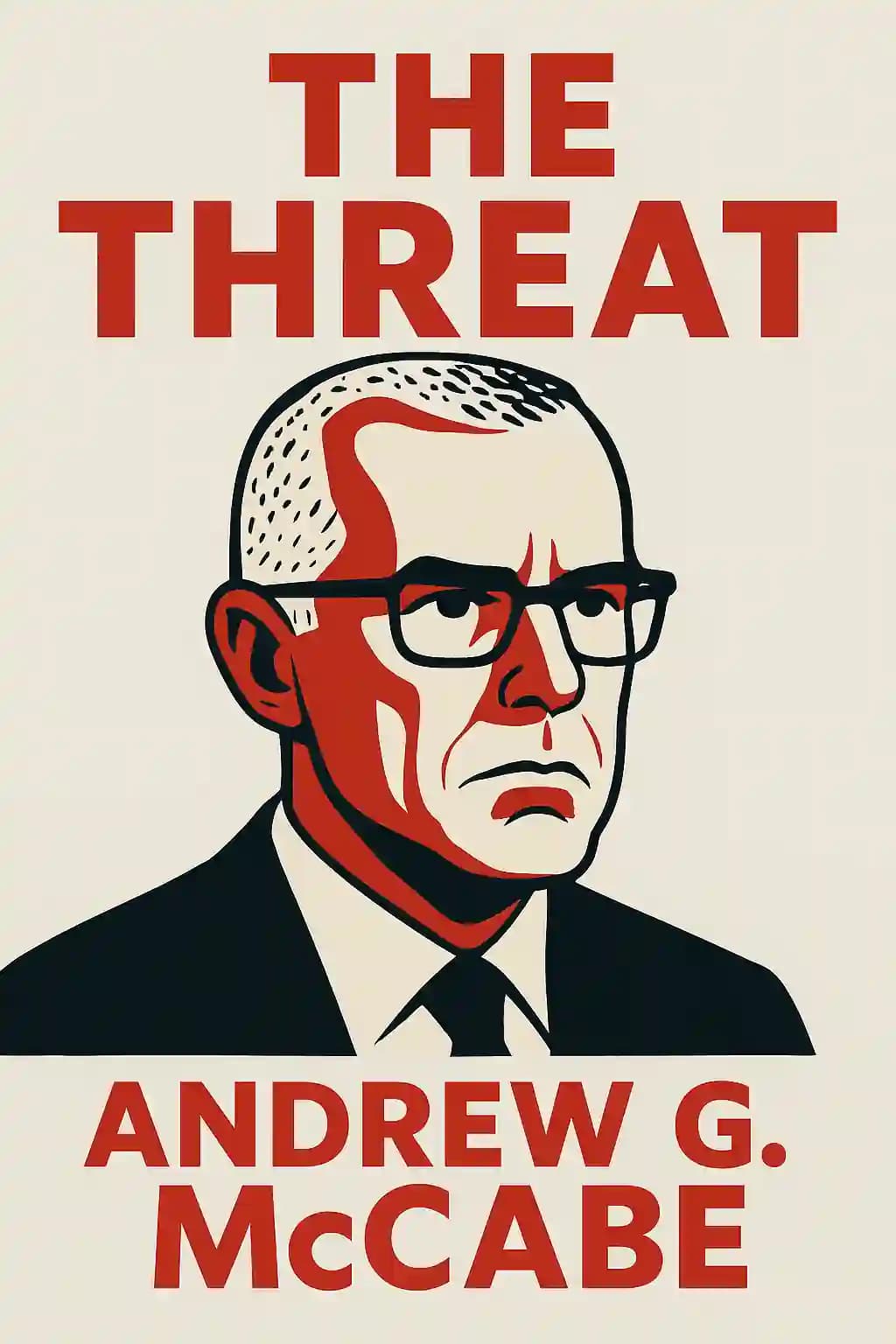
In an era when truth feels increasingly elusive, "The Threat" arrives as a stark warning from the heart of American law enforcement. Andrew McCabe's memoir shot to #1 on the New York Times bestseller list within days of its February 2019 release, capturing the attention of a nation grappling with unprecedented attacks on its institutions. As former Acting Director of the FBI, McCabe offers readers a front-row seat to the collision between the rule of law and a president who views independent law enforcement as a personal threat. The book has been praised by intelligence professionals across political lines while simultaneously becoming required reading for those seeking to understand the fragile state of American democracy. What makes this account particularly chilling is its portrayal of familiar democratic guardrails buckling under pressure from within-revealing how quickly institutions we take for granted can be undermined when those sworn to protect them instead choose personal loyalty over constitutional duty.
Capitolo 2
From Russian Mobsters to Presidential Confrontations
McCabe's journey through the FBI spans the evolution of America's greatest threats-from Russian organized crime to Islamic terrorism to a presidency that actively undermines the rule of law. His career began in 1996 in New York City, where he found his calling pursuing Russian mobsters. The transition from practicing law to becoming an FBI agent meant taking a 50% pay cut, but McCabe felt drawn to public service-a calling that would define his 21-year career at the Bureau. This decision came after years as a successful private practice attorney, where he specialized in corporate litigation but felt unfulfilled by the work.
His first significant case involved a furniture store owner named Felix who was being extorted by Russian gangsters. "I think I'm being racketeered," Felix told McCabe, his voice trembling during their first meeting in a cramped back office of his Brooklyn store. This case led to one of the first successful RICO (Racketeer Influenced and Corrupt Organizations Act) prosecutions against Russian organized crime in America. The investigation revealed a complex network of protection rackets targeting immigrant businesses across New York's five boroughs, with connections reaching back to Moscow's criminal underworld. This case introduced McCabe to the brutal realities of the Russian criminal ecosystem, where violence was casual and intimidation routine. Victims often faced threats not just to themselves but to family members both in America and abroad.
The evolution of Russian criminal enterprise in America proved particularly fascinating. What began as street-level extortion in immigrant communities transformed into sophisticated financial crimes involving international banking networks, real estate fraud, and money laundering through legitimate businesses. One particularly notable case involved Alimzhan Tokhtakhounov, nicknamed "Taiwanchik," who orchestrated the rigging of the 2002 Winter Olympics figure skating competition and later ran a $100 million illegal gambling operation from Trump Tower. As McCabe notes, "This confirmed our worst fears-that vory money could corrupt Western institutions that Americans implicitly trust." The investigation uncovered links between Russian organized crime and elite social circles, revealing how thoroughly criminal enterprises had penetrated legitimate society.
This evolution mirrors America's broader failure to recognize emerging threats. While the Clinton administration was eager to see democracy flourish in post-Soviet Russia, they failed to recognize how deeply organized crime had embedded itself in former Soviet republics. The FBI's warnings about Russian criminal networks infiltrating American financial institutions often went unheeded. Years later, a different administration would fail to acknowledge Russian election interference despite overwhelming evidence-a pattern of willful blindness with devastating consequences for American democracy.
What emerges from McCabe's account is a portrait of an FBI constantly adapting to new threats while maintaining core principles of independence and fidelity to the Constitution-values that would eventually place the Bureau on a collision course with a president who demanded personal loyalty above all else. The progression from fighting street-level crime to confronting state-sponsored interference reveals how the nature of threats to American security evolved, requiring new investigative techniques and institutional responses. McCabe's experience with Russian organized crime proved invaluable in understanding the methods and motivations behind later Russian government actions, highlighting the complex interconnections between criminal enterprises and state actors in the post-Soviet era.
Capitolo 3
The 9/11 Transformation: From Crime-Solving to Threat Prevention
The September 11 attacks fundamentally transformed the FBI's mission from solving crimes to preventing attacks. McCabe vividly describes driving into Manhattan after the attacks, witnessing "surreal scenes: empty bridges, ghost-like dust-covered survivors walking away from Ground Zero, and a perfect blue sky marred by devastation." With the FBI field office uninhabitable, agents converted a Bureau garage into a command center, working around the clock to identify those responsible.
The post-9/11 period saw a dramatic shift in how the Bureau operated. Agents who had specialized in drug investigations suddenly found themselves working counterterrorism cases. Immigration enforcement intensified, with thousands of tips about people of Middle Eastern appearance being investigated immediately. This created a massive backlog of detention cases as individuals had to be cleared of terrorism connections before proceedings could continue.
McCabe's account reveals the human cost of this transition. One detainee broke down crying to an agent, saying people had called him a terrorist after 9/11, before adding poignantly, "I am Sikh. I'm not even Muslim." The pressure to prevent another attack led to imperfect systems that sometimes ensnared innocent people.
By 2006, when McCabe moved to counterterrorism, he encountered a Bureau transformed by Director Robert Mueller's leadership. Mueller, a former Marine with a rigid demeanor, achieved change through "sheer force of will." He wore only blue suits with white shirts and red ties, maintained strict schedules, and cross-examined everyone who briefed him. His leadership style ingrained accountability and follow-through that would shape McCabe's own approach to management.
Working counterterrorism permanently altered McCabe's perspective: "Every holiday became a potential threat, personal plans were always subject to change, and I lived in a perpetual state of heightened vigilance." When his team's intelligence triggered a global aviation security alert during the 2006 London airliner plot, McCabe had the sobering realization: "We did this"-their work had shut down the global transportation system to prevent a catastrophic attack.
This transformation from reactive to preventative operations created new tensions between intelligence collection and disruption. The Bureau initially "muscled" every lead regardless of credibility, investigating even vague references like "brothers in California" that consumed enormous resources. As one agent described it, they were like "a boy collecting rocks on a beach until he's too weighed down to move." Eventually, the FBI evolved toward a more targeted approach, focusing on specific threats rather than investigating everyone with tenuous connections.
Capitolo 4
The Science and Art of Interrogation: Beyond Enhanced Techniques
In late 2009, Director Mueller summoned McCabe with unexpected news: President Obama had selected him to lead the High-Value Detainee Interrogation Group (HIG), a new interagency effort to professionalize terrorist interrogations and move away from controversial enhanced techniques. When McCabe attempted to express his preference for continuing in counterterrorism, Mueller replied with the memorable line, "You know what I like to do? I like to try homicide cases. And look what I'm doing." This exchange exemplified the FBI's culture of putting institutional needs above personal preferences.
The HIG emerged from the intense controversy over Guantanamo Bay and enhanced interrogation techniques, reflecting a fundamental shift in American counterterrorism strategy. Obama believed these methods not only compromised American values but also produced unreliable intelligence, as subjects would often say anything to stop the pain. Many Republicans viewed terrorist suspects as enemy combatants deserving no constitutional protections, arguing that national security trumped civil liberties. The FBI's interview approach, developed over decades of criminal investigations, differed significantly from both the CIA's intelligence-driven interrogations and the Defense Department's Field Manual-restricted methods. Where intelligence agencies relied on rigid protocols and inflexible checklists, FBI agents excelled at reading subjects, building rapport, and adapting their approaches based on individual psychology and circumstances.
The HIG's effectiveness was powerfully demonstrated in the case of Umar Farouk Abdulmutallab, the "Underwear Bomber" who attempted to detonate explosives on Northwest Airlines Flight 253 in December 2009. Initially uncooperative during harsh interrogations, Abdulmutallab responded to the FBI's rapport-building techniques, eventually providing crucial intelligence about al-Qaeda's operations. He revealed detailed information about his connection to Anwar al-Awlaki, the American-born jihadi preacher who had become a key terrorist recruiter, and Ibrahim Hassan al-Asiri, the sophisticated bomb maker who had developed the innovative underwear explosive device. His testimony provided unprecedented insights into al-Qaeda in the Arabian Peninsula's recruitment, training processes, and operational planning that guided U.S. intelligence efforts for years afterward.
Despite these concrete successes, the HIG became increasingly caught in political crossfire. During Congressional testimonies, Republican members, led by Peter King and others, consistently claimed America had lost valuable intelligence by treating Abdulmutallab as a criminal defendant rather than an enemy combatant. They refused to acknowledge the wealth of actionable intelligence obtained through constitutional methods, maintaining their position even as successful counterterrorism operations validated the HIG's approach. McCabe repeatedly defended the program, presenting evidence that rapport-building consistently produces higher-quality, more reliable intelligence than coercive techniques. When Republican Mike Rogers became Intelligence Committee chair in 2011, he made eliminating the HIG a priority, despite its proven track record.
The fundamental tension between constitutional interrogation methods and enhanced techniques dramatically resurfaced during the 2016 presidential campaign when Donald Trump explicitly endorsed waterboarding and "a hell of a lot worse," while opposing trying foreign terrorists in regular courts. For national security professionals who had spent years developing and implementing effective, ethical methods for handling terrorism suspects while respecting constitutional principles, this rhetoric represented a potentially devastating setback to their progress in professionalizing interrogation techniques.
Capitolo 5
Inside the FBI's Investigative Playbook
The FBI's approach to complex investigations follows a methodology refined over decades of law enforcement experience. The "enterprise theory" emerged from the pressing need to combat organized crime, which law enforcement officials long denied even existed. Everything changed dramatically in 1957 when the "Apalachin Meeting" exposed a national crime syndicate after local police discovered dozens of well-known mobsters fleeing through the woods with muddy wingtips at a gathering in upstate New York. This watershed moment forced FBI Director J. Edgar Hoover, who had long resisted acknowledging organized crime's existence, to finally confront this reality, ultimately leading to the landmark 1970 Organized Crime Control Act with its groundbreaking RICO provisions.
RICO (Racketeer Influenced and Corrupt Organizations Act) fundamentally transformed law enforcement by allowing prosecutors to hold organization leaders accountable for crimes committed by their subordinates, even without direct evidence of orders. The enterprise theory investigation model teaches agents to view criminal organizations holistically as interconnected networks rather than isolated incidents. Investigators first prove the enterprise exists by gathering "association evidence" - surveillance photos, phone records, financial transactions, and witness statements showing connections between members. They then demonstrate each participant engaged in a "pattern of racketeering activity" through at least two qualifying crimes within a ten-year period.
The Bureau's success heavily depends on three distinct types of inside sources: confidential informants whose relationship with the FBI must remain permanently secret for their safety; cooperating witnesses who provide intelligence and may eventually testify in court proceedings; and undercover employees who infiltrate criminal groups at great personal risk, sometimes spending years building cover stories and relationships. The ability to protect these human sources is absolutely crucial to the FBI's effectiveness - without rock-solid assurances of protection, sources simply won't cooperate, leaving investigations to falter.
For politically sensitive investigations, the FBI implements additional safeguards by designating them as "sensitive investigative matters" (SIMs), requiring extensive high-level oversight and multiple layers of approval. This includes detailed review and authorization from the field office's chief division counsel and special agent in charge, mandatory notification to the local U.S. attorney's office, FBI headquarters, and Department of Justice officials. Through methodical evidence collection - from comprehensive database searches to physical and electronic surveillance to detailed financial records analysis - agents build cases on solid foundations that can withstand intense scrutiny.
This rigorous, process-driven approach stands in stark contrast to President Trump's unprecedented interference in justice matters during his administration. When Trump publicly tweeted about Paul Manafort's case, claiming the presiding judge was unfair and deliberately mischaracterizing basic court proceedings, he put inappropriate pressure on the judicial system and undermined its independence. His direct commentary on cases affecting him personally proved particularly egregious - not just signaling preferences but actively lobbying for specific outcomes, behavior that former FBI officials and legal experts widely condemned as an assault on the rule of law.
Capitolo 6
The Clinton Email Investigation: Fatal Choices and Political Fallout
In July 2015, the FBI launched a high-stakes investigation into Hillary Clinton's use of a private email server, following concerns raised by the intelligence community inspector general about the potential mishandling of classified information. The investigation, code-named "Midyear Exam," was deliberately structured as a headquarters "special" to maintain strict control and limit exposure. At the center of the probe were 60,000 emails from Clinton's private server, which her staff had sorted into two categories: work-related emails (approximately 30,000) that were sent to the State Department, and personal emails (also approximately 30,000) that were deleted. The deleted emails became a lightning rod for controversy and conspiracy theories, dominating political discourse throughout the campaign.
The investigation's management structure included weekly progress meetings where detailed metrics were presented, tracking the number of emails reviewed and their various classification levels. These sessions were followed by comprehensive briefings on witness interviews and emerging investigative challenges. As the investigation progressed, significant tensions developed between the FBI investigative team and Justice Department prosecutors over tactical approaches. The FBI advocated for a more aggressive strategy, pushing for grand jury subpoenas and compulsory process, while Justice Department officials preferred a more measured approach focused on negotiation and voluntary cooperation. These differences came to a head during witness interviews, where FBI agents expressed frustration at the unprecedented number of attorneys present, which they felt impeded their ability to conduct thorough questioning.
Deputy Director McCabe identified what he considered a critical strategic error by Attorney General Loretta Lynch and Deputy Attorney General Sally Yates in their handling of the case. Rather than making a clear choice to either fully recuse themselves or actively manage the investigation, they attempted to maintain a middle ground that ultimately undermined the credibility of the entire process. This ambiguous positioning would later prove particularly problematic following Lynch's controversial tarmac meeting with former President Bill Clinton in Phoenix.
The drafting of Director Comey's public statement marked another crucial moment in the investigation. The team's decision to replace the phrase "grossly negligent" - which mirrored the criminal statute's language - with "extremely careless" reflected their careful deliberation over how to accurately characterize Clinton's conduct while explaining their decision not to recommend charges. This linguistic choice would later face intense scrutiny and criticism.
The investigation took a dramatic turn when Lynch's impromptu meeting with Bill Clinton on an airport tarmac in Phoenix became public knowledge. This incident severely compromised the Department of Justice's credibility in the matter and ultimately led to Comey's controversial decision to make an independent public announcement about the investigation's conclusions without DOJ coordination. On July 5, Comey delivered his unprecedented statement, a move that broke with department protocols and traditions.
The situation became even more complex in October when previously unknown emails were discovered on Anthony Weiner's laptop during an unrelated investigation. Against McCabe's advice, Comey sent his fateful October 28 letter to Congress announcing the investigation's reopening. McCabe strongly believed they should have first reviewed the new material before making any public statements. While McCabe understood Comey's dilemma - choosing between what Comey termed "Terrible" and "Even Worse" options - he maintained that the more prudent course would have been to delay any announcement until they had properly assessed the new evidence, despite the potential risks of this approach being leaked.
In retrospect, McCabe acknowledged that the FBI leadership had significantly misjudged two critical factors: the public's willingness to accept their investigative conclusions and the intensity of the political firestorm their decisions would ignite. These miscalculations would have far-reaching consequences for both the FBI's reputation and the 2016 presidential election.
Capitolo 7
The Russia Investigation and the Fight for Independence
On May 9, 2017, while FBI Director James Comey was visiting field offices in California, McCabe was serving as acting director at headquarters when he received the shocking news of Comey's termination. The president's termination letter contained a peculiar and seemingly out-of-place line explicitly stating that Trump was not under investigation - a detail that would prove increasingly significant as subsequent events unfolded. This unprecedented firing of an FBI Director sent immediate shockwaves through the bureau and raised serious concerns about the independence of federal law enforcement.
The following day, McCabe had his first face-to-face meeting with Trump in the Oval Office, which quickly revealed itself not as a substantive discussion but as a thinly veiled loyalty test. Trump dominated the conversation with a rambling monologue about finding a new FBI director while repeatedly praising law enforcement in general terms. His speaking style was described as "frenetic" - talking continuously without pause, circling back to rephrase statements multiple times, and rarely allowing for response or dialogue. Despite having viciously attacked McCabe during the campaign over his wife's failed Democratic run for state office in Virginia, Trump abruptly shifted to effusive flattery near the meeting's end, calling McCabe "great" and "terrific" while dismissively referring to his previous criticism as merely McCabe's "one mistake." This dramatic pivot highlighted Trump's transactional approach to relationships.
On May 10, while McCabe was meeting with the Russia investigation team to discuss critical next steps, he received an unprecedented direct call from President Trump - a clear violation of long-standing DOJ policies requiring all White House-FBI communications to go through proper channels to prevent political interference. Trump made several false claims, including that FBI employees were celebrating Comey's firing, and repeatedly demanded confirmation that he personally wasn't under investigation. When Trump insisted on visiting FBI headquarters for a photo opportunity, McCabe advised against it, explaining the bureau's shocked reaction to Comey's firing. The conversation took an even darker turn when McCabe mentioned Comey had flown home on a government plane with his security detail - Trump erupted in anger over this routine procedure. He ended the call by cruelly mocking McCabe's wife's election loss, sneering "That must've been really tough. To lose. To be a loser," revealing both his vindictiveness and obsession with electoral victory.
Recognizing the mounting threat to the Russia investigation's independence, McCabe urgently pressed Deputy Attorney General Rod Rosenstein to appoint a special counsel to ensure its integrity. In private conversations, Rosenstein appeared deeply troubled, confessing he couldn't believe the White House's handling of Comey's firing, particularly their attempt to make it appear as his recommendation when in fact the president had directly ordered him to write the justifying memo. Rosenstein's distress was evident when he confided, "There's no one that I can talk to about this. There's no one here that I can trust," highlighting the isolation and pressure he felt.
On May 17, Rosenstein finally agreed to appoint a special counsel and scheduled a classified briefing with congressional leadership. During this crucial meeting, McCabe provided a detailed timeline of their investigation dating back to July 2016, methodically explaining how they had opened cases on four Trump campaign figures with substantial Russian connections: Carter Page, a foreign policy advisor with extensive Moscow ties; George Papadopoulos, who had advance knowledge of Russian election interference; Michael Flynn, whose undisclosed contacts with Russian officials raised serious concerns; and Paul Manafort, the former campaign chairman with deep connections to pro-Russian Ukrainian politicians. Following McCabe's comprehensive presentation, Rosenstein announced Robert Mueller's appointment as special counsel, marking a pivotal moment in the investigation's history.
Capitolo 8
The Price of Integrity in an Age of Loyalty Tests
Six weeks into McCabe's tenure as acting FBI director, the president launched his first Twitter attack against him, falsely claiming he received $700,000 from Hillary Clinton for his wife's campaign. These attacks continued, questioning why Sessions hadn't replaced him.
Through fall 2017, the president's attacks intensified. After McCabe's December testimony corroborating Comey's account of events, the tweets resumed, "effectively terrorizing" his family through the holidays. In January 2018, FBI Director Christopher Wray asked McCabe to step aside voluntarily, which he refused. He was fired 26 hours before his planned retirement, with the president tweeting it was "a great day for Democracy."
The president's rhetoric represents a dangerous trend where he pushes citizens to view themselves as "true Americans" while considering anyone who disagrees as treasonous or criminal. This language mirrors that of totalitarian regimes, generating "shock troops" of core believers and sowing extremism. This division has fractured public life to where people on opposite sides can't even agree on basic facts.
McCabe hopes for a future where America returns to one of its best traditions: answering the call of duty. This quality made him choose becoming an FBI agent over being a lawyer. It's what drove the FBI to transform after 9/11, what compelled Director Mueller to take on difficult assignments despite reluctance, what led Comey to make difficult decisions in the Clinton email investigation, and what motivated McCabe to protect the Russia case by pressing for a special counsel-even suspecting it might cost him his job.
The FBI's purpose isn't to support any political side but to protect the American people and uphold the Constitution. While the Bureau depends on Congress for funding and oversight and the White House for policy guidance, at the end of the day, it must do its work independently. This independence has become increasingly difficult as Congress and the White House attempt to politicize everything, potentially costing our country dearly.
Looking back on his career, McCabe sees how much has changed while core fundamentals endure. The Russian threat bookended his career-from organized crime cases as a new agent to election interference as acting director. Our government embodies values, with the glaring exception of Trump's presidency, which values only self-interest. The FBI's core values-constitutional obedience, fairness, respect, integrity, leadership, accountability, and diversity-derive their power not just from procedures but from an animating culture that exists in the soul of the institution and the people who serve it.