Capitolo 1
The Legacy of Strategic Leadership: Transforming Organizations Through Identity
Have you ever wondered what separates truly exceptional organizations from the merely successful? Alex Brueckmann's "The Strategy Legacy" offers a compelling answer that has captivated business leaders worldwide. This groundbreaking work has become a staple in executive education programs at institutions like Harvard Business School and INSEAD, with industry titans from Microsoft's Satya Nadella to former Starbucks CEO Howard Schultz citing its influence on their leadership approach. What makes this book particularly fascinating is how it challenges conventional wisdom about strategy development, arguing that without a strong organizational identity, even the most brilliant strategies will ultimately fail. In a business landscape increasingly defined by purpose and meaning, Brueckmann's framework has emerged as the gold standard for organizations seeking not just profitability, but lasting significance.
Capitolo 2
The Nine Elements Framework: Building Your Organization's Identity
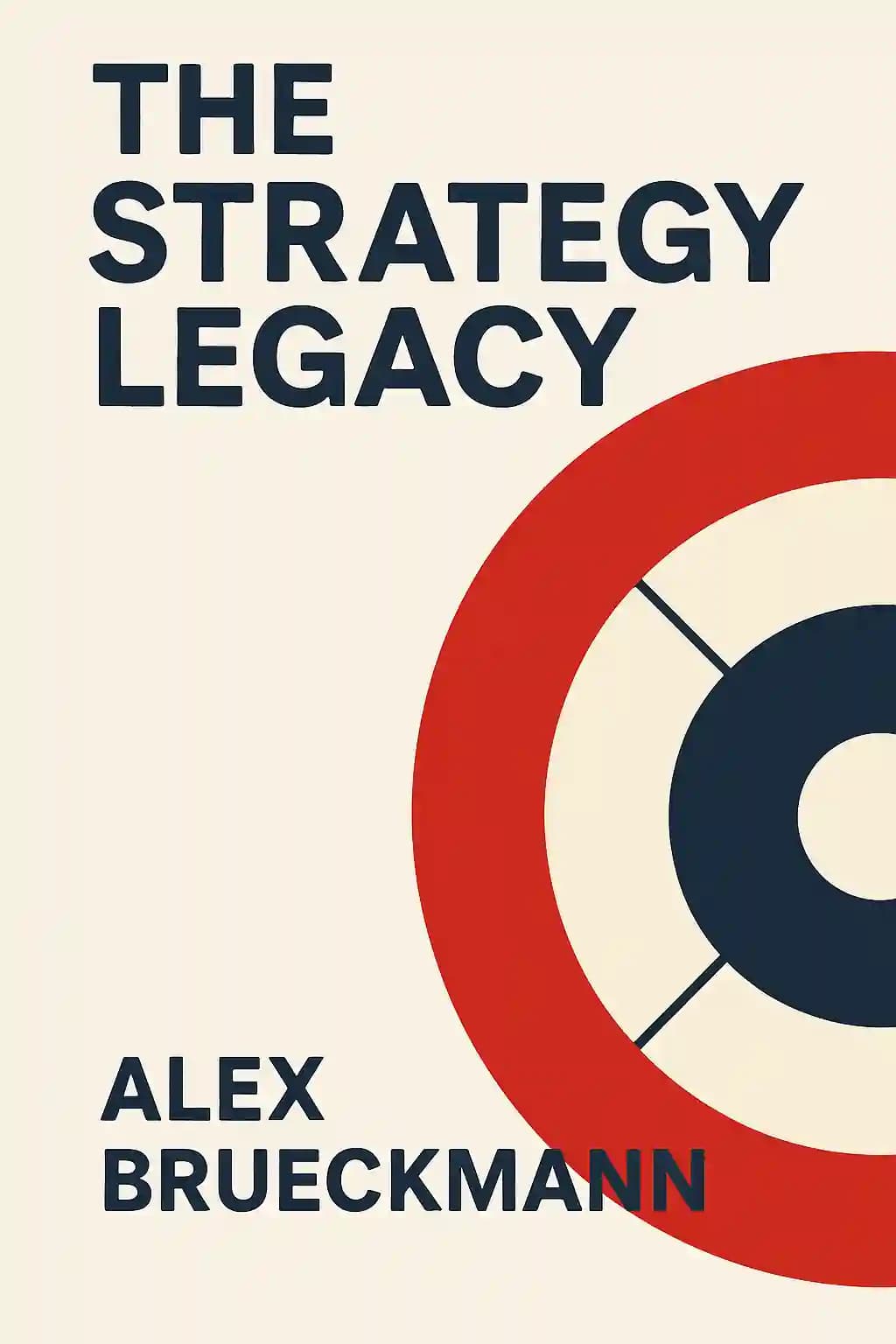
At the heart of Brueckmann's approach is the Nine Elements of Organizational Identity framework, organized in three concentric circles that work together to create a cohesive organizational identity. The inner circle establishes who the business is through impact, mission, and principles - the foundational elements that define an organization's core purpose. The middle circle contains the strategic core with vision, strategy maps, and goals, which translate purpose into actionable direction. The outer circle enables implementation through targets, capabilities, and management systems, providing the practical tools for execution.
This framework emerged from nearly two decades of hands-on business experience across various industries and organizational sizes. What distinguishes it is its response to the fundamental shift in employee expectations. The "Great Resignation" revealed that workers increasingly prioritize purpose over paycheck, with studies showing that 65% of employees would take a pay cut to work for a company with a strong mission alignment. This framework directly addresses these evolving workforce demands by creating environments where meaning and belonging are built into the organizational structure.
The framework's effectiveness is demonstrated through numerous real-world applications. Patagonia's evolution from a climbing equipment manufacturer to an environmental champion illustrates its power. Founder Yvon Chouinard built a values-based business centered on environmental stewardship (inner circle), which attracted passionate employees who shared these values (middle circle). The company then implemented concrete actions, including their "1% for the Planet" pledge and ultimately making Earth their only shareholder (outer circle). Similarly, Microsoft's transformation under Satya Nadella shows how the framework can revitalize established organizations. By redefining their mission from "a computer on every desk" to "empowering every person and organization on the planet to achieve more," Microsoft realigned its entire organization around a more meaningful purpose.
The framework's importance becomes particularly clear when examining the costs of misalignment. Organizations lacking clear purpose face turnover rates up to 3 times higher than their purpose-driven competitors. Brueckmann warns of an impending "talent storm" where workers will increasingly gravitate toward organizations that provide genuine meaning. This shift is already visible in sectors like tech, where companies with strong mission alignment report 40% lower turnover rates.
Implementation of the Nine Elements framework requires systematic effort but offers clear benefits. Companies that successfully align their elements report increased employee engagement (up to 1.4 times higher), improved customer satisfaction (2.3 times better), and stronger financial performance (3.1 times better revenue growth). The framework transforms strategy from a static document into a dynamic force that drives daily decisions and actions, creating organizations where purpose and profit coexist harmoniously.
Capitolo 3
Beyond Purpose Statements: Creating Genuine Impact
"No one cares about purpose." With this provocative statement, Brueckmann challenges the hollow buzzwords that have become all too common in corporate mission statements. While over 200 CEOs signed the Business Roundtable's stakeholder commitment, what truly matters is translating these intentions into meaningful action. The gap between stated values and actual behavior has created widespread cynicism, particularly among younger generations who can quickly spot corporate insincerity.
Today's consumers, employees, and investors demand authenticity rather than polished statements. They're asking organizations not just to define their "why" but to answer "why not" take positive action. This shift in thinking opens tremendous opportunities for forward-thinking companies. Research shows that companies with genuine purpose-driven strategies outperform their peers by up to 42% in shareholder returns over a 10-year period.
Take Unilever as an example. By implementing sustainable practices that attract conscious consumers, they've discovered new business opportunities while making a positive impact. Their Sustainable Living brands grew 69% faster than the rest of their business, demonstrating the commercial value of authentic purpose. Similarly, Hoffmann-La Roche demonstrated their commitment during COVID-19 by providing free test kits to China when they were desperately needed, showing how purpose can drive real-world decisions. This action not only helped address a global crisis but also strengthened their market position in Asia.
This approach to impact extends beyond individual companies to entire industries. Brueckmann challenges larger companies to aim higher with their "why not" questions, taking greater responsibility to offset negative impacts. He suggests linking executive compensation to meaningful change rather than purely financial metrics-imagine if Coca-Cola's leadership bonuses depended on achieving 100% recycled materials and carbon neutrality rather than just quarterly profits. Companies like Microsoft and Shell have already begun implementing such measures, tying executive pay to environmental targets.
The most powerful concept here is what Brueckmann calls the Legacy Trident-the threefold responsibility leaders have toward the people they lead, their organization, and society. This framework provides a practical guide for balancing competing interests while driving meaningful change. Leaders must consider how their decisions affect employee well-being, organizational sustainability, and societal impact simultaneously. This isn't just about feeling good; it's about creating sustainable entrepreneurship that generates business opportunities through innovations in circular economy and green energy.
Companies that embrace this approach aren't just doing good-they're positioning themselves for long-term success in a world that increasingly demands both profit and purpose. Patagonia's commitment to environmental activism has driven strong financial performance while building unprecedented customer loyalty. Interface's Mission Zero initiative not only eliminated its negative environmental impact but also generated significant cost savings and new revenue streams through innovative sustainable products. These examples demonstrate how authentic purpose can create competitive advantages while contributing to positive social change.
Capitolo 4
Strategy in a Transformative World
We live in an era of unprecedented disruption-from pandemics and geopolitical tensions to climate change and technological advancement. These disruptive forces are reshaping entire industries, from healthcare and energy to retail and manufacturing. Rather than seeing these challenges as threats, Brueckmann presents them as strategic opportunities for organizations willing to combine crisis response with value-driven strategy and foresight-informed planning. Companies like Microsoft and Amazon have demonstrated how disruption can become a catalyst for innovation and growth, transforming challenges into competitive advantages.
Strategic planning must operate across different time horizons, forming a three-tiered approach to future-readiness. While business strategy typically covers 3-5 years, organizations also need foresight (looking 10-15 years ahead) and signaling (immediate threat detection). This comprehensive approach helps companies understand macro trends, create scenarios with probability tags, and make bigger strategic bets that can revolutionize their business models. For instance, automotive companies like Volkswagen and BMW are simultaneously managing immediate supply chain disruptions while investing heavily in electric vehicle technology and exploring autonomous driving futures.
The power of transformative thinking becomes evident through concrete examples. Imagine a sportswear company that could pivot from selling yoga wear to becoming a player in the longevity industry through AI-backed personalized health services. Nike's evolution from a shoe manufacturer to a digital fitness ecosystem with Nike+ and connected devices illustrates this kind of strategic transformation. Similarly, IBM's transition from hardware manufacturer to AI and cloud services provider demonstrates how companies can fundamentally reinvent themselves through strategic foresight.
Brueckmann challenges the popular notion that "culture eats strategy for breakfast," drawing from extensive field experience. In one personal case study, cultural resistance derailed a sales project despite his success with operational excellence initiatives. This led him to conclude that culture should be shaped by strategy, not vice versa. Performance culture emerges from "a psychologically safe workplace where improving performance through learning, experiments, and a quest for the truth is central." Companies like Google and Pixar have successfully demonstrated this approach, creating cultures of innovation through strategic commitment to experimentation and learning.
This perspective offers three compelling insights with practical implications. First, dedicated culture projects often waste resources since culture naturally derives from strategy and leadership - as demonstrated by companies like Netflix, where cultural values emerge from strategic priorities. Second, executives engage more readily with strategy than abstract culture concepts, making strategy a more effective lever for organizational change. Third, culture has become a strategic factor for investors in the shift to stakeholder capitalism, with ESG metrics increasingly influencing investment decisions. By focusing on strategy implementation, organizations can shape culture more effectively than through standalone culture initiatives, as exemplified by companies like Patagonia and Microsoft, which have successfully aligned their cultural values with their strategic objectives.
The integration of crisis management capabilities with long-term strategic thinking has become essential for survival and growth in today's volatile business environment. Organizations must develop the ability to respond to immediate challenges while maintaining focus on long-term transformation opportunities, creating what Brueckmann calls "strategic resilience."
Capitolo 5
Strategic Mindsets: The Foundation for Successful Strategy
Before diving into strategy creation, Brueckmann emphasizes the importance of establishing the right mindset. Conscious leadership is essential-leaders must operate "above the line" by being open, curious, and committed to learning rather than defensive and closed. A dysfunctional leadership team simply cannot create effective strategy, regardless of their technical expertise or market knowledge.
What does this look like in practice? It means becoming "humble learners" who explore options curiously, pay attention to others, and detach from ego-driven aspirations. Leaders must actively demonstrate vulnerability by admitting what they don't know, seeking input from all levels of the organization, and showing genuine openness to new perspectives. This might involve senior executives spending time on the front lines, regularly soliciting feedback from junior team members, or establishing formal mechanisms for bottom-up innovation. This approach transforms collaboration from a buzzword into the lubricant for high-performance organizations.
Brueckmann advocates for combining team development with strategy creation, an approach he calls "integrated strategic development." While this process typically takes 20-30% longer than traditional strategy planning, it produces deeper conversations, more productive conflict, and higher accountability. For example, a leadership team might spend several sessions exploring their individual leadership styles, addressing interpersonal tensions, and building trust before tackling strategic decisions. The psychological safety built through this process enables more ambitious goals and faster execution, as team members feel confident expressing dissenting views and taking calculated risks.
When facilitating these processes, organizations face a choice between internal and external facilitators. Internal facilitators bring valuable institutional knowledge-they understand the organization's processes, history, and stakeholders. They can navigate internal politics and know which buttons to push or avoid. External facilitators, however, offer fresh perspectives and remain unbiased, allowing them to ask difficult questions that challenge internal paradigms and move groups forward through controversial issues because they aren't personally affected by decisions. The best approach often combines both: using external facilitators for major strategic initiatives while developing internal facilitation capabilities for ongoing implementation.
This balanced approach to strategy development creates a foundation where teams can have honest conversations about their organization's strengths, challenges, and future direction. Common practices include regular "strategy retreats" that combine team building with strategic planning, establishing clear ground rules for constructive conflict, and creating formal feedback mechanisms to ensure all voices are heard. By establishing this foundation before diving into strategy creation, organizations dramatically increase their chances of developing strategies that can actually be implemented rather than collecting dust on a shelf. Success metrics might include improved team psychological safety scores, faster decision-making processes, and higher implementation rates for strategic initiatives.
The mindset shift required often involves moving from a "knowing" culture to a "learning" culture, where curiosity and experimentation are valued over certainty and perfection. This transformation typically takes 6-12 months of consistent effort but creates lasting changes in how organizations approach both strategy and leadership development.
Capitolo 6
The Strategy Design Process: From Foundation to Implementation
Strategy development isn't mysterious or reserved for elite consultants. As Jim Ollhoff notes, "strategy is simply a plan for gaining an advantage." Brueckmann's eight-step process makes this accessible to organizations of all sizes, beginning with executive interviews to assess the terrain and gauge leadership alignment.
The foundation session serves as a critical first step-like shifting gears on an ancient tractor, it carefully aligns moving parts before advancing to strategy development. This session measures the base layer of organizational identity and secures leadership commitment for the journey ahead. Teams identify their organization's truly unique strengths-not just what they're good at, but what genuinely differentiates them from competitors.
When defining organizational values, Brueckmann advises going beyond generic moral values to identify what he calls "diamond values"-2-3 values that directly support the impact statement and remain nonnegotiable even under pressure. Research by Professor Sigal Barsade shows that cultures based on "companionate love"-where people genuinely care about one another-lead to better engagement, teamwork, less burnout, and higher customer satisfaction.
The strategy design workshop represents the heart of the process, bringing together the core team to create three tangible outcomes: a vision statement, strategic KPIs, and workstreams captured in a strategy map. A great vision balances heart and brain (emotional and rational appeal), detail and aspiration, and purpose and measurability. Wikipedia's vision of creating "a world in which every human being can freely share in the sum of all knowledge" exemplifies this balance.
Strategic workstreams drive progress toward the vision, but require ruthless prioritization-stopping projects that aren't strategically relevant to free up resources for implementation. A B2B company example illustrates how failure to reallocate resources (when a sales leader continued serving lower-priority clients) undermined strategic goals.
After the initial design phase comes refinement-making your organizational identity and strategy implementation-ready. This includes research to eliminate assumptions, refinement workshops to stress-test the strategy, and workstream deep dives to finalize charters. The process culminates in an organizational intent document that consolidates all elements into one source of truth, written in flowing text with supporting visuals rather than bullet points.
Capitolo 7
Implementing Strategy Through Targets and Accountability
Even the most brilliant strategy fails without proper implementation. Brueckmann uses a personal football story about being benched without explanation to illustrate how the absence of clear targets creates confusion and anxiety. Without translating strategy into individual targets, initiatives lose momentum-like an aircraft losing airflow.
Breaking down strategic goals into individual targets enables meaningful contribution. Consider a commercial vehicle manufacturer monetizing vehicle data with a $500 million revenue goal-this requires contributions across departments, each with clear targets that connect to the overall strategy.
The author advocates for the 80/20 rule in target-setting-focusing on the 20% of measures that will make 80% of the difference. Reporting should accelerate the organization and demonstrate progress, not control every move. When organizations lack trust and healthy culture, people "play the system" to reach targets through deception.
Not all targets are quantitative-principles like business integrity must be translated into context-specific behaviors. What works for corporate lawyers in Japan differs from a sales team in Chile. Leaders must help teams understand how principles apply to their daily work.
Performance reviews drive behavior, as people focus on what helps them advance or avoid trouble. Strategy must be translated into individual targets with accountability for both outcomes and methods. The process of reaching targets should be as important as achieving them, with incentives for doing things correctly rather than cutting corners.
This approach creates a culture of justice and accountability where fair target-setting and public recognition motivate people to contribute willingly rather than from fear of repercussions. When people understand how their work connects to the bigger picture, they become engaged participants rather than confused spectators.
Capitolo 8
Building Capabilities: The Human Side of Strategy
A popular social media exchange captures a fundamental truth about organizational development: A CFO asks, "What happens if we invest in developing people and they leave?" The CEO responds, "What happens if we don't, and they stay?" Without intentional capability development, organizations face a troubling reality-some employees will self-teach out of curiosity, some will struggle with change, but most-the "silent majority"-will simply maintain the status quo within their comfort zones.
Despite 90% of companies recognizing significant skill gaps, only 16% know how to close them, and 60% admit their learning and development budgets aren't connected to strategic goals. This disconnect stems from business leaders failing to partner with HR to identify strategic capability needs.
The solution requires a two-way partnership: HR professionals must develop business acumen and speak the language of ROI, while business leaders must engage with L&D teams instead of making isolated training decisions that waste resources. The author recommends four steps to close capability gaps: conduct a proper analysis, evaluate existing measures, design new programs with clear business links, and measure application of learning.
Six critical capabilities emerge as essential for implementing organizational identity: the ability to inspire others by helping them discover personal benefits; the ability to collaborate through relationships and transparent feedback; communication skills using appropriate terminology and active listening; strategic acumen for understanding market dynamics; leading by intention through effective prioritization; and selflessness that celebrates team achievements while understanding one's ego patterns.
A powerful case study demonstrates this approach in action: A client placed people development at the center of their customer support strategy, creating a dedicated workstream called "Develop and Empower Our People." The program taught leaders how to explain strategy without jargon, translate strategy into individual targets, hold people accountable, and use both rational and emotional communication to inspire action.
The author emphasizes that training alone isn't enough-research shows only 15% of participants successfully apply what they learn without proper preparation and follow-up support. By investing in these capabilities when implementing strategy, organizations avoid costly implementation failures and create the human foundation necessary for strategic success.
Capitolo 9
Management Systems: Aligning Structure with Strategy
In architecture, "form follows function" means design should primarily relate to intended purpose. This principle applies equally to organizational design-structures and processes must support identity and strategy rather than hinder them. Using an airplane metaphor, successful identity implementation requires thrust (strategy, vision), reduced drag (cynicism, fear), lift (influential stakeholders, capable leaders), and reduced weight (obsolete management systems).
Management systems-from simple collaboration guidelines to complex policies-must be reviewed during identity transformation. One powerful example shows a company terminating a profitable client relationship because the client's business practices violated the company's newly defined values, demonstrating the importance of aligning management systems with identity.
Strong governance requires creating an environment where uncomfortable truths can be discussed and positive conflict leads to the best decisions. Organizations failing to establish this environment suffer from ambiguity, secret decision-making, and psychological insecurity among employees who don't understand the decision criteria being used.
The implementation board serves as the conductor orchestrating the identity rollout, tracking strategy implementation and ensuring purpose and principles become operational. The strategy review board ensures the initiative remains effective and relevant. The Project Management Office (PMO) provides structural backbone through research, reporting, and methodological support.
While strategies should theoretically free up resources by providing a framework for prioritization, organizations often feel overwhelmed because their priorities are diluted-when everything is important, nothing is. True productivity comes not from hacks or delegation but from intentional focus on what matters.
Communication acts as essential oil for identity initiatives. Rather than imposing identity from the top down, organizations benefit from establishing meaningful two-way conversations about strategy, impact, and values through workshops, focus groups, and surveys. Though this participatory approach may initially slow the design process, it creates a broader, more stable foundation than leadership-only creations.
The power of effective communication was demonstrated when one company announced a site closure-instead of plummeting morale, employees showed understanding and many applied for positions at the new hub, having internalized the company strategy through consistent communication.
Capitolo 10
Creating Your Strategy Legacy: From Concept to Reality
While strategy changes, identity endures as the stabilizer keeping businesses afloat during strategic shifts. Leaders who combine commercial and cultural aspects unlock strategy's hidden power, driving success while creating meaningful legacies. People-centric strategies supported by capability-building and management systems enable this transformation.
Strategy belongs to everyone in an organization, not just executives. Embedding it within the Nine Elements of Organizational Identity generates marketplace energy that can't be easily copied. Rallying people around impact, values, and strategy creates competitive advantage that transcends mere profitability.
The journey begins with personal reflection-uncovering your moral compass, identifying core values, and visualizing your living legacy. From there, define your purpose and impact, balancing doing good with financial success. Clarify your mission and create a balanced vision that inspires action. Formulate clear workstreams and derive individual targets that connect daily work to strategic goals.
Link capability development directly to organizational identity and adjust management systems to support your strategy. Finally, use the legacy trident to reflect on your impact on people, business, and society.
The most powerful organizations don't just execute strategy-they embody it through every aspect of their identity. They create environments where people understand not just what they're doing but why it matters. They build structures that support rather than hinder implementation. And they develop the capabilities needed to bring their vision to life.
By following Brueckmann's framework, leaders can create organizations that don't just succeed in the marketplace but make a meaningful difference in the world. They can build legacies that extend beyond quarterly reports to touch the lives of employees, customers, and communities. And they can transform strategy from a dusty document into a living force that drives sustainable success.