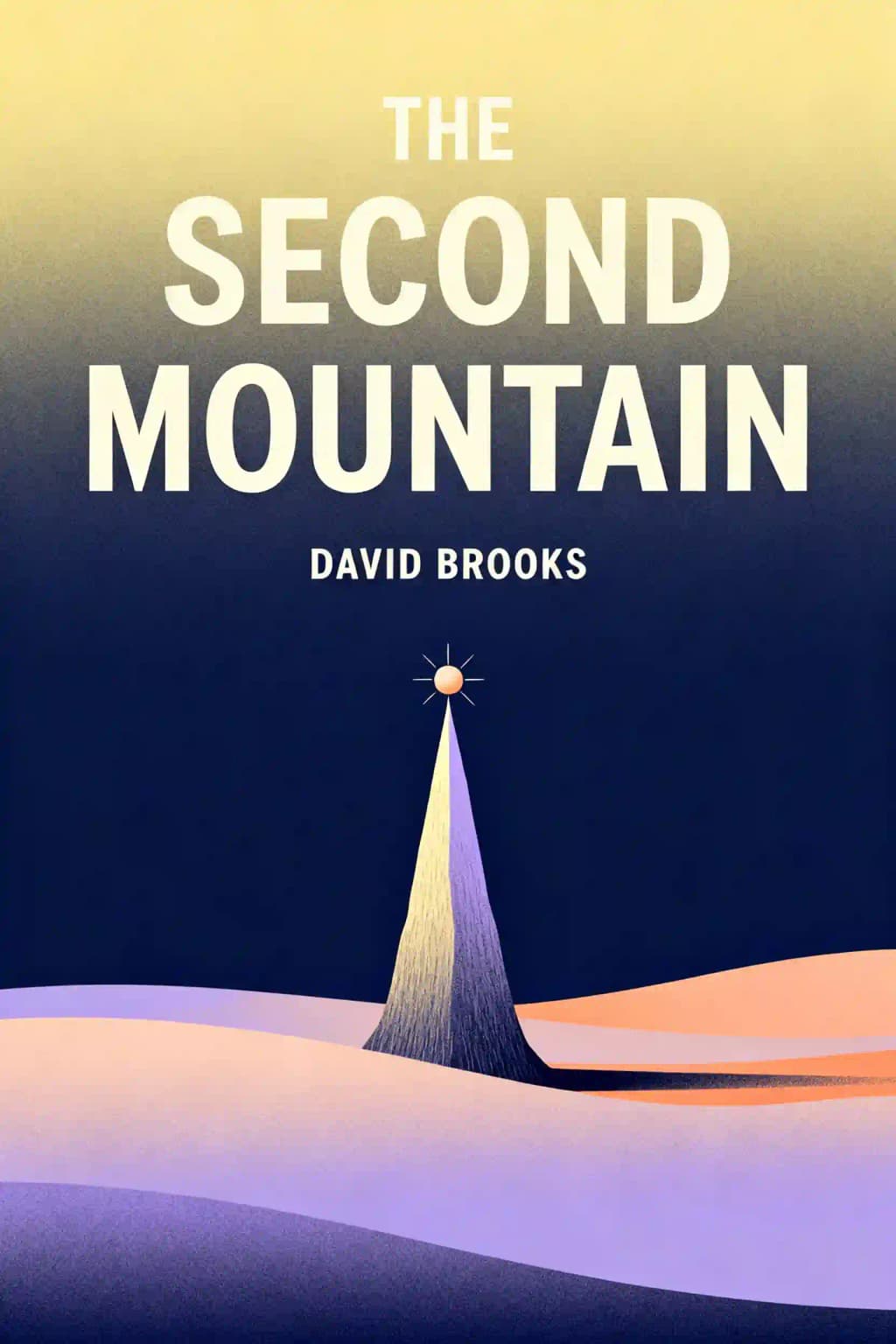
In "The Second Mountain," David Brooks challenges our individualistic culture, arguing true joy comes through commitment to family, vocation, faith, and community. This #1 NYT bestseller invites readers to transcend personal success and discover what makes life genuinely meaningful - not happiness, but purpose.
David Brooks, bestselling author of The Second Mountain: The Quest for a Moral Life, is a New York Times op-ed columnist, PBS NewsHour political analyst, and cultural commentator known for exploring themes of morality, community, and human connection.
Born in Toronto in 1961 and raised in New York and Pennsylvania, Brooks graduated from the University of Chicago with a history degree before launching a career spanning journalism at The Wall Street Journal, The Weekly Standard, and NPR. His work blends social analysis with philosophical inquiry, reflecting his expertise in dissecting modern societal shifts.
Brooks’s earlier books, including The Road to Character and The Social Animal (also summarized here), established his reputation for bridging psychology, ethics, and public policy. A frequent commentator on NBC’s Meet the Press and NPR’s All Things Considered, he chairs the Aspen Institute’s Weave Project, advancing community-building initiatives aligned with The Second Mountain’s themes. The book debuted as a #1 New York Times bestseller, cementing Brooks’s role as a leading voice on moral philosophy in contemporary discourse.
The Second Mountain explores the shift from self-centered success ("first mountain") to a purpose-driven life rooted in community, relationships, and moral commitment ("second mountain"). Brooks argues that true fulfillment comes from surrendering to meaningful causes, whether through faith, family, or social responsibility, rather than chasing individual achievement.
This book is ideal for readers questioning the emptiness of material success, seeking deeper connections, or navigating life transitions. It resonates with professionals, caregivers, and anyone interested in philosophy, ethics, or community-building.
Yes—Brooks combines memoir, social critique, and actionable wisdom to reframe modern life’s crises. Its blend of personal storytelling and communitarian philosophy makes it valuable for readers pursuing purpose beyond conventional success metrics.
Happiness is individual and fleeting, tied to achievements. Moral joy arises from self-transcendence—serving others, building community, and upholding ethical commitments. Unlike happiness, joy deepens over time through sacrifice and connection.
Some argue Brooks idealizes communal living without addressing systemic barriers to connection. Others note his focus on personal transformation may underplay structural solutions to societal isolation.
While The Road to Character focuses on inner virtue, The Second Mountain expands outward, emphasizing relational ethics over individual morality. Both critique hyper-individualism but differ in scope.
Brooks credits his Jewish heritage and Christian conversion with shaping his emphasis on surrender and service. He frames faith as a catalyst for transcending self-interest, though the book addresses secular readers equally.
Yes—Brooks advocates aligning work with communal impact rather than personal gain. Examples include teachers prioritizing student growth or entrepreneurs building employee-centric cultures.
Both emphasize surrender to purpose over control.
Brooks links societal isolation to individualism, proposing that sustained commitments (to places, causes, or people) rebuild trust and belonging—a corrective to transactional relationships.
While Atomic Habits focuses on personal systems, Brooks prioritizes collective purpose. Both address self-improvement but differ in scale—individual habits vs. communal ethics.
Senti il libro attraverso la voce dell'autore
Trasforma la conoscenza in spunti coinvolgenti e ricchi di esempi
Cattura le idee chiave in un lampo per un apprendimento veloce
Goditi il libro in modo divertente e coinvolgente
Joy involves transcendence of self-moments when barriers between you and others fade away.
A narcissist can be happy but never joyful because joy requires self-surrender.
We can create happiness, but joy seizes us.
Life began to feel not just meaningless but absurdly cruel.
Scomponi le idee chiave di The Second Mountain in punti facili da capire per comprendere come i team innovativi creano, collaborano e crescono.
Distilla The Second Mountain in rapidi promemoria che evidenziano i principi chiave di franchezza, lavoro di squadra e resilienza creativa.

Vivi The Second Mountain attraverso narrazioni vivide che trasformano le lezioni di innovazione in momenti che ricorderai e applicherai.
Chiedi qualsiasi cosa, scegli la voce e co-crea spunti che risuonino davvero con te.

Creato da alumni della Columbia University a San Francisco
"Instead of endless scrolling, I just hit play on BeFreed. It saves me so much time."
"I never knew where to start with nonfiction—BeFreed’s book lists turned into podcasts gave me a clear path."
"Perfect balance between learning and entertainment. Finished ‘Thinking, Fast and Slow’ on my commute this week."
"Crazy how much I learned while walking the dog. BeFreed = small habits → big gains."
"Reading used to feel like a chore. Now it’s just part of my lifestyle."
"Feels effortless compared to reading. I’ve finished 6 books this month already."
"BeFreed turned my guilty doomscrolling into something that feels productive and inspiring."
"BeFreed turned my commute into learning time. 20-min podcasts are perfect for finishing books I never had time for."
"BeFreed replaced my podcast queue. Imagine Spotify for books — that’s it. 🙌"
"It is great for me to learn something from the book without reading it."
"The themed book list podcasts help me connect ideas across authors—like a guided audio journey."
"Makes me feel smarter every time before going to work"
Creato da alumni della Columbia University a San Francisco

Ottieni il riassunto di The Second Mountain in formato PDF o EPUB gratuito. Stampalo o leggilo offline quando vuoi.
Life has a two-mountain shape. On the first mountain, we pursue conventional success-career advancement, financial security, social status. We build identities, cultivate talents, and establish ourselves as capable individuals. But something inevitably happens. Some reach the summit only to discover an emptiness-achievement without fulfillment. Others get knocked off by failure, illness, or tragedy, finding themselves in what Brooks calls "the valley"-a place where previous certainties collapse. In this valley, people face a choice. Some shrivel, becoming fearful and resentful. Others undergo transformation, discovering capacities for care they never knew they possessed. They begin yearning for something beyond self-interest-for moral causes, deep relationships, and interdependence. This marks the beginning of the climb up the second mountain. What distinguishes those on the second mountain is their joy-not the fleeting happiness of achievement but the deeper satisfaction from serving others. These people radiate an inner light. They're not perfect, but they live for something beyond themselves, committed to family, community, vocation, or faith. This distinction between happiness and joy is crucial. Happiness involves victory for the self. Joy involves transcendence of self-moments when barriers between you and others fade away. We can create happiness, but joy seizes us.