Capitolo 1
Dreams Bleed When Gods Are Wounded
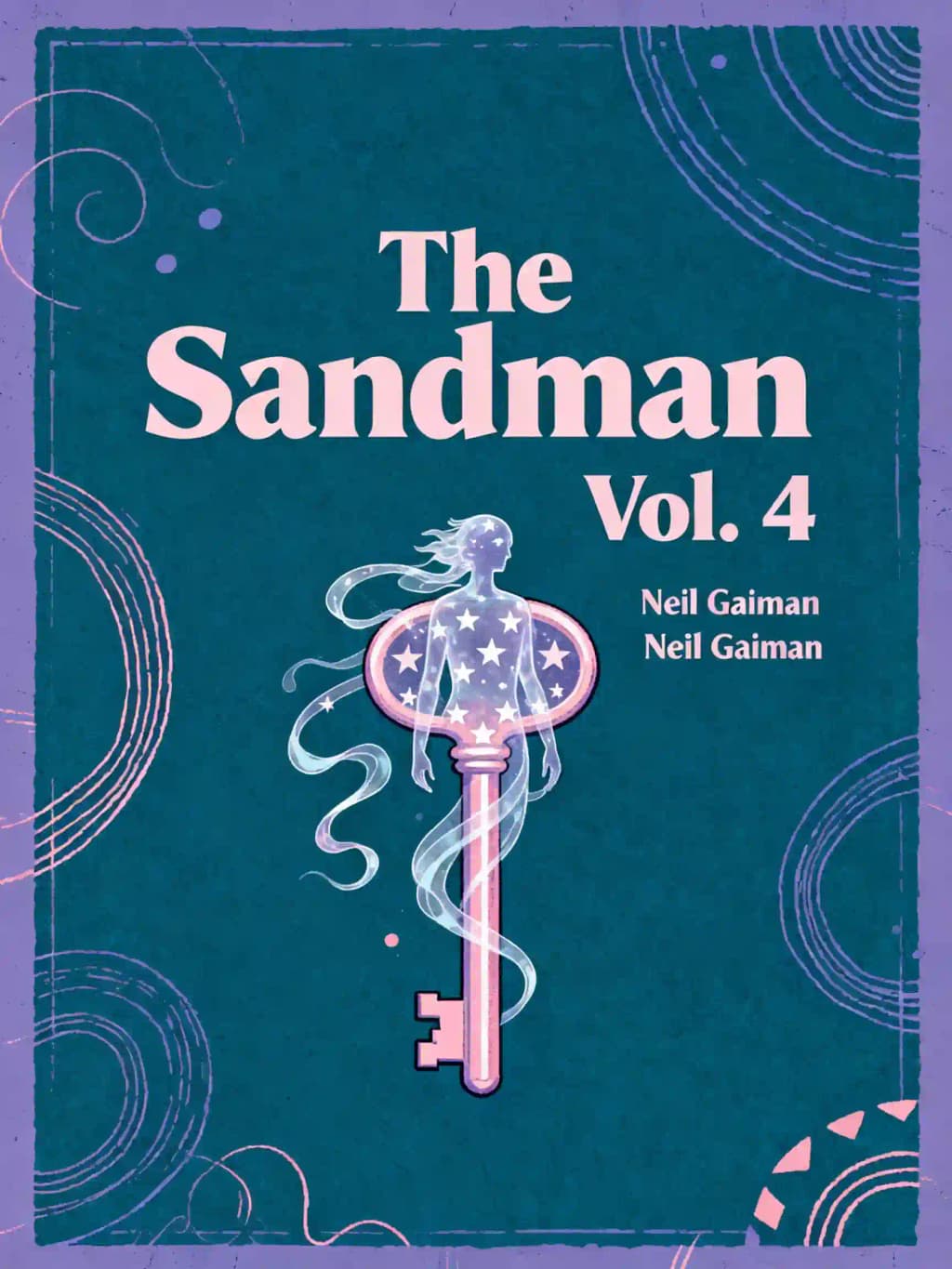
Step into a realm where nightmares have teeth and dreams can kill. Neil Gaiman's "The Sandman Vol. 4: Season of Mists" delivers the storyline that cemented this graphic novel series as literary royalty - the tale where Lucifer quits Hell and hands Morpheus the keys.
Originally published in 1992, this volume marked the moment mainstream critics finally acknowledged comic books could achieve high art. When Gaiman received a World Fantasy Award for a story in this saga, the rules were hastily changed afterward to prevent comics from competing again.
Within these pages, Morpheus confronts his past cruelties, various pantheons scramble for control of Hell's real estate, and the boundaries between mythology, theology, and fantasy dissolve into something uniquely haunting. The story weaves Norse gods with Japanese demons, angels with faeries, all rendered in breathtaking artistic detail.
What awaits you isn't merely escapism but a profound meditation on responsibility, change, and the stories we tell ourselves about power - packaged in a narrative so compelling it redefined what sequential art could achieve.
Capitolo 2
The Gathering of the Endless Family
The story begins with a family reunion unlike any other - the gathering of the Endless, seven siblings who embody fundamental aspects of existence. In the Garden of Destiny, the eldest brother, they come together at his bidding. Destiny himself is a blind figure bound to his book, knowing all that was, is, and will be. His garden is a labyrinth of possibilities, every path representing choices made and unmade across the universe.
Death arrives first - not the grim reaper of popular imagination, but a perky, compassionate young woman dressed in black, with an ankh around her neck and an eye of Horus painted beneath her eye. She is followed by the twins: Desire, a beautiful androgynous figure with golden eyes and a heart-shaped dwelling, and Despair, a naked, gray-skinned woman with hooked rings that tear at flesh. Delirium, once Delight, skips in with mismatched eyes (one blue, one green) and constantly changing hair, her thoughts scattered like butterflies.
The family awaits Dream (Morpheus) and their missing brother Destruction, who abandoned his realm centuries ago. When Morpheus finally arrives, the tension is palpable. These siblings may be cosmic forces, but their dynamics mirror human families - old wounds, resentments, and complicated love bind them together.
During this reunion, Desire deliberately provokes Dream by bringing up his former lover, Nada, whom he condemned to hell 10,000 years ago for rejecting his love. Death, in her wisdom, confronts Dream about this injustice, forcing him to acknowledge his cruelty. "You condemned her to Hell for ten thousand years, because she refused you?" Death asks, her simple question cutting through Dream's pride.
The scene establishes the central conflict - Dream must face his past mistake and the consequences of his pride. It also beautifully illustrates how these abstract concepts function as a dysfunctional family, with all the love, rivalry, and complexity that entails. The Endless may shape reality, but they are shaped by their relationships with one another, trapped in patterns as ancient as existence itself.
Capitolo 3
The Burden of Pride and Past Mistakes
Following the family gathering, Dream returns to his castle in the Dreaming, shaken by the confrontation with his siblings. He must now face a truth he has avoided for millennia - his treatment of Nada was unjust, motivated by wounded pride rather than any true crime on her part. This realization forces him to contemplate a journey to Hell itself, a realm where he has powerful enemies, particularly Lucifer Morningstar.
Dream prepares methodically for what might be his final journey. He appoints the raven Matthew as his witness and emissary should he not return. He settles affairs in his realm, speaking with Cain and Abel, the first murderer and victim who serve as storytellers in the Dreaming. The brothers provide comic relief but also foreshadow the dangers ahead - Cain repeatedly kills Abel (who always resurrects) while warning Dream about the foolishness of his mission.
The sequence reveals Dream's complex character - he is honorable enough to recognize his mistake and brave enough to risk everything to correct it, yet his pride remains. When his librarian Lucien asks if he should prepare for a new master of the Dreaming, Dream responds with characteristic arrogance: "If I do not return, there will be no new master. There will be no Dreaming. That is all." His identity is so bound to his role that he cannot imagine the realm continuing without him.
As Dream approaches the gates of Hell, we see flashbacks to his relationship with Nada. Ten thousand years ago, in a city of glass, the mortal queen Nada fell in love with Dream. Their brief romance ended in tragedy when her city was destroyed - the universe rejecting the union between mortal and Endless. When Nada rejected Dream to prevent further destruction, his pride was wounded, and he condemned her to eternal torment.
This backstory adds tragic depth to Dream's character. His loneliness and inability to form lasting connections stem from his rigid nature. The burden of his mistake has weighed on him for millennia, yet only now, prompted by family intervention, does he find the courage to make amends. The sequence beautifully illustrates how even immortal beings can be prisoners of their own character flaws, and how the passage of time does not necessarily bring wisdom without conscious reflection.
Capitolo 4
Hell's Surprising Vacancy Notice
Dream arrives at Hell's gates, steeling himself for confrontation with Lucifer Morningstar. The entrance is a massive face with a mouth for a doorway, crying tears of blood - a striking image of suffering that sets the tone for what lies beyond. Inside, Hell appears abandoned. The demons are gathering, the damned souls left unattended. Something momentous is occurring.
When Dream finally encounters Lucifer, he finds the fallen angel in an unexpected mood. Rather than the anticipated hostility, Lucifer seems almost serene, though with an undercurrent of dangerous purpose. "I've quit," he announces simply. He is closing Hell, releasing all its denizens, and abdicating his throne. As proof of his intent, Lucifer has already dismissed all demons and freed all souls - including Nada, whom Dream had come to rescue.
What follows is a masterful scene where Lucifer systematically locks every gate of Hell, accompanied by Dream who watches in astonishment. With each gate sealed, Lucifer grows visibly weaker, relinquishing the power that has defined him since his fall from Heaven. The sequence culminates in a moment of startling vulnerability when Lucifer asks Dream to cut off his wings - the last symbol of his angelic past and his reign over Hell.
"You think I blame you, don't you?" Lucifer says to Dream. "You think I hate you for imprisoning me here, all those years ago. I don't. I've had longer than you could imagine to plot revenge... But vengeance is hollow. I've watched universes die and be born. I've seen gods rise and fall. All I ever wanted was freedom."
In the final, stunning twist of their encounter, Lucifer hands Dream the key to Hell - a massive, ornate key that represents ownership and responsibility for the infernal realm. "It's yours now. It's your problem," Lucifer says with a smile that mixes malice and genuine relief. "Perhaps it will destroy you, perhaps it won't. But it's no longer my concern."
This unexpected development transforms the narrative from a rescue mission to something far more complex. Dream now possesses the key to Hell itself - a "gift" that is really a burden, a responsibility he never sought, and a potential source of power that could corrupt even an Endless. Lucifer's abdication is both an escape from his own prison and a subtle revenge against Dream, forcing him into a position where he must make decisions that will inevitably create enemies.
Capitolo 5
The Key That No One Wanted (But Everyone Desires)
Word spreads quickly across the cosmos - Hell is vacant, and Dream holds its key. Soon, a parade of deities, demons, and supernatural entities descends upon the Dreaming, each seeking ownership of the infernal realm. This unprecedented situation creates a divine diplomatic crisis, as representatives from various pantheons and dimensions arrive to stake their claims.
The Norse gods send Odin, Thor, and Loki as their delegation. The Egyptian pantheon dispatches Bast and Anubis. Azazel arrives with two other demons, representing Hell's former inhabitants. Faerie sends its lords Cluracan and Nuala. Order and Chaos send their emissaries. Even the angels Duma and Remiel appear as observers from the Silver City (Heaven), though they claim no interest in Hell's ownership.
Each delegation presents their case to Dream, creating a surreal supernatural lobbying session. Their arguments reveal much about their natures and the cosmology of this universe. Odin speaks of strategic advantage, while Azazel threatens Dream with hostages - two of his former lovers captured by demons. The Japanese storm god Susano-no-o offers a trade of treasures, while Chaos simply wants Hell as a new playground for entropy.
Throughout these negotiations, Dream maintains his composure, hosting the delegations with perfect courtesy while revealing nothing of his intentions. The situation becomes increasingly tense as rivalries between the groups emerge. Thor nearly starts a divine war when provoked by a demon. Loki and Puck (Robin Goodfellow) cause mischief throughout the Dreaming. The angels observe silently, their purpose unclear.
This sequence brilliantly expands the cosmology of the Sandman universe, showing how various mythological systems coexist. These aren't simply characters borrowed from world religions - they are complex beings with their own agendas and personalities. Odin is calculating and wise but limited by his nature. The demons are cruel but bound by their own codes. The faeries are beautiful but amoral and self-serving.
The negotiations also reveal the precarious position Dream occupies in the cosmic hierarchy. He is powerful enough to host gods and demons, yet vulnerable to their machinations. His realm is sovereign, yet connected to all others. The key to Hell represents not just ownership of a realm but a shift in the balance of power between various supernatural factions - and Dream finds himself the reluctant arbiter of this potential cosmic realignment.
Capitolo 6
Divine Politics and Infernal Diplomacy
As the delegations settle into the Dreaming, the politics grow increasingly complex. Dream assigns each group quarters within his realm, creating a temporary diplomatic compound for supernatural entities. The interactions between these beings reveal centuries-old rivalries, alliances, and grudges that transcend human understanding.
In one memorable scene, Odin, Thor, and Loki dine with the Egyptian gods. Their conversation is cordial but tense, each side probing for weaknesses while maintaining decorum. When Thor boasts of being worshipped still, Bast responds with cutting precision: "I have been worshipped as a god for ten thousand years... The followers of my cult numbered millions in the days before your grandfather's grandfather was born." The exchange highlights how these beings measure power and status through worship and remembrance.
Meanwhile, the demons plot more directly. Azazel reveals his hostages - Nada (whom Dream had been seeking in Hell) and Choronzon, a demon who once lost a contest to Dream. The implicit threat is clear: if Dream doesn't award Hell to the demons, these captives will suffer eternally within Azazel's body, which contains its own dimension of torment.
The faerie delegation takes a different approach. They offer Dream their servant Nuala as a gift, regardless of his decision - a gesture that seems generous but plants a potential spy in his realm. Cluracan, the smooth-talking faerie lord, attempts to charm and manipulate everyone he encounters, demonstrating the subtle approach of his court.
Throughout these negotiations, Dream's servants struggle to maintain order. Lucien the librarian catalogs the new arrivals, Matthew the raven observes and reports back, and Mervyn Pumpkinhead (the janitor with a pumpkin for a head) complains bitterly about the mess these divine visitors create. Their perspectives provide both comic relief and a grounding element to the cosmic politics.
The most fascinating dynamic emerges between the silent angels, Remiel and Duma. Though they claim to be mere observers, their presence grows increasingly significant. They communicate without words, exchanging glances that suggest deeper purposes. When they finally receive unexpected orders from the Silver City, their reaction - particularly Remiel's outrage and Duma's silent acceptance - foreshadows the ultimate resolution of the crisis.
This section brilliantly balances cosmic politics with personal stakes. The fate of Hell isn't just an abstract power struggle - it has implications for countless souls, for the balance between pantheons, and for Dream's own position in the cosmic hierarchy. The negotiations reveal that even gods are bound by rules and expectations, trapped in roles that define and limit them just as surely as mortals are constrained by their circumstances.
Capitolo 7
The Burden of Choice and Unexpected Solutions
As the delegations grow restless, Dream must finally make his decision. He retreats to his gallery, a hall containing symbols of the Endless - portraits and tokens representing his siblings. Here, in a rare moment of vulnerability, he seeks wisdom from his family, though only in spirit as he contemplates their perspectives.
The decision weighs heavily on him. Award Hell to any faction, and he creates powerful enemies among the others. Keep it himself, and he risks becoming something other than Dream - his identity diluted by new responsibilities. Destroy Hell, and he disrupts a fundamental aspect of cosmic order. There seems no solution that doesn't create new problems.
The resolution comes from an unexpected quarter. The angels Remiel and Duma receive a message from the Silver City - God has decreed that they will take stewardship of Hell, transforming it from a realm of punishment to one of redemption. Remiel rebels against this command, arguing passionately that they are angels of the presence, not jailers. Duma, the Angel of Silence, makes no protest but accepts with quiet dignity.
Dream seizes this divine intervention as the perfect solution. By awarding Hell to Heaven's representatives, he makes a choice that none can reasonably protest - not even the demons, who understand the hierarchy of power. When he announces his decision, the reactions are mixed but accepting. The delegations depart, some satisfied, others disappointed, but none in a position to challenge what appears to be divine will.
This resolution reveals much about Dream's character and the cosmology of this universe. He navigates an impossible situation by recognizing when to relinquish control, understanding that some problems are best solved by allowing greater powers to intervene. Yet there's irony in his relief - he fails to recognize that he's setting precedents and making enemies despite his careful diplomacy.
The most poignant aspect of this resolution concerns Nada, Dream's former lover whom he had condemned to Hell. Though freed from Azazel by Dream's cunning, their reunion is bittersweet. Dream finally apologizes for his pride and cruelty, offering Nada choices for her future - she can return to the world of the living, dwell in the Dreaming, or be reborn with no memory of her past suffering. She chooses rebirth, closing a chapter that has haunted Dream for millennia.
This sequence beautifully illustrates how even cosmic beings must face the consequences of their actions and find ways to make amends. Dream's apology to Nada represents growth - a willingness to acknowledge wrongdoing that he lacked when he first condemned her. Yet his fundamental nature remains unchanged; he is still Dream, bound by duties and limitations that define his existence.
Capitolo 8
Hell Under New Management
With the angels Remiel and Duma installed as Hell's new custodians, profound changes begin to reshape the infernal realm. Remiel, initially resistant to his new role, embraces it with disturbing zeal. He announces a new purpose for Hell - it will become a place of redemption rather than punishment, where souls are tormented not out of cruelty but to purify them for eventual return to Heaven.
"We are here to save you all," Remiel proclaims to the damned souls, his face radiant with purpose. "The pain you feel is not meaningless torture, but the clean fire of purification." This reframing of suffering as spiritual improvement creates a more insidious form of torment - one that removes even the dignity of acknowledging that punishment is punishment.
The sequence raises profound questions about the nature of redemption and suffering. Is Hell more hellish when torture comes with platitudes about improvement? When pain is inflicted "for your own good" rather than admitted as punishment? The damned souls certainly think so - many find this new Hell more unbearable than the old. As one soul laments, "At least Lord Lucifer was honest about his intentions."
Meanwhile, Lucifer himself has made his way to Earth. In a beautiful coastal scene, we find the former ruler of Hell watching a sunset, experiencing simple pleasures denied to him for eons. "I've never seen the Pacific," he tells an old man who joins him on the beach. "It's really quite extraordinary, isn't it?" This moment of genuine appreciation reveals Lucifer's true desire - not power or vengeance, but freedom from the role that defined and limited him.
When the old man asks what Lucifer will do now, his answer is simple yet profound: "I don't know. Isn't that wonderful?" For a being who has existed since nearly the beginning of time, uncertainty represents not anxiety but liberation - a chance to define himself beyond the parameters set by others' expectations.
This juxtaposition of Hell's transformation and Lucifer's freedom creates a powerful commentary on roles and identity. Hell continues without its creator, reshaped by new management but fulfilling the same cosmic function. Lucifer, freed from his purpose, discovers the exhilarating possibility of self-definition. The angels, thrust into new roles, adapt in ways that reveal their true natures - Remiel becoming a zealous reformer, Duma maintaining his silence even as he witnesses suffering.
The sequence suggests that identity is both chosen and imposed, that freedom comes with responsibility, and that systems often persist even when the individuals within them change. Hell remains Hell, despite new management with new methods - suggesting that some institutions are defined by function rather than by those who oversee them.
Capitolo 9
Ripples Across the Cosmos
The resolution of Hell's ownership creates consequences that extend far beyond the infernal realm. Dream returns to his castle, believing the matter settled, only to discover that cosmic politics are rarely so neat. The decisions made during the crisis continue to reverberate, creating new alliances, enmities, and obligations.
In Faerie, Queen Titania receives a report from Cluracan about the proceedings in the Dreaming. Though they failed to acquire Hell, they successfully placed Nuala as a servant in Dream's realm - a long-term investment that may yield future advantages. The scene reveals the calculating nature of the Faerie court, where centuries-old schemes unfold with patient precision.
Among the Norse gods, Loki faces punishment for mischief caused during the negotiations. Odin binds him once again beneath the earth, where a serpent drips venom onto his face - punishment for betrayals past and present. Yet Loki smiles, suggesting he has plans yet unrevealed. His brief freedom during the Hell crisis has allowed him to set things in motion that will have consequences in stories yet to come.
The demons, returned to a Hell now ruled by angels, begin plotting resistance and revenge. Azazel particularly nurses hatred for Dream, who outwitted him and rescued the hostages. "I will remember," the demon vows, his form a swirling mass of trapped souls and darkness. "When the Sandman believes himself safe, when he believes all debts settled and all dangers past - then I will strike."
In Heaven, the absence of Remiel and Duma creates its own ripples. The Silver City must adjust to the loss of two of its residents, reassigning duties and contemplating the unprecedented situation of angels governing Hell. Though not shown directly, the implications of this cosmic restructuring are suggested through the concerns voiced by other characters.
Most significantly, Dream himself must deal with the aftermath. Though he navigated the crisis without disaster, he has made subtle enemies and created obligations that will bind him in the future. The gift of Nuala means he has a permanent connection to Faerie. His interactions with various pantheons have established him as a power broker in cosmic politics - a role he never sought and may not be suited for.
In a quiet moment with Matthew the raven, Dream reflects on these changes. "I did what was necessary," he says. "Nothing more." But Matthew, with a bird's direct perspective, questions whether anything can ever be so simple for one of the Endless. "Seems to me," the raven observes, "that doing what's necessary always leaves loose ends."
This section emphasizes how actions have consequences beyond their immediate results - especially for beings of cosmic significance. Dream may have resolved the immediate crisis, but in doing so, he has altered his position in the cosmic hierarchy, created new responsibilities, and set in motion events that will eventually circle back to affect him. The ripples from this one decision will spread outward, touching realms and beings far removed from the original situation, demonstrating the interconnected nature of this universe.
Capitolo 10
The Price of Responsibility and Change
As the dust settles from the Hell crisis, Dream must confront the personal cost of his actions and decisions. Though he successfully navigated the diplomatic challenge, the experience has changed him in subtle but significant ways. He has been forced to examine his own past mistakes, to apologize for ancient wrongs, and to make decisions that will shape the cosmos for eons to come.
In the quiet of his castle, Dream speaks with Lucien about these changes. "I did what I had to do," he says, staring at the key to Hell - now unnecessary but still a powerful symbol. "Yet I cannot escape the feeling that I have been manipulated. That Lucifer planned this all along, knowing how I would respond."
Lucien, with his librarian's wisdom, suggests that perhaps both things can be true - that Dream made his own choices while still fulfilling patterns set in motion by others. "Is that not the nature of existence, my lord? We are all part of greater stories, yet we make our own tales within them."
This philosophical exchange highlights one of the central themes of the volume - the tension between destiny and free will, between playing assigned roles and making genuine choices. Dream, as one of the Endless, embodies concepts and functions that exist independent of his personality, yet he also has individual characteristics that influence how he fulfills his cosmic duties.
The changes in Dream are subtle but meaningful. He shows more compassion than in previous volumes, apologizing to Nada and ensuring she has choices about her future. He demonstrates diplomatic skill rather than rigid pride in his dealings with the various delegations. Yet his fundamental nature remains unchanged - he is still bound by responsibilities to his realm and his function in the universe.
This balance between change and constancy creates the poignant undertone of the volume's conclusion. Dream has grown, but within parameters that suggest he can only change so much. His identity as Dream of the Endless both enables his power and limits his freedom - a constraint made all the more striking by contrast with Lucifer, who has abandoned his role entirely to seek new definition.
In the final scenes, we see Dream standing at the window of his castle, looking out over his realm. The Dreaming has returned to normal after the departure of the divine delegations, but Dream himself seems different - more thoughtful, perhaps, more aware of connections and consequences. When Matthew asks what he's thinking, Dream responds simply: "I was thinking about how even immortals can change. And whether that is a blessing... or a curse."
This ambiguous reflection encapsulates the volume's exploration of identity and transformation. Change represents both growth and loss, both opportunity and danger. For beings as ancient and powerful as the Endless, whose very existence depends on fulfilling cosmic functions, change may be particularly perilous - threatening not just who they are but what they are.
Capitolo 11
Echoes in the Dreaming
As "Season of Mists" draws to a close, the immediate crisis has been resolved, but its effects continue to resonate throughout the Dreaming and beyond. Dream's realm, which reflects his state of mind and serves as the collective unconscious of all sentient beings, shows subtle signs of transformation following the events of the Hell crisis.
The castle at the heart of the Dreaming has new residents - Nuala, the faerie servant gifted to Dream, wanders its halls learning her duties and observing its master. Though seemingly insignificant, her presence represents an ongoing connection to Faerie and a potential vulnerability in Dream's domain. Her loyalty is divided, her purpose unclear even to herself.
Matthew the raven has been changed by his experiences as well. Having witnessed cosmic negotiations and the complexities of Dream's responsibilities, he has gained perspective that makes him a more valuable advisor but also more questioning of his master's decisions. "I used to think things were simple," he tells Lucien. "Good, bad, right, wrong. Now I'm not so sure about anything."
Throughout the Dreaming, the inhabitants discuss the recent events in hushed tones. Cain and Abel debate the theological implications of Hell's new management in their characteristically violent manner - Cain repeatedly killing his brother to punctuate his arguments. The Fashioning, three mysterious women who weave reality itself, exchange cryptic observations about patterns changing and threads being cut before their time.
Dream himself seems both unchanged and fundamentally altered. He returns to his duties with the same dedication as before, shaping dreams, maintaining boundaries, and ensuring his realm functions properly. Yet there's a new thoughtfulness to him, a willingness to consider perspectives beyond his own that wasn't present before. When Lucien presents him with administrative matters requiring attention, Dream pauses before responding - a small but significant change from his previously immediate and absolute decisions.
The volume ends with a scene of quiet power. Dream sits alone in his gallery, contemplating the symbols of his siblings - Death's ankh, Desire's heart, Despair's ring, Destiny's book, Delirium's swirl of colors, and the empty space that once held Destruction's symbol. Each represents not just a family member but an aspect of existence itself, a fundamental force that shapes reality.
"We are patterns," Dream muses to himself. "Repeating patterns that can sometimes change. The question is - how much can we change before we are no longer ourselves?" He touches the symbol of his own power, a helm shaped like a dream-catcher or gas mask. "And what happens then?"
The question hangs unanswered as the scene shifts to the waking world, where humans sleep and dream, unaware of the cosmic drama that has played out in the realm that shapes their unconscious minds. Their dreams reflect fragments of the story - angels with fiery swords, keys opening forbidden doors, choices with unforeseen consequences - filtered through personal symbolism and everyday concerns.
This final sequence emphasizes how the cosmic and personal intertwine in the Sandman universe. The negotiations over Hell's ownership have implications for the entire cosmos, yet they also reflect universal human experiences - family obligations, past mistakes, difficult choices, and the possibility of change. The Endless may be anthropomorphic personifications of cosmic forces, but they struggle with questions that resonate with human readers - questions of identity, responsibility, and the capacity for transformation.