Capitolo 1
The Rose-Tinted Future: How Optimism Shapes Our Reality
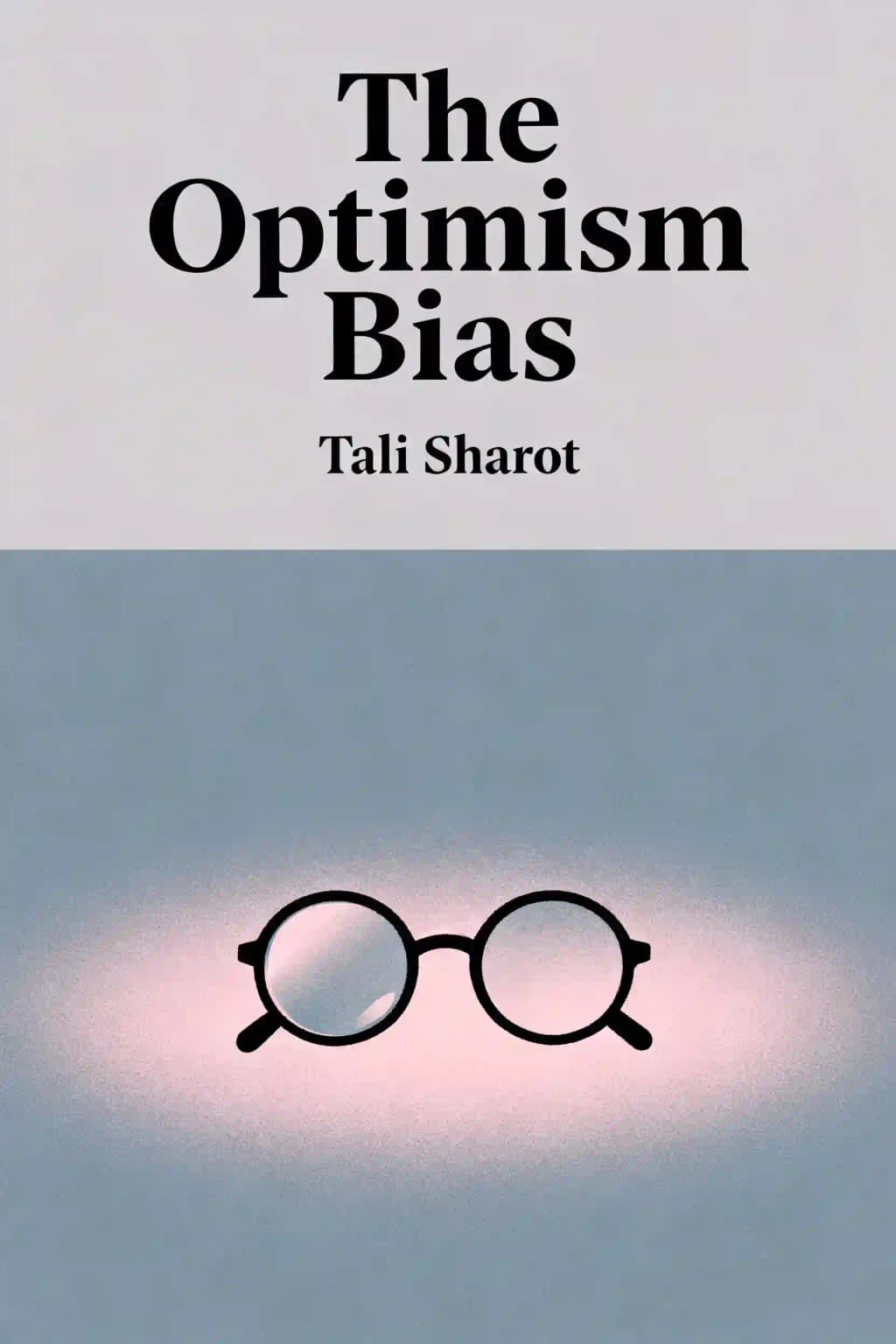
Imagine waking up each morning, convinced that today will be better than yesterday. Not because of any specific evidence, but because your brain is literally wired to expect positive outcomes. This isn't wishful thinking-it's the optimism bias, a powerful cognitive illusion that shapes how we perceive our future, influences our decisions, and ultimately impacts our well-being. When neuroscientist Tali Sharot accidentally discovered this phenomenon while researching 9/11 memories, she uncovered one of the most pervasive and beneficial biases of the human mind. Her groundbreaking research reveals that approximately 80% of people consistently expect better outcomes than reality delivers-a bias that crosses cultures, socioeconomic backgrounds, and age groups. This New York Times bestseller has captivated readers worldwide, including Bill Gates who featured it on his recommended reading list, and has transformed our understanding of how optimism functions not as a personality trait but as a fundamental neurological mechanism. From Wall Street to Hollywood, the implications of this discovery challenge conventional wisdom about rational decision-making and reveal why, as Winston Churchill noted, "it does not seem to be much use being anything else" but optimistic.
Capitolo 2
The Brain's Deceptive Reality: When What We See Isn't What Is
Our brains routinely deceive us, creating powerful illusions we perceive as reality. Consider Flight 604, which crashed in 2004 when its decorated pilot experienced spatial disorientation-his brain convinced him the plane was flying level when it was actually banking dangerously. This tragic event illustrates how our neural systems, evolved for ground movement, can create fatal misperceptions in unfamiliar environments like flight.
Visual illusions provide clear demonstrations of this phenomenon. In the checker shadow illusion, identical gray squares appear different because our visual system "corrects" for shadows. Even when we know the squares are identical, we still perceive them as different-knowledge doesn't override perception. The Thatcher illusion similarly reveals how our specialized face processing creates blind spots. When viewing an inverted face with upright eyes and mouth, we perceive it as normal when viewed upside-down but grotesque when right-side up.
While we readily accept visual illusions once demonstrated, cognitive illusions prove much harder to recognize in ourselves. The superiority illusion reveals how most people believe they're above average in positive traits-85% rank themselves in the top half for getting along with others, and 93% for driving ability. This mathematical impossibility persists because we're blind to our own biases while readily detecting them in others.
Justice Scalia demonstrated this "bias blind spot" when he refused to recuse himself from a case involving Vice President Cheney after they went duck hunting together. While confidently asserting his impartiality couldn't be questioned, he was experiencing an introspection illusion-the false belief that we can directly access our mental processes. In reality, most mental processes remain unavailable for conscious interpretation.
Research on "choice blindness" further reveals how easily we create false rationalizations. When participants' choices were secretly switched-whether photos of attractive faces or jam flavors-75% failed to notice but confidently explained their reasoning for choices they never actually made. The optimism bias functions similarly-we acknowledge it exists in others but believe we're realistic, even as our expectations remain consistently rosy.
Capitolo 3
Time Travelers: How Our Brains Project Us Into the Future
Meet Jay, a scrub-jay bird living on Cambridge University's campus whose remarkable cognitive abilities challenged scientific assumptions about animal intelligence. Jay doesn't just fly and forage-she plans for the future by hiding food when roommates might steal it, rehiding food when observed, planning breakfast storage in rooms where she'll wake up, and varying her food choices to maintain diversity. These behaviors, documented in a 2007 Nature publication, challenged the prevailing assumption that non-human animals are mentally "stuck in time" without the ability to imagine different temporal states.
The ability to mentally travel through time depends on specialized brain structures, particularly the hippocampus. London taxi drivers provide fascinating insight into how these structures develop. To earn their license, these elite drivers must master "the knowledge"-an intimate familiarity with 25,000 streets and 320 routes within central London. This demanding training physically transforms their brains, with posterior hippocampi enlarging while anterior portions shrink. Remarkably, upon retirement, their brains revert to normal proportions, demonstrating impressive neural plasticity.
Similar adaptations occur in birds' brains, with hippocampi growing and shrinking based on seasonal food-caching needs. Scrub-jays can remember thousands of food storage locations for months, with their hippocampi enlarging during peak caching seasons. Even birds' mating strategies affect brain structure-cowbirds that practice brood parasitism show gender differences in hippocampal size based on nest-finding responsibilities.
Mental time travel-our capacity to revisit past and imagine future events-depends on shared cognitive mechanisms. Patients with hippocampal damage cannot recall their past nor envision their future. Brain imaging confirms the hippocampus activates both when recollecting past experiences and imagining future scenarios. This suggests the hippocampus evolved not merely for memory storage but for simulating potential futures by binding pieces of stored information into coherent mental images.
What truly distinguishes humans is our developed frontal lobes, enabling sophisticated future thinking, self-awareness, and conscious foresight. Yet this evolutionary advantage came with a devastating price: awareness of our mortality. Biologist Ajit Varkil argues that conscious time travel could only have evolved alongside false beliefs-specifically, optimism bias to counterbalance death awareness. This coupling of prospection with optimism underlies humanity's extraordinary achievements in culture, medicine and technology.
Capitolo 4
Self-Fulfilling Prophecies: How Expectations Create Reality
In June 1987, after the Los Angeles Lakers won the NBA championship, head coach Pat Riley made a bold declaration. When asked if his team could win back-to-back championships-something no team had achieved since 1969-Riley responded with three confident words: "I guarantee it." This wasn't a momentary boast; Riley repeated his promise throughout the summer and into the next season, creating both pressure and motivation for his team.
The following year, the Lakers narrowly defeated the Detroit Pistons in a grueling finals series, fulfilling Riley's guarantee. When reporters immediately asked if he would promise a "threepeat," Kareem Abdul-Jabbar physically covered Riley's mouth, later explaining the pressure of Riley's guarantee had been overwhelming.
Riley's guarantee exemplifies a self-fulfilling prophecy-a prediction that causes itself to become true. While his team had legitimate championship potential, Riley's unwavering optimism triggered a process that increased their likelihood of success. His guarantee created pressure that motivated the team to train harder than ever before. As sociologist Robert Merton explained, a self-fulfilling prophecy begins as a "false definition of the situation" but evokes behaviors that make the originally false conception come true.
Expectations powerfully shape reality through both conscious and unconscious communication. The famous case of Clever Hans, a horse believed to perform complex mathematics, demonstrates this principle. While Hans appeared to calculate answers by tapping his hoof, psychologist Oskar Pfungst discovered the horse was actually responding to subtle, unconscious bodily cues from questioners who tensed when Hans approached the correct answer.
Similarly, in education, Rosenthal and Jacobson's landmark "Pygmalion effect" experiment showed that randomly selected students labeled as "intellectually superior" actually scored higher on year-end IQ tests because teachers unconsciously gave them more attention, detailed feedback, and encouragement. These social expectations profoundly influence performance across all domains-from employees' productivity to children's academic achievement.
Expectations also influence our brain's response to errors. An fMRI study revealed that participants primed with "clever" showed enhanced activity in the medial prefrontal cortex after making mistakes-a crucial error-detection signal absent in those primed with "stupid." When we expect success but fail, our brain generates a mismatch signal that facilitates learning. Without this signal, we accept errors as inevitable and fail to improve. This explains why optimistic expectations don't just feel better-they actually lead to better performance through enhanced error correction.
Capitolo 5
Private Joy, Public Gloom: The Paradox of Optimism
A remarkable wave of optimism swept across America and then the globe following Obama's election in 2008. Surveys showed 80% of Americans felt optimistic about the next four years, with strong majorities expecting personal financial improvement (63%), economic growth (71%), and falling unemployment (65%). This hope transcended borders, with three-quarters of respondents worldwide expecting positive change.
When Obama spoke, people experienced what scientists call "elevation"-a feeling of spreading warmth and throat-tightening emotion that erases cynicism and generates hope. Psychologist Jonathan Haidt proposes this triggers the vagus nerve, releasing oxytocin-the same hormone activated during hugging, holding babies, or sex. Oxytocin reduces social uncertainty, making positive signals clearer and promoting trust. Obama's speeches, like Shirley Temple's Depression-era films, offered reassurance during economic crisis. Both mirrored difficult times while promising better days ahead, with Temple's movies so effectively boosting morale that President Roosevelt declared, "As long as our country has Shirley Temple, we will be all right."
The wave of optimism following Obama's election was remarkable precisely because public optimism is so rare. While private optimism (positive expectations about our own future) is commonplace, it typically coexists with public despair (negative expectations about our country's future). Even before the 2008 financial collapse, most Britons believed their country was deteriorating while simultaneously expecting their personal circumstances to improve. A striking 93% were optimistic about their own family's future, but only 17% felt optimistic about other families.
Similarly, while 80% reported satisfaction with their last hospital visit, most believed the National Health Service was in crisis nationally. Crime perceptions showed the same disconnect-83% of Britons believed violence was rising despite crime rates steadily declining for nearly a decade. Looking at actual homicide rates globally reveals that the UK's rate (1.28 per 100,000) is relatively low compared to countries like El Salvador (71) or even the United States (5), yet Britons consistently overestimate crime rates nationally while simultaneously underestimating their personal risk of victimization.
This disconnect between private optimism and public pessimism stems largely from our sense of control. We feel optimistic about things we believe we can influence, even when this sense of control is merely an illusion. We convince ourselves we're less likely to be mugged because we'll avoid dark alleys, less vulnerable to skin cancer because we'll use sunscreen, and more likely to survive economic downturns because our talents remain in demand. Meanwhile, we acknowledge having no control over our country's finances or the welfare of fellow citizens, making us pessimistic about those domains.
Capitolo 6
The Happiness Mirage: Why We Can't Predict What Will Make Us Happy
What truly makes us happy? When surveyed, people typically believe happiness comes from more family time, doubled income, better health, time with friends, and more travel. Yet our ability to predict sources of happiness is surprisingly poor. Age significantly affects these predictions-younger people prioritize wealth (55% of 15-24 year olds versus just 5% of those over 75), while health concerns increase with age (from 10% among young adults to 45% among seniors).
Contrary to popular belief, certain activities correlate more strongly with happiness than conventional wisdom suggests. Weekly gardening, having plants in one's office, holding advanced degrees, attending religious services regularly, and engaging in physical activities all show positive correlations with reported life satisfaction. Meanwhile, having children-widely assumed to enhance happiness-actually shows a negative correlation with life satisfaction. Studies consistently reveal that happiness decreases after children arrive, reaches its lowest point during the teenage years, and only returns to pre-child levels once the nest empties.
The relationship between wealth and happiness remains highly debated. While the Pew Research Center found people earning over $100,000 report being twice as happy as those earning under $30,000, the difference between median and top earners isn't substantial. Similarly, national happiness increases with GDP only to a point, after which additional wealth produces no further well-being. Using moment-to-moment happiness measures, researchers found zero correlation between income and happiness, though higher earners reported more moments of anxiety and anger.
We adapt quickly to wealth increases-even lottery winners return to baseline happiness within a year. Higher incomes typically require sacrificing time with family and friends (our top happiness priorities) for workplace responsibilities. The focusing illusion explains why we overestimate money's importance when directly asked about it, while relative wealth matters more than absolute wealth-we compare ourselves to those around us rather than evaluating our financial situation objectively.
Our perception of wealth follows Weber's law of relativity-the subjective value of money decreases as our wealth increases. A $50 bonus feels significant when added to a $70 payment but negligible when added to $10,000. This explains why people need increasingly larger financial gains to notice any difference in their happiness as they accumulate wealth.
When we imagine positive future events, our brains create richer, more vivid images than when picturing unwanted scenarios. Brain scans reveal that optimistic people show enhanced activity in two critical brain regions when imagining positive futures: the amygdala (processing emotion) and the rostral anterior cingulate cortex (rACC), which modulates emotional flow. The rACC acts like a traffic conductor, enhancing positive emotional signals while dampening negative ones. This creates powerful, detailed positive future images while leaving negative possibilities blurry and indistinct.
Capitolo 7
The Optimism-Depression Connection: Two Sides of the Same Coin
Depression often begins with a triggering event, like the parallel stories of Shawn and Fred, who return from business trips to discover their partners have left them. Both initially experience typical depression symptoms-difficulty eating and sleeping, loss of interest in activities, rumination about what went wrong. While these reactions have an adaptive function, allowing us to process painful events, most people eventually heal from disappointment. However, about 15 percent of the population will develop clinical depression.
The crucial difference lies in how people interpret these events. Fred develops a pessimistic explanatory style, blaming himself for driving Sabrina away, believing his relationships are permanently doomed, and generalizing this failure to other life domains like his career. In contrast, Shawn adopts an optimistic explanatory style, attributing the breakup to Phoebe's weaknesses, viewing it as a temporary setback, and maintaining confidence in his professional abilities.
Martin Seligman's groundbreaking research on learned helplessness began with dogs receiving unavoidable electric shocks while harnessed. When later placed in shock boxes with escapable barriers, these dogs remained passive, not attempting to jump to safety-unlike dogs without prior shock exposure. This passivity mirrored depression symptoms: lack of assertiveness, negative mood, whining, weight loss, and general helplessness. Seligman theorized that depression stems from perceived absence of control over outcomes, where people learn from past experiences to behave helplessly.
Genetic studies reveal that mice with disrupted serotonin-transporter genes show enhanced responses to stress, mirroring human patterns. People with the short version of this gene show higher amygdala activation when exposed to fearful stimuli. The amygdala has reduced connectivity with the anterior cingulate cortex (ACC) in these individuals, impairing their ability to regulate fear and extinguish it when threats disappear.
Depression reflects a system failure involving multiple brain regions, but targeting just one area can sometimes cure it. Helen Mayberg pioneered deep brain stimulation treatment for severe depression by targeting the subgenual cingulate cortex. Her first patient experienced "an intense sense of calm or relief... like that first day of spring when the crocuses just pop up through the snow." This treatment helped two-thirds of patients by restoring efficient interaction between frontal cortex and emotional systems.
Brain scans revealed a crucial biological link between optimism and depression. The same neural pathways that break down in depressed patients are those mediating the optimism bias in healthy individuals. In depression, the rACC fails to properly regulate amygdala function. While healthy people are biased toward positive futures, depressed individuals perceive potential misfortunes too clearly. Interestingly, mildly depressed people demonstrate "depressive realism"-they're actually quite accurate in predicting future events without the optimistic filter. This suggests the optimism bias isn't just a pleasant distortion but a crucial ingredient for mental health.
Capitolo 8
The Power of Anticipation: Why Friday Beats Sunday
The perfect pint of Guinness takes precisely 119.5 seconds to pour using the traditional double-pour technique. This ritual creates the perfect creamy head and generates what many consider the most vital aspect of the Guinness experience-anticipation. Guinness's wildly successful 1994 "Anticipation" advertisement tapped into this central aspect of human nature-the joy of savoring expectations.
We often overlook how expecting a good thing can be more pleasurable than experiencing it. Economist George Loewenstein found people would pay more for a celebrity kiss scheduled in a year than an immediate one, with three days being the optimal waiting time-balancing anticipation pleasure with impulsivity. This reveals how anticipation generates satisfaction. Even when in a negative state (working late Friday), we can feel happiness thinking about future events. Friday ranks higher than Sunday in preference despite being a workday, because it brings the promise of the weekend ahead. Sunday, though a day of rest, is marred by anticipation of the workweek ahead.
While we seek to extend anticipation of positive events, we try to minimize waiting for negative ones. When faced with an unpleasant procedure like a root canal, most choose to get it over with immediately to avoid dread. In Loewenstein's study, participants would pay almost double to avoid an electric shock in ten years compared to an immediate one. Some even opted for larger immediate shocks rather than smaller delayed ones. This seemingly irrational behavior actually accounts for the negative value of dread-the distress caused by anticipating pain can be worse than the pain itself.
Anticipation doesn't just precede experiences-it changes them. When given a surprise skydiving gift, having three days to prepare allowed for information gathering that ultimately reduced fear. Brain imaging studies show people who dread upcoming shocks find them worse when waiting longer. During anticipation, the brain's "pain matrix" activates similarly to experiencing actual pain-anticipation mimics the physical experience.
Temporal discounting-our tendency to value present rewards over future ones-pulls us in the opposite direction from anticipation. While anticipation makes us patient, temporal discounting makes us impulsive. We choose immediate rewards partly because we perceive the future as uncertain and partly because we view our future selves as different people. Studies show that people who discount future rewards more heavily show greater differences in brain activity when thinking about their current versus future selves.
Our perception of our future selves influences how we discount future rewards. The further in the future we imagine ourselves, the more we see that person as a stranger, making us less concerned with their welfare. Michael Jackson exemplifies how this disconnect can lead to financial disaster. Despite his enormous success, Jackson died deeply in debt because "there was no planning in terms of allocations of how much he should spend." Most people find the image of their aging selves aversive, causing them to avoid retirement planning altogether.
Capitolo 9
Choice-Induced Preference: Why We Love What We Choose
My friend Tim faces an annual dilemma with his company's Christmas bonus-an all-expenses-paid vacation to anywhere in the world. Each year he agonizes over the destination, changing his mind repeatedly until the last possible moment. Yet once he commits to a choice, uncertainty vanishes and complete conviction takes its place-suddenly his selection seems clearly superior to all alternatives.
Our tendency to reevaluate options after making decisions was first discovered by psychologist Jack Brehm in 1956 using his wedding gifts. He invited housewives to rate household items, choose between equally-valued options, and then rate them again. Invariably, they rated their chosen items higher and rejected ones lower after deciding. This "free-choice paradigm" has been replicated hundreds of times, even with capuchin monkeys who, after choosing between differently colored but equally-valued M&Ms, subsequently valued their chosen color more highly.
Even amnesiacs with hippocampal damage showed the same preference changes for posters they'd selected, despite not remembering making any choices. Brain imaging reveals that this preference shift happens in the caudate nucleus-the brain's reward center-suggesting our hedonic response genuinely changes after commitment.
For this value shift to occur, we must believe we're making the choice ourselves. When monkeys were simply given M&Ms without choosing, their preferences remained unchanged. However, when researchers tricked monkeys into believing they had chosen a particular M&M (while actually manipulating the outcome), the monkeys still developed a stronger preference for what they thought they had selected.
Why do we value things more after selecting them? Psychologist Leon Festinger's cognitive dissonance theory suggests that choosing between similar alternatives creates psychological discomfort. The decision conflicts with both the desirable aspects of the rejected option and undesirable aspects of the selected one. By reevaluating options after choosing-enhancing the chosen and devaluing the rejected-we reduce this tension.
Are two options ever truly equal? Brain imaging reveals that even when we consciously rate options as equally desirable, activity in the caudate nucleus often predicts which we'll choose before we're even aware of our preference. When participants imagined vacation destinations, their brain activity forecasted their later choices.
Taking this further, researchers manipulated participants' expected pleasure from vacation options by administering L-dopa, which increases dopamine function in the caudate nucleus. Participants rated destinations they'd imagined while under L-dopa higher the next day, and were more likely to choose these destinations over those imagined under a placebo.
These findings suggest that in our choice-abundant modern society, dopamine-sensitive neurons signal the predicted value of different options, influencing our decisions in ways we may not consciously recognize. After making choices, we rapidly update our values to align with our decisions-enhancing the expected pleasure from selected options while decreasing it for rejected ones-preventing the paralysis of constant second-guessing and keeping us moving forward.
Capitolo 10
The Philosopher's Stone: Finding Gold in Life's Darkest Moments
Which would you rather be-a Tour de France champion or a cancer survivor? While most would instinctively choose cycling victory over the ordeal of cancer treatment, Lance Armstrong-uniquely qualified to answer having experienced both-surprisingly chooses cancer survivorship. "I would rather have the title of cancer survivor than winner of the Tour, because of what it has done for me as a human being," he says. Armstrong, who won seven consecutive Tours after recovering from advanced testicular cancer that had spread to his brain and lungs, believes his battle with cancer gave him unexpected strength and a new life perspective that enabled his unprecedented success.
While ancient alchemists failed to find the legendary philosopher's stone that could turn base metals into gold, the human brain performs this transformation effortlessly. We adapt to misfortune with surprising speed-paraplegics report normal levels of enjoyment from everyday events just a year after their accidents, and divorced individuals return to baseline happiness within a couple of years. Yet we consistently overestimate how devastated we would be by such hardships, falling prey to what psychologists call the "impact bias."
When imagining life in a wheelchair, we focus narrowly on what would change rather than what would remain the same-we'd still enjoy books, movies, friends, and family. Matt Hampson, paralyzed from the neck down during rugby training, exemplifies this remarkable adaptation: "Life is different now. It's not over, it's different. And it's not any worse. Some ways it's better."
The neural mechanisms that help us reframe negative experiences mirror those responsible for extinguishing fear. In fear conditioning experiments, participants learn to associate neutral stimuli (like a high tone) with aversive outcomes (like electric shocks), causing fear responses. Elizabeth Phelps and Joe LeDoux demonstrated that the rostral anterior cingulate cortex (rACC) and ventral medial prefrontal cortex inhibit the amygdala's fear response when a stimulus no longer signals danger. Without this extinction mechanism, we'd live in constant terror.
Our emotional regulation doesn't just change our thoughts-it literally alters how we perceive the world. In a creative experiment, Emily Balcetis and David Dunning had students walk across campus wearing embarrassing Carmen Miranda-style outfits. Students who "chose" this embarrassing task perceived the distance as significantly shorter (111 feet) than those who were "assigned" it (182 feet). Similarly, students pushing themselves uphill on all-terrain skateboards perceived the slope as less steep when they had chosen the task versus when assigned it.
Why does choosing an unpleasant task make it seem more pleasant? The conflict between our choice and prior belief creates cognitive dissonance-an uncomfortable psychological state we resolve by altering our perception. Leon Festinger documented this phenomenon in his book "When Prophecy Fails," describing how members of a doomsday cult became more committed after their prediction failed. Rather than abandoning their faith when Earth wasn't destroyed, they resolved their dissonance by believing their faith had saved the world.
Capitolo 11
The Delicate Balance: Optimism's Benefits and Pitfalls
From World War II to modern financial crises, our tendency to underestimate risk has profound consequences. When Soviet spy Leopold Trepper warned Stalin about Hitler's imminent invasion plans in 1941, Stalin refused to believe Germany would attack, clinging to the Molotov-Ribbentrop nonaggression pact. Multiple warnings from various sources were similarly dismissed, leading to devastating consequences when the invasion occurred on June 22, 1941.
Most of us significantly underestimate the probability of negative events in our lives. Studies show people believe they're less likely than average to experience misfortunes like cancer (actual lifetime risk: 33%) or divorce (actual risk: about 50%). Neil Weinstein, who coined the term "optimism bias," demonstrated that most people believe their chances of suffering misfortunes are below average-a mathematical impossibility.
The persistence of optimism bias is puzzling given our daily exposure to negative events. According to learning theories, humans should adjust expectations based on outcomes, yet we consistently underestimate our likelihood of experiencing misfortunes. The key finding is that our brains process information selectively-incorporating desirable information into our outlook while discarding undesirable information. In an fMRI study, participants' frontal lobes tracked prediction errors well for positive information but poorly for negative information. This selective learning mechanism explains why people maintain unrealistic optimism despite contradictory evidence.
Is optimism bias beneficial despite its inaccuracy? While underestimating health risks can reduce preventive care and increase risky behaviors, optimism offers surprising advantages. Studies show optimistic cancer patients under sixty were more likely to survive than pessimists with similar conditions, and optimists recovered faster from coronary bypass surgery. Economists Manju Puri and David Robinson discovered that moderate optimists (who slightly overestimate their longevity) work longer hours, save more money, expect to retire later, and smoke less than pessimists or extreme optimists. Their research suggests optimism functions like red wine-beneficial in moderation but hazardous in excess.
The Sydney Opera House exemplifies optimism bias's dangers. Initially budgeted at $7 million with a six-year timeline, it ultimately cost $102 million and took ten years to complete due to unforeseen challenges. The British government now explicitly adjusts for optimism bias in project appraisals. Economists suggest optimism bias contributed significantly to the 2008 financial meltdown, as individuals expected home values to rise while interest rates remained stable.
The solution isn't abandoning optimism but becoming aware of our biases-like pilots who understand vertigo while still flying planes. We can remain optimistic while taking precautionary actions: getting medical screenings despite believing in long life, signing prenuptial agreements while believing in lasting marriage, or adding buffer time to project estimates. Just as pilots aren't born understanding vertigo, humans aren't naturally aware of cognitive biases-these must be identified through observation, proven through experiments, and communicated widely.