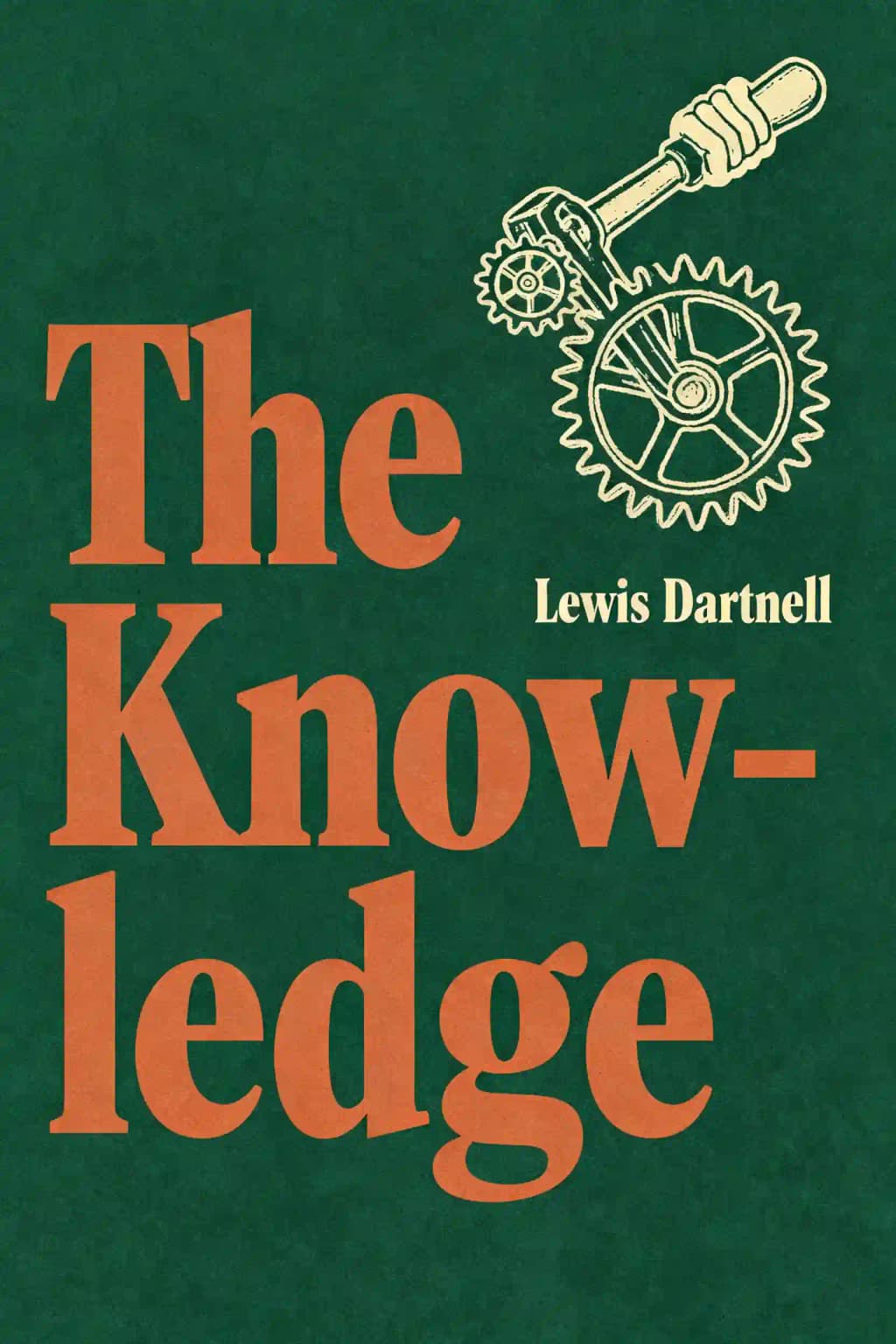
Could you rebuild civilization after collapse? "The Knowledge" is your survival blueprint, distilling centuries of scientific progress into one manual. This thought-provoking guide has sparked debate for its optimistic focus on peaceful rebuilding rather than weaponry - a controversial yet educational approach to humanity's resilience.
Lewis Ryan Dartnell, bestselling author of The Knowledge: How to Rebuild Our World from Scratch, is a British astrobiologist, professor of science communication at the University of Westminster, and a leading voice in popular science. His work blends survivalist pragmatism with interdisciplinary expertise, exploring how science and technology could restore civilization after catastrophic collapse.
A PhD graduate in astrobiology from University College London, Dartnell’s research on extremophile microbes and planetary environments informs his writing, which merges historical context with actionable futurism. He has authored acclaimed titles like Origins: How the Earth Made Us and Being Human: How Our Biology Shaped World History, both of which examine humanity’s interplay with geological and biological forces.
A regular contributor to New Scientist and BBC programs like Horizon and Wonders of the Universe, Dartnell has presented TED Talks and advised documentaries, including the planetarium show We Are Aliens. The Knowledge became a Sunday Times “New Thinking” Book of the Year, translated into over 20 languages and adopted by educators and engineers for its innovative approach to sustainable problem-solving.
The Knowledge by Lewis Dartnell is a survival guide for rebooting civilization after a catastrophic collapse. It explains fundamental scientific principles behind agriculture, energy production, medicine, and communication systems, offering a "quickstart guide" to avoid a new Dark Age. The book emphasizes the scientific method as humanity’s greatest tool for rediscovering lost technologies.
This book is ideal for survival enthusiasts, science educators, and fans of post-apocalyptic scenarios. It appeals to readers curious about the interconnectedness of modern technologies or those seeking actionable strategies for sustaining communities after societal collapse.
Yes. Praised by the Sunday Times and New Scientist, The Knowledge combines practical survival tactics with a celebration of scientific progress. Its clear explanations of complex concepts—like generating electricity or producing soap—make it both educational and engaging, even for non-scientists.
Dartnell prioritizes mastering essentials:
The book argues that scientific literacy, not memorization, is critical for adaptation.
The book breaks down technologies into their foundational components, explaining how to recreate them using scavenged materials or raw resources. For example, it details how to produce charcoal for fuel or manufacture glass for lenses, emphasizing incremental progress.
Critical skills include purifying water, preventing disease through hygiene, and navigating without GPS. Dartnell stresses securing shelter and food first, then transitioning to sustainable farming and energy production.
Unlike tactical survival manuals, The Knowledge focuses on rebuilding societal infrastructure. It teaches why technologies work, not just how to use them, empowering survivors to innovate beyond the book’s instructions.
Some reviewers note the book overlooks defense strategies and assumes survivors will cooperate. Others highlight gaps in detailed step-by-step instructions for complex processes like metallurgy.
As a UK Space Agency researcher, Dartnell leverages his scientific background to distill complex concepts into accessible advice. His focus on sustainability and scalability reflects lessons from astrobiology and resource-limited environments.
Amid climate crises and global instability, the book’s lessons on resilience and adaptive problem-solving remain vital. It serves as a primer for decentralized systems, offering insights for preppers and policymakers alike.
These lines underscore the book’s belief in rational inquiry as humanity’s best tool.
For deeper dives, try The Manual for Civilization (community rebuilding) or Emergency by Neil Strauss (personal survival tactics). A Practical Guide to Research Methods offers additional scientific literacy tools.
Senti il libro attraverso la voce dell'autore
Trasforma la conoscenza in spunti coinvolgenti e ricchi di esempi
Cattura le idee chiave in un lampo per un apprendimento veloce
Goditi il libro in modo divertente e coinvolgente
Modern humans exist in a state of dangerous ignorance.
Nature would quickly reclaim our cities.
Tests on 100-year-old canned foods have shown them to be microbiologically safe.
A single average supermarket could sustain one person for approximately 55 years.
Modern food packaging is remarkably conservative with expiration dates.
Scomponi le idee chiave di The Knowledge in punti facili da capire per comprendere come i team innovativi creano, collaborano e crescono.
Distilla The Knowledge in rapidi promemoria che evidenziano i principi chiave di franchezza, lavoro di squadra e resilienza creativa.

Vivi The Knowledge attraverso narrazioni vivide che trasformano le lezioni di innovazione in momenti che ricorderai e applicherai.
Chiedi qualsiasi cosa, scegli la voce e co-crea spunti che risuonino davvero con te.

Creato da alumni della Columbia University a San Francisco
"Instead of endless scrolling, I just hit play on BeFreed. It saves me so much time."
"I never knew where to start with nonfiction—BeFreed’s book lists turned into podcasts gave me a clear path."
"Perfect balance between learning and entertainment. Finished ‘Thinking, Fast and Slow’ on my commute this week."
"Crazy how much I learned while walking the dog. BeFreed = small habits → big gains."
"Reading used to feel like a chore. Now it’s just part of my lifestyle."
"Feels effortless compared to reading. I’ve finished 6 books this month already."
"BeFreed turned my guilty doomscrolling into something that feels productive and inspiring."
"BeFreed turned my commute into learning time. 20-min podcasts are perfect for finishing books I never had time for."
"BeFreed replaced my podcast queue. Imagine Spotify for books — that’s it. 🙌"
"It is great for me to learn something from the book without reading it."
"The themed book list podcasts help me connect ideas across authors—like a guided audio journey."
"Makes me feel smarter every time before going to work"
Creato da alumni della Columbia University a San Francisco

Ottieni il riassunto di The Knowledge in formato PDF o EPUB gratuito. Stampalo o leggilo offline quando vuoi.
Imagine waking tomorrow to find 99% of humanity vanished. No electricity. No internet. No running water. Just eerie silence. How would you survive? More importantly, how would you help rebuild the technological society we take for granted? This question has made "The Knowledge" a cult classic among Silicon Valley executives and government officials. When COVID-19 first struck, the book experienced a surge in sales as people confronted their own vulnerability in a suddenly uncertain world. Modern humans exist in a dangerous state of ignorance about the systems keeping us alive. We've become so specialized that no single person understands how to maintain our vital societal processes. The iPhone in your pocket represents the pinnacle of this specialization - a device requiring thousands of experts across dozens of fields. If catastrophe struck, this collective knowledge would shatter, leaving survivors with fragments of understanding but no coherent whole.