Foundation
Panoramica di Foundation
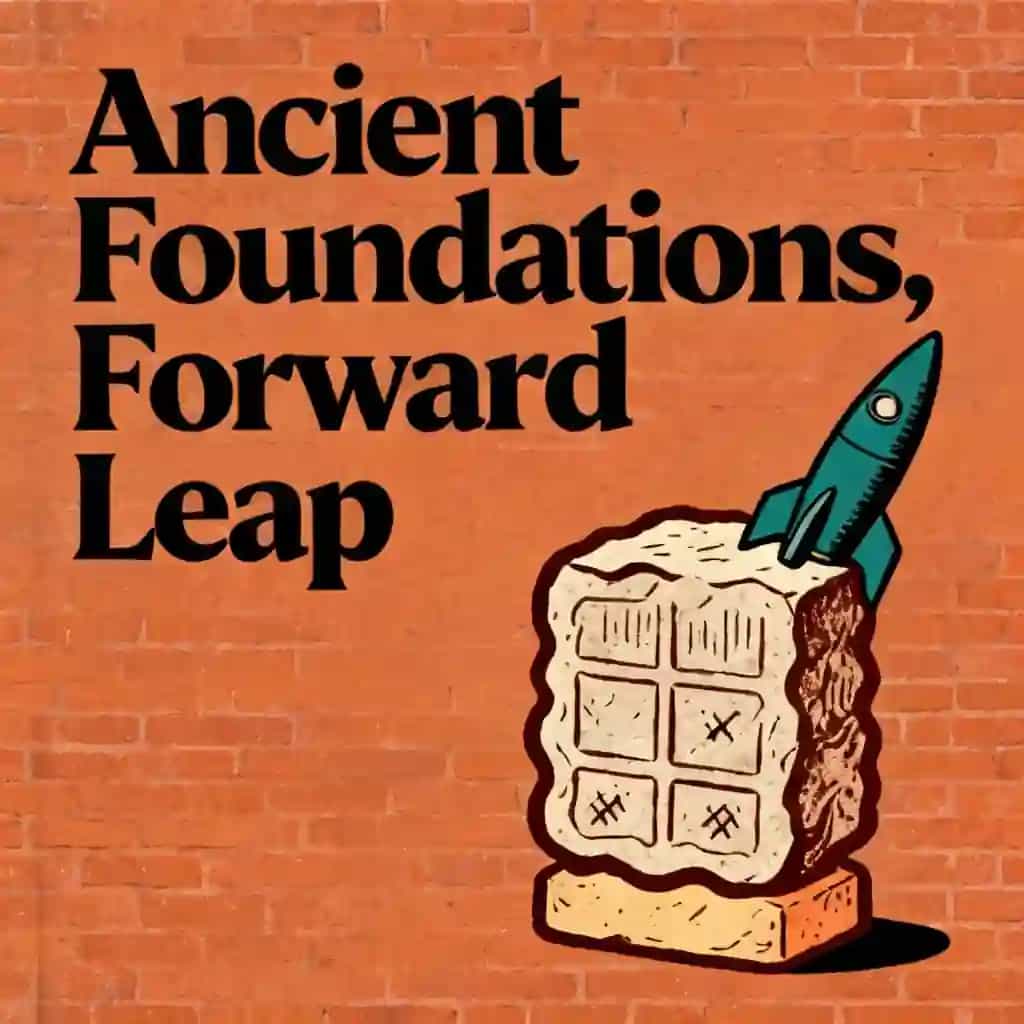
Asimov's "Foundation" charts humanity's fate across 50,000 years, predicting civilization's collapse through mathematical sociology. Winner of the 1966 "Best All-Time Series" Hugo Award, it inspired Elon Musk's SpaceX mission - preserving knowledge before our inevitable galactic dark age begins.
Temi chiave in Foundation
- mathematical sociology
- imperial collapse
- predictive modeling
- civilizational cycles
- long-term planning
Citazioni da Foundation
How many of us plan beyond our own lifetimes?
Isn't this increasingly our own reality?
How often do we see this pattern repeated?
When does speaking truth become revolutionary?
The more desperately they cling to the appearance of strength, the more they accelerate their downfall.
Personaggi di Foundation
- Hari SeldonMathematical genius and creator of psychohistory
- Gaal DornickYoung mathematician and colleague of Hari Seldon
- Cleon IEmperor whose assassination led to political shift
Sull'autore
Sull'autore di Foundation
Isaac Asimov (1920–1992), author of Foundation and visionary science fiction pioneer, was a Russian-American biochemist and one of history’s most prolific writers. A Columbia University PhD graduate (1948) and Boston University professor, Asimov masterfully wove his scientific expertise into genre-defining narratives that blended sociology, mathematics, and futuristic technology.
Foundation—the first book in his iconic series—revolutionized sci-fi with its psychohistory-driven epic about galactic empires, earning comparisons to Edward Gibbon’s historical analyses.
Known for classics like I, Robot (which introduced the Three Laws of Robotics) and The Caves of Steel, Asimov authored over 500 works spanning science guides, mysteries, and biblical studies. His weekly Fantasy & Science Fiction column (400+ installments) cemented his reputation as a public intellectual.
The Foundation trilogy, originally published between 1951–1953, has sold millions of copies worldwide and inspired Apple TV+’s acclaimed 2021 adaptation. Asimov’s concepts of robotics and AI ethics remain foundational in both literature and modern technology.
Scarica il riassunto di Foundation
Ottieni il riassunto di Foundation in formato PDF o EPUB gratuito. Stampalo o leggilo offline quando vuoi.
FAQ su questo libro
Foundation explores the collapse of a galactic empire and mathematician Hari Seldon’s plan to shorten 30,000 years of impending dark age to 1,000 years using psychohistory—a science predicting societal trends. The novel follows the Foundation, a colony preserving knowledge, as it navigates political crises, religious manipulation, and external threats to rebuild civilization.
Science fiction enthusiasts, fans of epic space operas, and readers interested in themes of societal evolution, political strategy, and the interplay between science and religion will appreciate Foundation. It’s ideal for those who enjoy intellectually rigorous narratives with layered worldbuilding, such as Dune or The Martian Chronicles.
Yes—Foundation remains a cornerstone of science fiction, offering timeless insights into power dynamics, crisis management, and human resilience. Its Hugo Award-winning status and influence on modern data-driven forecasting theories cement its relevance, particularly for readers analyzing societal trends or AI-driven futures.
Psychohistory is a fictional science combining mathematics, sociology, and statistics to predict large-scale societal outcomes. Hari Seldon uses it to foresee the Galactic Empire’s fall and orchestrate the Foundation’s survival, though its accuracy hinges on mass behavior—not individual actions—mirroring real-world predictive analytics.
- Hari Seldon: Visionary psychohistorian who establishes the Foundation.
- Salvor Hardin: Pragmatic leader who leverages “soft power” to resolve early crises.
- Hober Mallow: Merchant-entrepreneur who shifts the Foundation’s strategy to economic dominance.
Inspired by the fall of the Roman Empire, the novel depicts bureaucratic stagnation, loss of centralized control, and regional fragmentation. The Foundation’s rise mirrors historical rebirths of knowledge hubs like monastic institutions during Europe’s Dark Ages.
The encyclopedia symbolizes the preservation of human knowledge post-collapse. Initially a ruse to secure resources for the Foundation, it evolves into a cultural touchstone, blending scientific authority with quasi-religious influence over neighboring planets.
The Foundation weaponizes technology as a “religion” to control neighboring regions, using atomic power as a divine reward for loyalty. This critiques organized religion’s role in manipulating masses while highlighting science as a new societal bedrock.
The Mule—a genetic mutant with mind-control abilities—disrupts Seldon’s plan, symbolizing the limits of deterministic systems. His unforeseen rise forces the Foundation to adapt, introducing themes of chaos versus order.
Psychohistory parallels predictive analytics and machine learning, where aggregate data forecasts trends. The novel’s emphasis on crisis intervention plans mirrors contemporary disaster modeling and organizational risk management strategies.
Critics note limited female representation and a focus on political machinations over character depth. Others argue its deterministic view underestimates individual agency—a tension explored later in the series.
Both examine empire-building, prophecy, and resource politics, but Foundation prioritizes societal forces over individual heroes. Dune delves deeper into ecology and mysticism, while Asimov’s work emphasizes rational problem-solving and institutional evolution.
In an era of AI-driven decision-making and global instability, Foundation’s themes of preparing for systemic collapse, leveraging knowledge ecosystems, and balancing free will with predictability remain acutely pertinent.