Capitolo 1
A Journey Between Worlds: The Spiritual Odyssey We All Must Take
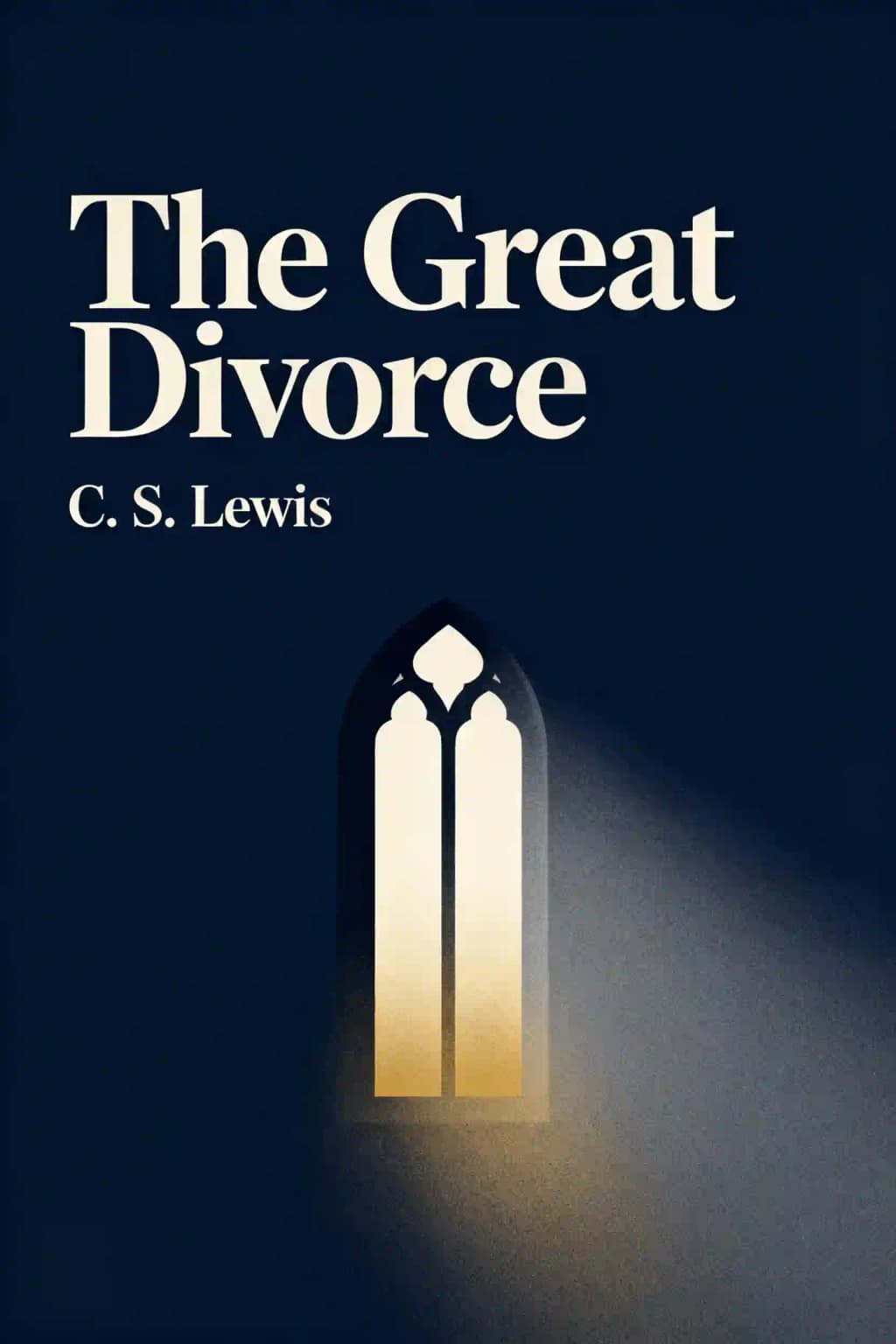
C.S. Lewis's masterpiece has captivated readers for generations, offering a profound meditation on the nature of heaven, hell, and human choice that transcends religious boundaries. Published in 1945 during the tumultuous final days of World War II, this allegorical novella has influenced countless spiritual seekers, including notable figures like U2's Bono, who cited it as transformative to his understanding of faith. What makes this work particularly remarkable is how it presents complex theological concepts through vivid, accessible imagery that resonates with readers of all backgrounds. Unlike many religious texts that feel prescriptive, this book invites us to question our deepest assumptions about reality, desire, and the afterlife. What if the choices we make daily are shaping our eternal destiny? What if heaven and hell are less about location and more about perspective? These questions continue to make this slim volume one of the most thought-provoking explorations of spirituality in modern literature.
Capitolo 2
The Grey Town: A Realm of Endless Twilight
The journey begins in a dismal, rainy street where perpetual twilight hangs over a strangely empty town. This grey town feels both familiar and unsettling-a place where buildings stand vacant, streets stretch endlessly, and inhabitants seem determined to remain isolated from one another. The narrator joins a quarrelsome bus queue where passengers jockey for position, revealing their petty grievances and self-absorption even in this afterlife state.
When the magnificent golden bus arrives, driven by a radiant figure, the remaining passengers scramble aboard despite there being ample room for everyone. This first glimpse of something truly beautiful in the dreary landscape creates an immediate contrast-light versus darkness, abundance versus scarcity, cooperation versus competition. Yet the passengers respond with suspicion rather than joy, grumbling about the driver's apparent self-satisfaction.
On board, the narrator sits beside a tousle-headed youth who immediately begins sharing his tale of victimhood and artistic disappointment, revealing he had committed suicide. Other passengers include a cultured intellectual who dismisses fears about the perpetual twilight as "primitive superstitions," insisting educated circles now view it as the promise of dawn-"the slow turning of a whole nation towards the light." His preference for abstract spirituality over "the clogs of matter" foreshadows a key theme: the rejection of concrete reality in favor of comfortable illusions.
As the bus ascends, light gradually fills the cabin-first mud-colored, then mother-of-pearl, finally a blinding blue. The passengers react with alarm rather than wonder, fearing they might "catch their death of cold" despite their ghostly state. When the cruel light reveals their distorted, faded faces in a mirror, we glimpse the truth: these souls have become insubstantial through their choices, and the approaching reality threatens to expose what they've become.
The grey town, we later learn, is actually Hell-not as a place of punishment, but as the natural result of souls turning inward, choosing isolation over connection, resentment over forgiveness, illusion over reality. It expands endlessly as its inhabitants continually move away from each other, building new neighborhoods to escape uncomfortable neighbors. Yet for all its vastness, this Hell is ultimately tiny-"smaller than one atom" of Heaven's reality.
Capitolo 3
The Borderlands: Where Phantoms Meet Substance
The bus approaches a massive cliff, flying over its emerald edge onto a landscape of extraordinary beauty - a grassy country stretching endlessly beneath what feels like perpetual early summer morning. A wide river meanders through the terrain, its waters gleaming with an otherworldly clarity. Yet something is profoundly different about this place. The light possesses a peculiar quality, penetrating and revealing in ways earthly sunshine never could, making the entire Solar System seem "an indoor affair" by comparison. This illumination creates both an exhilarating sense of freedom and an uncomfortable feeling of exposure, as if every shadow and hidden thing must now stand revealed.
The first shocking revelation strikes with devastating force: the bus passengers appear as transparent ghosts, "man-shaped stains on the brightness," so insubstantial they don't even bend the grass beneath their feet. Some can see straight through their own hands, while others appear as smudges against the brilliant landscape. The narrator's perception then shifts dramatically - the passengers haven't changed, but the landscape itself is made of something incomparably more solid, more real than anything in their experience. The grass, though appearing ordinary, proves harder than diamond. The trees possess a density that makes earthly oak seem like tissue paper. Even a simple daisy stands impenetrable to his ghostly fingers, its petals more substantial than steel. Terror strikes as he realizes he too is a phantom in this substantial world, a mere shadow among shadows.
The reactions among the ghostly passengers vary dramatically. One ghost flees screaming back to the bus, while others huddle together like children in the dark. Their fear intensifies as solid people approach - some naked, some robed in flowing garments that seem woven from light itself. These "Bright People" or "Solid People" move with graceful purpose, their faces bearing an ageless quality that combines youth's vigor with wisdom's depth. Each seems drawn to a specific ghost, approaching with intention rather than random chance. Their brilliance proves too much for some ghosts, who retreat immediately to the bus's familiar shadows.
Walking becomes an excruciating ordeal for the narrator - each step on the diamond-hard grass sends shooting pains through his unsubstantial feet. This physical discomfort serves as a powerful metaphor for a deeper spiritual truth: the initial encounter with ultimate reality proves painful for those long accustomed to living in illusion. The borderlands represent a crucial threshold where souls must make their choice - retreat to comfortable shadows or endure temporary pain for the promise of becoming solid themselves.
The section's power lies in its complete inversion of conventional understanding. Heaven isn't ethereal while Earth is solid; rather, Heaven emerges as the most real place imaginable, and those who cling to lesser realities become increasingly ghostly, transparent, barely there at all. As one character later explains with stark simplicity: "Heaven is reality itself... All that is fully real is Heavenly." This borderland serves as the meeting point between substance and shadow, where souls must choose between embracing reality's sometimes painful solidity or retreating into the comfortable numbness of their self-made phantoms.
Capitolo 4
Conversations with the Damned: The Tragedy of Self-Justification
The borderlands become the setting for a series of encounters between ghosts and solid spirits-each revealing different ways souls reject heaven. The first meeting involves a "Big Ghost" who prides himself on having "gone straight" all his life, meeting Len, who had murdered someone named Jack. Astonishingly, Len explains that "it is all right now" and that Jack sends his love. The indignant Ghost cannot comprehend why a murderer should be "pleased as Punch" while he suffered despite his moral superiority.
When Len reveals he had "given up himself" after the murder, which was "how everything began," the Ghost rejects this as a trick. His refusal of forgiveness-both to receive it and to give it-becomes almost pleasurable to him as he declares, "I'd rather be damned" and limps away over the sharp grass.
Another encounter features the cultured Ghost who insists his religious beliefs were sincere, though he rejected "superstitious" literal interpretations of Heaven and Hell. When told the grey town is actually Hell, he's offended by this "profanity" and asks if people are truly "penalised for their honest opinions." The Spirit challenges whether there are "no sins of intellect," explaining that the Ghost's opinions weren't honestly formed but adopted because they "seemed modern and successful." The Ghost ultimately chooses to return to Hell to deliver a paper to his Theological Society about how Jesus would have "outgrown some of his earlier views" had he lived longer.
Perhaps most tragic is the female Ghost who refuses Heaven if it means meeting her husband Robert. Though claiming she forgives him "as a Christian," she insists some things can never be forgotten. Her monologue reveals her as controlling and possessive, having micromanaged her husband's life while portraying herself as the victim. Her final words expose her true motives: "I want Robert. What right have you to keep him from me? I hate you. How can I pay him out if you won't let me have him?"
These conversations reveal how self-justification becomes the barrier to salvation. Each ghost has constructed a narrative that preserves their sense of righteousness while blinding them to their own failings. Their tragedy isn't that they're condemned but that they choose condemnation rather than surrendering their carefully maintained self-image.
Capitolo 5
The Apple Thief: Material Desires in a Spiritual Realm
Near a magnificent waterfall stands a tree with golden apples gleaming through its leaves. A bowler-hatted ghost named Ikey crouches nearby, signaling for the narrator to hide. With excruciating effort, he makes his way to the tree but finds himself blocked by an impassable belt of lilies. When wind blows apples to the ground around him, they cause him pain, yet he frantically tries to collect them.
Gradually lowering his ambitions from many apples to just one small enough to carry, Ikey manages to lift the smallest apple, though it bends him double with its weight. As he painfully begins his journey back toward the bus, a thunderous voice from the waterfall-which appears as a bright angel-calls him a fool: "You cannot take it back. There is not room for it in Hell."
This poignant scene illustrates the futility of trying to possess Heaven's gifts without becoming the kind of person who can properly receive them. Ikey's entrepreneurial scheme-to bring back an apple that would heal all diseases and make him wealthy-reveals his inability to understand the nature of Heaven's abundance. He wants to possess rather than be transformed, to profit rather than participate.
The angel's words highlight a profound truth: the problem isn't that Hell's residents can't enter Heaven but that they can't bring Heaven back to Hell. There simply isn't "room" for Heaven's reality within the cramped, self-centered existence they've chosen. The solid apples are too substantial for ghostly hands to carry, just as divine joy is too substantial for souls contracted by selfishness.
What makes this scene particularly moving is Ikey's determination. Despite the pain and difficulty, he persists in his misguided plan. His industriousness and ingenuity-qualities that might have served him well on Earth-become tragically misapplied. He cannot see that the invitation isn't to possess the apple but to become the kind of being who could eat such fruit naturally.
Capitolo 6
The Cynical Observer: Doubt as a Defense Against Joy
Walking away from the waterfall, the narrator encounters a tall ghost with grey hair leaning against a tree, chewing a ghostly cheroot-a hard-bitten but educated-sounding man who strikes him as reliable. This Hard-Bitten Ghost represents the cynical observer who refuses engagement with reality by maintaining a posture of detached skepticism.
When asked if he's returning to the bus, he confirms he's "seen about all there is to see," dismissing the possibility of staying as "propaganda." He claims humans couldn't survive in a place where "you can't eat the fruit and you can't drink the water and it takes you all your time to walk on the grass." His attitude is that of someone who prides himself on not being fooled, who "likes to see things for himself."
The Hard-Bitten Ghost reveals his worldview-that all tourist attractions are mere "advertisement stunts" run by a "World Combine." He insists the same "management" secretly runs both Heaven and Hell, that they're in league despite claiming to be at war. After sharing his theory that the rain here would drill holes through ghosts "like machine-gun bullets," he moves off, leaving the narrator deeply depressed.
This encounter powerfully illustrates how cynicism functions as a defense mechanism against joy and transformation. The Hard-Bitten Ghost has constructed a worldview that protects him from both disappointment and demand. By reducing everything to manipulation and conspiracy, he avoids having to engage with the possibility that reality might actually require something of him-namely, surrender and change.
His cynicism masquerades as wisdom and experience, but it's actually a form of cowardice. He's afraid not of being fooled but of being transformed. His "seeing through" everything becomes, as the narrator later learns, a way of not seeing at all. As MacDonald explains elsewhere in the book: "A man can't go on seeing through things forever. The whole point of seeing through something is to see something through it."
Capitolo 7
The Artist's Dilemma: Creation Versus Reputation
Among the most revealing encounters is that between a Solid Person and a Ghost who had been a famous artist on Earth. The Ghost wants to paint the landscape, but the Spirit explains that in Heaven, seeing comes before creating-"When you painted on earth, it was because you caught glimpses of Heaven in the earthly landscape." The Ghost remains fixated on when he can begin painting rather than appreciating the reality before him.
The Spirit tries to explain that the artist's first love had been light itself, not paint, which was merely a means of telling about light. The Ghost dismisses this as something he'd "grown out of," becoming "more interested in paint for its own sake." The Spirit warns this was a snare-every artist, without Grace, is drawn away from love of the thing he tells to love of the telling, eventually caring only about reputation.
When the Ghost asks about meeting famous artists like Claude or Cezanne, revealing his preoccupation with status, the Spirit explains that in Heaven, no one is distinguished above others-"The Glory flows into everyone, and back from everyone: like light and mirrors." Learning his art is worthless on Earth, the Ghost immediately vanishes, declaring he must return to write manifestos and gain publicity-his duty to "the future of Art" outweighing Heaven itself.
This conversation brilliantly captures the spiritual danger unique to creative people. The artist begins with genuine vision-seeing beauty and truth that others miss-but can gradually become more concerned with technique, style, and ultimately reputation. The medium becomes more important than the message, and the messenger more important than either.
The Ghost's horror at learning he's been forgotten on Earth reveals his true motivation wasn't beauty or truth but recognition. His art had become not a window to reality but a mirror reflecting his own ego. His question about the "Neo-Regionalists" winning shows his view of art as competition rather than contemplation. In rejecting Heaven for the sake of his artistic legacy, he demonstrates how even our highest cultural pursuits can become idols that separate us from true joy.
Capitolo 8
Transformation Through Surrender: The Lizard and the Stallion
Perhaps the most dramatic scene involves a dark, oily Ghost with a red lizard perched on his shoulder, whispering in his ear. A bright Angel offers to kill the lizard, but the Ghost hesitates, making excuses. "You're burning me. Keep away," he protests.
The Angel persists: "May I kill it?" The Ghost equivocates, suggesting gradual change instead. "The gradual process is of no use at all," replies the Angel. As the Ghost fears for his own life, the lizard whispers frantically, promising "nice dreams" if spared.
Finally, the Ghost consents: "God help me. God help me." The Angel seizes the reptile, twists it, and flings it down broken. The Ghost screams in agony, but then something miraculous happens-both he and the lizard transform. The Ghost materializes into "an immense man," while the lizard becomes "the greatest stallion I have ever seen, silvery white but with mane and tail of gold."
Man and horse breathe into each other's nostrils, then the man embraces the Angel's feet. Mounting the stallion, they gallop toward the mountains, scaling "impossible steeps" until vanishing "into the rose-brightness of that everlasting morning." The very land rejoices in song at their passing.
This powerful scene illustrates the book's central message about transformation through surrender. The lizard represents lust-not just sexual desire but any consuming passion that has taken control of the man's life. The Ghost's initial reluctance shows how we often cling to our destructive patterns, making excuses and preferring "gradual change" that never actually happens.
The Angel's insistence on killing the lizard seems cruel until we witness the outcome-not elimination but transformation. The lizard's death leads not to loss but to resurrection in a more glorious form. What was once a whispering, controlling parasite becomes a magnificent stallion that carries the man toward joy.
This illustrates the paradoxical Christian teaching that we must die to live, lose to find, surrender to conquer. The Ghost's consent-"God help me"-is the turning point, the moment of surrender that allows transformation to begin. His willingness to endure momentary agony leads to eternal joy.
Capitolo 9
The Nature of Heaven and Hell: Freedom's Final Choice
Through conversations with George MacDonald (a real Scottish author who influenced Lewis), the narrator learns profound truths about the nature of Heaven and Hell. MacDonald explains that the "grey town" is Hell only for those who stay there permanently; for those who leave, it becomes merely Purgatory. The "holidays" or "excursions" for the damned (called Refrigerium) offer genuine opportunities for salvation, though most prefer returning to familiar haunts.
MacDonald clarifies that both good and evil become retrospective when fully grown-the saved will see all their earthly past as Heaven, while the damned will recognize their entire existence as Hell. The good man's past begins to change so his forgiven sins take on the quality of Heaven, while the bad man's past conforms to his badness.
When the narrator asks if Heaven and Hell are merely states of mind, MacDonald sternly corrects him: Hell is indeed a state of mind-every shutting up within one's own mind becomes Hell. But Heaven is reality itself-"all that is fully real is Heavenly."
Most importantly, MacDonald explains that souls choose their fate. Every lost soul's choice can be expressed as "Better to reign in Hell than serve in Heaven." They insist on keeping something, even at the price of misery-what children call Sulks, but adults name Revenge, Injured Merit, Self-Respect, or Proper Pride. Even sensualists, who begin with real pleasure, eventually prefer the itch to its relief.
This perspective on Hell as self-chosen isolation rather than imposed punishment represents a profound theological insight. The damned are not so much sent to Hell as they create Hell around themselves through their refusal to surrender their autonomy. As MacDonald puts it: "There are only two kinds of people: those who say to God, 'Thy will be done,' and those to whom God says, 'Thy will be done.' All in Hell choose it."
The book's vision of freedom is both terrifying and exhilarating. We are truly free to choose our eternal destiny, but that freedom includes the possibility of choosing eternal isolation. Heaven cannot be forced upon those who prefer their own way, however miserable it makes them.
Capitolo 10
The Dream Awakens: Reality Beyond Imagination
The narrative concludes with a startling revelation. The narrator beholds gigantic forms standing around a silver table where chessmen move to and fro. These chessmen are humans as they appear in this world, the silver table is Time, and the watching giants are the immortal souls of those same people. This vision suggests our earthly lives are but shadows of a greater reality, our choices echoing in eternity.
When the narrator asks if he's really present in this country, MacDonald gently replies: "No, Son. The bitter drink of death is still before you. Ye are only dreaming." He instructs the narrator to make it plain if he ever tells others of his vision that it was merely a dream, not knowledge of what no mortal knows.
As they stand in quiet woods, the narrator notices light flooding the eastern horizon. Birds begin to sing "It comes! It comes! Sleepers awake!" Glimpsing what might be the sunrise "that shoots Time dead with golden arrows," he screams and buries his face in MacDonald's robe, crying, "I am caught by the morning and I am a ghost." Next moment, he awakens in his cold room, having fallen from his chair, with books scattered around him.
This ending brilliantly preserves the work's status as a theological speculation rather than a doctrinal statement. By framing the narrative as a dream, Lewis acknowledges the limitations of human understanding while still offering profound insights about the nature of reality, choice, and eternity.
The final image-being "caught by the morning" and revealed as a ghost-suggests our current existence may be more shadow-like than we realize. Perhaps we too are insubstantial compared to the solid reality awaiting us. The true sunrise-the full revelation of reality-might be both terrifying and transformative, exposing our phantasmal nature while offering the possibility of becoming truly solid.
This dream-framing also invites readers of all backgrounds to engage with the book's ideas without feeling pressured to accept them as literal truth. Like all great allegories, it offers wisdom that transcends its specific religious context, speaking to universal human concerns about the nature of reality, the consequences of our choices, and the possibility of transformation through surrender.