Capitolo 1
Facing Our Climate Crossroads: A Choice That Will Define Humanity
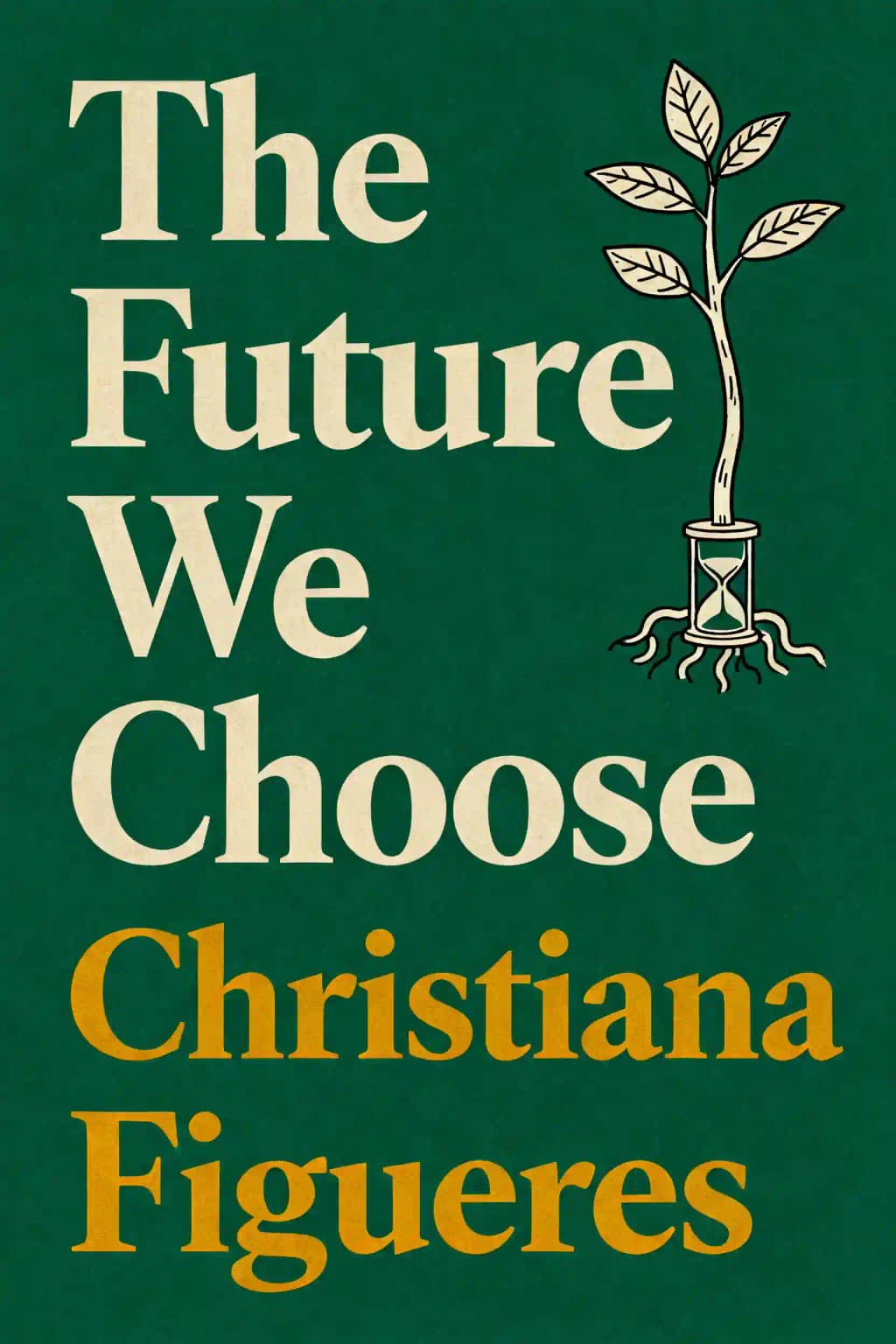
When Christiana Figueres took over the UN climate negotiations after the disastrous 2009 Copenhagen summit, few believed success was possible. The world's nations seemed hopelessly divided, with developed and developing countries locked in mutual blame. Yet six years later, 195 countries unanimously adopted the Paris Agreement-the first universal climate accord in history. This remarkable achievement didn't happen by accident. It required what Figueres calls "stubborn optimism"-not naive hope, but a gritty determination to create possibility where none seemed to exist.
In "The Future We Choose," Figueres and her strategic advisor Tom Rivett-Carnac offer both a stark warning and an empowering vision. The book has become required reading in corporate boardrooms and government offices worldwide, praised by figures from Jane Goodall to Leonardo DiCaprio. Its central premise is both simple and profound: we stand at a crossroads where our choices in this decade will determine whether future generations inherit a habitable planet or one ravaged beyond recognition. What makes this book different is its refusal to indulge in either false hope or paralyzing despair-instead offering a clear-eyed assessment of where we stand and a practical roadmap for the transformation ahead.
Capitolo 2
Two Futures: A Tale of Diverging Paths
For 12,000 years, human civilization flourished within the Holocene epoch-a period of remarkable climate stability with temperature variations of just 1C. This stability allowed our species to develop from scattered tribes to a global population of nearly 8 billion. But in a geological blink of an eye-just fifty years-we've shattered this equilibrium through relentless fossil fuel consumption and deforestation.
If we continue on our current trajectory, by 2050 we'll inhabit a world more than 3C warmer. Even in temperate regions, extreme weather will dominate daily life. Most people will keep emergency go-bags ready, with the wealthy subscribing to private satellite-based alert systems while others rely on glitchy government warnings. Water conflicts will intensify globally, with public facility taps locked or coin-operated. Food production will fluctuate wildly, with more people starving than ever before as climate zones shift and global trade slows. Nations will desperately hoard resources while militarizing borders against climate refugees.
The psychological toll will be immense. Ancient microbes released from melting permafrost, disease-carrying insects, and antibiotic resistance will create mounting public health crises. Many will openly discuss human extinction, with suicides, despair, and resentment toward previous generations becoming commonplace. The Earth will continue heating beyond our control as forests that once absorbed carbon dioxide are logged or consumed by wildfire. Vast regions will become uninhabitable within years, with Australia, North Africa, and the western United States facing uncertain futures.
Yet an alternative path remains possible. In this regenerative future, our communities become stronger and more localized. Activities once done individually-growing vegetables, capturing rainwater, composting-become communal endeavors. Though initially resistant to this togetherness, most discover that shared resources create better support networks and greater happiness. Cities like Madrid, once at risk of desertification, create "green envelopes" to cool, oxygenate, and filter pollution. Globally, forest cover reaches 50%, with agriculture becoming more tree-based. New electric railways replace domestic flights, while buildings produce their own electricity through solar paint and wind turbines.
These diverging futures aren't science fiction-they represent the actual stakes of our current moment. The choice between them will be determined not by fate but by the decisions we make collectively in this critical decade.
Capitolo 3
The Mindset Revolution: Stubborn Optimism
The Buddha understood that optimism is both the goal and first step of enlightenment-a brightness of mind that enables progress. This ancient wisdom resonates deeply with contemporary challenges, particularly in addressing global crises. We aren't passive recipients of attitudes but active creators of them, a truth confirmed by modern neuroscience through studies of neuroplasticity and cognitive restructuring. Research shows that our brains physically reshape themselves based on persistent thought patterns, making mindset cultivation not just philosophical but physiological.
After her first press conference following the failed Copenhagen negotiations, Christiana Figueres realized her attitude was the problem itself. When asked if a global agreement was possible, she instinctively replied, "Not in my lifetime." But she immediately recognized that impossible is not a fact-it's an attitude. This pivotal moment led to a profound personal transformation. Her primary task became being a beacon of possibility that would allow everyone to find solutions together. She developed specific practices, including daily meditation and intentional perspective shifts, to maintain this optimistic stance even in the face of setbacks.
From Martin Luther King Jr. to Gandhi, and Nelson Mandela to Malala Yousafzai, history's transformative figures believed in better worlds and fought for them despite seemingly impossible odds. They demonstrated that radical change begins with unwavering belief in possibility. This lesson proved critical on the road to the Paris Agreement. Bringing about complex transformation is like weaving an elaborate tapestry with thousands of people who have never woven before - each thread representing a different stakeholder, perspective, or solution. The Paris process involved nearly two hundred nations, hundreds of diplomatic staff, and thousands of participants across multiple negotiating tracks, including scientific experts, civil society representatives, and indigenous leaders. Throughout this process, careful interventions were needed to unblock energy and catalyze progress, seeing the negotiations not as something to control but as a landscape of potential.
Stubborn optimism-not soft but gritty-sustained the process through countless setbacks and challenges. This form of optimism isn't about passive hope but active determination, much like an athlete's mindset during intense training. Despite daily dark news about climate impacts, rising emissions, and political resistance, we must boldly persevere with both systemic transformation and individual changes. The evolution of humanity is a story of adaptive ingenuity, from the development of agriculture to the digital revolution. While we face our greatest challenge in climate change, we're invited to rise to the next level of our abilities, drawing on both technological innovation and psychological resilience. Historical examples show that seemingly insurmountable challenges - from ending apartheid to eradicating smallpox - yielded to persistent, optimistic action.
Capitolo 4
Beyond Scarcity: The Abundance Mindset
Our economic model has long been based on the assumption of scarcity-that there's not enough for everyone, so we must compete for limited resources. This mindset has driven extraction, exploitation, and environmental degradation. But what if we've been asking the wrong questions? What if the real challenge isn't managing scarcity but creating abundance?
A pivotal moment occurred during the 2014 Lima climate negotiations when Minister Xie Zhenhua of China intervened at a critical impasse over emissions reductions. He advocated moving away from competition and scarcity toward collaboration and abundance, pointing to a recent US-China agreement as a model. Through delicate negotiations, a new understanding emerged: reducing emissions benefits both individual nations and the planet collectively.
This mindset shift-from competition to shared winning-ultimately unlocked the door to the Paris Agreement. Countries increasingly understand that clean development creates abundance through more jobs, cleaner air, efficient transportation, and habitable cities. As nations demonstrate these benefits, momentum builds and global decarbonization accelerates.
When motivated by collaboration rather than competition, we open ourselves to broader possibilities available to everyone. Endless abundance comes from renewable energy sources like sun and wind, regenerated ecosystems, and human attributes like creativity and solidarity. Digital platforms like Wikipedia demonstrate how collaborative systems create knowledge greater than the sum of individual contributions.
The practice of abundance requires shifting from perceived scarcity to collective abundance-making, developing keener interest in how we can all win together. As we face resource scarcity and diminishing atmospheric space for carbon emissions, we must internalize that either we all win or we all lose, applying abundance thinking to what remains and what we can co-create.
Capitolo 5
Nature's Wisdom: The Regenerative Revolution
Our human tendency toward extraction has reached its limit-we've come to the end of humanity's extraction road with a clear warning: "STOP: PRECIPICE AHEAD." While extraction is deeply ingrained in human behavior, we must now cultivate our equally strong capacity for regeneration: caring for ourselves and others, connecting with nature, and replenishing what we use.
Being regenerative isn't foreign to us-we naturally support children through doubt and friends through professional challenges. Yet we must begin with ourselves, replenishing our own energies through meditation, mindfulness, or whatever practices ground us against the bombardment of climate crisis news. Whether through gardening, music, exercise, or time in nature, we must identify and intentionally practice what replenishes our souls.
In nature, regeneration refers to self-healing processes, from lizards regrowing limbs to humans healing liver damage. More broadly, it's the capacity of species or ecosystems to recover when human pressure is removed-like whale populations rebounding after whaling bans or Chernobyl's ecosystem flourishing after human abandonment.
However, converging environmental crises have nearly extinguished nature's self-renewal capacity. Ecosystem restoration now requires intentional human intervention through rewilding, reforestation with mycorrhizal fungi support, and coral farming. While we can't recover everything-many species are already extinct-our relatively hardy natural environment still responds positively to well-planned regenerative practices.
Our very survival depends directly on nature-every breath, drop of water, and morsel of food connects us to it. Beyond survival, our health relies on contact with nature, with "nature-deficit disorder" emerging from sedentary indoor lives. Practices like Japanese shinrin-yoku (forest bathing) demonstrate nature's healing power.
A regenerative mindset bridges the gap between how nature works (regeneration) and how humans organize life (extraction). We must create a "Garden of Intention"-a deliberately regenerative Anthropocene with rewilding projects, regenerated forests and wetlands, and restored coral farms. This requires filtering every action through one question: Does it actively contribute to humans and nature thriving together?
Capitolo 6
Breaking Free: Letting Go of the Old World
To meet the climate crisis challenges while preserving democracy and human rights, we must make profound shifts in how we live. The first step is honoring the past, then letting it go. Fossil fuels powered the Industrial Revolution, enabled modern medicine, transformed agriculture, and lifted billions from poverty. However, their continued use is no longer supportable given their devastating impacts on public health, ecosystems, and climate stability. The air pollution alone from fossil fuels causes millions of premature deaths annually.
Change of this magnitude makes societies vulnerable to tribalism and populism, with political shocks already reverberating worldwide. We see this in the rise of climate denial movements, anti-environmental populism, and the polarization of climate policy debates. Blame-whether directed at developed nations, oil companies, or older generations-creates a sense of needed restitution but doesn't deliver it and can consume us. This blame game often paralyzes action and deepens social divisions rather than catalyzing solutions.
During the 2015 Paris climate negotiations, a bomb discovered at the Le Bourget subway station presented a harrowing choice: shut down the conference and lose the chance for a global climate agreement, or continue despite the risks. This moment exemplifies the choices we all face regarding climate action - whether to retreat in fear or press forward despite uncertainty. The negotiators chose to continue, resulting in the landmark Paris Agreement signed by 196 countries.
The climate crisis demands transformational change while preserving democratic institutions and processes. We face dual risks: abrupt changes triggering social revolution and upheaval, while insufficient action sparks youth uprisings and generational conflict. Climate impacts like Syria's devastating drought (2006-2010) demonstrate how environmental crises cascade into political instability - in this case contributing to civil war and mass migration that reshaped global politics.
To let go of the old world, we must focus on where we're going rather than where we've been. This requires building resilience to nostalgia for simpler times and bursting out of our ideological bubbles by genuinely connecting with people whose views differ from ours. Like Nelson Mandela forgiving his captors before walking free, we must intentionally relinquish the fossil-fuel-dominated past without recrimination to make room for the future. This includes acknowledging the benefits fossil fuels brought while recognizing that their era must end.
Success requires both individual and collective transformation - changing not just technologies and policies but also mindsets and relationships. We must build bridges across divides, foster dialogue between generations, and create spaces for collaborative problem-solving. Only by releasing our grip on the familiar past can we fully grasp the possibilities of a sustainable future.
Capitolo 7
Navigating Grief While Holding Vision
The familiar seasonal patterns of our childhoods are rapidly changing. Glaciers retreat at unprecedented rates, with iconic formations like Montana's Glacier National Park losing over 80% of its ice since 1850. Oceans choke with plastic, forming massive gyres like the Great Pacific Garbage Patch, now three times the size of France. Ancient diseases emerge from thawing permafrost, including anthrax outbreaks in Siberia. We cannot hide from the grief of biodiversity loss and impoverished future generations-we must feel this new reality in our bones while simultaneously envisioning what we can still create and preserve.
A vision differs fundamentally from goals. Goals are specific targets with strategies and tactics, like reducing carbon emissions by 50% by 2030 or eliminating single-use plastics. Vision, however, inspires the deeper commitment needed for difficult years ahead, painting a picture of possibility that sustains us through setbacks. During the climate negotiations in Paris, securing a global agreement was a concrete goal serving the broader vision of a regenerative world where humans and nature thrive in harmony. Without vision, goals alone may prove too rigid and may not provide the necessary flexibility to adapt to changing circumstances.
To maintain vision amid today's challenges, we must start with "why" and remember the future is worth fighting for regardless of likelihood of success. Imagination is essential; systems that seem permanent can transform rapidly, often in unexpected ways. Just as General Motors' 1939 Futurama exhibit imagined a car-centric future that came to pass, transforming American cities and culture, we must now imagine urban spaces transformed by shared electric vehicles, freeing up vast areas currently used for parking - up to 30% of urban land in some cities.
Much that seems permanent is actually ephemeral, as demonstrated by the fall of the Berlin Wall or the rapid adoption of smartphones worldwide. Keep your eyes on what's to come, even as we grieve inevitable losses like disappearing coral reefs and coastal communities threatened by rising seas. As Maya Angelou said, "You may encounter many defeats, but you must not be defeated." A compelling vision acts as a hook in the future, connecting us to emerging possibilities and innovations in renewable energy, regenerative agriculture, and circular economies. Like Martin Luther King Jr.'s "I Have a Dream" speech during the darkest days of segregation, vision can illuminate the path forward when change seems impossible. The civil rights movement demonstrates how persistent vision can overcome seemingly insurmountable obstacles. We must all embrace this strong vision rather than waiting for perfect leadership to emerge, recognizing that transformative change often starts with individual and community action.
Capitolo 8
Truth as Foundation: Defending Reality in a Post-Truth Era
In this "post-truth era," the systematic undermining of science poses a critical threat to our ability to address the climate crisis. Jonathan Swift's prescient observation that "Falsehood flies, and truth comes limping after it" has found stark validation in modern research - MIT studies demonstrate that false information spreads six times faster than truth on social media platforms, with emotional content and sensational claims garnering significantly more engagement than factual reporting. Twitter, Facebook, and other platforms have become powerful engines for disseminating falsehoods, with algorithmic amplification favoring controversial content over verified facts.
The scientific method faces unprecedented challenges, as political leaders increasingly divorce themselves from objective reality in favor of "alternative facts." This dangerous shift toward radical subjectivity creates fertile ground for oppression and tyranny, as seen in historical examples where the manipulation of truth preceded authoritarian control. Humans demonstrate particular vulnerability to confirmation bias - we instinctively seek information that validates our existing beliefs while dismissing contradictory evidence, regardless of its merit. This psychological tendency, combined with sophisticated disinformation campaigns, makes distinguishing truth from fiction increasingly challenging.
As climate change triggers more frequent and severe disasters - from intensifying hurricanes to devastating wildfires - authoritarian leaders often seize these opportunities to consolidate power by finding scapegoats rather than implementing long-term solutions. Examples include blaming environmental regulations for economic hardship or attributing natural disasters to divine punishment rather than human-caused climate change. To defend truth effectively, we must first free our own minds by critically examining whether we're choosing information that merely confirms our existing positions or genuinely seeking objective reality.
The process of distinguishing genuine science from pseudoscience requires careful attention to methodology, funding sources, and institutional credibility. Legitimate scientific work undergoes rigorous peer review, publishes in established journals, and welcomes scrutiny. The Heartland Institute's distribution of climate denial textbooks to schoolteachers illustrates the sophistication of modern propaganda - these materials often mimic scientific authority while promoting industry-funded misinformation. Similar tactics appear in social media "experts" who present credentials without actual scientific expertise.
Research in science communication shows that when engaging with climate deniers, presenting facts alone rarely changes minds. More effective approaches involve sincere listening, understanding underlying concerns, and finding common ground - such as shared values about protecting communities or ensuring economic stability. Building trust through respectful dialogue while maintaining firm commitment to scientific truth creates opportunities for genuine understanding.
By defending incontrovertible truths about climate change while applying critical thinking to all information sources, we can better navigate the fog of misinformation. This requires developing media literacy skills, supporting independent journalism, and fostering educational systems that teach scientific thinking. Only by maintaining our collective grip on reality can we bring our path to a regenerative future into sharper focus and take effective action against climate change.
Capitolo 9
From Consumer to Citizen: Reclaiming Our Power
Our economic growth engines depend on continued spending. In the 1920s, Americans worried about market saturation as people satisfied their needs. President Hoover's Committee concluded advertising was necessary to create "new wants that will make way for endlessly newer wants." Today, companies spend astronomical sums to keep us trapped in consumption cycles-$5 million for a 30-second Super Bowl ad, with Amazon alone earning $10 billion from advertising in 2018.
Products are intentionally designed for obsolescence, with warranties rarely exceeding three years and replacement parts often costing more than new items. Supply chains span the globe, making sustainability tracking difficult. But we can reclaim our idea of a good life beyond consumerism, which creates an endless hole in our lives we futilely try to fill through purchasing.
Moving beyond fossil fuels requires breaking our mental attachment to them as necessary for human prosperity. Fossil fuel companies deliberately slow the transition, investing heavily in lobbying against regulations while playing a dangerous waiting game to be the "last one out." Meanwhile, governments provide approximately $600 billion annually in fossil fuel subsidies-triple what renewables receive.
Bank of England governor Mark Carney warns of a potential "jump to distress" where high-carbon assets suddenly plummet in value, potentially triggering financial chaos worse than the 2008 crisis. This urgent shift must happen in a planned, measured way, which is why central banks established the Network for Greening the Financial System to monitor climate impacts on monetary stability.
By becoming better consumers who buy quality, sustainable products, and embracing dematerialization-shifting from ownership to service models like Airbnb and Uber-we can break free from the consumption trap. Like Coelho's content fisherman who recognized "enough," we can increase our happiness while reducing our environmental impact.
Capitolo 10
Reweaving Our Future: The Path Forward
Our future requires reconnecting with nature, particularly forests which are integral to our survival. Since agriculture began, humans have destroyed approximately 3 trillion trees-half of Earth's total. In 2018 alone, we lost 12 million hectares of forest, including pristine rainforest at a rate of thirty football fields per minute. Almost all tropical deforestation is driven by demand for four commodities: beef (responsible for 80% of Amazon deforestation), soy, palm oil, and wood.
Reforestation represents one of our most powerful climate solutions. Studies show 900 million hectares-roughly the size of the United States-are available for reforestation without interfering with human habitation or agriculture. Once mature, these forests could absorb 205 billion tons of carbon, nearly 70% of all CO2 released since the Industrial Revolution. This ancient carbon-absorbing technology requires no high technology, is completely safe, and is relatively inexpensive.
At this critical moment, we face two essential truths: we still have a choice about our future, and humanity is capable of making the right choices despite the challenges ahead. The path forward isn't easy, but failure isn't an option.
The stories we tell ourselves about climate change need reinvigoration. When the story changes, everything changes. Just as Kennedy's moon landing vision transformed NASA and Churchill's wartime narrative united Britain, we need a new collective story about tackling climate change.
The Paris Agreement succeeded because the narrative shifted from "impossible" to "possible," as momentum built through commitments from countries, cities, corporations, and citizens. We've now reached the limits of our planet's ability to sustain life as we know it, and simultaneously the limits of stories defined by individualism and consumption.
Our quest for a regenerative future is more complex and consequential than putting someone on the moon or defeating Hitler. It requires all nations and peoples to recognize our shared fate. When future generations ask what we did, our answer must be: "We did everything that was necessary."
Let us tell the story of how we pulled back from the brink, took responsibility, and rekindled our relationships with each other and natural systems. A story of great adventure against overwhelming odds-a story of survival and thriving existence.